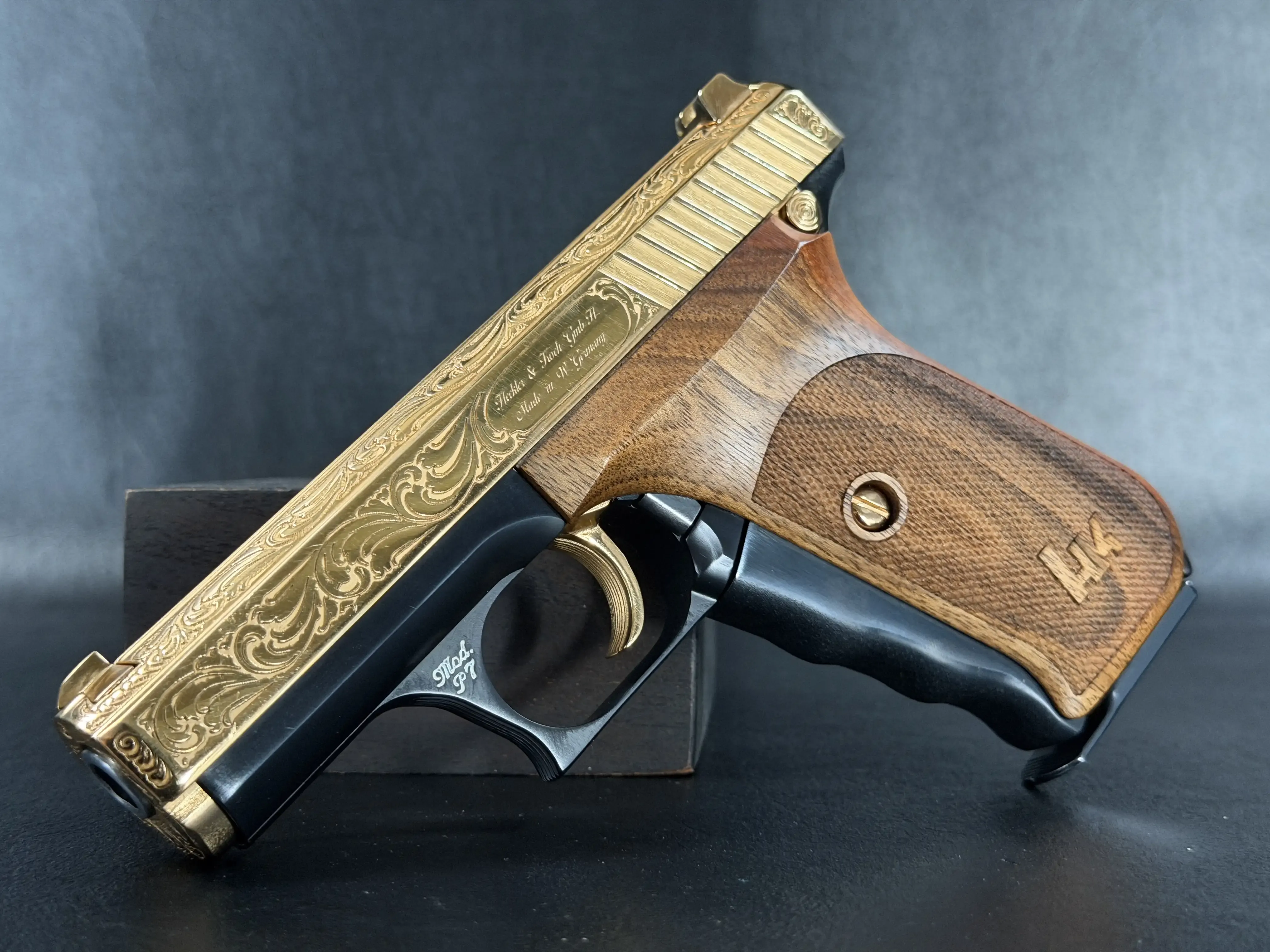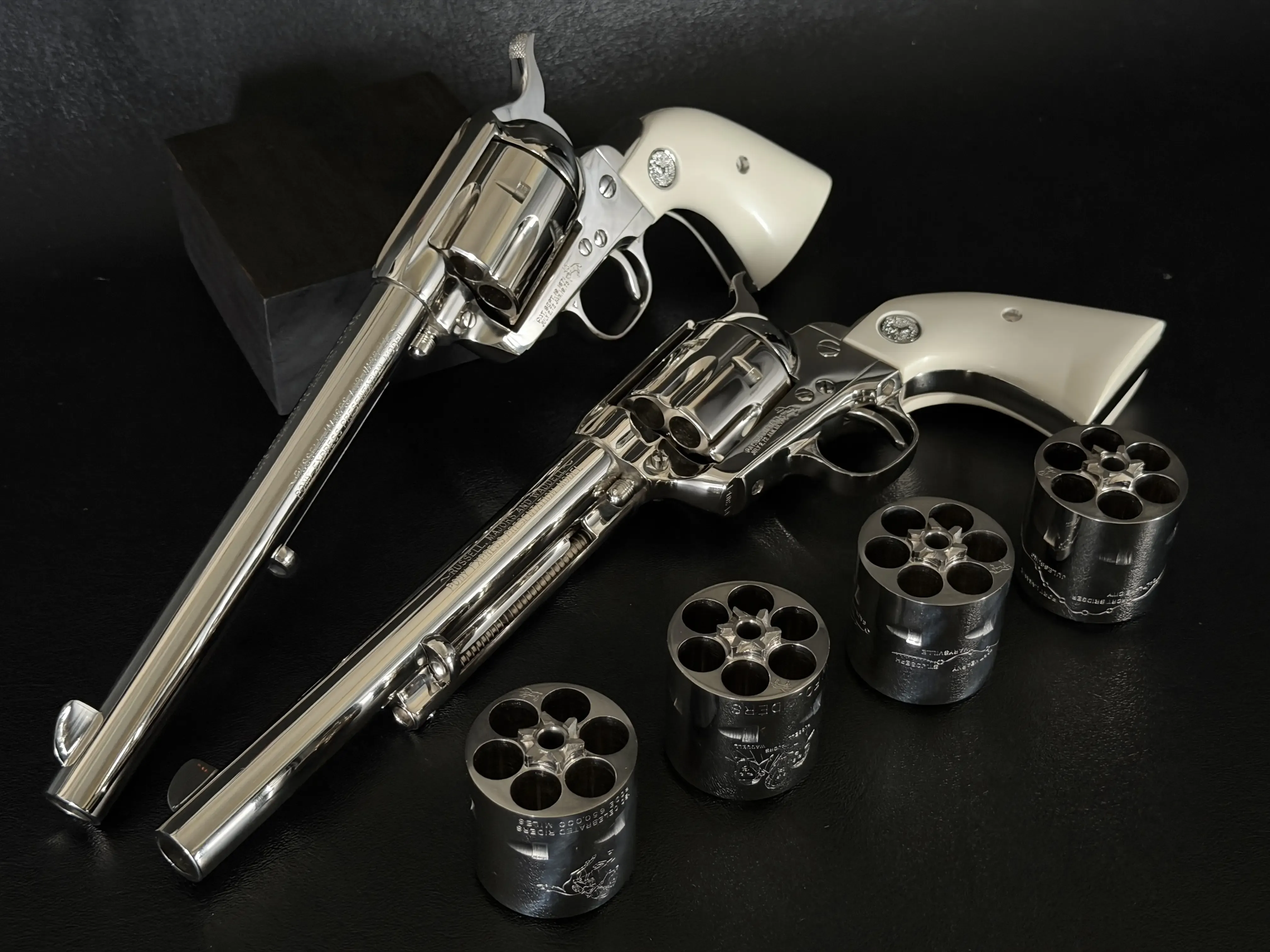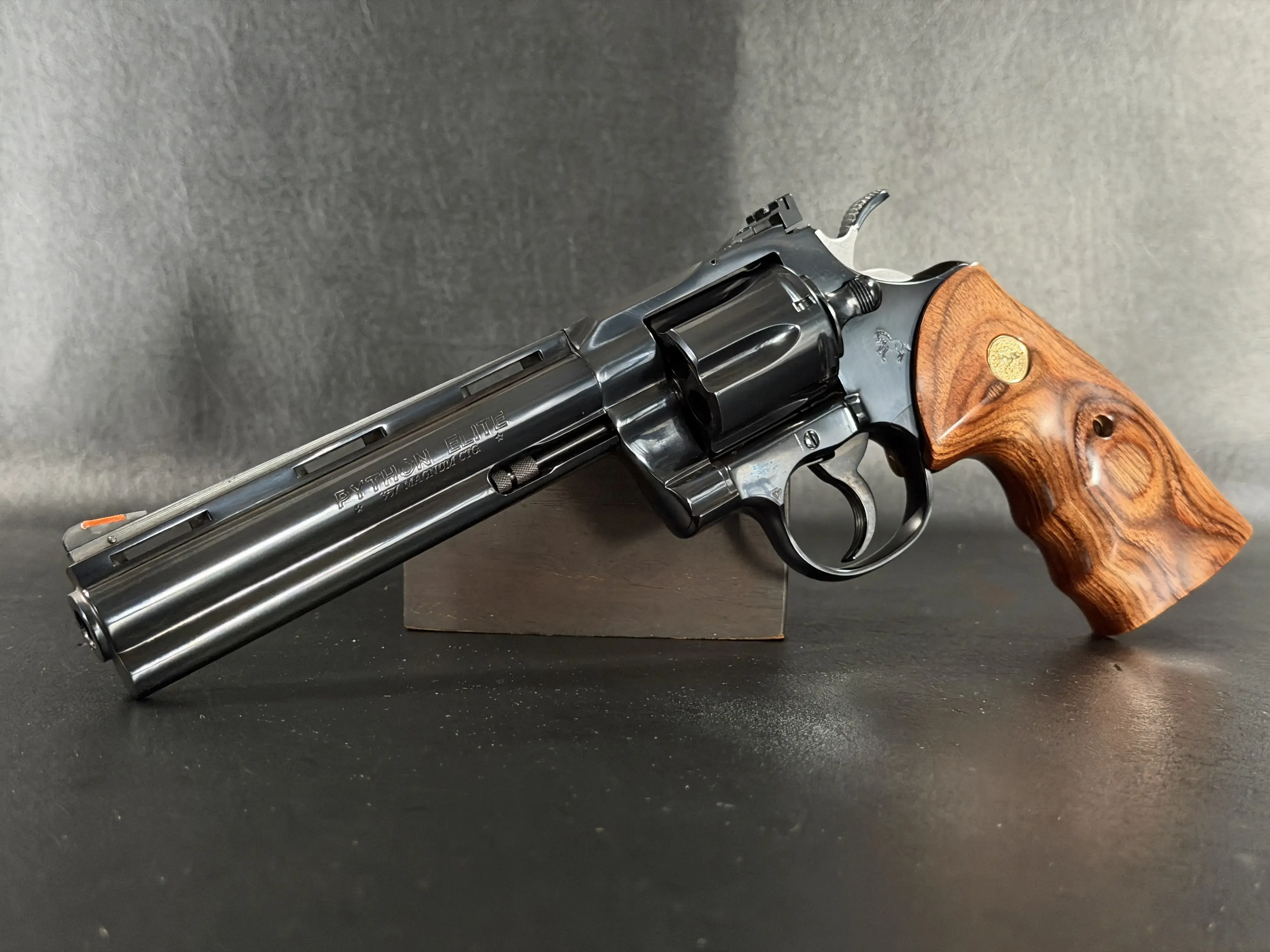
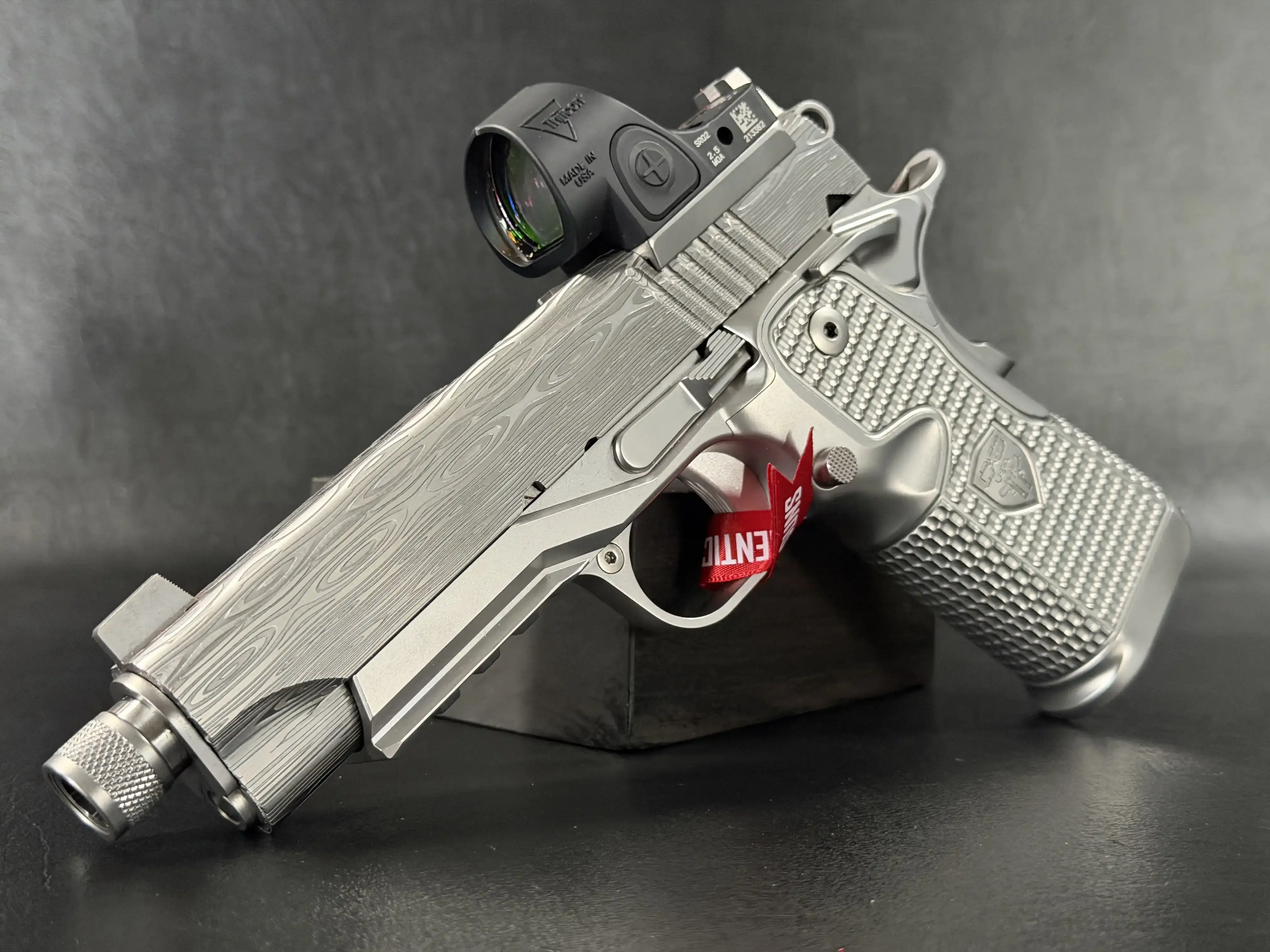
Walk into any decent gun shop, and you can leave with a working 1911 for around $600. It'll go bang. It'll feed hardball all day, and cared for, it'll outlive you.
So what are people actually buying when they hand over $4,000, $8,000, or, in one famous case, $4.5 million for the same 115-year-old design?
That question has a real answer. It lives in barrel fit measured in ten-thousandths, in small parts machined from bar stock instead of cast from metal powder, and in the hours a single human being spends with files and stones getting a slide to glide like it's riding on oil. What follows is a tour of the companies doing that work at the highest level, on both the classic single-stack 1911 and its double-stack descendant, the 2011. Some of these makers you already know. A few you probably don't. All of them are worth understanding before you spend serious money.
First, the family tree
Quick housekeeping for anyone newer to this corner of the gun world.
The 1911 is John Browning's single-action design, adopted by the U.S. Army in (surprise) 1911 and carried as the standard sidearm until 1985. Single-stack magazine, steel frame, and a trigger that slides straight back instead of pivoting on a pin. That trigger is the main reason people still obsess over the design more than a century later.
2011 is when competition shooters wanted that trigger with more ammunition behind it. In the early 1990s, gunsmith Virgil Tripp and engineer Sandy Strayer developed a modular frame: a steel upper receiver carrying the rails and fire control, mated to a separate wide-body grip that accepts double-stack magazines. They patented the design in 1994 and built guns under the STI name. Strayer left almost immediately to co-found Strayer-Voigt, which sells under the Infinity brand. STI itself, after a 1997 sale to Dave Skinner and two decades of dominating practical shooting, rebranded as Staccato in 2020.
Two details from that history still shape today's market. Staccato owns the "2011" trademark, so technically only its guns are 2011s, though the term has gone the way of Kleenex. And the frame patent has expired, which is why seemingly every maker now sells a double-stack 1911-pattern pistol, priced from near $800 to over $10,000.
Wilson Combat: the reference point
Every conversation about high-end 1911s starts in Berryville, Arkansas, where Bill Wilson began customizing pistols in 1977 out of the back of his family's jewelry store. He trained as a watchmaker, which tells you something about his tolerance for sloppy fit.
Nearly fifty years on, Wilson Combat is the biggest name in the segment and, for many buyers, the default answer. The catalog is deep. The CQB has been a working gun for decades, the kind of 1911 that police instructors and serious carriers actually shoot rather than photograph. The hand-built Supergrade sits at the top of the single-stack line, priced north of $5,000 with waits to match. In between are dozens of models covering every barrel length and caliber that makes sense, plus a few that don't.
Wilson also changed the platform in quieter ways. The company's 47D magazine fixed the 1911's most common failure point and ended up riding in everyone else's guns. Then, in 2016, Wilson introduced the EDC X9, its own take on a high-capacity carry 9mm. It's a different animal from 2011, with a one-piece machined aluminum frame instead of a modular chassis, but it packs 15-plus rounds into a grip slim enough for real concealment, and it nudged the whole industry toward carry-sized double stacks.
If there's a knock, it's that Wilson has become a big company, with big-company pricing and a product line that now includes rifles, shotguns, and collaborations. None of that seems to have hurt the pistols.
Les Baer: accuracy or your money back
Les Baer Custom is the stubborn old craftsman of the group, and I mean that as a compliment. Founded in 1991 in Hillsdale, Illinois, and later moved across the Mississippi to LeClaire, Iowa, the company builds tight, heavy, hard-fit 1911s and doesn't bother much with fashion. The website looks like 2003. The guns shoot like nothing else at this price.
Baer's signature is the accuracy guarantee. Every pistol is guaranteed to group within 3 inches at 50 yards. Yards, not feet. For roughly $295 more, many models can be ordered with a 1.5-inch guarantee, and the upcharge pays for extra barrel-fitting time built into the gun from the start rather than a lucky example pulled off the line.
The flagship Premier II runs somewhere around $2,800 to $3,200 these days, depending on configuration, which makes Baer the value play among the royalty. There are trade-offs. New Baers arrive famously tight and want a few hundred rounds of break-in before they smooth out. The factory publishes specific ammunition recommendations and expects you to follow them. And the options list is shorter than Wilson's or Nighthawk's. You buy a Baer to shoot small groups, not to spec out a piece of jewelry.
Ed Brown: the family shop that reshaped the carry 1911
Ed Brown Products of Perry, Missouri, might be the least flashy name on this list, and its influence per dollar might be the largest. Brown started gunsmithing in 1968, and before the complete pistols came, the parts did. Handle a quality 1911 from nearly any maker, and there's a fair chance the grip safety or sear started life in an Ed Brown catalog.
The company's best-known idea is the Bobtail, a trademarked rounded-off mainspring housing that removes the sharp bottom corner of the grip. Sounds trivial. It isn't. The Bobtail keeps a full-size gun from printing through a shirt, and it has been licensed, imitated, and flat-out copied across the industry. Brown's Kobra Carry and the other models built around it remain some of the most practical carry 1911s available.
Ed Brown is still family-run, still fairly small, and prices most catalog guns between roughly $3,500 and $5,000. Fit and finish sit right alongside the other big names, though the look is more workmanlike. Buyers who want engraving and French borders shop elsewhere. Buyers who want a 40-ounce gun that disappears under a jacket tend to land here.
Nighthawk Custom: one gunsmith per gun
Here's a fun bit of geography: Nighthawk Custom is also in Berryville, Arkansas, a town of a few thousand people. The company was founded in 2004 by a small group who left Wilson Combat to build guns their own way, which makes Berryville the unlikely Florence of the American custom 1911.
Nighthawk's pitch is right there in its slogan, "One Gun, One Gunsmith." A single builder hand-fits each pistol through the entire process instead of passing it down a line. Whether that produces a measurably better gun than Wilson's approach is a debate that keeps forum servers warm at night. What's harder to argue with is the finished work. Nighthawks look the money, with base guns starting around $4,000 and the catalog climbing steeply past $8,000 for presentation pieces.
The company also collaborates constantly. Clint Smith's Thunder Ranch models moved to Nighthawk after his split with Les Baer. There are Agent-series guns designed with Agency Arms, a partnership importing Korth revolvers from Germany, and a growing family of double-stack models chasing the 2011 wave. If Wilson is the establishment, Nighthawk is the ambitious rival that refuses to concede an inch.
Cabot Guns: aerospace machining meets art money
Cabot Guns of Cabot, Pennsylvania, is the strangest and most fascinating company here. It launched in 2011 as an offshoot of Penn United Technologies, a precision manufacturer serving aerospace and medical customers, and it approached the 1911 the way you'd approach a turbine blade: wire EDM, obsessive measurement, tolerances quoted in ten-thousandths. Gun-value authority S.P. Fjestad called the results "the Rolls-Royce of 1911 pistols," and Cabot has been living up to that line, and pricing off it, ever since.
Two things set Cabot apart. First, true mirror-image left-handed 1911s, built as complete reversals for southpaws and often sold as matched left-right pairs. Second, materials nobody else would touch. The famous example is the Big Bang Pistol Set, completed in 2016: a mirrored pair machined almost entirely from a 77-pound chunk of the Gibeon meteorite that fell on prehistoric Namibia. Slides, frames, triggers, and grips are all ancient extraterrestrial iron; only the barrels, springs, pins, and a few other components are earthly steel. Both guns fire. Cabot's own engineer test-shot one left-handed with his right hand tucked behind his back, just in case. The asking price for the pair was $4.5 million, which would make them the most expensive new guns ever sold if a buyer steps up.
Below the stratosphere, Cabot's commissioned and engraved OAK collection pieces have run $50,000 to $150,000, and its tenth-anniversary Damascus-and-meteorite pistols sold out quickly at $35,000 to $60,000. Standard catalog guns start around $5,000 and climb fast. Are they shooters? Cabot says yes, and claims that the only two civilians ever to win the NRA National Pistol Championship outright did it with Cabot pistols. Still, let's be honest about what most of these are: functional sculpture for people who could have bought a car instead.
The small shops and the one-man benches
Below the famous names sits a layer of smaller makers doing work that's arguably finer, if harder to get.
Guncrafter Industries builds 1911s with a cult following and one genuinely original idea: the .50 GI, a proprietary half-inch cartridge housed in a gun that handles like a standard 1911. Founder Alex Zimmerman made his name at Wilson Combat before striking out on his own, and buyers still report that he personally answers the shop phone, which tells you the scale of the operation.
Alchemy Custom Weaponry in New Hampshire was started by Rob Schauland, who spent years fitting guns at Les Baer. Owners tend to describe an Alchemy as a refined Baer, hand-fit the old way with nicer detailing, and the Prime series has become a quiet favorite among people who carry expensive guns rather than photograph them.
Then there are the true bespoke benches: Jason Burton at Heirloom Precision, Joe Chambers, Ted Yost, and a handful of others. These shops operate on a different scale entirely, turning out a few dozen full-house builds a year, with waiting lists measured in years and prices that outpace the big names on the way up. Collectors put them in a separate class, and they're right to.
One sleeper worth naming before we move on: the Springfield Armory Custom Shop's Professional model, born from a 1998 FBI contract, is still one of the great buys in hand-built 1911s. People who own Wilsons and Nighthawks routinely mention it in the same breath.
Staccato: the company that owns the name
Now to the double stacks, and the company that turned the 2011 from a race-gun oddity into a phenomenon.
Staccato, the Texas outfit formerly known as STI, made its bet around 2019: take the competition-bred 2011, tune it for absolute reliability, and sell it to police and armed citizens instead of trophy chasers. The bet paid off in a way almost nobody predicted. The Staccato P became a genuine duty pistol, adopted or approved by hundreds of law-enforcement agencies, with users including the U.S. Marshals' Special Operations Group and the Texas Rangers.
The current lineup covers the whole spread. The P remains the duty standard at around $2,500. The C, C2, and CS handle carry. The XL (about $3,599) and the compensated XC (about $4,299) are the factory race guns, both wearing hand-tuned 2.5-pound triggers. And the newer HD line has been quietly rethinking the platform: revised ergonomics, tougher construction, and, the big one, feeding from widely available Glock-pattern steel magazines instead of costly 2011 mags. The latest flagship, the compact HD C4X shown at SHOT Show 2026, pairs a 7075 aluminum frame with a 4-inch integrally compensated barrel and starts at $3,499.
Is a factory Staccato a luxury gun? At the P's price, it's closer to premium production. But the XC and the HD flagships sit squarely in high-end territory, and Staccato's real luxury is institutional: a lifetime warranty, a large service operation, and the comfort of buying the platform from the company that invented it.
Infinity: the grail on the order sheet
Remember Sandy Strayer, the engineer who co-created the 2011 and left STI in 1994? His company, Strayer-Voigt of Gunter, Texas, sells under the Infinity Firearms name, and serious competition shooters talk about it the way watch people talk about small independent Swiss houses.
There's no real catalog. An Infinity is built from an order sheet with an option list that runs to absurd lengths: island barrels, sight-tracker ribs, exotic serration patterns, grips, finishes, whatever you can articulate. Waits have historically run a year or more. Configured prices typically start north of $5,000 and easily exceed $7,000, and the company is famously coy about published pricing. On the secondary market, desirable configurations get listed well into five figures.
What you get for all that is machine work and fitting that even owners of other top-tier guns describe with a kind of awe. Infinities arrive glass-tight, sometimes needing a break-in period of their own, then settle into the smoothest 2011-pattern guns made. If the Staccato is the one you carry, the Infinity is the one you daydream about between stages.
Atlas Gunworks: race guns without the two-year wait
Atlas Gunworks of northern Vermont was built on a simple complaint: superb competition 2011s existed, but you couldn't actually get one this season. The founders, mentored by veteran pistolsmith and IPSC world champion Allan Zitta, set out to deliver custom-grade match guns on schedule, with a real customer service department standing behind them.
The guns wear Greek-myth names (Titan, Nemesis, Athena, Erebus, Artemis) and map neatly onto USPSA and IPSC divisions. Expect to spend from about $4,500 to well into the $8,000s once options stack up. Match circuits are thick with them now, which says plenty. People who burn 30,000 rounds a year don't keep buying guns that break.
Owners who compare Atlas directly against Infinity tend to land in the same spot: the Infinity is a touch more refined, while the Atlas runs hard out of the box and arrives before you've even forgotten you ordered it. For a working competitor, that trade often decides itself.
Other 2011 names you'll hear
A few more deserve a paragraph. Phoenix Trinity's Honcho is an engineer's 2011 with a linkless barrel lockup and a loyal following among open-division shooters. Limcat and Akai build celebrated race guns in small numbers. Taran Tactical's Pit Viper picked up a pop-culture halo as the John Wick gun and sells for around $5,000 on star power and genuinely nice machining.
And at the other end, the post-patent flood (Springfield's Prodigy, Tisas, Bul Armory, and others) has filled shelves with double stacks under $1,500. Those guns have forced the expensive makers to sharpen their cases. When anyone can sell the layout, execution is the whole product.
What the money actually buys
Strip away the branding, and the price of a high-end 1911 or 2011 comes down to a few concrete things.
Hours, mostly. A production gun is assembled from parts made to tolerances loose enough to interchange. A hand-fit gun starts with oversized components that a smith files, stones, and laps to one another: barrel hood to slide, lugs to slide stop, bushing to barrel, rails to frame. That fit is where 3-inches-at-50-yards accuracy comes from, and it can't be rushed or fully automated.
Materials, second. The top makers machine their small parts from bar stock or use forgings, whereas budget guns lean on metal-injection-molded components. MIM has gotten good, honestly, and plenty of reliable pistols use it. But machined parts hold crisper engagement surfaces and survive higher round counts, and at these prices, you're entitled to them.
Then testing and finishing. The good shops live-fire every gun, often shipping the test target in the case. Checkering gets cut at 20 or 30 lines per inch. Edges get broken by hand, so the gun stops chewing holsters and palms. None of this makes a pistol meaningfully more reliable than a well-made $1,200 gun, and it's worth saying so plainly. What it buys is consistency, longevity, and the tactile difference you feel the first time you rack a Supergrade next to a rack-grade pistol. Diminishing returns start early in this hobby. That isn't a scandal. It's just what luxury means.
Buying one without regrets
Some hard-won advice, compressed.
Handle before you order. Grip shape, trigger reach, and balance differ more among these makers than spec sheets suggest, and a $5,000 gun that doesn't fit your hand becomes a $3,400 mistake on the used market. This raises the second point: semi-custom guns generally resell below retail, sometimes well below, with scarce models and true one-man-shop builds being the main exceptions. So buy the gun you intend to keep and shoot, and treat whatever it fetches years later as someone else's problem.
Mind the wait times and the ecosystems. An Infinity or a full bespoke build can take a year or more, while a Staccato or Atlas ships fast. Magazines matter too. Traditional 2011 mags cost $60 to $150 each and sometimes need tuning, which is exactly the problem Staccato's HD line addressed by switching to Glock-pattern magazines. Budget for optics, holsters, and a healthy ammunition supply, and respect break-in periods on tight guns along with the maker's ammo guidance. Les Baer publishes specific load recommendations for a reason.
Finally, weigh service reputation as heavily as machining. Every maker on this list has shipped an occasional lemon. What separates them is what happens next, and owner communities have long memories. Spend an evening on the 1911 forums reading how each company handled its problems, then decide.
And if all this still sounds like a lot of money for a pistol, think back to that $600 hardball gun from the top of the page. It exists, it works, and nobody strictly needs anything these companies sell. That's fine. Nobody needs a mechanical watch either, and yet here we are, holding a slide up to the light to admire the fit. Some machines earn affection beyond their function. The 1911 has been doing it for 115 years, and if you're going to fall for one, it may as well be built by people who care about it as much as you do.
As a firearms enthusiast with a background in website design, SEO, and information technology, I bring a unique blend of technical expertise and passion for firearms to the articles I write. With experience in computer networking and online marketing, I focus on delivering insightful content that helps fellow enthusiasts and collectors navigate the world of firearms.
Comments
Be the first to leave a comment.
Be the first to read new editorial features, collector guides, and brand spotlights.