I first learned the difference between an 870 that works and an 870 that sings on a cold Saturday morning, standing at a pawn shop glass case that smelled like Hoppe’s and old socks. The tag said Remington 870, but the wood glowed like a well-kept fishing boat, the receiver looked deep and polished, and the action felt like sliding a drawer in a fine desk. That was my first Wingmaster. A week later, a buddy showed up to the duck blind with an 870 Express. It had a matte receiver, plastic furniture, and an action that felt slightly gritty at first stroke. Two shotguns with the same bones, yet a different feel in the hands. If you’re sorting out Wingmaster vs. Express vs. Police and trying to buy smart, let’s pull the curtain back on what changes, what doesn’t, and what to check before you pay.
A quick family sketch: Wingmaster, Express, Police
Remington launched the 870 Wingmaster in 1950. Decades later, in 1987, the 870 Express arrived as a more affordable, no-frills version. Between and beyond those two sits the Police variant, which is set up for duty use and shares core parts with the others. This family tree matters to buyers because furniture, finish, and a handful of small parts create most of the real-world differences.
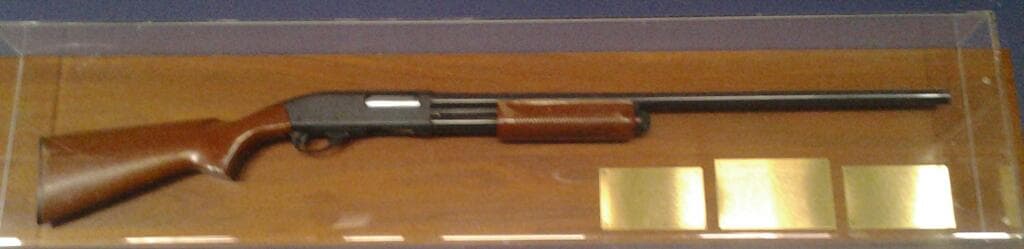
Remington 870 Right Side Forend Close Up, shown in detail view, supports the article’s focus on Remington 870 Pump Guns, Explained: Wingmaster vs. Express and Police.
Here is the short, buyer-facing snapshot:
- Wingmaster: polished receiver, blued gloss finish, walnut or mahogany furniture, and a smooth, refined feel. It’s the traditional upland and clay gun many of us picture when we think 870.
- Express: matte receiver and barrels, usually synthetic or laminated wood furniture, and a basic working-gun vibe. It costs less and can feel a bit rough when new.
- Police: built for duty service and hard use. One notable small-parts difference is the extractor type, which we’ll cover below.
Many hunters and shooters have carried all three versions afield because the 870 pattern is familiar and proven. The key for a buyer is understanding how these differences show up in the action, at the bench, and in your hands.
Receivers and actions: polish, parts, and how they feel
Put a Wingmaster and an Express side by side and the first thing that catches your eye is the receiver. Wingmasters wear a polished, classic look. Express receivers are matte finished, and depending on when one was made, you may see minor cosmetic tool marks. That is normal for the budget tier and it doesn’t define how well the gun can run, but it does explain why a new Express may feel a little gritty compared to a Wingmaster.
Functionally, the 870 action is a straightforward twin action bar pump. When people talk about smoothness, they are often talking about two things: the surface finish of the parts that rub and the clean fit of parts inside the receiver. Some Express-era guns feel rough because manufacturing left tiny burrs or a less polished surface. The fix is not exotic. A bit of careful hand work can settle a new Express down. A simple trick that veteran 870 owners use is gently rubbing the rough contact surfaces with fine steel wool and keeping the gun cleaned and lightly oiled. This removes leftover crud and smooths the feel without changing the geometry.
Inside that receiver are the parts that actually make the 870 run: the bolt body with its extractor, the carrier and its spring-loaded parts, the shell latches on the receiver walls, and the ejector riveted to the inside left wall. If you want to put names to parts, Remington’s factory manual breaks them out clearly, right down to the ejector, ejector spring, and the front and rear ejector rivets listed on the parts diagram. You can see that breakdown and basic handling instructions in the official Remington 870 manual.
Carriers and shell latches: how feeding actually works
The 870’s feeding cycle is simple to feel but fun to understand. As you push the fore-end forward to chamber a shell, the carrier lifts the shell up in front of the bolt. As you pull the fore-end back, the carrier drops and the next shell is managed by the shell latches that live on the inner receiver walls.
There are two of those latches, often called the left and right shell latches. They do not just stand there like coat hooks. One holds a shell until the other hands it off. In practice it looks like this:
- With the action open, a shell sits on the right side latch inside the magazine tube mouth.
- As the fore-end starts forward, timing between the latches staggers. The right latch lets go while the left latch catches the rim, so the shell jumps across to the left latch and waits its turn for the next cycle.
- When the bolt comes back again, that shell is released so the carrier can lift it.
Why should a buyer care? Because worn or bent shell latches cause feeding headaches that feel random at the range. If an 870 will not reliably pick a shell off the magazine or if it sometimes lets two try to come out, suspect the latches or the tiny springs and pins that control the carrier’s behavior. The good news is that latches can be retensioned or replaced by a competent gunsmith, and the parts are available.
Ejectors and extractors: the small parts that decide reliability
Two parts finish the cycle after a shot. The extractor is the little hook on the bolt face that grabs the rim of the shell and pulls it from the chamber. The ejector is the springy strip fixed to the left inner receiver wall. As the bolt retracts, the case mouth hits the ejector and pivots out of the ejection port.
Across the 870 family, the extractor is one of the places you see a parts difference called out by experienced users. Wingmasters use a machined extractor made from solid steel. The Police version uses that same non-MIM extractor because of its reliability history. Many Express models use a metal-injection-molded extractor to help keep costs low. MIM parts can work, but owners have found that a worn MIM extractor may eventually lose its bite on the shotshell rim. If you are resurrecting a hard-used Express that has started to short-stroke ejections, closely inspect the extractor’s hook for sharpness and spring tension. Replacing a tired MIM extractor with a machined version is a straightforward, commonly recommended upgrade.
The ejector is not on the bolt at all. It is riveted into the receiver. The factory schematic lists an ejector, an ejector spring, and front and rear ejector rivets, which tells you how it is mounted. If you are buying a used 870, look into the receiver and make sure the ejector and its rivets are solid and not bent away from the wall. A loose ejector or a sheared rivet can cause weak ejection or failures to clear the port. It is not a deal breaker if the gun is otherwise sound, but a receiver repair is a gunsmith job, not a parts-swap at the kitchen table.
Barrels and chokes: what swaps, what to look for
One reason 870s show up in so many roles is the barrel system. Swapping a barrel takes seconds. According to Remington’s factory literature, all barrels of the same gauge are interchangeable without adjustment. That single sentence opens up a lot of possibilities for a buyer who wants one receiver and several jobs covered. If you stick with the same gauge, you can go from a ventilated rib field barrel with screw-in chokes one afternoon to a shorter barrel with rifle sights the next morning.
Many modern 870 field barrels use Rem Choke tubes, which let you change constriction with a small wrench. A common setup you will find in combo packages is a 28 inch ribbed barrel with a modified choke installed, plus a shorter barrel with rifle sights for close-range work. Those combos are practical, and they are part of why 870s hold their place on the used rack. The takeaway for buyers is to check what choke system the barrel uses, make sure the choke tube is not seized by rust, and confirm that the set actually includes the tube wrench if the seller claims it does.
Match your shells to the markings on the barrel. Remington barrels are marked with chamber length and choke spec near the receiver ring. Stay within those stamped limits. If you are inspecting a used gun at the counter and want to check the bore for obstructions without taking anything home, Remington’s manual outlines a simple and safe method that uses a cleaning rod from the muzzle and a locked-open action. It is a smart move any time a barrel’s history is unknown, and you can read those basic steps in the official 870 manual.
Finishes and furniture: what you are really paying for
Finish and furniture are where you feel the biggest gap between Wingmaster and Express at first touch.
- Wingmaster: polished receivers with a glossy blue and classic wood. That nicer fit and finish often translates to a smoother feel out of the box because surfaces are more polished where parts ride.
- Express: matte receivers and barrels. Furniture is usually synthetic or laminated wood. The matte finish is honest and practical but can feel rough in spots. Some examples left the factory with small burrs or tool marks that you can smooth out with a patient hand and some fine steel wool. The finish hides hard use well and is common on guns that live in boats and blinds.
Is a Wingmaster always worth more to a buyer? If you value a fine factory finish and the way polished surfaces feel as they slide, a Wingmaster will speak your language. If you want a field tool that you will not baby on a muddy bank, an Express makes sense and can be tuned to run as slick as you like with minimal effort. Either way, look past cosmetics and focus on the functional checks in the inspection section below.
Remington 870 Right Side Forend Close Up 002, shown in detail view, supports the article’s focus on Remington 870 Pump Guns, Explained: Wingmaster vs. Express and Police.
The Police variant in plain language
What about the Police 870? It shares the same 870 receiver and barrel interface, but it is configured for duty service. One easily spotted mechanical difference is the extractor. Police models use the non-MIM, machined extractor. That small change matters to agencies that expect thousands of trouble-free cycles with mixed ammunition. Beyond that, understand that many Police guns show honest rack wear and may have been carried a lot. Cosmetics aside, the same inspection rules apply. Focus on the carrier’s snap, the ejector’s integrity, and the condition of the chamber and extractor.
How to inspect a used 870, step by step
Bring a small flashlight, a couple of 12 gauge snap caps or dummy shells in the right gauge, and a patient attitude. If the seller allows it, take your time. Safety first, then follow a rhythm. The factory manual’s safe handling steps are the baseline for everything that follows.
1. Clear it, then check the barrel
Point the shotgun in a safe direction. Engage the safety so the red dot is not showing. Unlock the action and slide the fore-end fully rearward. Visually and physically check the chamber and magazine for shells. With the action locked open, look down from the ejection port and make sure the chamber is empty. If you have a cleaning rod handy, you can run it from the muzzle to ensure the bore is clear. These steps mirror the safety guidance in the factory manual.
2. Work the action and feel for smoothness
Cycle the action several times. You are not evaluating speed, just feel. Expect a Wingmaster to glide and an Express to feel matte and possibly a touch gritty. Grit can often be cleaned out. Grinding or binding hints at a bent action bar or debris. Watch the bolt head and make sure the extractor claw is not chipped.
3. Inspect the extractor
Lock the bolt open and shine a light on the extractor hook. Look for a well-defined edge and clean engagement with a shell rim. If possible, use a snap cap and feel the hook grab the rim as you close and open the action. A weak bite or slipping can signal a tired extractor or spring. If the gun is an Express with a long service life, budget for a fresh, machined extractor as preventative maintenance.
4. Inspect the ejector and its rivets
With the action open, look inside the receiver on the left wall. You will see the ejector running lengthwise. Make sure it is not bent out of line and that both rivets look tight and proud of the surface rather than sheared or mashed. These parts are called out by name in the factory parts list, which gives you a sense of where to look and what you are seeing.
5. Test feeding and shell latch timing
Using snap caps, load the magazine to its normal capacity. Slowly cycle the action. Watch how rounds are released from the magazine and handed off between the right and left shell latches as described earlier. You are looking for two classic issues:
- Double feed from the magazine, which hints at a shell latch that is out of tune.
- Failure to release, which suggests the other latch is not letting go when it should.
The fix is typically a shell latch retensioning or replacement. It is a common service item on hard-used 870s and not a reason to write off an otherwise solid gun.
6. Check the carrier and carrier dog spring
As you cycle slowly, the carrier should snap up smartly to lift a shell and drop quickly when the bolt retracts. A lazy lift can point to a tired carrier dog spring or grime. Springs and small pins inside the trigger plate assembly are wear items on guns that have fed many cases of shells. They are not expensive to replace.
7. Examine the chamber and bore finish
Shine a light in the chamber. Look for rust, heavy fouling, or pitting. A rough chamber can hang onto steel-based hulls and make extraction feel sticky. Light corrosion can often be removed with careful cleaning. Deep pits and peeling may call for a replacement barrel, which is easy on an 870 as long as you match the gauge.
8. Look over the barrel and choke system
Confirm the barrel gauge and chamber markings. If it uses screw-in chokes, make sure the tube is present, turns freely, and seats flush. Ask for the choke tube wrench that usually ships with the gun if the seller has it. If the gun comes with a second barrel, verify it fits by swapping it on and confirming that the action closes and the forend clears without rubbing.
9. Furniture and finish
Check the stock at the wrist for hairline cracks, and look under the buttplate or recoil pad for crush or moisture damage. On matte Express guns, the finish can hide field wear. That is fine, but do not let the cosmetics distract you from the mechanical checks above. On Wingmasters, a bright, even blue and clean wood finish help with resale, but again, function first.
10. Final function with snap caps
Load, cycle, and dry fire on snap caps to check safety engagement, trigger reset, and action bar lock function. The pump should not unlock when you pull the trigger until the action bar lock is depressed by recoil movement or your hand. Everything should feel positive and repeatable.
What to buy for your purpose
If you love classic lines and a factory-slick action, buy a Wingmaster and enjoy it. If you want a working pump that you will carry in rough weather and you like the idea of customizing small parts, an Express makes a lot of sense. Start with a clean gun, smooth any harmless burrs, keep it lightly oiled, and consider upgrading the extractor if you encounter ejection issues over time. If you find a Police-marked 870 in good mechanical shape, you are getting duty-focused parts like the non-MIM extractor. Cosmetics can be rough from rack life, so let the function checks be your guide.
One last note on barrels and roles. It is completely reasonable to build a simple 870 kit that does several jobs. A field barrel with screw-in chokes covers clays, upland, and much of your waterfowl work. A shorter barrel with rifle sights is handy for close shots in the timber. Swapping is quick, and Remington’s own literature says same-gauge barrels interchange without adjustment, which keeps life simple.
Parts, support, and resources
The first stop for any 870 owner or buyer is the manual. The parts list is useful for naming what you are looking at during an inspection, and the handling section shows the factory’s safe process for clearing and checking a barrel. Keep a copy of the official 870 manual handy for those reasons.
If you are curious how the 870’s story runs alongside Remington’s gas autos, I covered the cousins in Remington 1100 and 11-87 history. It is a good backdrop for understanding why the 870 stayed relevant even as semiautos took center stage.
For current factory information, warranty questions, and general contact, RemArms maintains the official home for 870 firearms today. You can start at remarms.com for updates and service information.
In the end, buying an 870 is not about chasing buzzwords. It is about matching a proven pattern to your hands. Get the receiver feel and small parts right, pick a barrel or two that fit your seasons, and you will understand why so many of us still slide an 870 into the truck before dawn with a small smile.
As a firearms enthusiast with a background in website design, SEO, and information technology, I bring a unique blend of technical expertise and passion for firearms to the articles I write. With experience in computer networking and online marketing, I focus on delivering insightful content that helps fellow enthusiasts and collectors navigate the world of firearms.
Comments
Be the first to leave a comment.
Be the first to read new editorial features, collector guides, and brand spotlights.