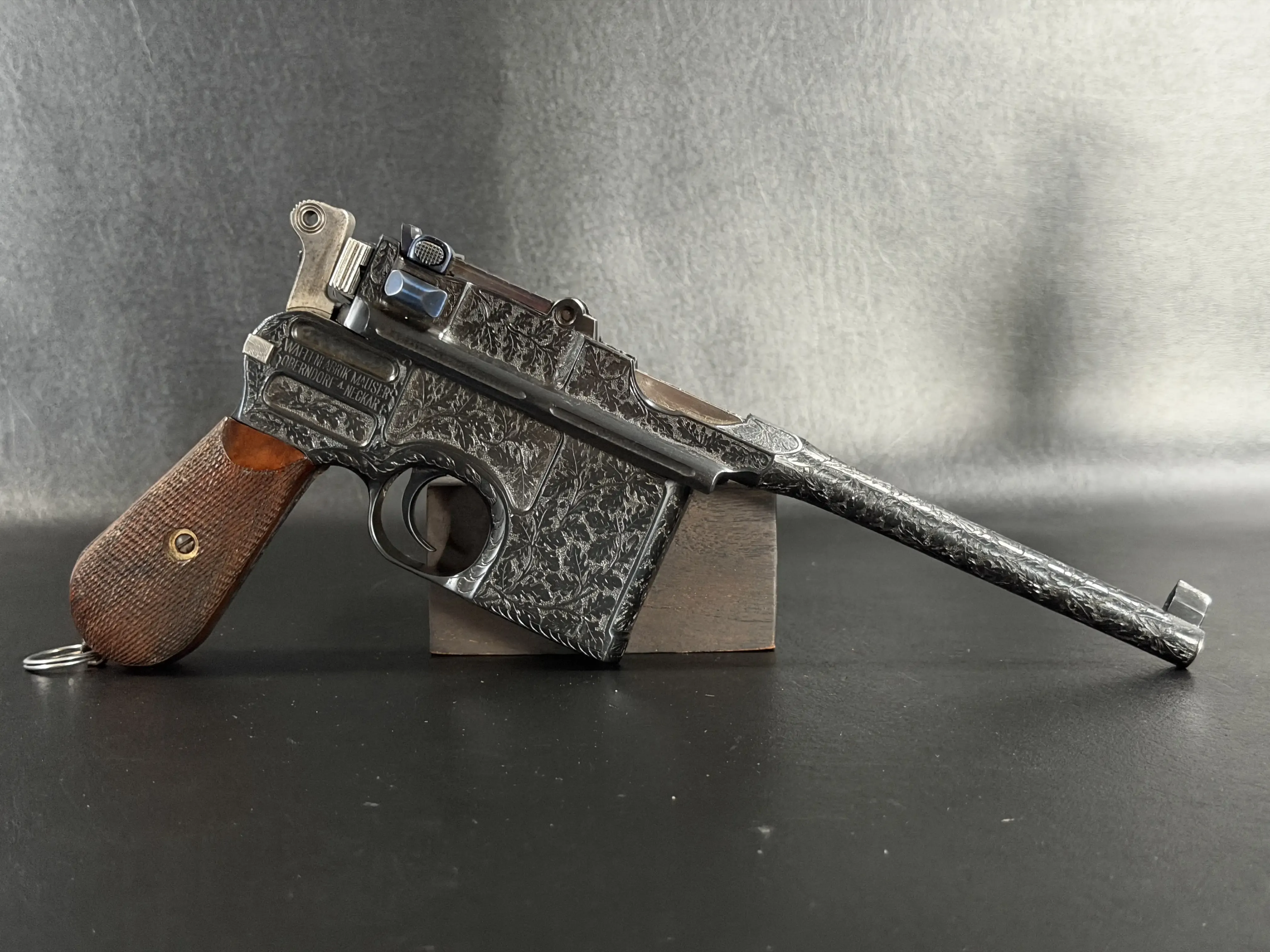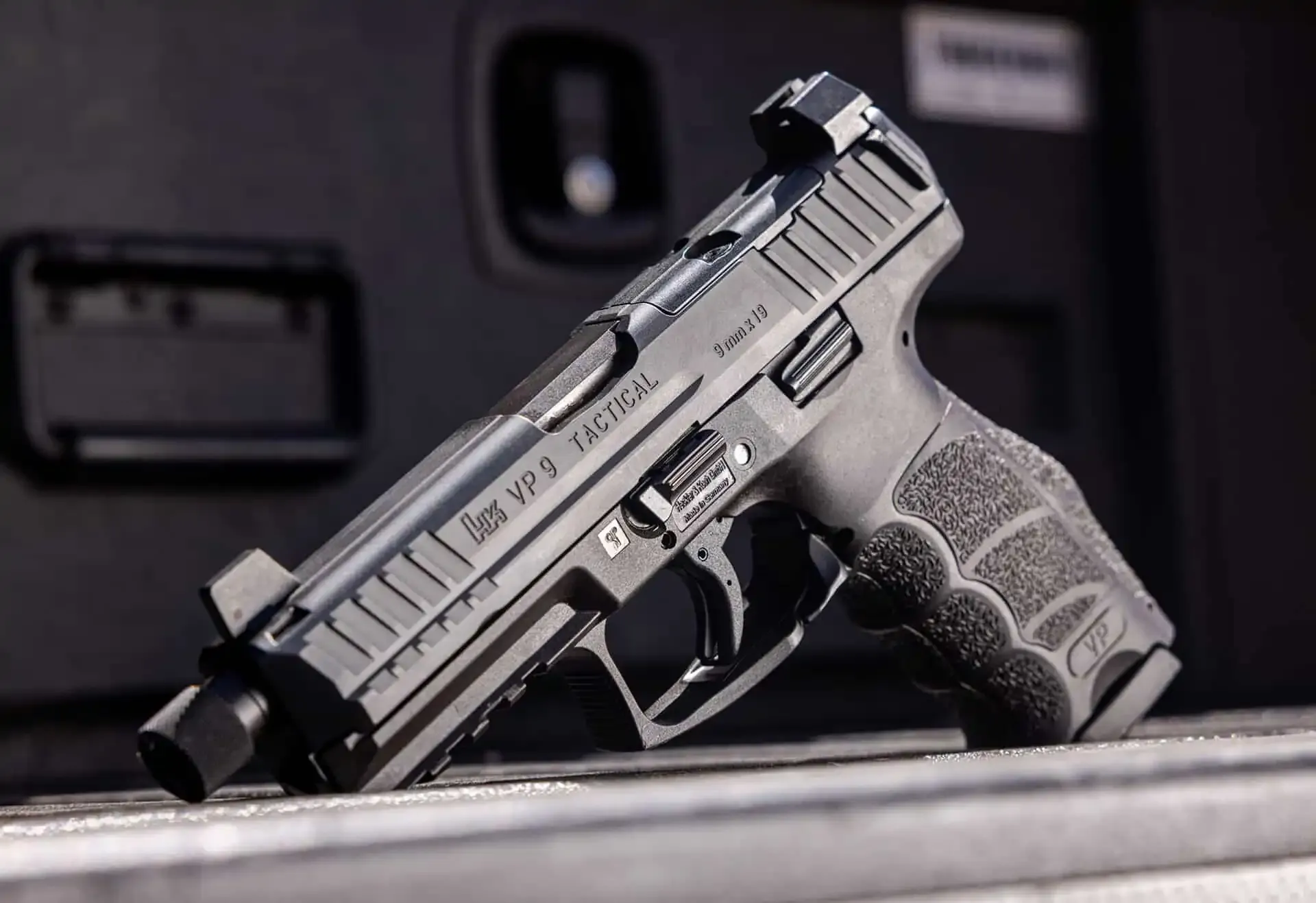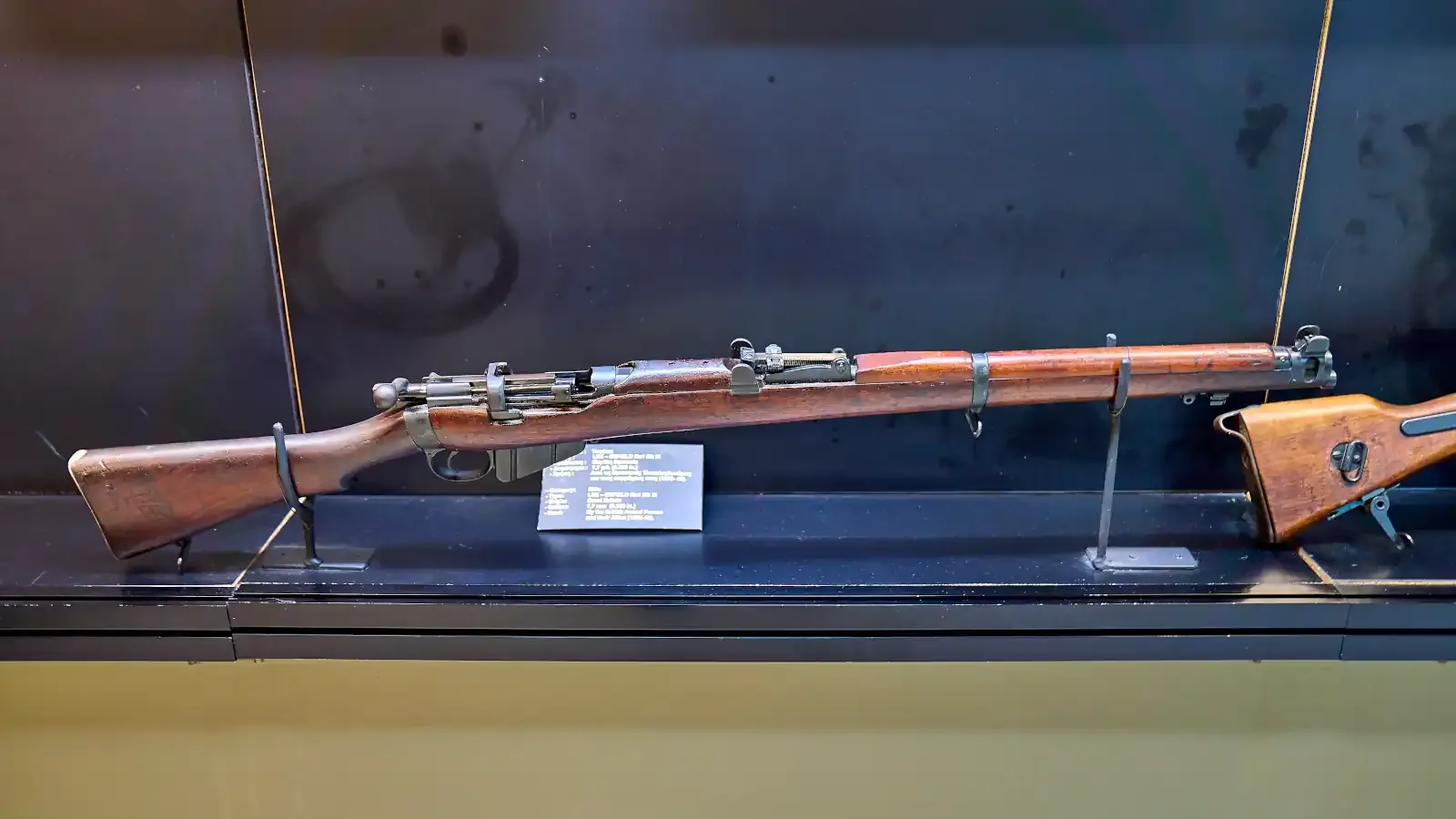
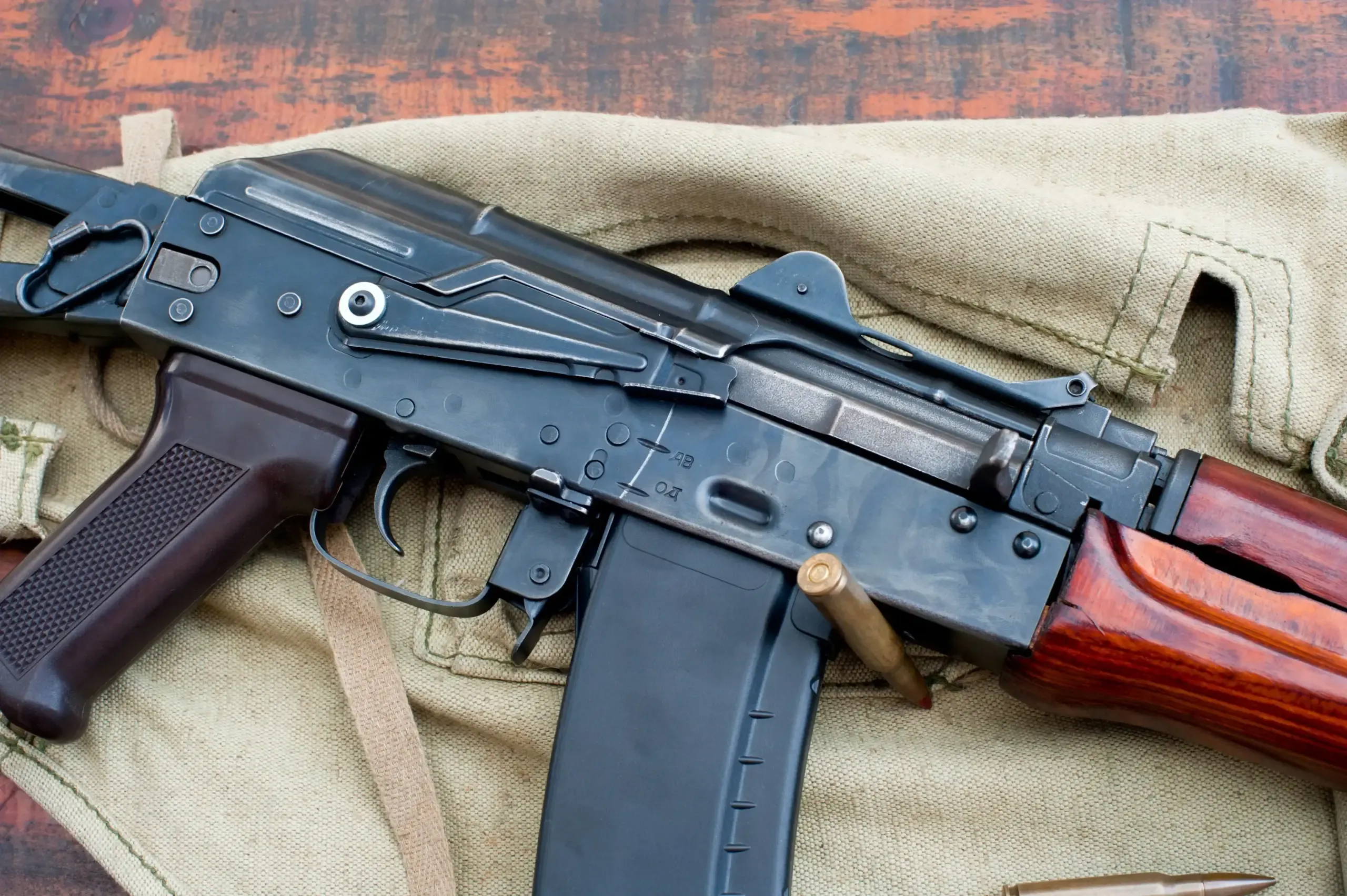
Key Takeaways
- Single-action, DA/SA, and DAO describe trigger functions, while striker-fired describes the component used to initiate ignition.
- Safety systems and trigger operation vary among models, even when pistols share the same general action type.
- Undocumented fire-control modifications can affect safety, reliability and collector confidence, so questionable work requires professional inspection.
The trigger is only one component of a handgun’s fire-control system. Depending on the design, that system may also include a hammer or striker, sear, trigger bar, disconnector, springs, and mechanical safeties. These parts determine not only how a trigger feels, but also how the pistol must be operated, inspected, and preserved.
Terms such as single-action, double-action, and double-action only describe what the trigger does. Striker-fired, by contrast, identifies the component that initiates ignition. The categories can therefore overlap: a striker-fired pistol may use a trigger mechanism that finishes cocking the striker, while another may hold its striker in a different state before the trigger is pressed. Manufacturer terminology and the manual for the specific model should take precedence over assumptions based on trigger feel alone.
Single-Action
In a single-action mechanism, the trigger releases a hammer or striker that has already been cocked. On a semiautomatic pistol, cycling the slide generally performs the cocking operation. Because the trigger is not required to cock the firing mechanism, single-action pistols can have relatively short trigger movement, although pull weight and travel vary by design.
Many single-action-only pistols incorporate a manual safety intended for use when the pistol is loaded and cocked. SIG Sauer, for example, directs users of its single-action-only models to engage the manual safety when a live cartridge is chambered.[1] That instruction is model-specific, but it illustrates a broader rule: the correct condition of carry and method of operation must come from the manufacturer’s manual, not from a generalized description of the action.
Traditional Double-Action/Single-Action
A traditional double-action/single-action, or DA/SA, pistol provides two trigger modes. With the hammer lowered, the first trigger press both cocks and releases it. After firing, slide movement recocks the hammer, leaving subsequent shots in single-action mode.
This arrangement creates a deliberate mechanical transition: a longer double-action first pull followed by shorter single-action pulls. Whether that transition is desirable is a matter of intended use, training, and individual preference, not an inherent measure of quality.
Control arrangements also vary. Some pistols combine a manual safety with a decocking function; others use a decocking lever that returns the pistol to a ready-to-fire condition without leaving a manual safety engaged. Beretta’s Model 92 manual, for example, distinguishes its safety-decocking models from “G” variants equipped with a decocking lever only.[2] A decocker should always be used exactly as the manufacturer directs. Manually lowering a hammer by pressing the trigger and attempting to ease the hammer forward can defeat safety provisions and create a risk of unintended discharge.[3]
Double-Action Only
The Sporting Arms and Ammunition Manufacturers’ Institute defines double-action only, or DAO, as a mechanism in which the trigger both cocks and releases the hammer or striker and the firearm cannot be manually cocked for single-action fire.[4]
DAO does not necessarily mean that every pistol shares the same safety arrangement, trigger weight, or internal construction. Beretta’s Model 92 family demonstrates the distinction: its “DS” variant combines a DAO mechanism with a manual safety, while the related “D” variant omits that lever.[2] The presence or absence of an external control therefore cannot, by itself, establish how a pistol’s action operates.
On revolvers, a concealed or enclosed hammer may prevent manual cocking and thereby make the revolver functionally DAO. Collectors should still identify the exact model and configuration rather than treating an external profile as conclusive evidence.
Striker-Fired Systems
A striker-fired pistol uses a spring-driven striker rather than an external hammer to strike the cartridge primer. That description alone does not establish precisely what the trigger does or how much striker-spring compression exists before the trigger is pressed.
Glock’s Safe Action system offers a well-documented example. Glock describes it as using a trigger bar that interacts with the firing pin while three passive mechanical safeties, the trigger safety, firing-pin safety, and drop safety, disengage sequentially during a trigger press and reengage when the trigger is released.[5] The firing-pin safety physically blocks forward movement of the firing pin until the trigger bar raises the block, while the drop-safety arrangement retains the firing pin until the trigger completes its rearward movement.[5]
That architecture should not be treated as universal. Other striker-fired pistols may use materially different sears, trigger bars, safety systems, or degrees of pre-cocking. The manual and parts documentation for the particular model remain the controlling references.
What Produces Trigger Feel
Trigger feel is the combined result of geometry, spring forces, leverage, surface condition, and the movement needed to operate internal safeties. Several terms help describe it:
- Pretravel, also called take-up or slack, is the trigger’s initial movement before the sear begins to move.[6]
- Creep is perceptible movement during the final stage before release.
- Break is the point at which the hammer or striker is released.
- Overtravel is rearward trigger movement after release. A trigger stop is a device intended to limit that movement.[7]
- Reset is the forward movement required before the mechanism can fire again.
A short or light trigger is not automatically superior. The proper relationship among engagement surfaces, springs, safeties, and reset is design-dependent. The disconnector, for example, separates the sear from the trigger as required to prevent uncontrolled fire or, in some designs, firing before the action is fully locked.[8]
For collectors, trigger feel can offer clues but not proof. Grit, excessive movement, an indistinct reset, or an unusually light break may result from wear, contamination, replacement parts, prior alteration, or the original design. A mechanical inspection is required before drawing conclusions about originality or safety.
Evaluating a Collectible Pistol
Begin with documentary identification. Confirm the model, variant, and operating instructions before manipulating the firearm. Period manuals, factory literature, and model-specific parts diagrams are particularly valuable because closely related pistols may use different trigger systems or control arrangements.
Once the pistol has been positively unloaded in accordance with its manual, inspect for mismatched or visibly altered fire-control components. Rounded edges, irregular tool marks, displaced metal, nonuniform polishing, or replacement springs may indicate earlier work. Such evidence does not automatically establish that a pistol is unsafe, but undocumented alteration can diminish collector confidence and warrants examination by a qualified gunsmith familiar with the model.
Do not polish sear surfaces, change engagement angles, shorten springs, or substitute internal parts merely to improve feel. Smith & Wesson warns that unauthorized manipulation of internal components can affect both safety and reliability and advises that alteration or parts replacement be performed by a qualified gunsmith using authorized parts.[9] Beretta likewise warns that altering a pistol’s internal firing mechanism can create unsafe conditions.[10]
For a historically significant firearm, restraint serves two purposes. It protects the pistol's operating safety, and it preserves physical evidence that may help establish originality, use, or earlier workmanship. Cleaning, repair, and replacement should therefore be documented, limited to what is necessary, and undertaken with due regard for both mechanical integrity and collector value.
Frequently Asked Questions
What is a single-action pistol trigger?
A single-action trigger releases a hammer or striker that has already been cocked. Cycling the slide commonly performs the cocking operation in a semiautomatic pistol.
How does a DA/SA pistol work?
The first double-action trigger press cocks and releases the hammer. Slide movement then recocks the hammer, placing subsequent shots in single-action mode.
What does DAO mean?
Double-action only means each trigger press cocks and releases the hammer or striker. The mechanism cannot be manually cocked for single-action fire.
Is every striker-fired trigger mechanically the same?
No. Striker-fired pistols can differ in their degree of pre-cocking, sear arrangement, trigger mechanism and internal safeties.
Should a collector modify a pistol’s trigger?
Undocumented alterations can affect safety, reliability, originality and collector confidence. Internal trigger work should be evaluated and, when necessary, performed by a qualified gunsmith familiar with the model.
Sources
- SIG Sauer, Operator’s Manual: Classic Line Pistols, “Safety” and “Alterations.” View the official manual
- Beretta, Series 92 Pistol User Manual, descriptions of G, DS, and D models. View the official manual
- SIG Sauer, Safety Instructions and Warnings Manual, section 5.4.1, “Hammer Fired Pistols.” View the official manual
- Sporting Arms and Ammunition Manufacturers’ Institute, “Double Action Only,” SAAMI Glossary. View the glossary entry
- Glock, “Safe Action System,” official technical description. View the system overview
- Sporting Arms and Ammunition Manufacturers’ Institute, “Pretravel,” SAAMI Glossary. View the glossary
- Sporting Arms and Ammunition Manufacturers’ Institute, “Trigger Stop,” SAAMI Glossary. View the glossary entry
- Sporting Arms and Ammunition Manufacturers’ Institute, “Disconnector,” SAAMI Glossary. View the glossary entry
- Smith & Wesson, “Product Safety Information,” guidance concerning internal components and authorized repairs. View the official safety information
- Beretta, 92XI and 92GTS User Manual, warning concerning alteration of internal firing-mechanism parts. View the official manual
As a firearms enthusiast with a background in website design, SEO, and information technology, I bring a unique blend of technical expertise and passion for firearms to the articles I write. With experience in computer networking and online marketing, I focus on delivering insightful content that helps fellow enthusiasts and collectors navigate the world of firearms.
Comments
Be the first to leave a comment.
Be the first to read new editorial features, collector guides, and brand spotlights.