Key Takeaways
- Consecutive serial numbers do not prove that firearms were manufactured, shipped, or sold as a set.
- Factory records and physical examination are essential when assessing originality, configuration, and provenance.
- There is no standard market premium; value depends on the complete set’s documentation, rarity, condition, and historical significance.
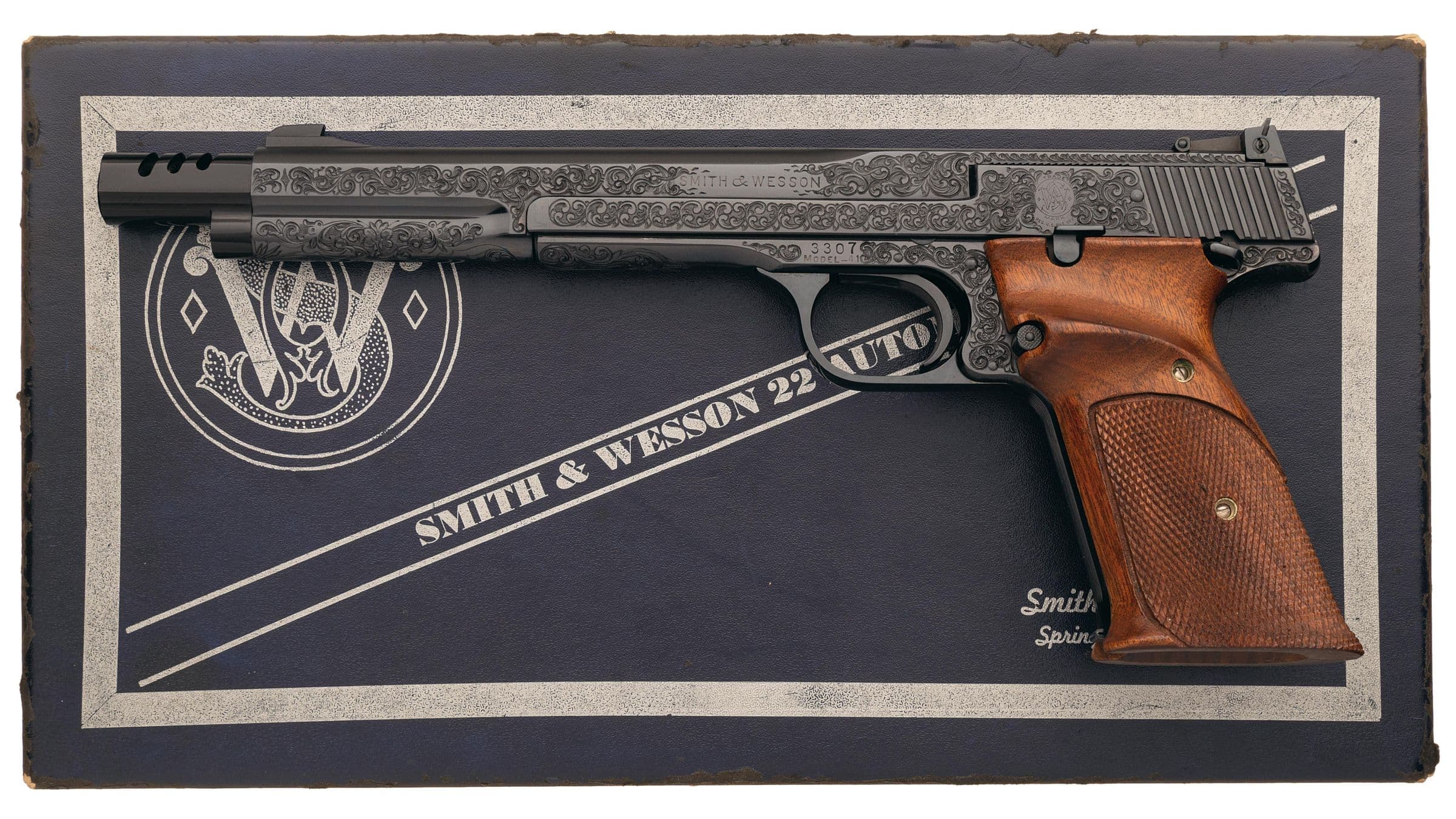
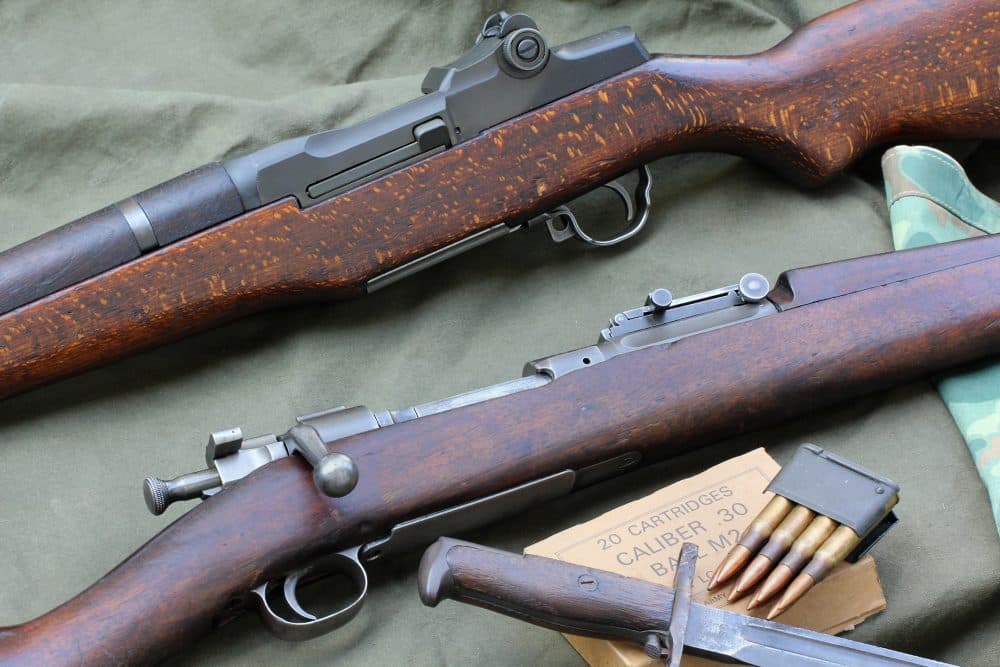
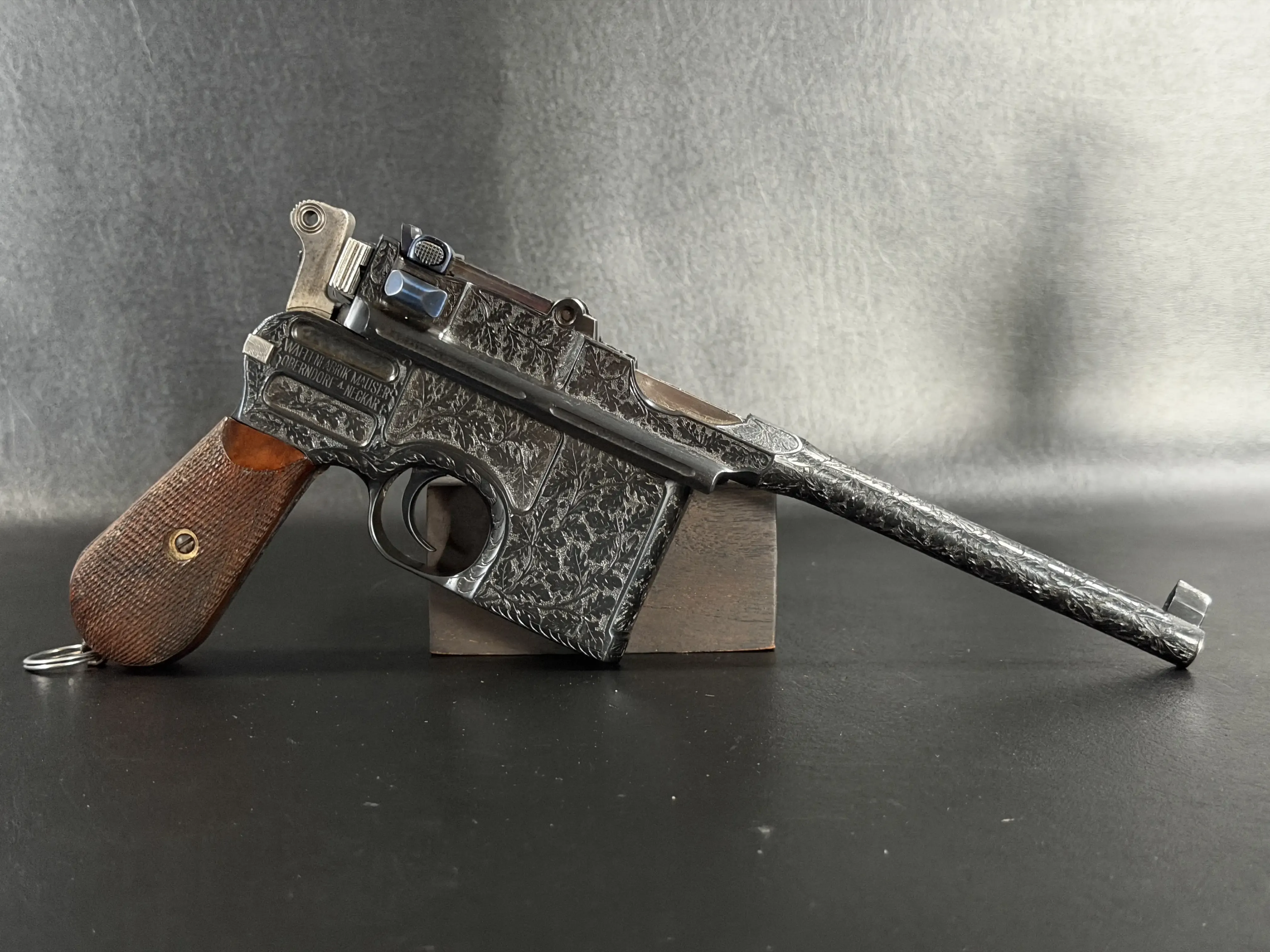
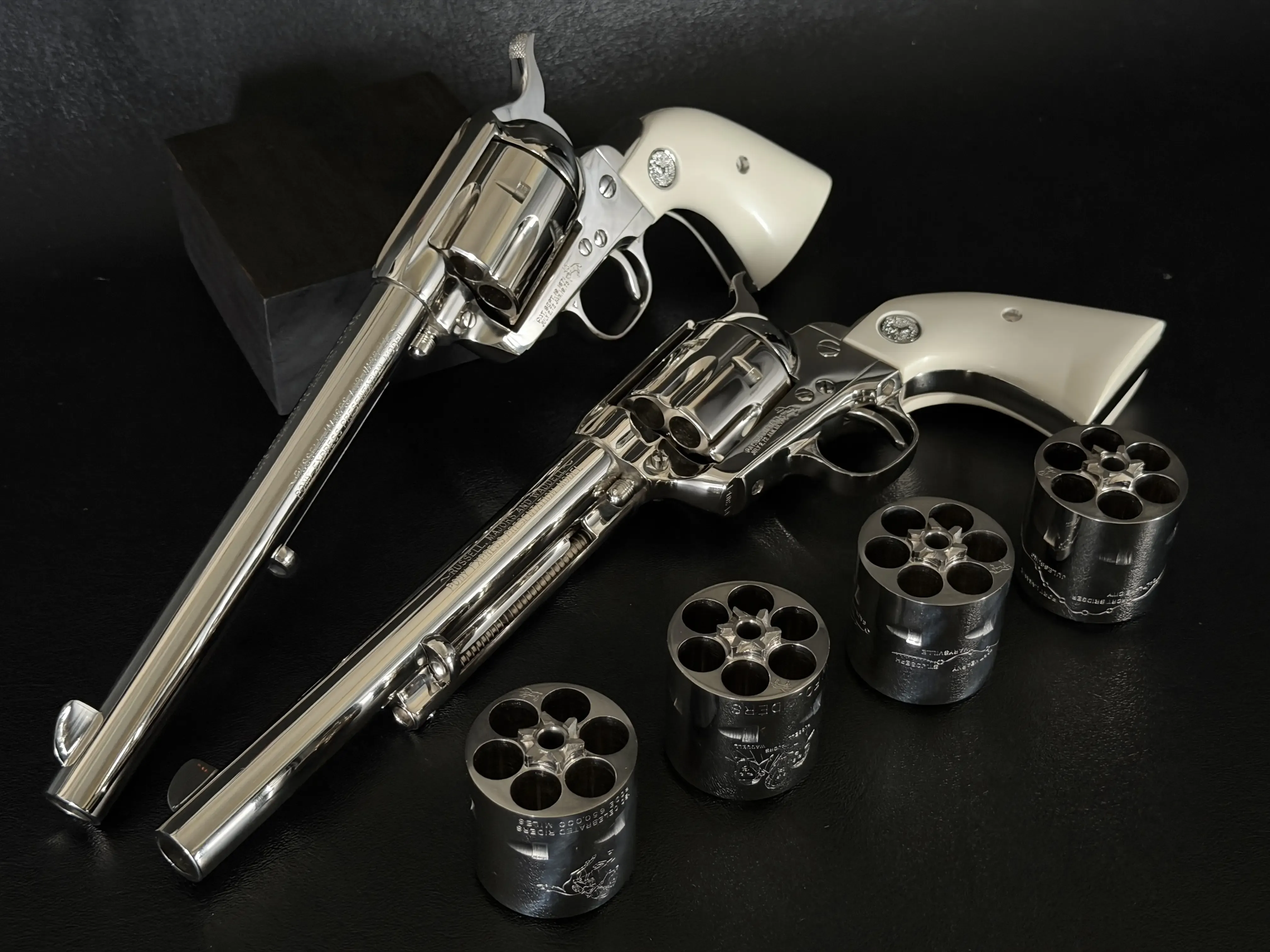
Consecutive serial numbers are immediately appealing. Two firearms marked 28401 and 28402 appear connected before their histories are known. For collectors, however, numerical sequence is only the beginning of the inquiry. The important questions are whether the firearms were originally associated, whether their configurations and condition remain correct, and whether surviving records establish that history.
Sequence Is Not Provenance
Two firearms are consecutively numbered when their serial numbers form an uninterrupted sequence. That fact alone does not prove they were completed together, shipped together, sold together, or retained by one owner.
Manufacturing records can reveal a stronger relationship. A factory letter may report a firearm’s original configuration, shipping date, destination, and recorded special features, although the available information varies by manufacturer and serial range. Colt states that its archive letters may confirm original specifications, delivery information, engraving, and other recorded features.[1] The Cody Firearms Records Office similarly provides information from surviving Winchester and other factory records, but cautions that record coverage and content are not uniform.[2]
Accordingly, a pair documented on the same shipment or order is materially different from two adjacent-numbered firearms assembled from separate sources. Both may be collectible, but only the first has documentary support for an original association.
Collectors should also distinguish “consecutive” from “matching.” Consecutive numbers concern two or more complete firearms. Matching numbers ordinarily concern the numbered components of a single firearm. A consecutively numbered pair can still contain replaced or incorrectly numbered parts, just as an individually matching firearm need not belong to a larger set.
The Pair Predates Modern Serial Numbering
Firearms were made and presented in pairs long before serial numbering became standard. Single-shot pistols were commonly housed together in fitted cases with loading and maintenance accessories. The Smithsonian records a flintlock dueling pistol as one of a cased pair presented to President Andrew Jackson.[3] The Metropolitan Museum of Art holds a cased pair of percussion pistols made in Paris by Louis-Julien Gastinne-Renette around 1850, complete with tools and accessories.[4]
These surviving sets demonstrate that the pair was historically treated as a complete object rather than merely as two interchangeable arms. In such cases, the case, accessories, inscriptions, and documented provenance can be as important as the pistols themselves.
Repeating firearms reduced the practical need for paired handguns, but the paired format remained useful for presentation, sporting, commemorative, and collector-grade arms. Serial sequence later supplied an additional means of identifying the component firearms.
What Creates Collectible Significance
Consecutive numbering becomes meaningful when it reinforces evidence that the firearms belong together. The strongest sets ordinarily combine several attributes:
- Factory or archival documentation showing a shared order, shipment, destination, or special notation.
- Consistent model, caliber, barrel length, finish, engraving, grips or stocks, and other specifications, unless a mixed configuration is documented as original.
- Comparable condition and evidence of similar use and storage.
- Correct numbered components or assembly markings where the manufacturer employed them.
- An original case, accessories, boxes, labels, or paperwork associated with the set.
- A documented chain of ownership connecting both firearms.
No single attribute substitutes for the others. Adjacent serial numbers cannot authenticate an undocumented presentation, and a fitted case does not prove two firearms were originally cased together. Likewise, a factory letter describes surviving record entries; it does not by itself establish the present originality or condition of every component.
Physical examination therefore remains essential. Inspectors should compare markings, finishes, wear patterns, grips, internal numbers, mechanical condition, and signs of refinishing or parts replacement. Each firearm should first be evaluated on its own merits and then as part of the proposed set.
Rarity Requires Evidence
It is tempting to call any old consecutive pair rare. That conclusion is not automatic.
Factories applied serial numbers in sequence, so adjacent numbers were created routinely. What may be unusual is the continued survival of two or more adjacent-numbered firearms as an intact and properly documented group. The degree of rarity depends on the model, production history, original distribution, surviving population, and quality of the documentation.
A production total for a model does not establish how many consecutive sets were made, and an auction catalog’s assertion that a pair is rare should not be treated as a census unless the underlying research is identified. Reliable rarity claims require factory records, a recognized scholarly survey, or another source capable of defining the population under discussion.
What Auction Results Can, and Cannot, Show
Published auction results confirm that collectors sometimes pay substantial sums for consecutive sets. In 2020, Rock Island Auction Company reported that a consecutively numbered pair of Colt Bisley Flattop Target revolvers realized $16,100.[5] In May 2024, the same auction house reported a realized price of $528,750 for a trio of engraved Purdey shotguns with an accompanying three-barrel set.[6]
These results document specific transactions, not a standard premium for consecutive numbering. The prices also reflected the firearms’ makers, configurations, embellishment, condition, rarity, and presentation as complete groups. Without comparable sales of substantially identical individual firearms, the portion attributable solely to serial sequence cannot be isolated.
There is therefore no defensible universal percentage premium. In some cases, documentation and sequence transform separate firearms into a historically coherent set. In others, particularly recent production arms deliberately ordered with adjacent numbers, the sequence may add primarily personal or presentation value.
A Disciplined Buying Standard
Before purchasing a consecutive set, obtain the best available factory records and confirm exactly what those records establish. Compare every recorded specification with the firearms themselves. Examine each arm independently, including its bore, mechanics, finish, markings, furniture, and numbered components. Treat undocumented ownership stories and dealer assurances as unproven until supported by contemporary records.
The case and accompanying material deserve the same scrutiny. Determine whether they are factory supplied, period replacements, or later additions. Preserve original letters, invoices, boxes, labels, photographs, and prior sales records because documentation separated from the firearms may be impossible to reconstruct.
Most importantly, value the set from the evidence outward. Consecutive numbers are compelling because they can help connect objects that history has kept together. They are not, by themselves, proof that the connection ever existed.
Frequently Asked Questions
What are consecutively numbered firearms?
They are two or more complete firearms whose serial numbers form an uninterrupted sequence.
Do consecutive serial numbers prove that firearms left the factory together?
No. Shared factory shipment or order records are needed to establish an original association.
What documentation should a collector request?
Seek available factory letters, shipping records, invoices, original boxes, and documented ownership records.
Do consecutive serial numbers always increase value?
No. Any premium depends on documentation, originality, condition, rarity, configuration, and buyer demand.
How should a consecutive set be evaluated?
Examine each firearm independently before assessing the group as a set. Confirm recorded specifications, numbered components, condition, and provenance.
Sources
- Colt’s Manufacturing Company, “Archive Services”
- Buffalo Bill Center of the West, Cody Firearms Records Office, “Winchester Factory Records”
- Smithsonian National Museum of American History, “Andrew Jackson Dueling Pistol”
- The Metropolitan Museum of Art, “Cased Pair of Percussion Pistols,” Louis-Julien Gastinne-Renette
- Rock Island Auction Company, “The Largest Sporting & Collector Auction Ever Realizes $11.1 Million,” February 20, 2020
- Rock Island Auction Company, “May Premier Realizes $25.7 Million,” May 21, 2024
As a firearms enthusiast with a background in website design, SEO, and information technology, I bring a unique blend of technical expertise and passion for firearms to the articles I write. With experience in computer networking and online marketing, I focus on delivering insightful content that helps fellow enthusiasts and collectors navigate the world of firearms.
Comments
Be the first to leave a comment.
Be the first to read new editorial features, collector guides, and brand spotlights.