Before Janz built revolvers under its own name, it built parts for someone else's. Through much of the 1990s, the precision-mechanics workshop in Malente, a small town in Schleswig-Holstein, manufactured components for Korth-Ratzeburg, then one of Germany's established revolver makers. German law restricted the manufacture of weapon parts to licensed gunsmiths, and the workshop's owner, Uwe Janz, held a master craftsman's qualification in fine mechanics rather than in gunsmithing. When Korth's finances came under strain and the arrangement grew unstable, Janz sat the master gunsmith's examination himself, adding it to his existing credentials so the company could keep working with weapons on its own terms.
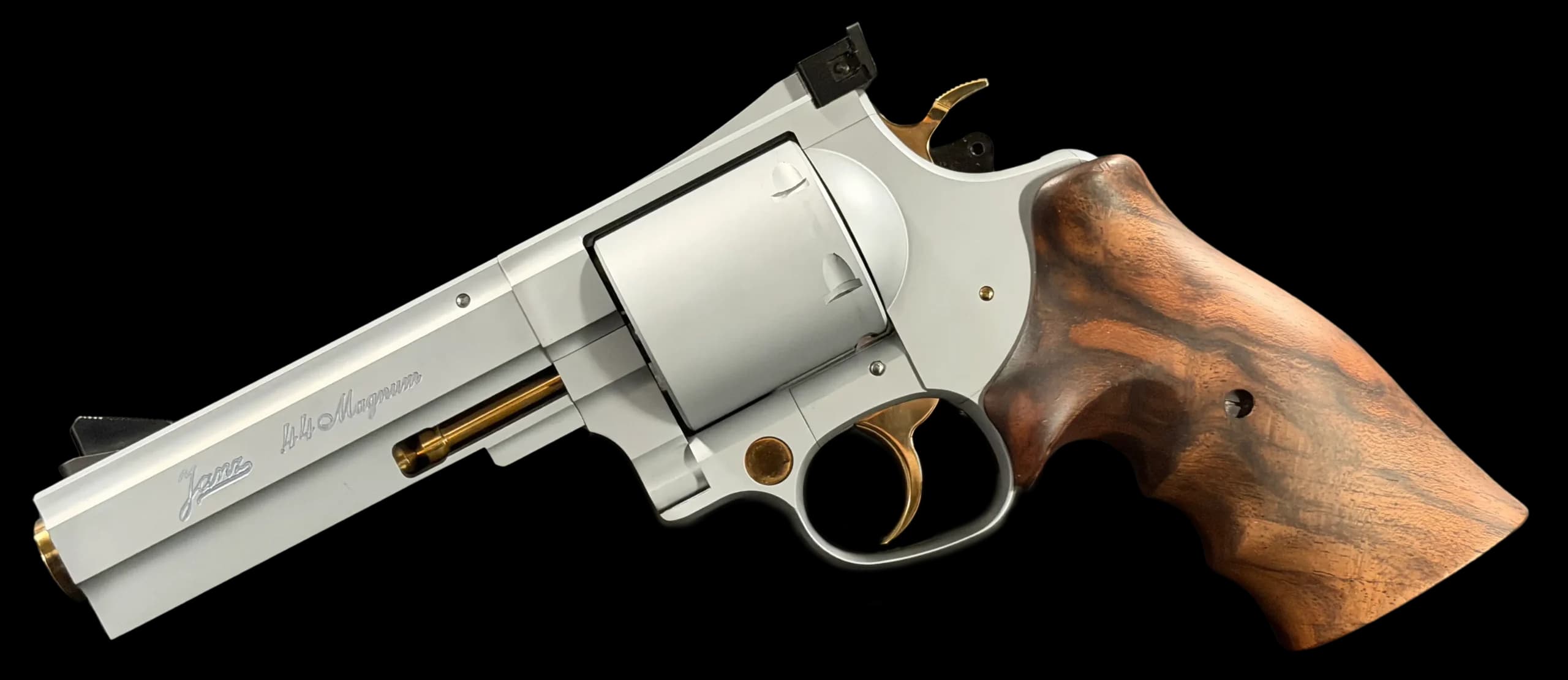
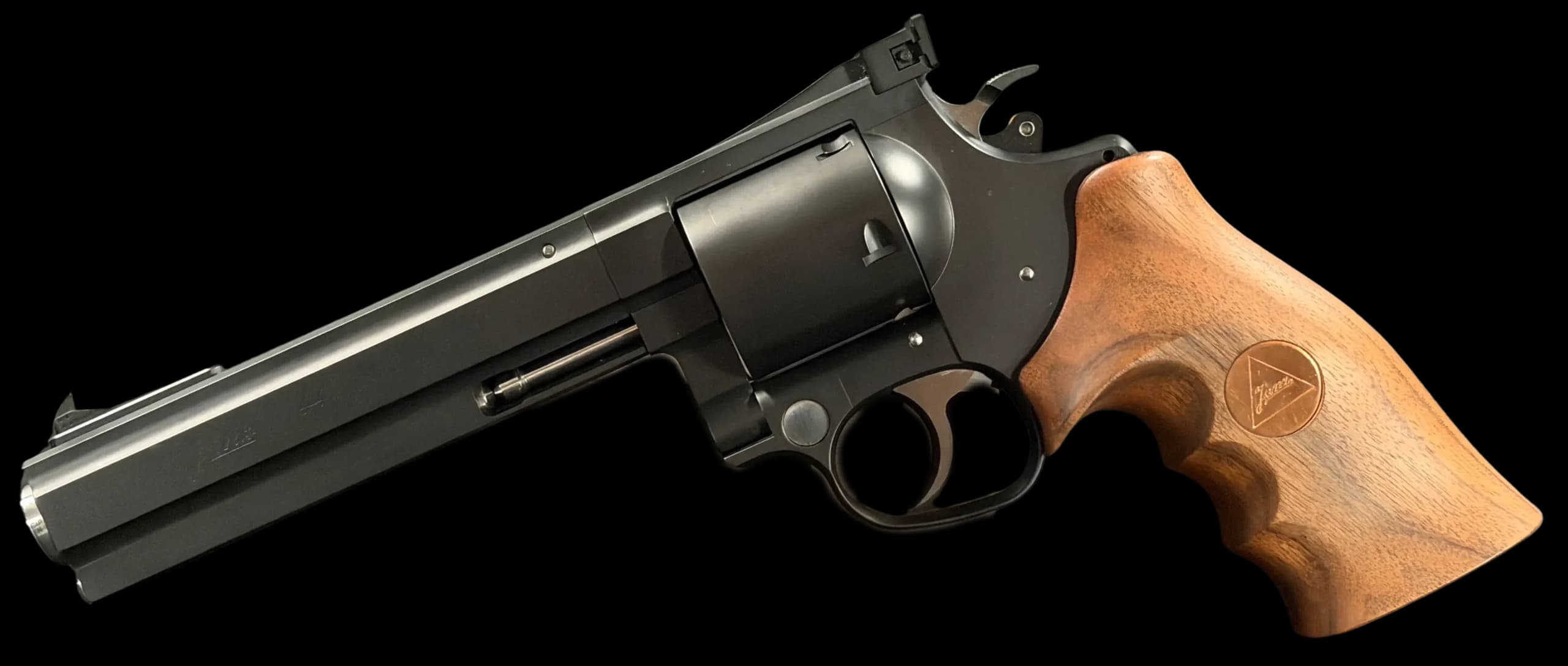
The decision to build a complete revolver, rather than continue supplying parts for someone else's, came in 1997. The specification was closer to a correction than an invention: keep the trigger mechanism developed by Korth's founder, Willi Korth, since it worked, but move to a grip frame closer to Smith & Wesson's N and L patterns, push the standard caliber up to .44 Magnum from Korth's more modest chamberings, and finish every part to the tolerances the parts-supply work had already demanded. Production was capped at roughly 100 units per year from the outset, priced in line with Korth's own guns. The first Janz-branded revolver, built on what the company calls its EM frame, entered series production in 1998.
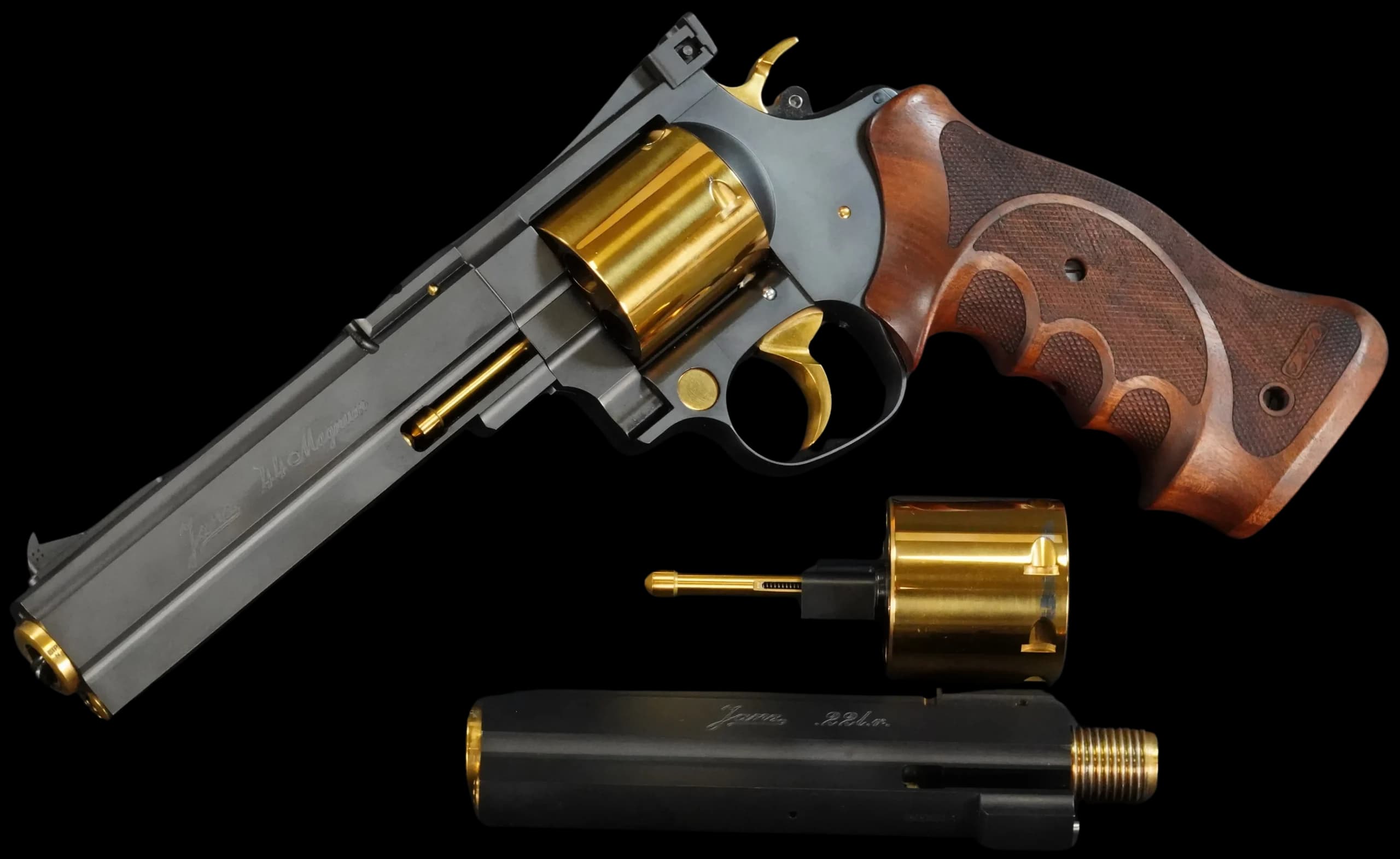
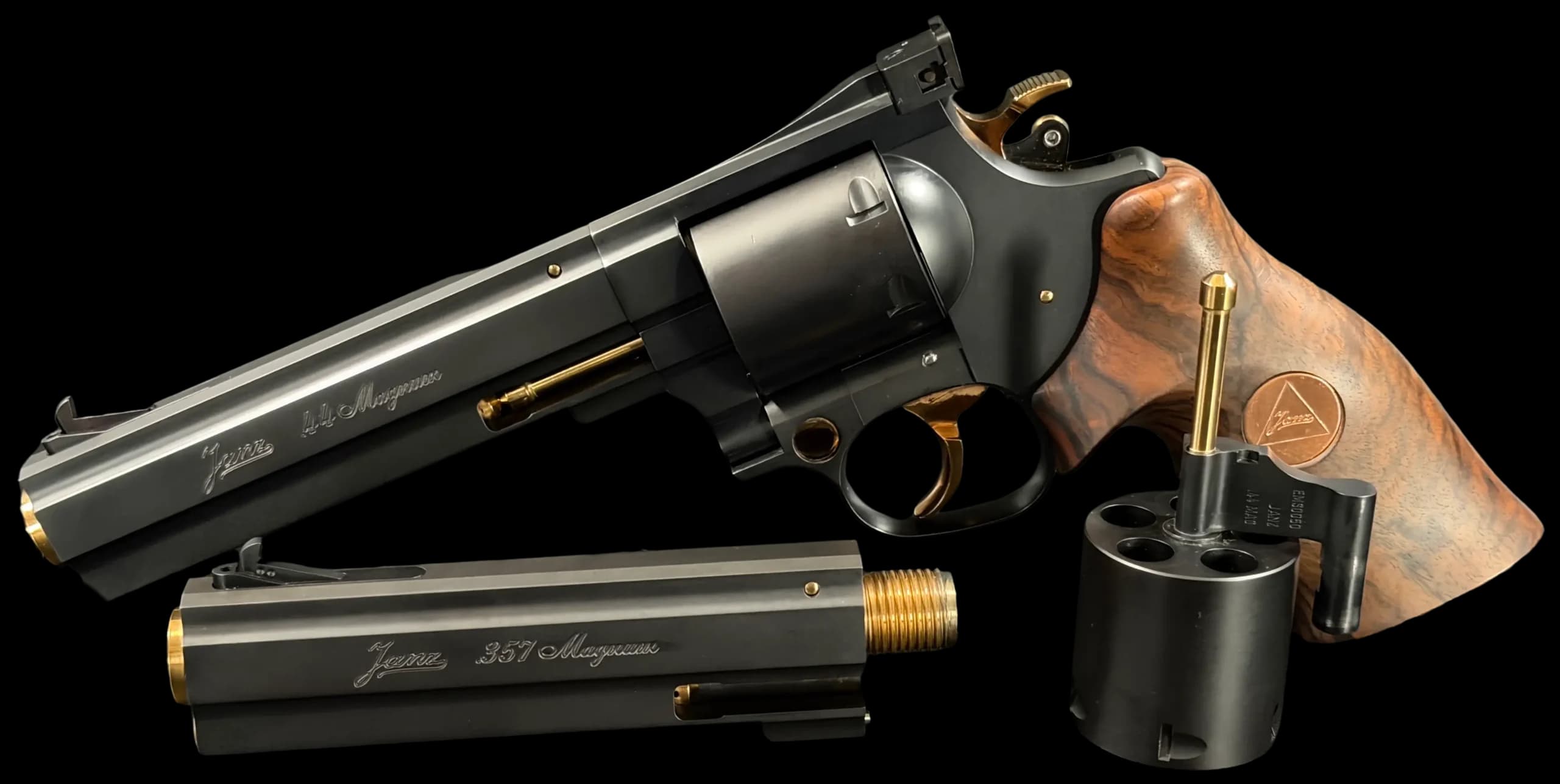
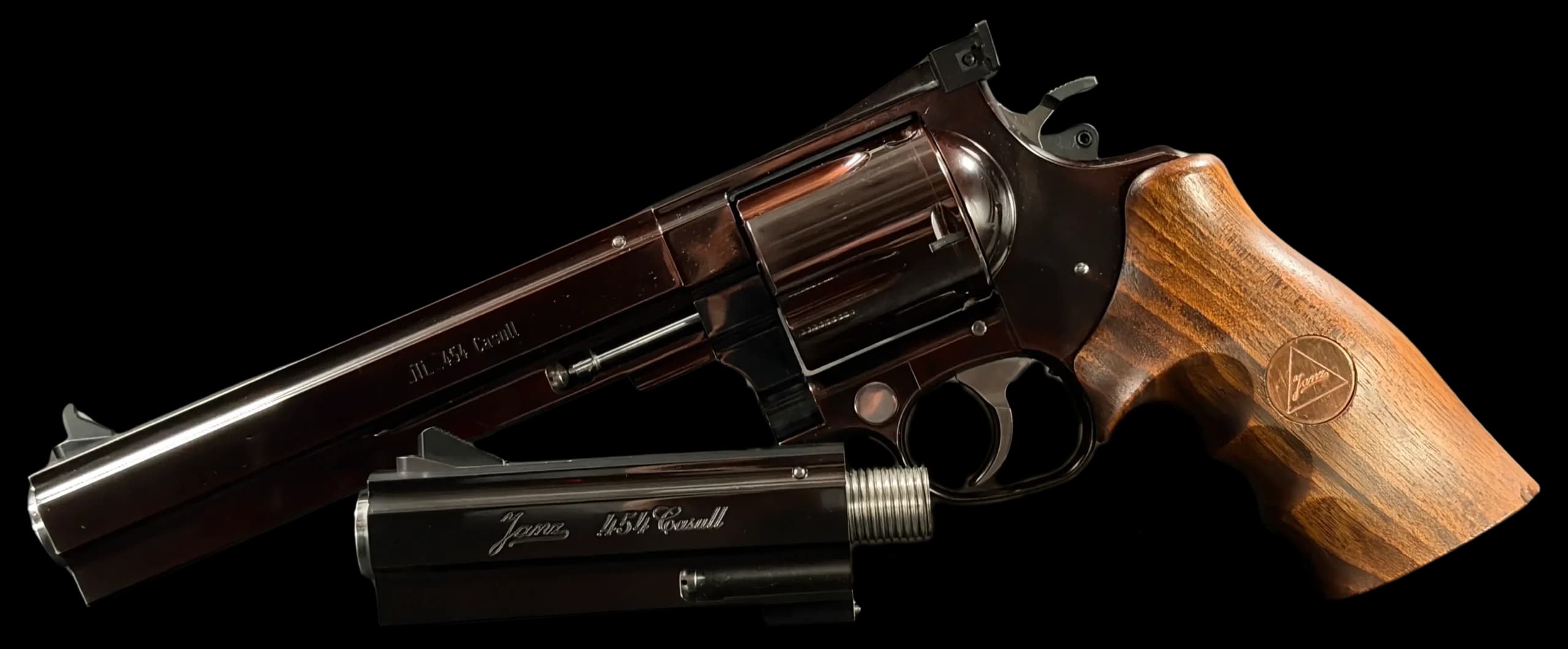
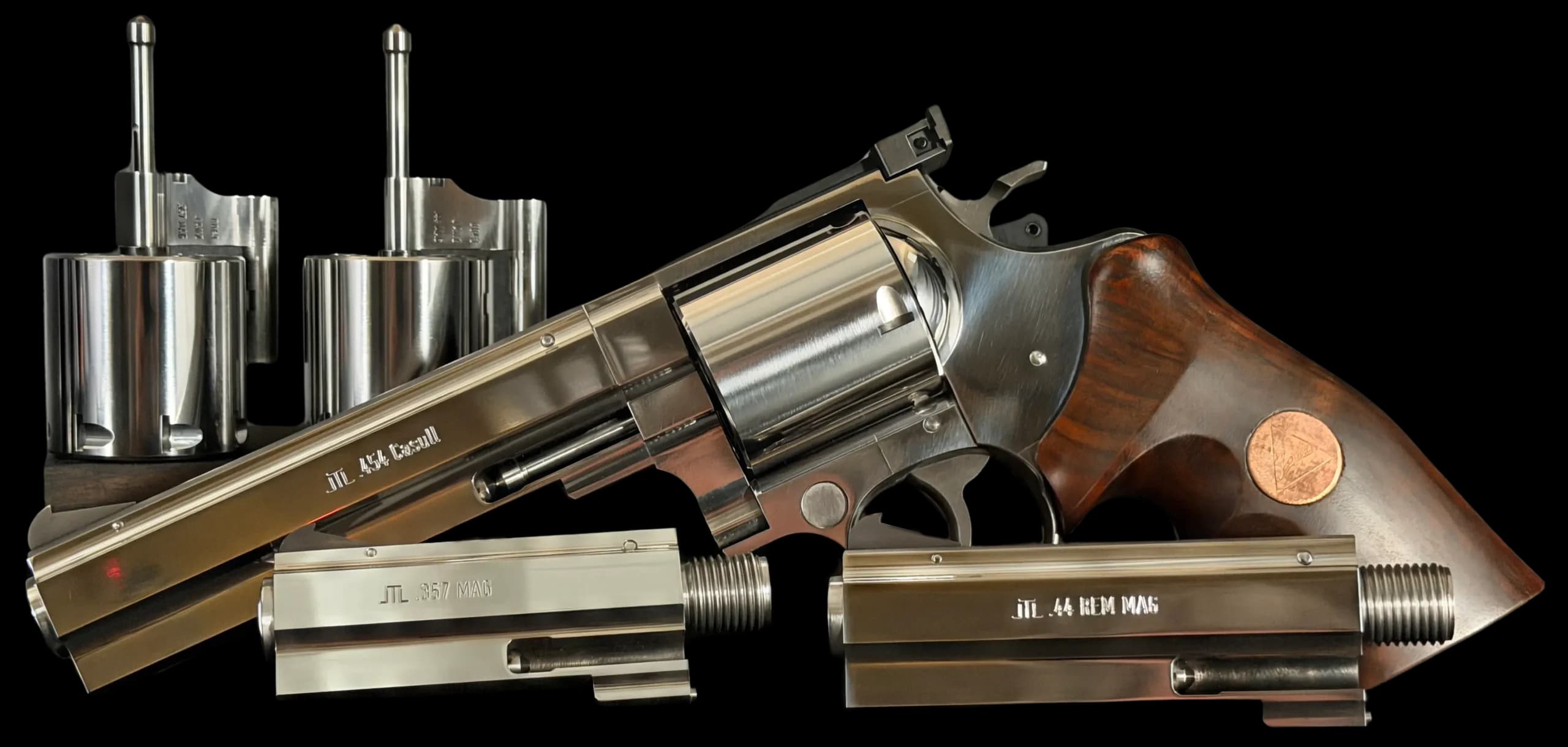
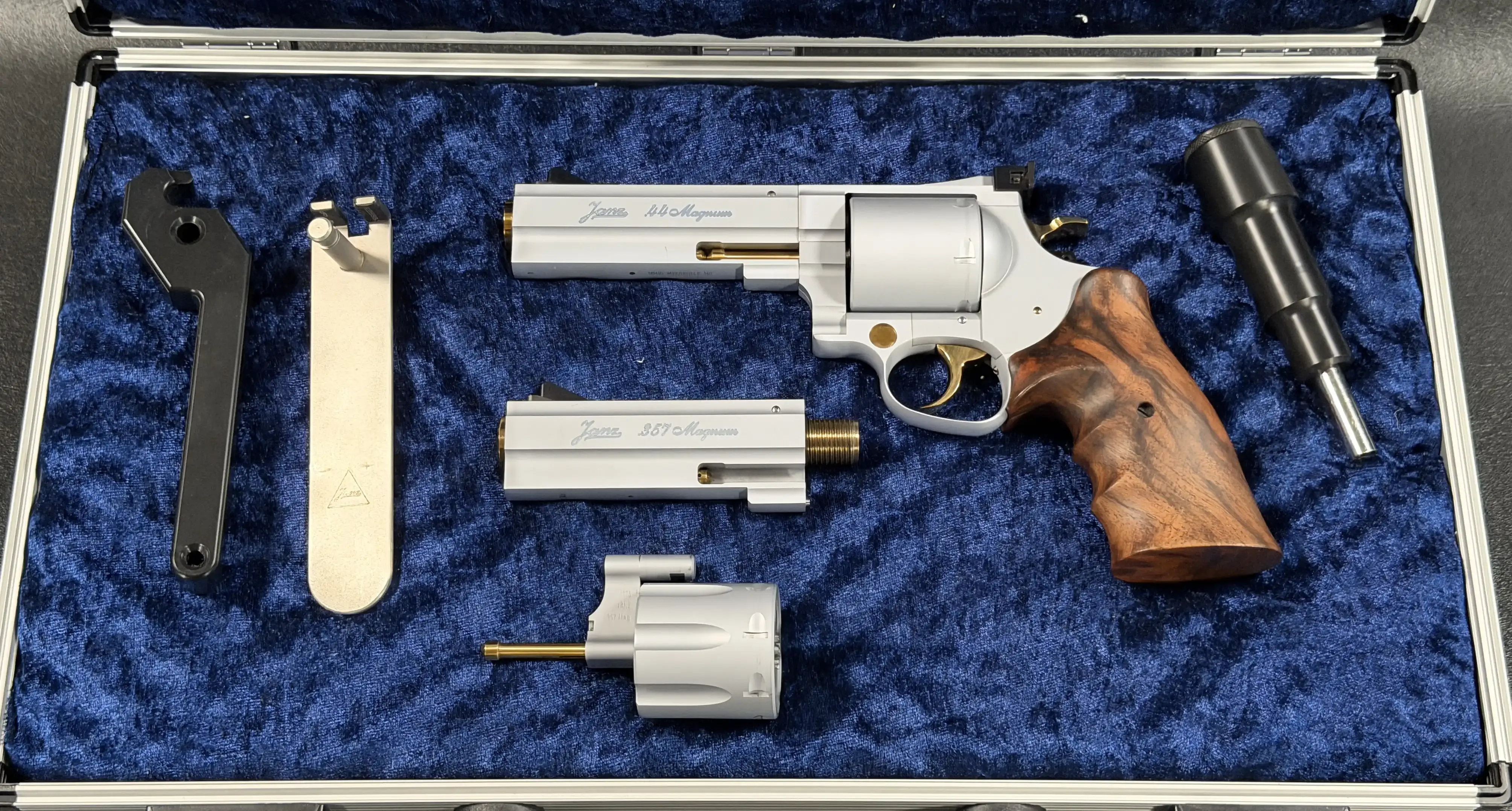
What distinguishes Janz within that narrow field of German boutique revolver makers is a mechanical detail rather than a marketing one. By 2000, the company had developed a quick-change barrel-and-cylinder system, sold as the EM-S and E-S frames, that lets an owner swap between calibers from .22 LR to .454 Casull without sending the gun back to a gunsmith. It is a feature no other revolver manufacturer offers in the same form, and it turned what could have been a single-caliber curiosity into a genuinely modular platform. A third frame, the MA, was added for the largest magnum chamberings, .460 and .500 S&W, offered as fixed-caliber guns only.
In 2018, after five years of development, Janz stepped outside revolvers for the first time with the Janz-Schuknecht Pistole, a 9mm Parabellum semi-automatic. Where most striker-fired pistols in that caliber use a tilting barrel to lock the action, the Schuknecht uses a roller-locking piece, an unusual choice for a small manufacturer and one that reads more like an engineering exercise than a straightforward product launch. It appeared at the IWA and SHOT Show that year, drawing attention from a firearms press more accustomed to writing about the company's revolvers.
Janz revolvers reached the American market unevenly. Rocky Mountain Armory of Silverthorne, Colorado, handled a brief import run in 2003 and 2004; Brenzovich of Fort Hancock, Texas, picked it up again from 2007 to 2009. Since 2015, Janz Revolver USA in Fort Worth has handled US distribution, and the wait for a new gun still runs close to a year. The revolver line is one part of a larger precision-engineering business, Janz-Präzisionstechnik, whose roots trace to a fine-mechanics workshop Hugo Janz opened in Kiel in 1935 and whose main work has long been laboratory equipment for dairy-industry analysis.
That dual identity, gunmaker and lab-equipment manufacturer under one roof, is unusual among revolver houses and helps explain how the company sustained the low-volume, labor-heavy economics of the gun side for close to three decades. German trade coverage of the guns has been periodic rather than constant, including feature articles in Das Deutsche Waffen-Journal in 2001 and again in 2009.
For a serious collector, the appeal sits less in rarity for its own sake and more in what the company chose not to do: it never scaled up, never pursued a police or military contract, and never moved production out of Malente. A Janz revolver bought today is still, mechanically, an argument the company started making in 1997.
History & Milestones
Precision workshop opens in Kiel
Hugo Janz founds a fine-mechanics workshop, the root of what becomes Janz-Präzisionstechnik GmbH.
Janz begins supplying parts to Korth
The company has manufactured revolver components for Korth-Ratzeburg for several years, gaining direct experience with high-end revolver mechanics.
Decision made to build an own-brand revolver
After a disruption tied to Korth's financial troubles, owner Uwe Janz specified a revolver built on Korth's trigger mechanism in a larger caliber.
First Janz revolver enters production
The EM frame, chambered up to .44 Magnum, becomes the company's first series-production firearm sold under its own name.
Quick-change caliber system introduced
The EM-S and E-S frames let owners swap barrels and cylinders to change calibers without gunsmithing, a feature unique to Janz among revolver makers.
First documented US import
Rocky Mountain Armory of Silverthorne, Colorado, begins importing Janz revolvers to the American market.
Janz Revolver USA established
US distribution resumes under Janz Revolver USA in Fort Worth, Texas, and continues to the present.
Janz-Schuknecht Pistole introduced
After five years of development, Janz shows its first semi-automatic pistol, a roller-locked 9mm design, at IWA and SHOT Show.
Alpha 9mm pistol added to the catalog
A second semi-automatic model joins the Janz lineup; its exact relationship to the 2018 Schuknecht design is unconfirmed.