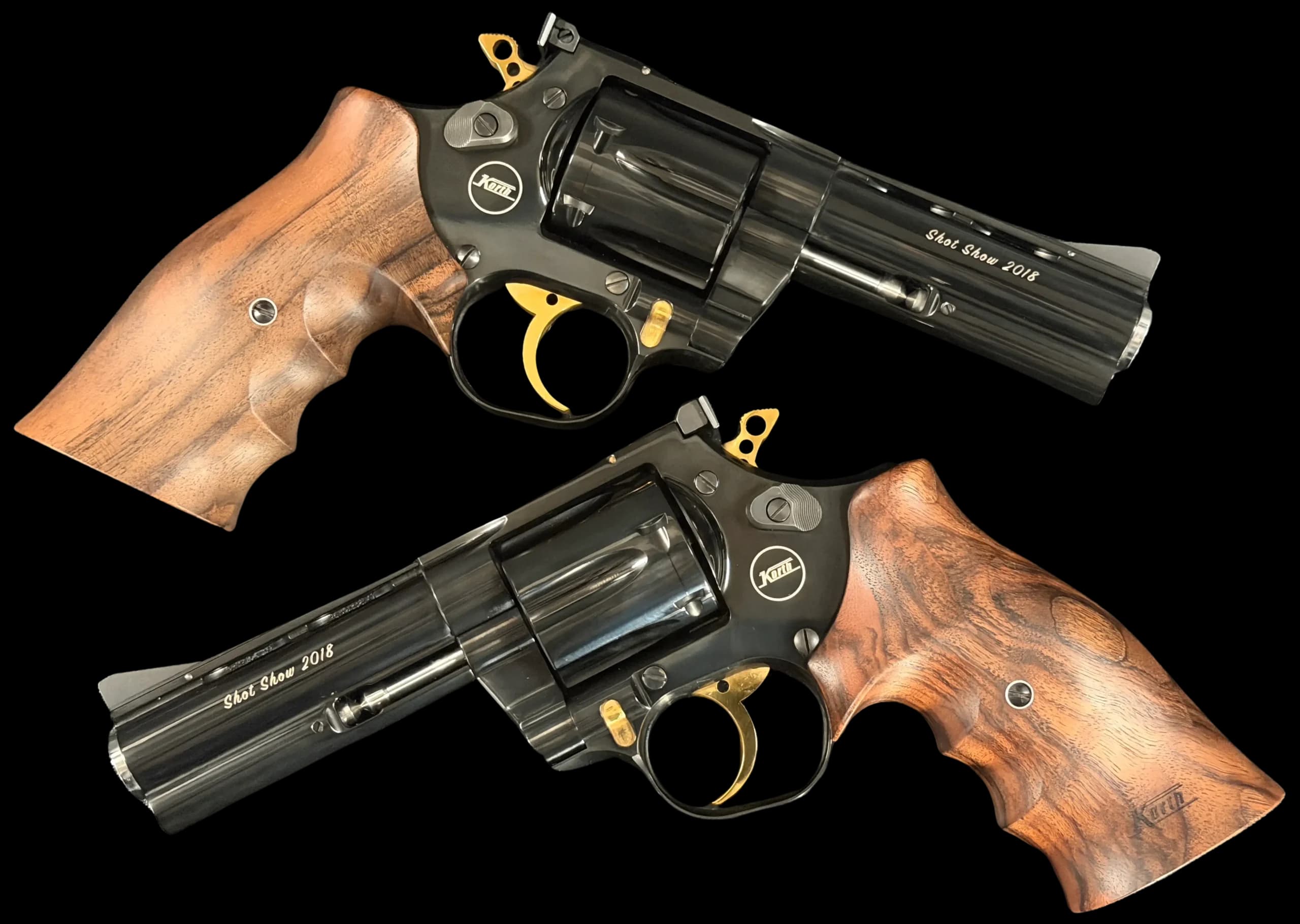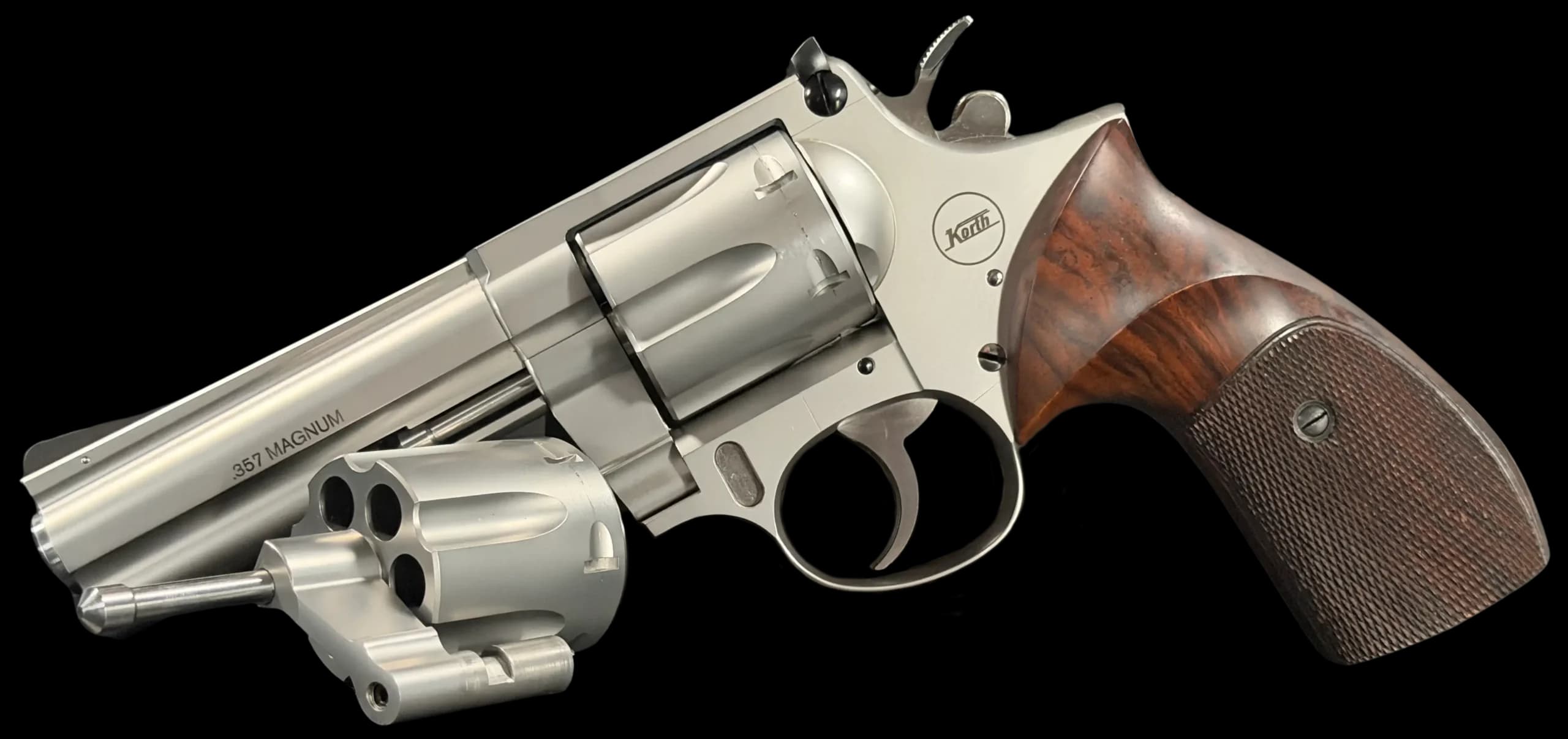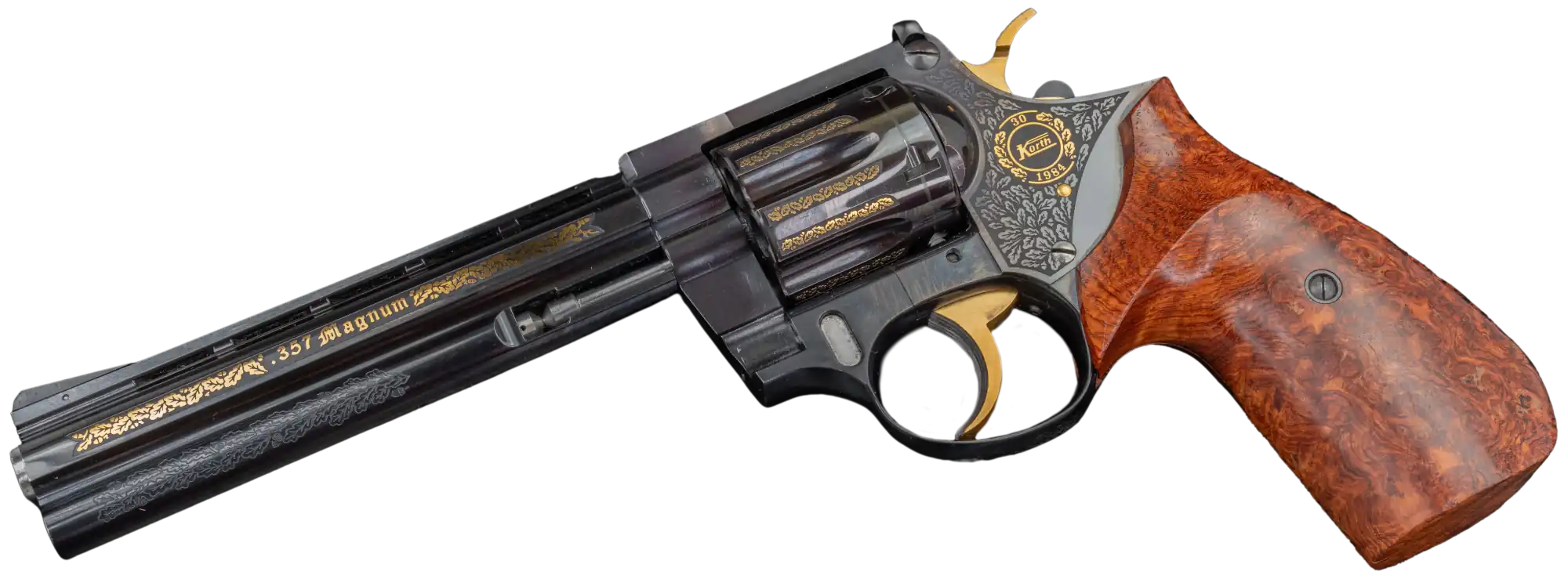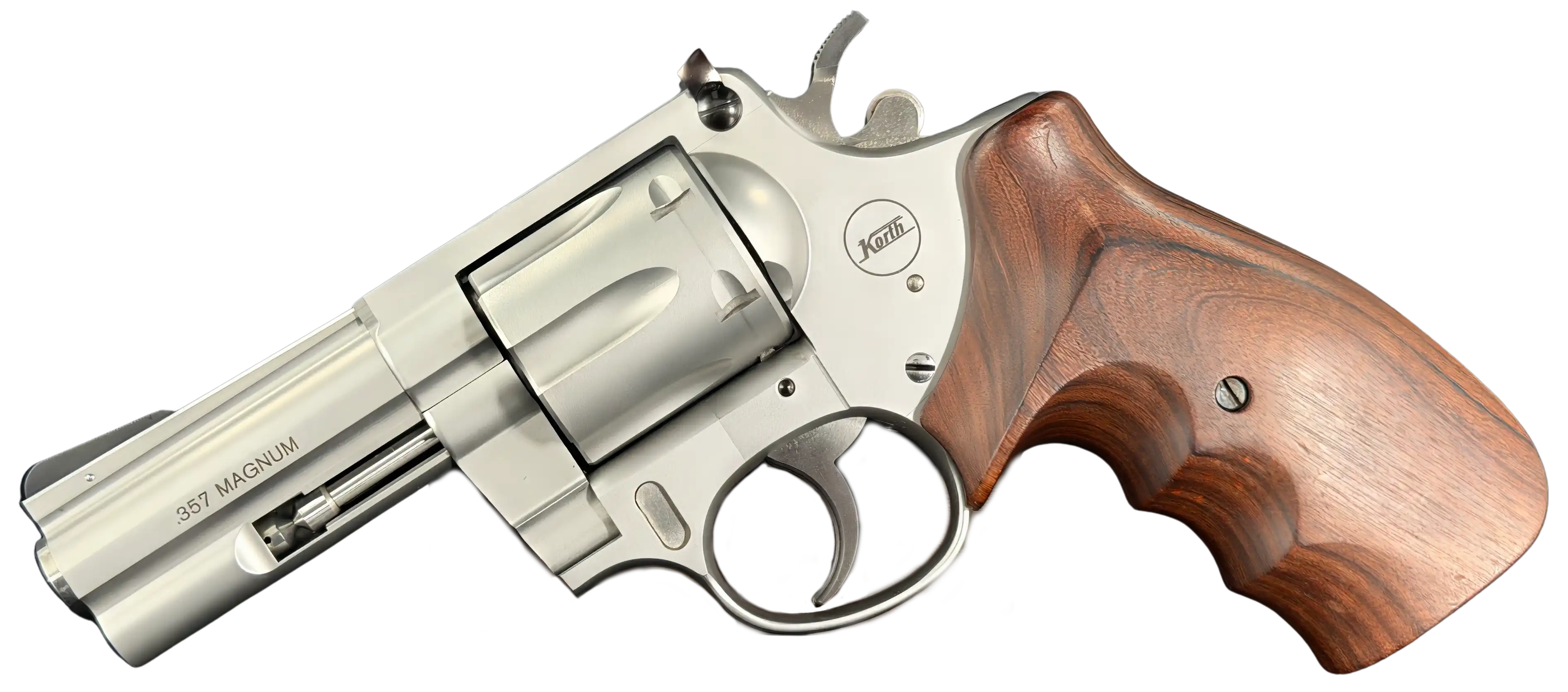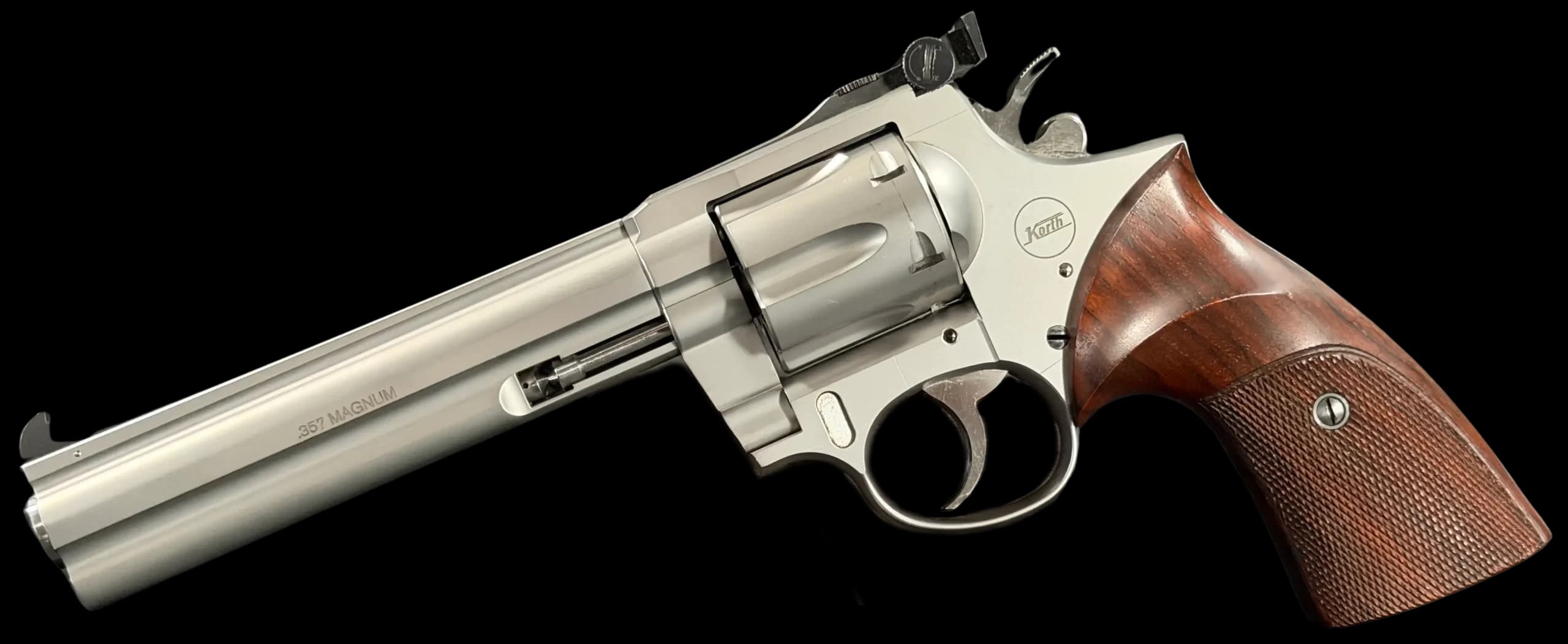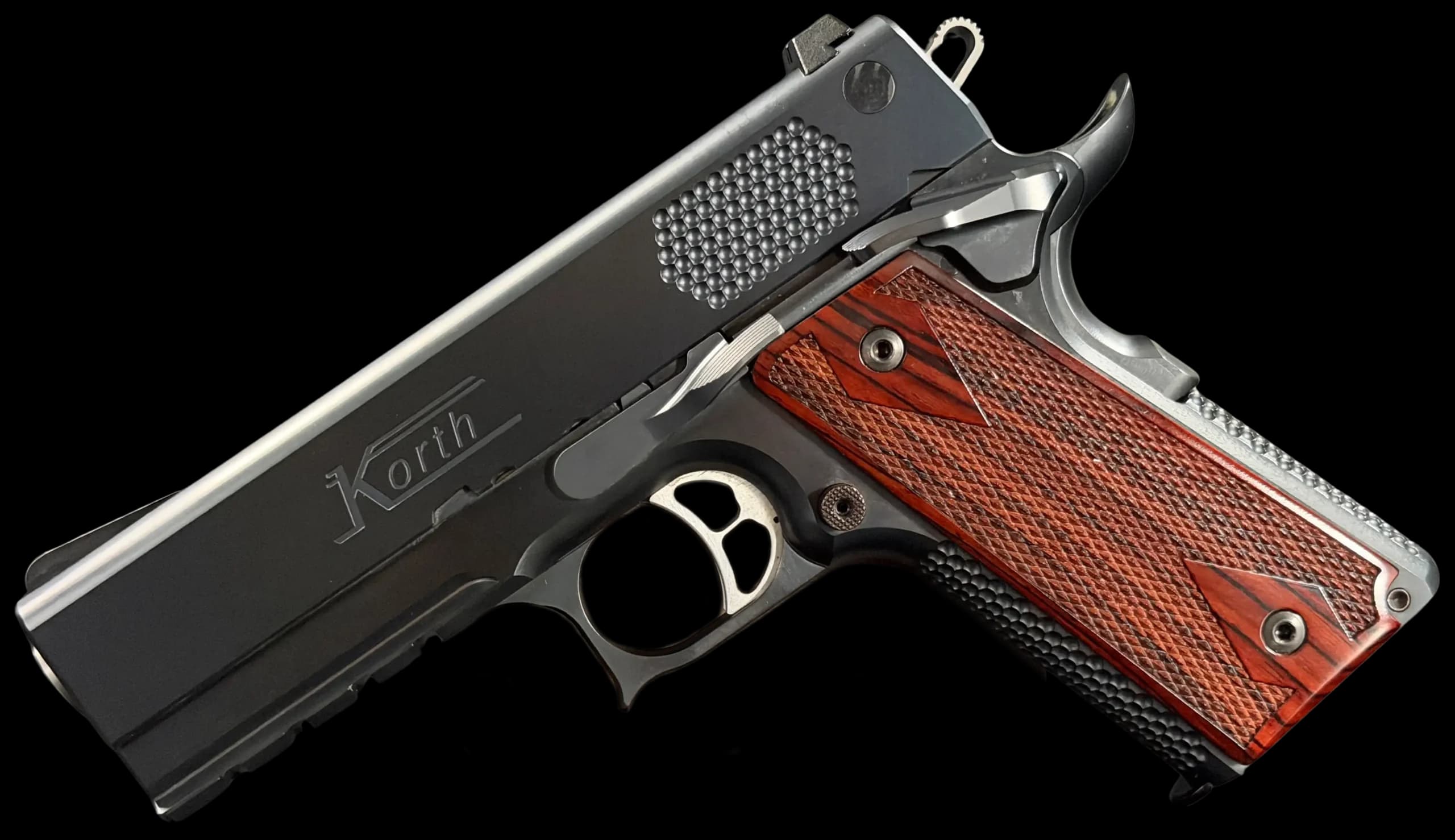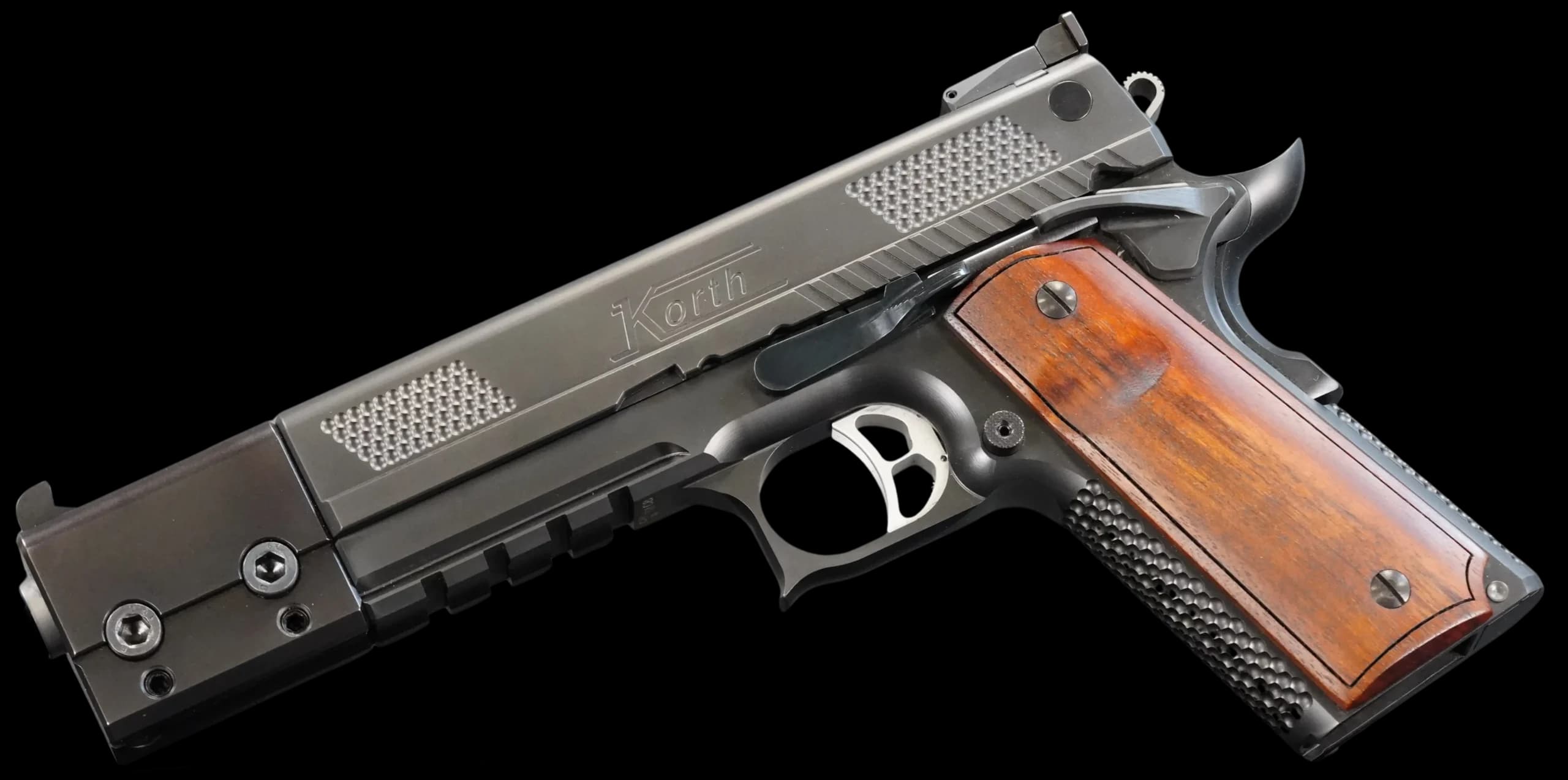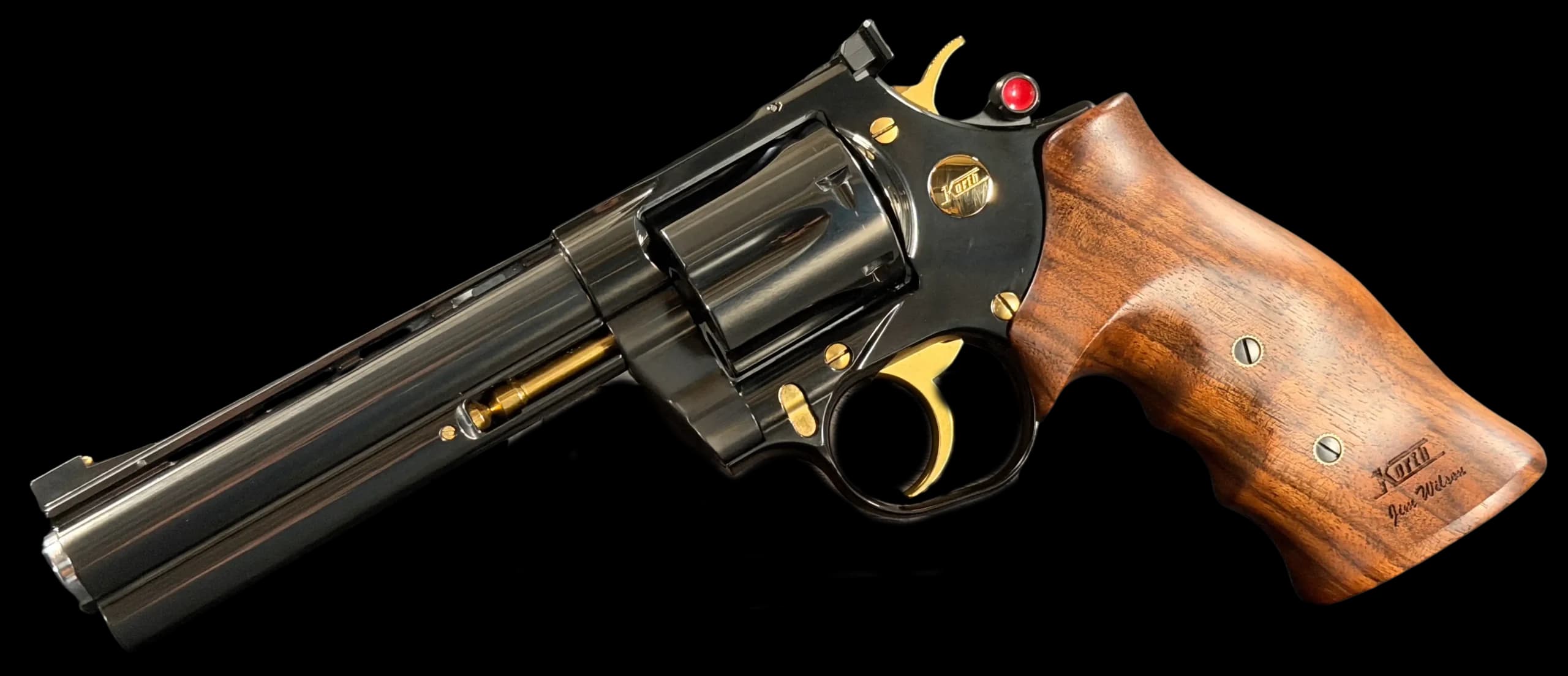
Willi Korth started building revolvers under conditions most manufacturers never have to think about. In the years after the Second World War, Allied occupation rules restricted what German civilians could legally manufacture, including firearms, and a trained railway machinist with an interest in precision mechanics had to work within a licensing system that capped what he could build and the caliber he could use. Korth began in a small workshop making blank-firing and gas-alarm revolvers, the kind of thing his license allowed, and by the mid-1950s, he had formalized the operation as a gunmaking concern based in Ratzeburg, in northern Germany.
The restrictions eased through the early 1960s, and Korth used the opening to design an actual cartridge revolver. His first, built in 1962, was chambered in .32 S&W Long, the highest caliber his license permitted at the time. Two years later, he moved into series production with a .38 Special model built for the police and self-defense market, the first Korth revolver to carry a proper serial run rather than a one-off build number. The mechanical signature that would define the brand was already visible: a crane assembly and cylinder release unlike anything Smith & Wesson or Colt were doing, chambers peened and polished to a glassy finish, and a general refusal to accept "good enough" from a part just because a customer wouldn't see it.
The 1966 Sport and 1973 Combat models built on that foundation and gave Korth its commercial identity. The Combat, in particular, compact, fixed-sighted, and eventually offered with a cylinder that could be swapped between .357 Magnum, .38 Special, and 9mm Parabellum once properly timed to the gun, became the model most associated with the marque, occupying roughly the market position Colt's Python held in the United States.
By the early 1980s, Willi Korth had sold the company to Count Nikolas von Bernstorff and stepped back from daily management, though he stayed on briefly as production manager. Under Bernstorff's ownership, Korth also began work on a semi-automatic pistol, at one point intended for consideration in German police and military trials, but the design was never finished in time for submission, and the pistol was never adopted by any service. The company filed for bankruptcy in 1999 and was broken up, ending 45 years of continuous production in Ratzeburg.
The Luxembourg gun house, Armurerie Freylinger & Cie, bought the Korth name and remaining assets in April 2000 and kept a small crew of the original Ratzeburg gunmakers producing revolvers, briefly extending into the American market through a subsidiary in 2001. The arrangement did not last. Korth announced the closure of its factory in November 2008, and for a few months, the name went dormant. In April 2009, Andreas Weber and Martin Rothmann revived the trademark under a new company, PTW Korth Technologies GmbH, and moved production to Lollar, near Giessen, where a small team of about 25 people continues to hand-build the revolvers today.
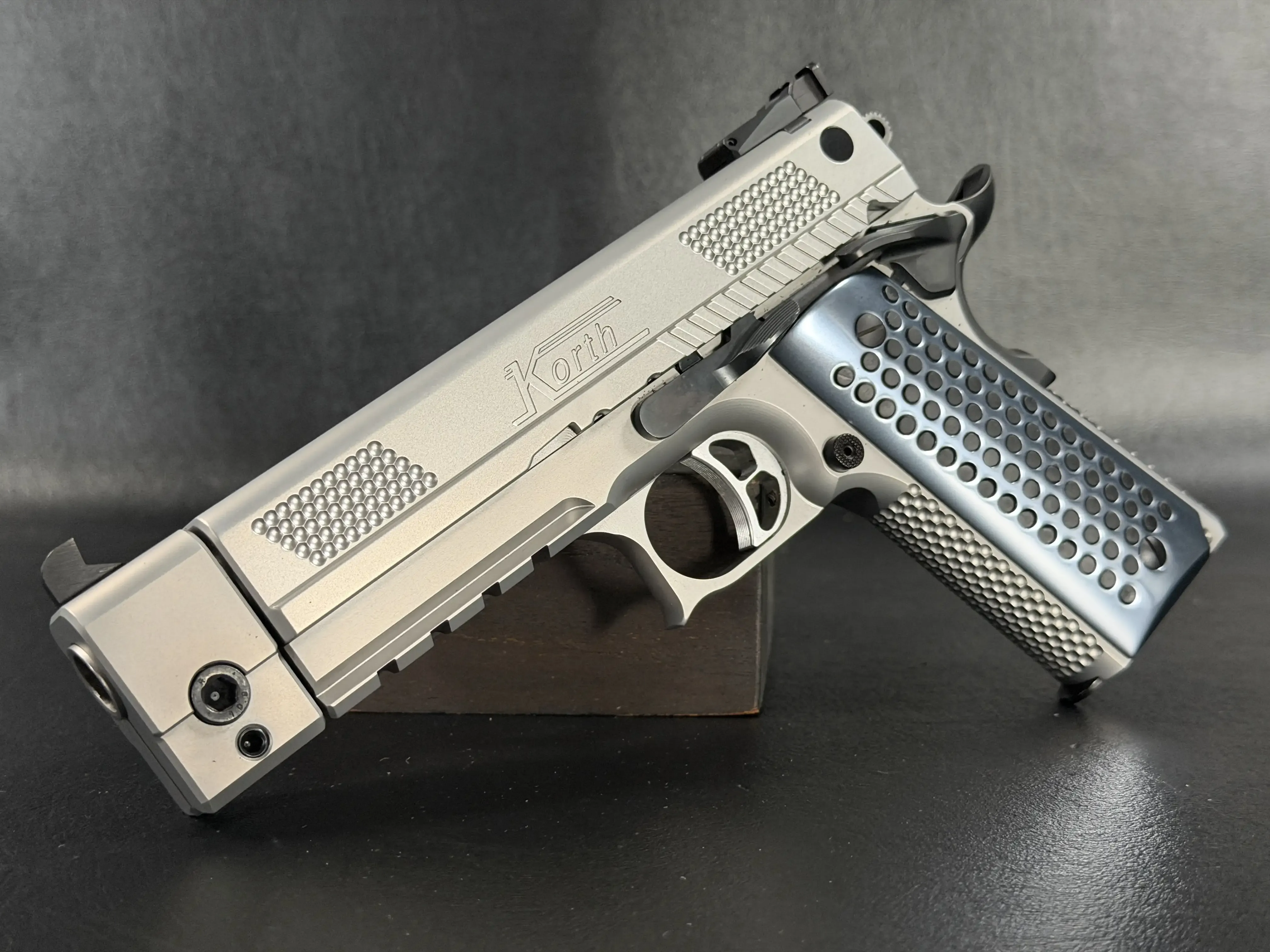
The modern era has been about extending the platform rather than reinventing it. In 2015, Korth introduced the PRS, a semi-automatic pistol pairing a 1911-style frame with a fixed barrel, roller-delayed blowback slide, a mechanism closer to the HK G3/MP5 family than to the tilting-barrel designs used by nearly every other premium 1911-format pistol. It is a different animal from Willi Korth's unfinished 1980s pistol project, but it answers the same question he was asking: what does a semi-automatic look like when Korth's revolver standards are applied to it?
In 2016, Nighthawk Custom of Berryville, Arkansas, a well-regarded 1911 house in its own right, became Korth's exclusive US distributor, which gave American collectors their first sustained, broad access to the brand after decades of small, irregular importer runs. For a serious collector, that history means two distinct eras worth knowing: pre-1999 Ratzeburg guns, valued for their direct line back to Willi Korth's own shop, and the Lollar-era production, which carries the name forward under Rothmann with the same insistence on hand fitting.
History & Milestones
Willi Korth begins building gas revolvers
A former railway engineer starts making blank-firing and alarm revolvers in a small workshop, working within postwar limits on German civilian arms manufacture.
First cartridge revolver designed and built
Korth builds his first lethal, cartridge-firing revolver, chambered in .32 S&W Long, the maximum caliber his manufacturing license allowed at the time.
Series production begins with a police-market model
A .38 Special revolver aimed at police and self-defense buyers becomes Korth's first series-produced cartridge revolver, opening the 20xxx serial range.
Sport model introduced for competition shooters
A target-oriented variant with adjustable sights broadens the lineup into rimfire and magnum chamberings.
Combat model becomes the brand's signature revolver
The fixed-sight Combat, with its distinctive top-strap cylinder release and 9mm-convertible cylinder, becomes the model most associated with Korth.
Willi Korth sells the company to Bernstorff
Korth steps back from daily management and transfers ownership to Count Nikolas von Bernstorff, remaining briefly as production manager.
Company files for bankruptcy
Under Bernstorff's ownership, Korth is broken up in bankruptcy proceedings, ending 45 years of continuous production at the original Ratzeburg works.
Armurerie Freylinger acquires the Korth trademark
The Luxembourg gun house buys Korth's assets, keeps limited production running with several original Ratzeburg gunmakers, and briefly opens a US subsidiary in 2001.
Trademark revived in Lollar under Rothmann
Following the 2008 closure of the Ratzeburg factory, Andreas Weber and Martin Rothmann relaunch Korth as PTW Korth Technologies GmbH in Lollar, Hesse, resuming hand-built production.
Nighthawk Custom becomes exclusive US distributor
The partnership with the Berryville, Arkansas, 1911 maker gives Korth its first sustained, broad distribution in the American market.