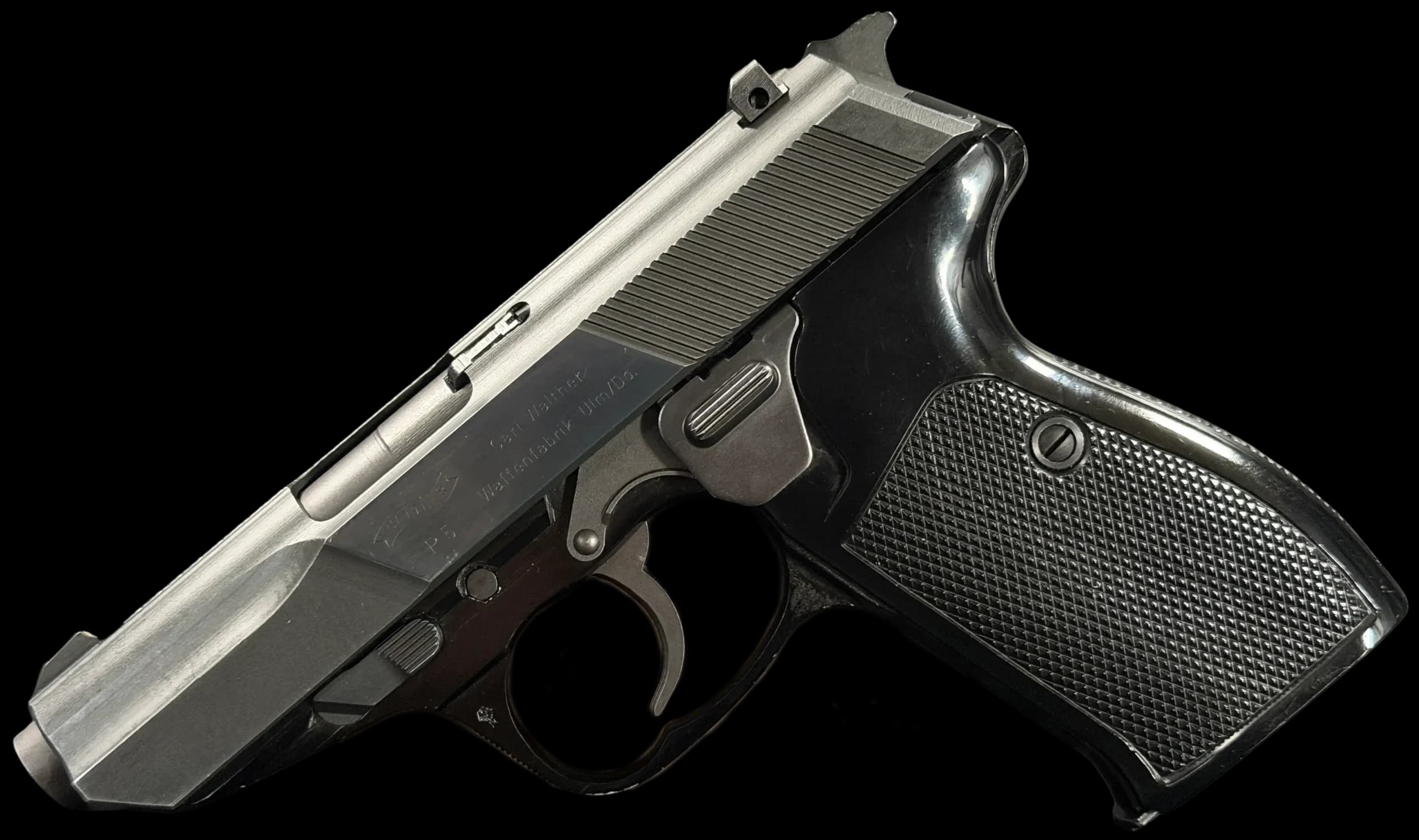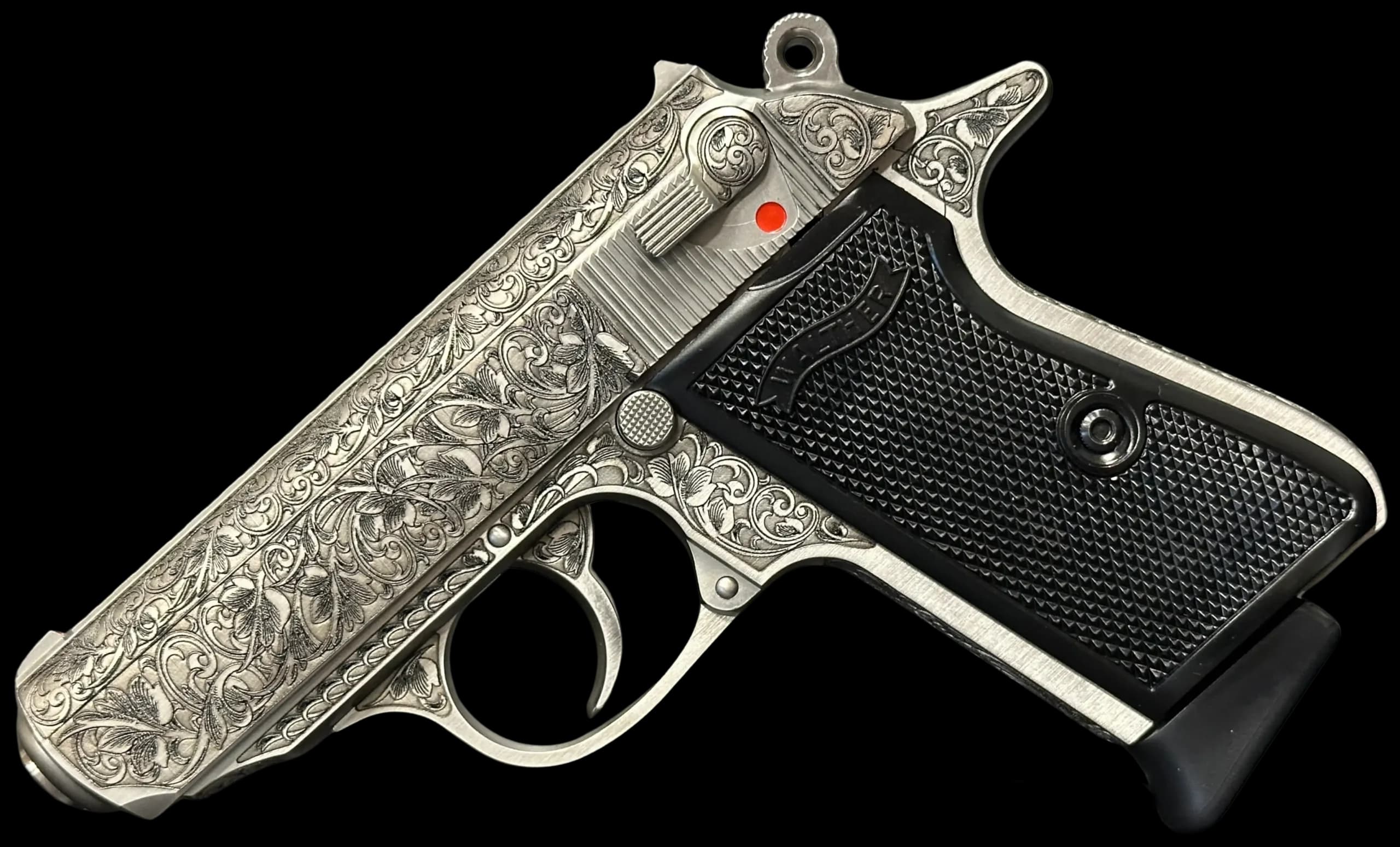
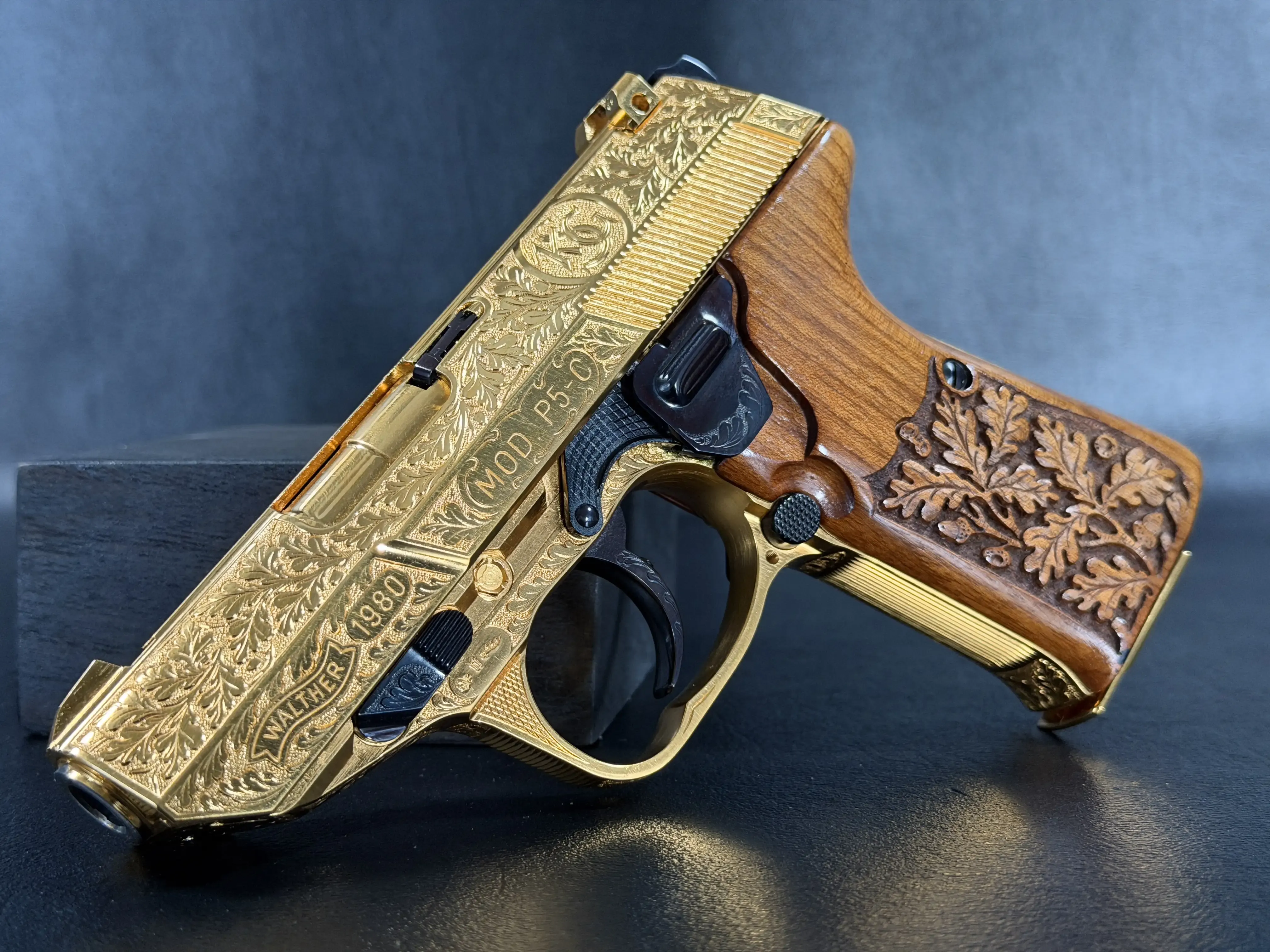

In the autumn of 1886, a twenty-eight-year-old gunsmith named Carl Walther opened his own workshop in Zella-Mehlis, a Thuringian town whose ore deposits had already made the region a center of rifle making. He had trained under two local gunsmiths and made Mauser-pattern rifles for another Zella-Mehlis firm before striking out on his own, and his new shop turned out hunting and target rifles built on the Martini-Henry and A.Y.D.T. breech actions. The business grew quickly enough that by 1903 the family added a three-story workshop on the Katzenbuckel hill to keep up with demand.
The shift toward handguns came from Carl's oldest son. Fritz Walther apprenticed with a gun manufacturer in Berlin before taking the company in a new direction, and as early as 1908 the Model 1, a .25 ACP pocket pistol, appeared as the firm's first semi-automatic design, opening a numbered series that ran through the Model 9 by 1921. None of these early pistols sold in large numbers, but they gave Walther a foundation in self-loading design it would draw on again after Carl Walther's death in 1915, when Fritz took over the company.
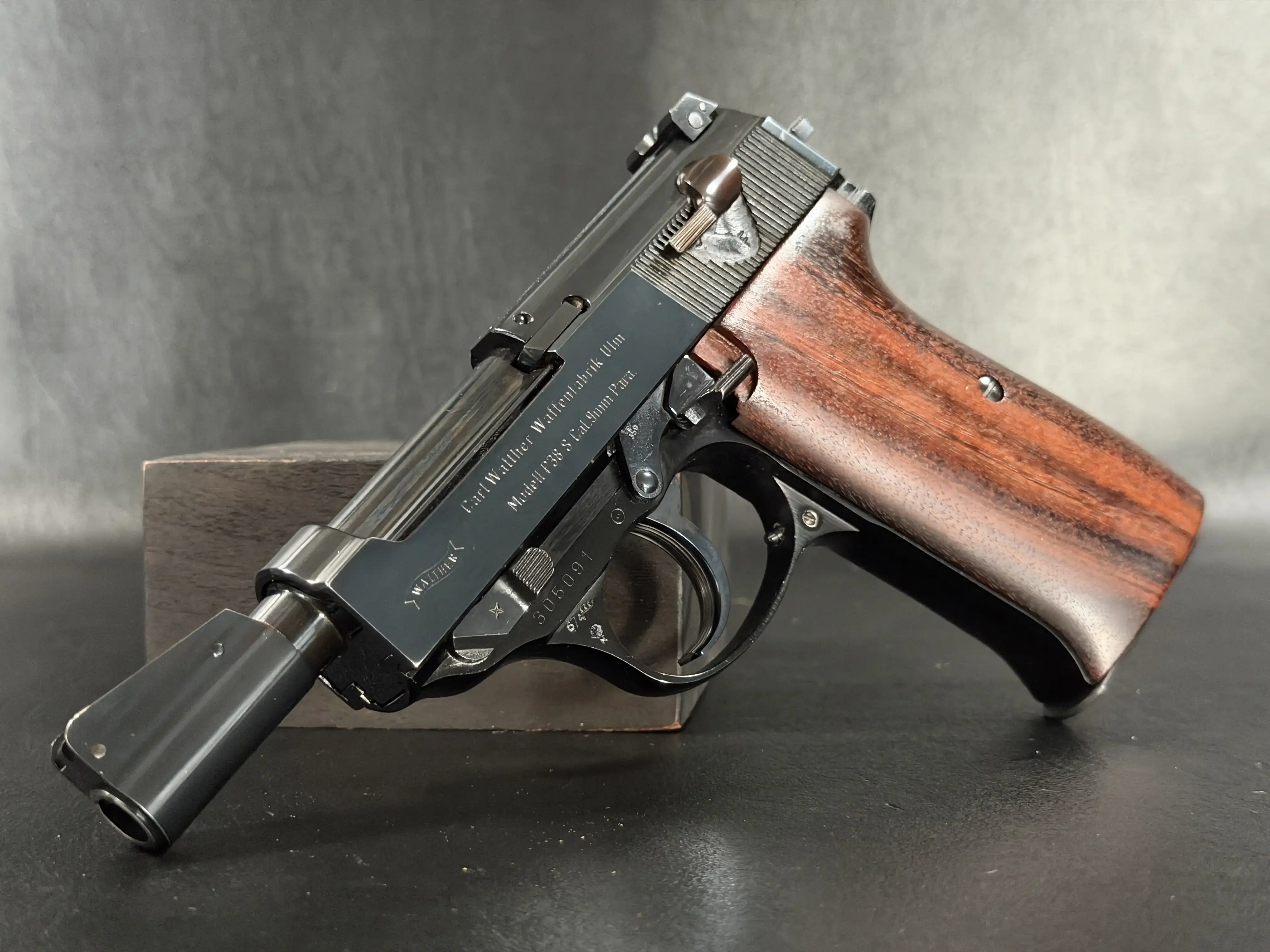
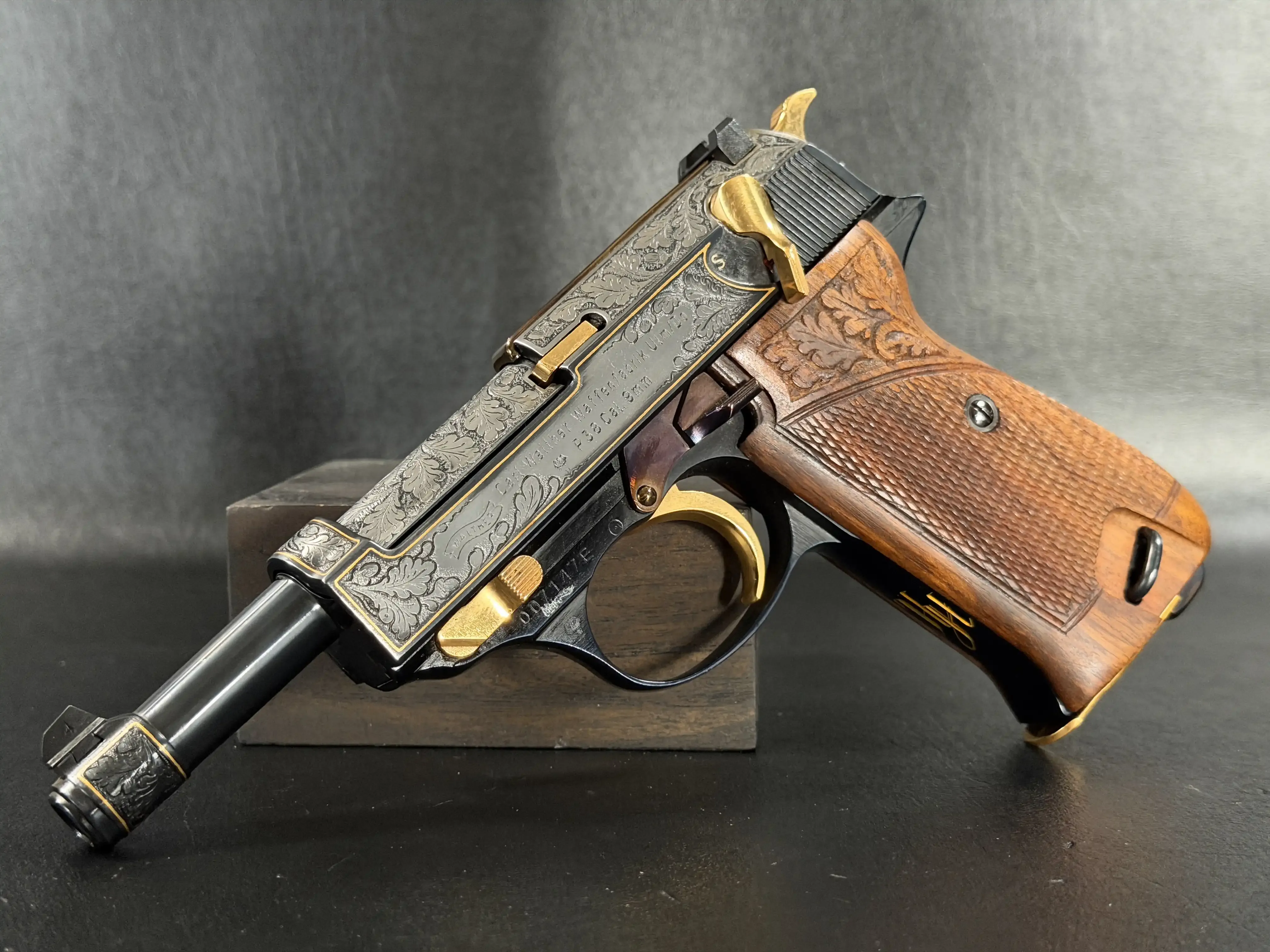
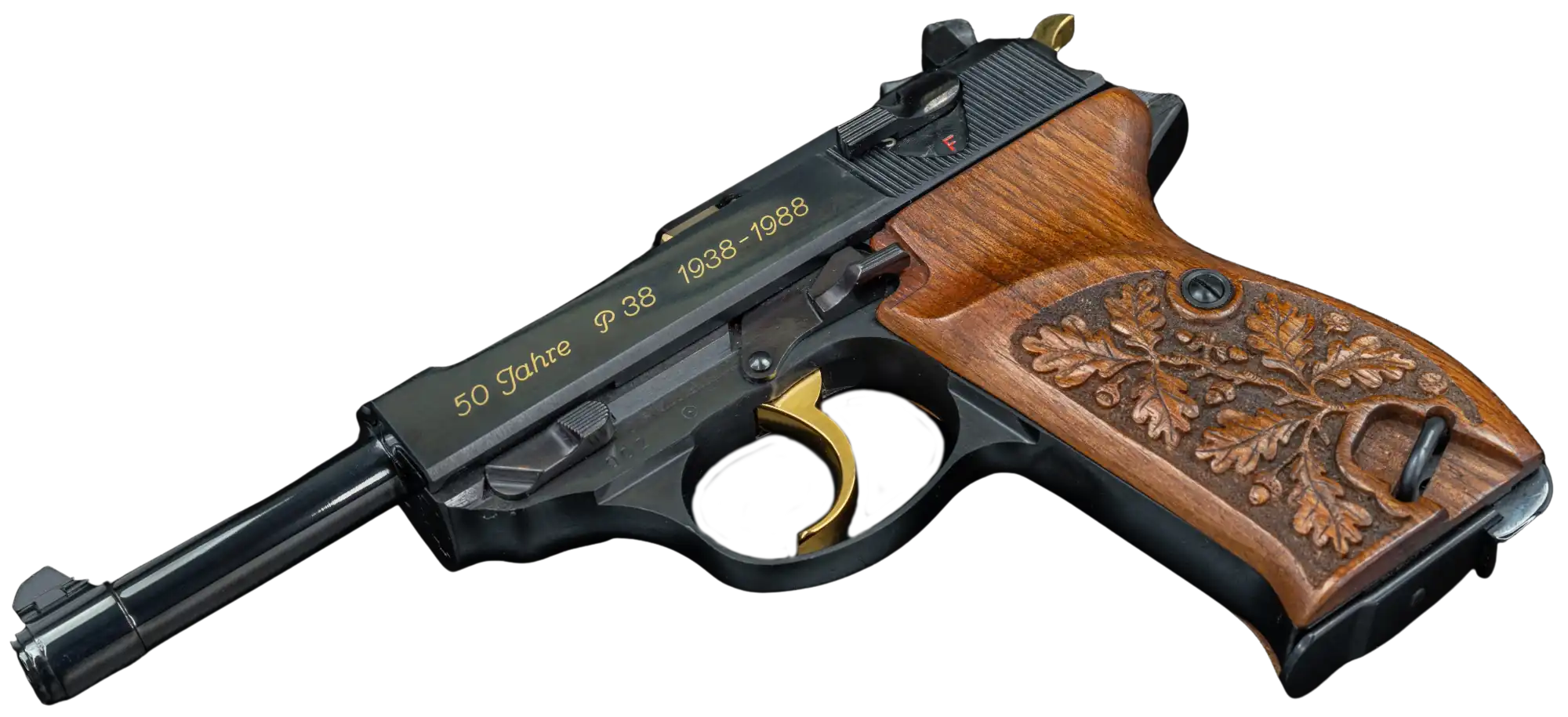
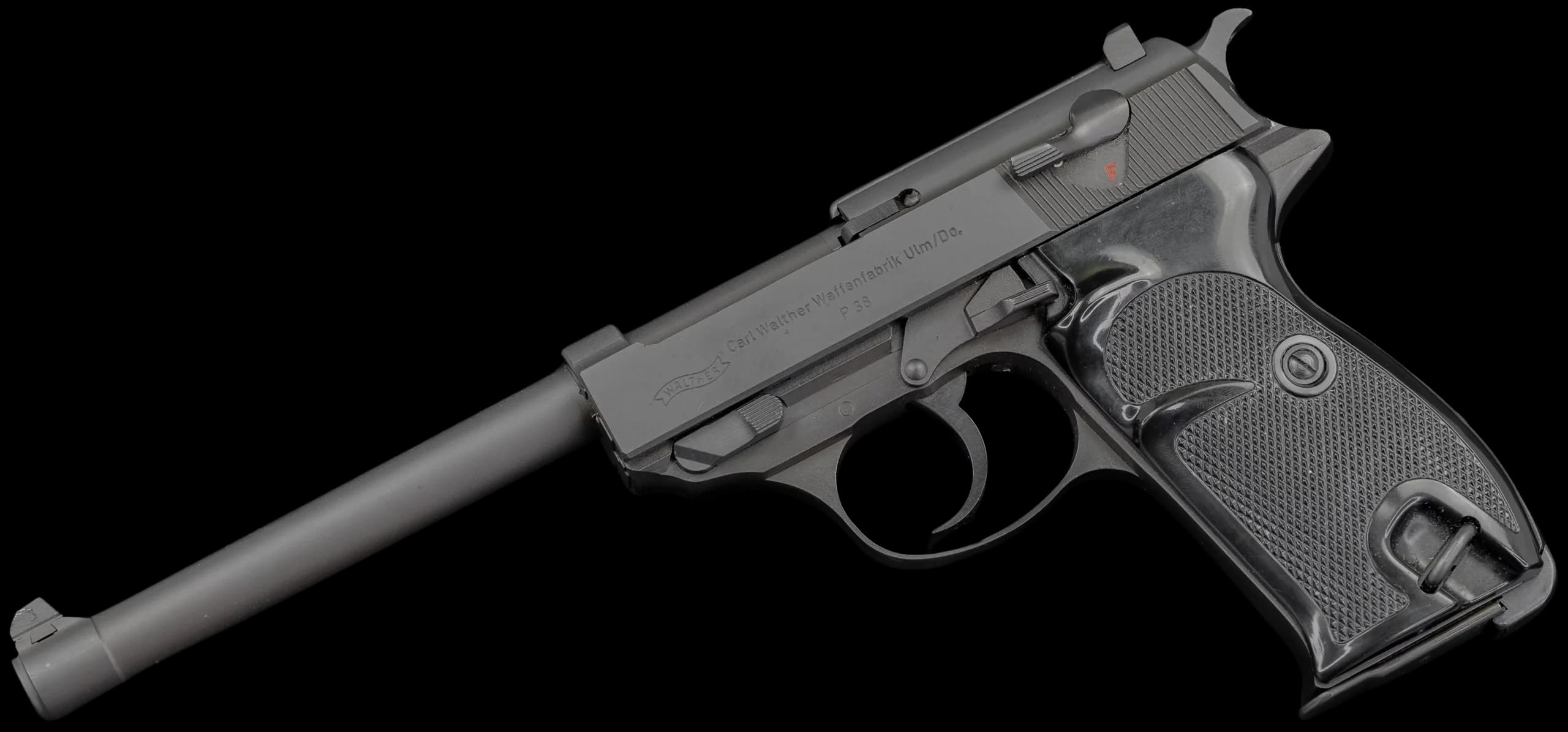
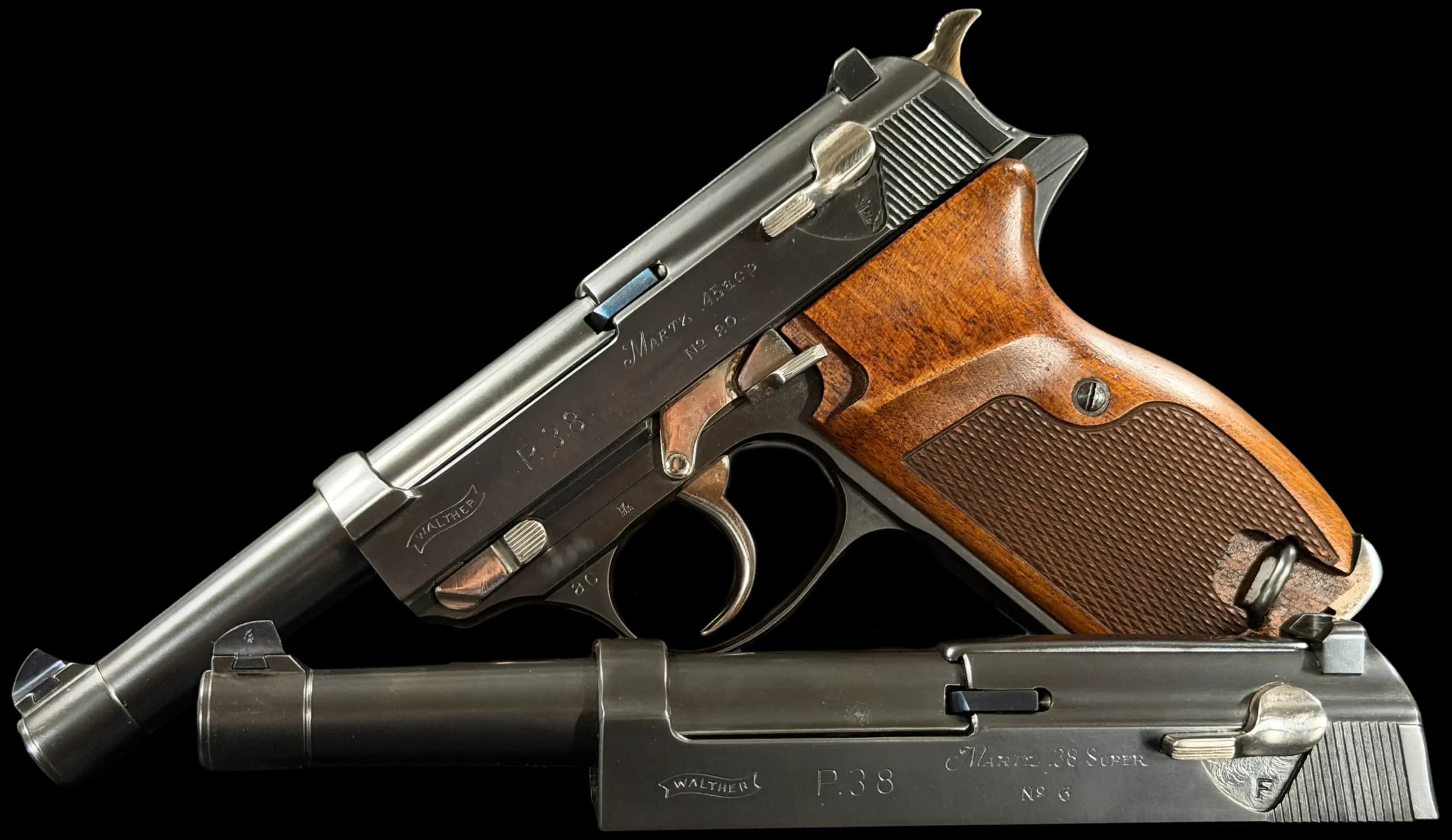
Walther's defining model arrived in 1929. The PP, short for Polizeipistole, was the world's first production pistol with a double-action/single-action trigger mechanism and an external safety and decocker, a combination that let an officer carry the gun with a round chambered and draw it without first cocking the hammer. Two years later, the company shortened the frame and barrel for detective and plainclothes work and called the result the PPK (Polizeipistole Kriminalmodell). In 1938, Walther won the Wehrmacht's own service pistol contest with a full-size design designated the Pistole 38, and production continued at Zella-Mehlis through the war; after 1957, once Walther had rebuilt in West Germany, the same basic design returned to service with the new Bundeswehr, renamed the P1.
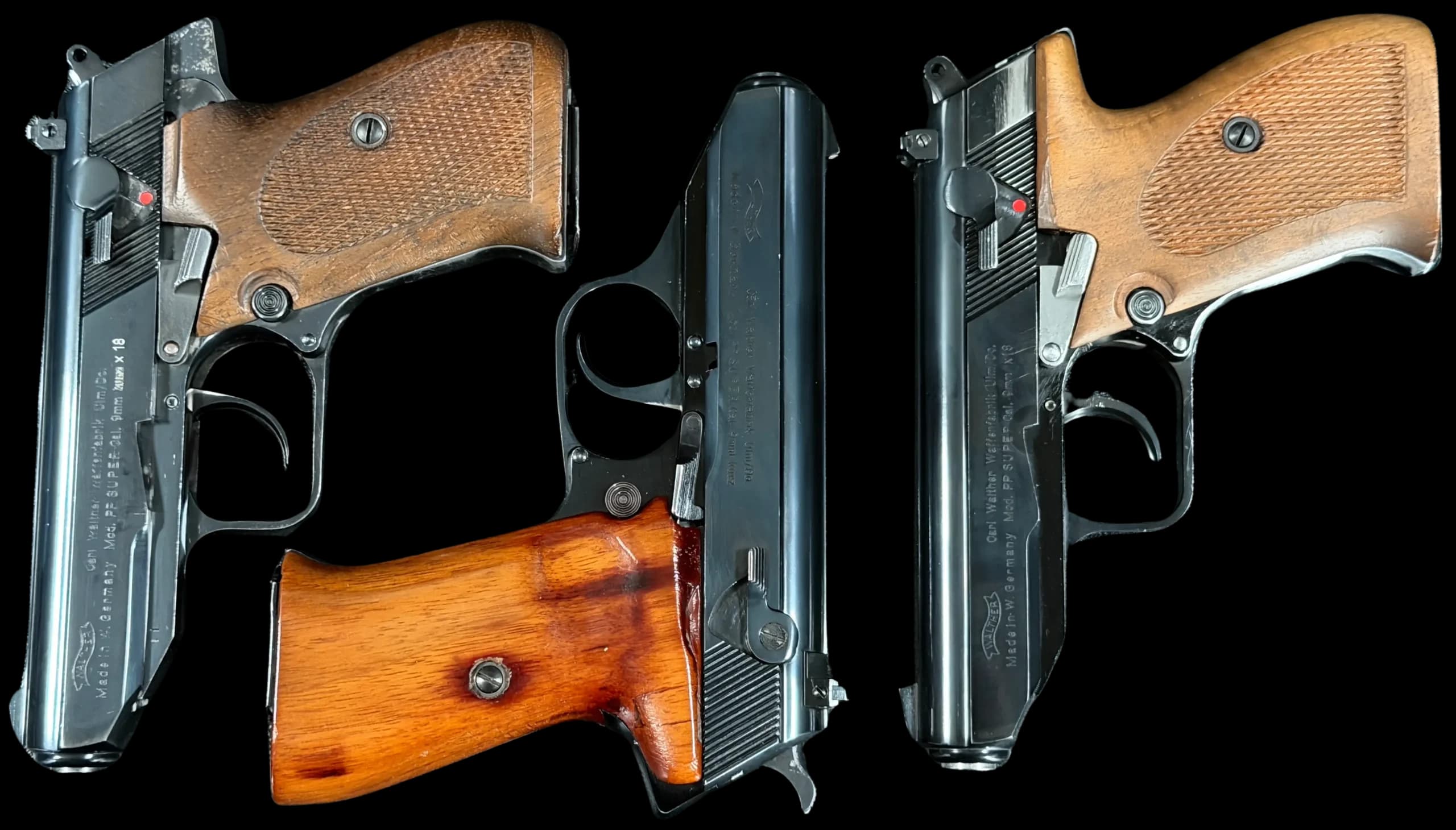
The war nearly ended the company. Zella-Mehlis fell inside the Soviet occupation zone by mid-1945, and the factory there was dismantled, its machinery shipped east. Fritz Walther crossed into the American zone and rebuilt over the following years, first through a licensing arrangement with the French firm Manurhin, which produced PP and PPK pattern pistols at Mulhouse under Walther's patents, and later at a new plant in Ulm. Fritz ran the rebuilt company until his death in December 1966, when his son Karl-Heinz took over and expanded into the sports sector, where Walther's OSP and GSP target pistols became mainstays of Olympic rapid-fire and 25-meter pistol events from the 1960s onward.
The failed police response to the 1972 Munich Olympics hostage crisis pushed Walther toward a different kind of firearm, a semi-automatic bullpup sniper rifle for specialized police units, the WA2000. Only 176 were built, and the rifle's cost kept it out of wide service, though it remains one of the more closely studied designs in postwar German gunmaking. Two decades later, financial trouble brought a change of ownership rather than a change of address: in 1993, Wulf-Heinz Pflaumer and Franz Wonisch, principals of the Arnsberg-based Umarex group, bought roughly ninety percent of Walther's shares, keeping the firm in German hands at a moment when a foreign buyer had seemed likely.
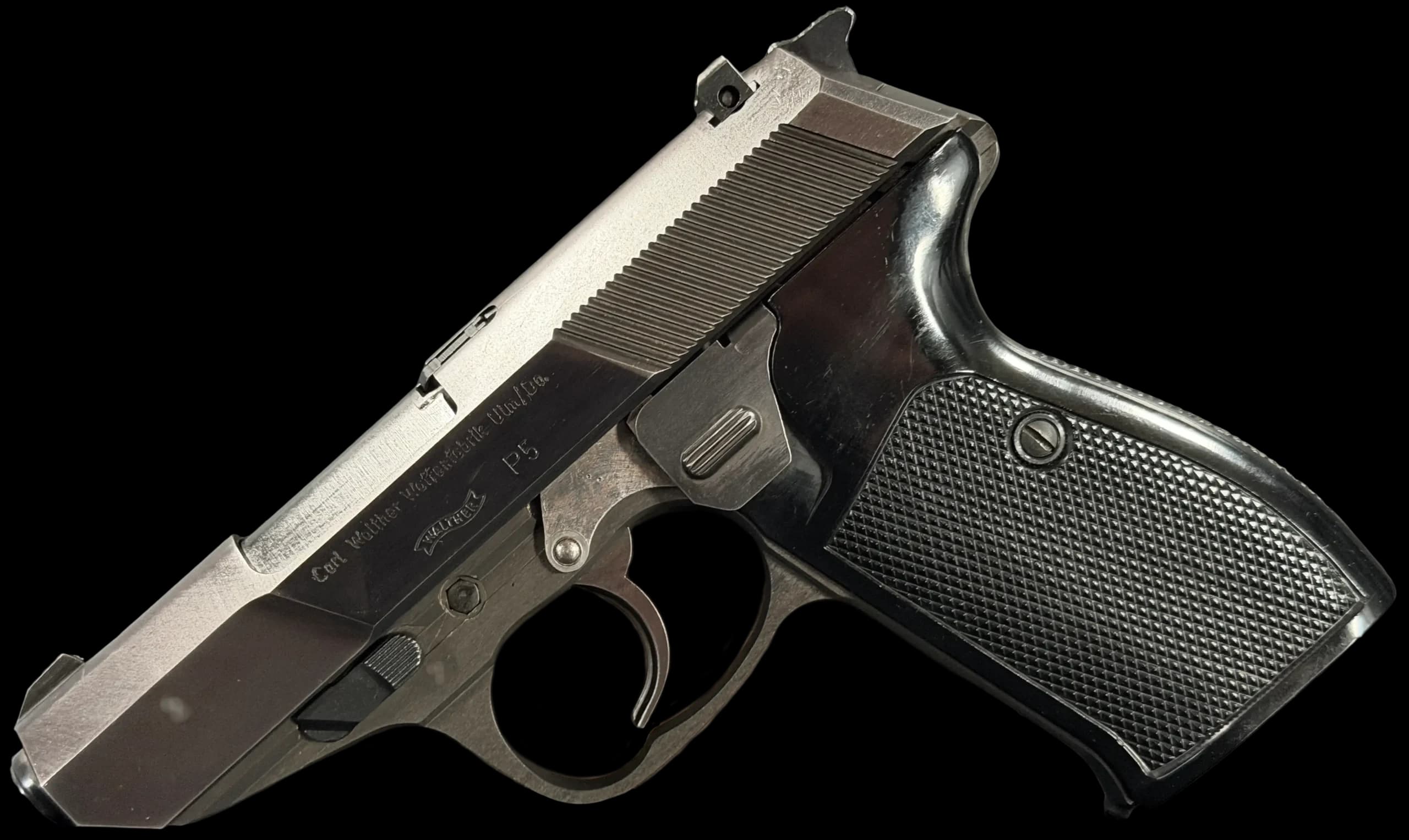
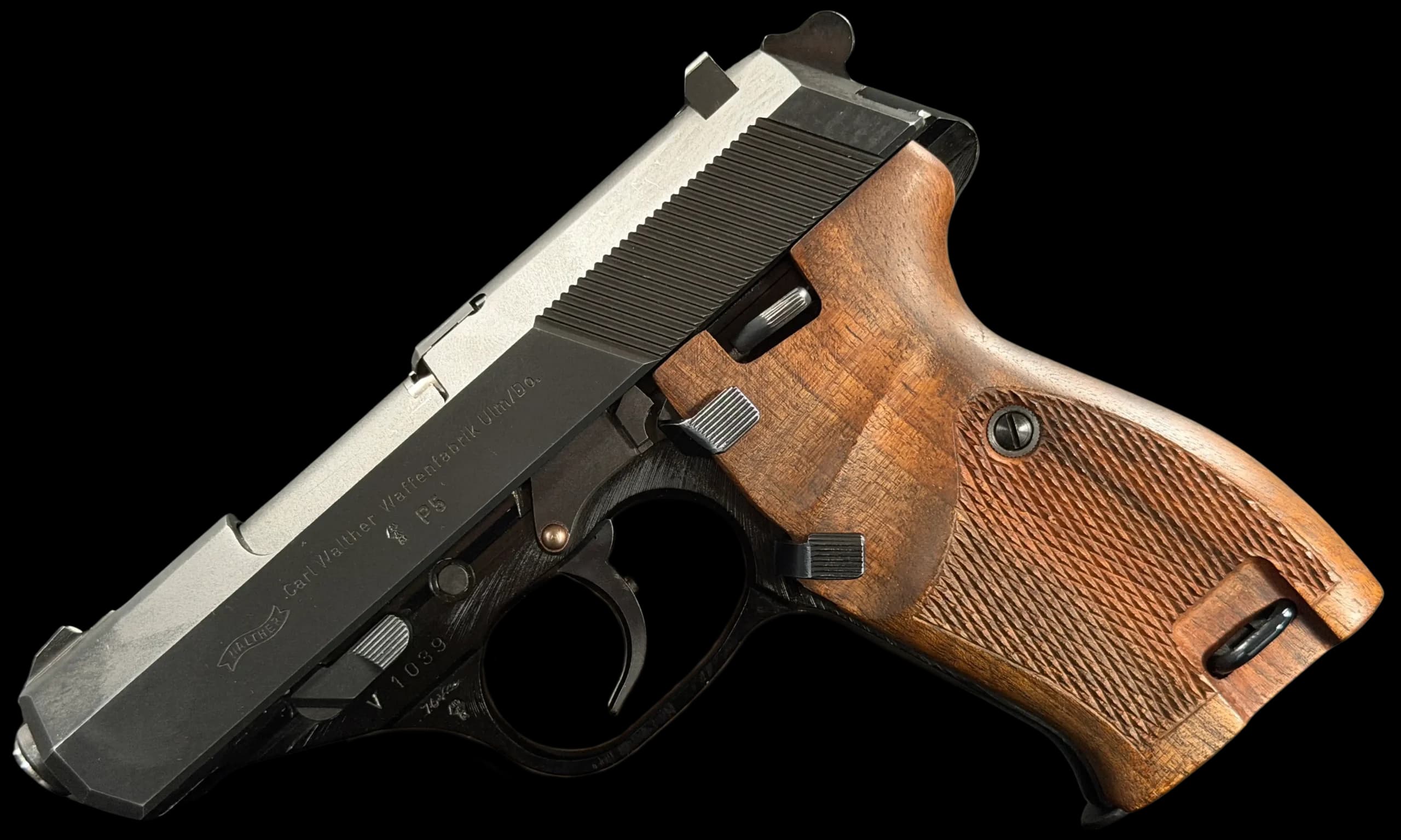
Walther and Umarex are now both held by the PW Group. The handgun line kept moving: the polymer-framed P99 arrived in 1996 as an intended successor to the P5 and P88, the striker-fired PPQ followed in 2011, and the current flagship, the PDP, replaced the PPQ in 2021. US distribution, handled by Smith & Wesson from 1999, was transferred to a newly formed Walther Arms, Inc. in Fort Smith, Arkansas, in 2013, and PPK production for the American market has since moved largely to that facility to comply with US import rules.
For a collector, Walther's range spans several distinct eras that rarely sit together in one collection: prewar Zella-Mehlis production, wartime P38s, postwar Manurhin-marked PP and PPK variants, and the Ulm-made service and sport pistols that followed. The PPK carries an added layer of cultural weight. Ian Fleming rearmed James Bond with a PPK in the novel Dr. No after Geoffrey Boothroyd, a Glasgow-based firearms enthusiast, wrote to him in 1956, arguing that Bond's original Beretta lacked stopping power, and the pistol has appeared on screen with every actor to play Bond in the Eon film series. Walther's target pistols carry a quieter but longer competitive record, having equipped Olympic 25-meter pistol shooters for decades.
History & Milestones
Carl Walther opens Zella-Mehlis workshop
A gunsmith in his late twenties starts a rifle-making business in Thuringia, the foundation of what becomes Carl Walther GmbH.
Model 1 pistol enters production
Fritz Walther's patented .25 ACP design becomes the company's first commercial self-loading pistol, moving Walther beyond rifles for the first time.
PP introduces double-action safety design
The Polizeipistole becomes the first production pistol with a DA/SA trigger and decocking safety, a mechanism that German police adopt widely.
PPK offers a compact alternative
A shortened PP variant built for detective work becomes Walther's best-known model decades later through its film association.
Wehrmacht adopts the P38 pistol
Walther's full-size service pistol wins the German army's contract, entering mass production at Zella-Mehlis.
Zella-Mehlis factory falls, company relocates
Soviet occupation dismantles the original factory; Fritz Walther escapes west and rebuilds through a French licensing deal before establishing a new plant in Ulm.
P1 equips the new Bundeswehr
A revived, lighter version of the P38 becomes the standard sidearm of West Germany's newly formed armed forces.
Munich Olympics prompt sniper-rifle program
The failed police response to the hostage crisis at the Munich Games leads Walther to develop the WA2000 for specialized police units.
Umarex-led group buys Walther
Wulf-Heinz Pflaumer and Franz Wonisch acquire roughly 90 percent of the company shares, keeping Walther under German ownership within what becomes the PW Group.
PDP becomes the new flagship pistol
Walther replaces the long-running PPQ with the optics-ready PDP, its current primary striker-fired platform.