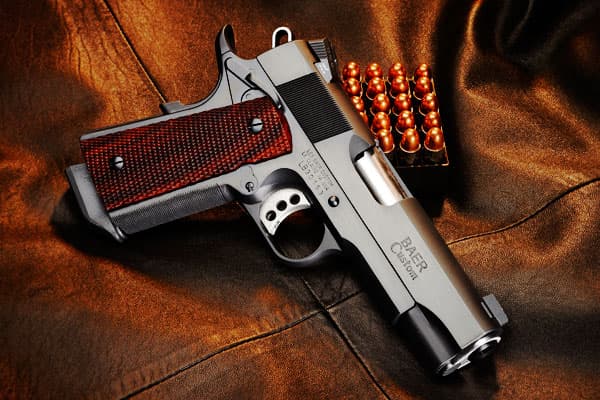
In 1994, the FBI's Hostage Rescue Team sent a request for a .45 ACP pistol built on a high-capacity frame, capable of ten-shot groups under two inches at twenty-five yards. Les Baer's shop in Hillsdale, Illinois, answered it, building the pistol on a Para-Ordnance P14 frame and fitting it with Novak sights and a Birdsong Black-T finish. The HRT adopted roughly 225 of them to replace their Wayne Novak-tuned Browning Hi-Powers, and Baer began selling a civilian version, the Swift Response Pistol, through his own catalog. It was the kind of validation a small custom shop rarely gets, and it happened before Baer's company was old enough to vote.
Baer's path to that point had nothing to do with firearms at first. He came up in Allentown, Pennsylvania, in the 1960s and 70s with a taste for machining and muscle cars, blueprinting engines for drag racing before he ever built a gun. He started tuning and modifying pistols out of his basement in 1973, and by 1976, the work had outgrown the house. A visit to an International Practical Shooting Confederation match in the early 1980s convinced him he could build better guns than the ones he saw shooters carrying. He opened Baer Custom Guns full-time in 1980, then spent several years running Springfield Armory's custom shop in Geneseo, Illinois, before striking out on his own. Les Baer Custom Inc. was formally incorporated in 1991, with early operations in Rock Island before the shop settled into Hillsdale, Illinois.
The Hillsdale years built the reputation the company still trades on: pistols guaranteed, in writing, to shoot inside a specified group size at fifty yards, an unusual commitment in an industry that mostly relied on word of mouth. Thunder Ranch's Clint Smith noticed. In 2000, Thunder Ranch designated a Baer 1911 its official "Thunder Gun," and for years, Les Baer Custom was one of only two pistol makers, alongside Smith & Wesson, permitted to put the Thunder Ranch name and logo on a production gun. The two sides later parted ways, and Baer discontinued the Thunder Ranch Special, but the arrangement had already done its work: it put Baer's guns in front of the tactical-training crowd, not just the competition circuit where the company started.
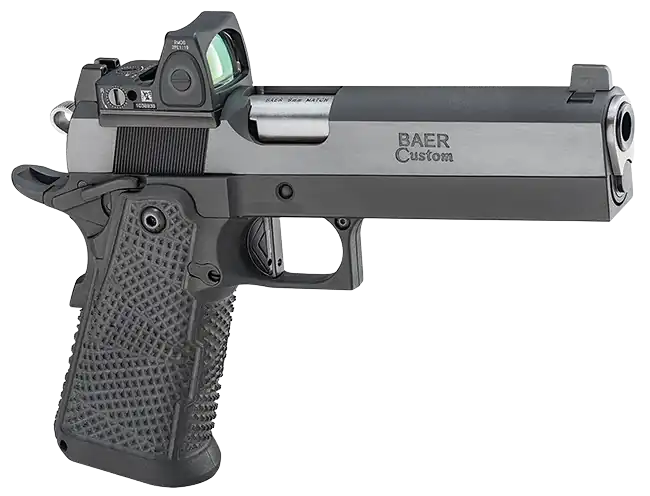
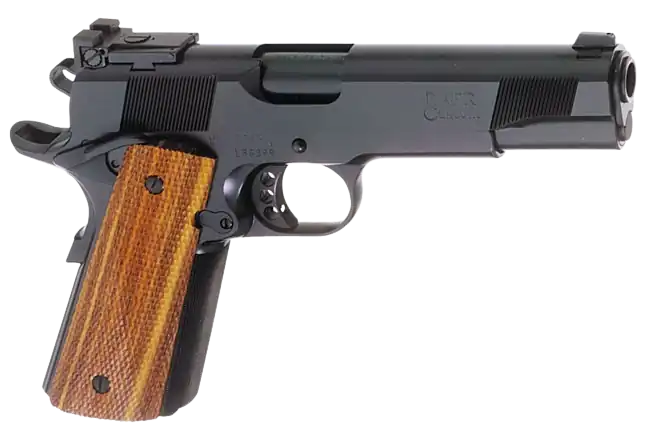
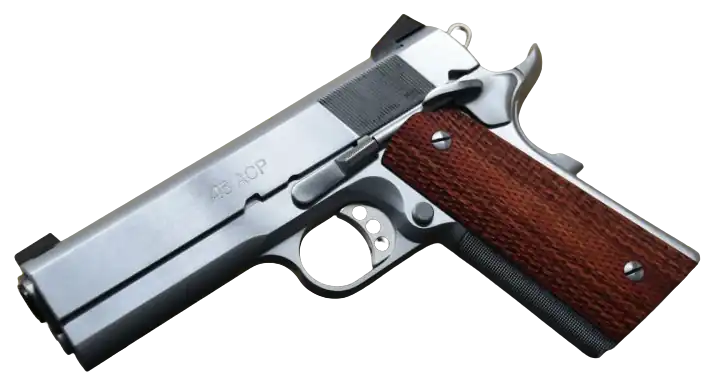
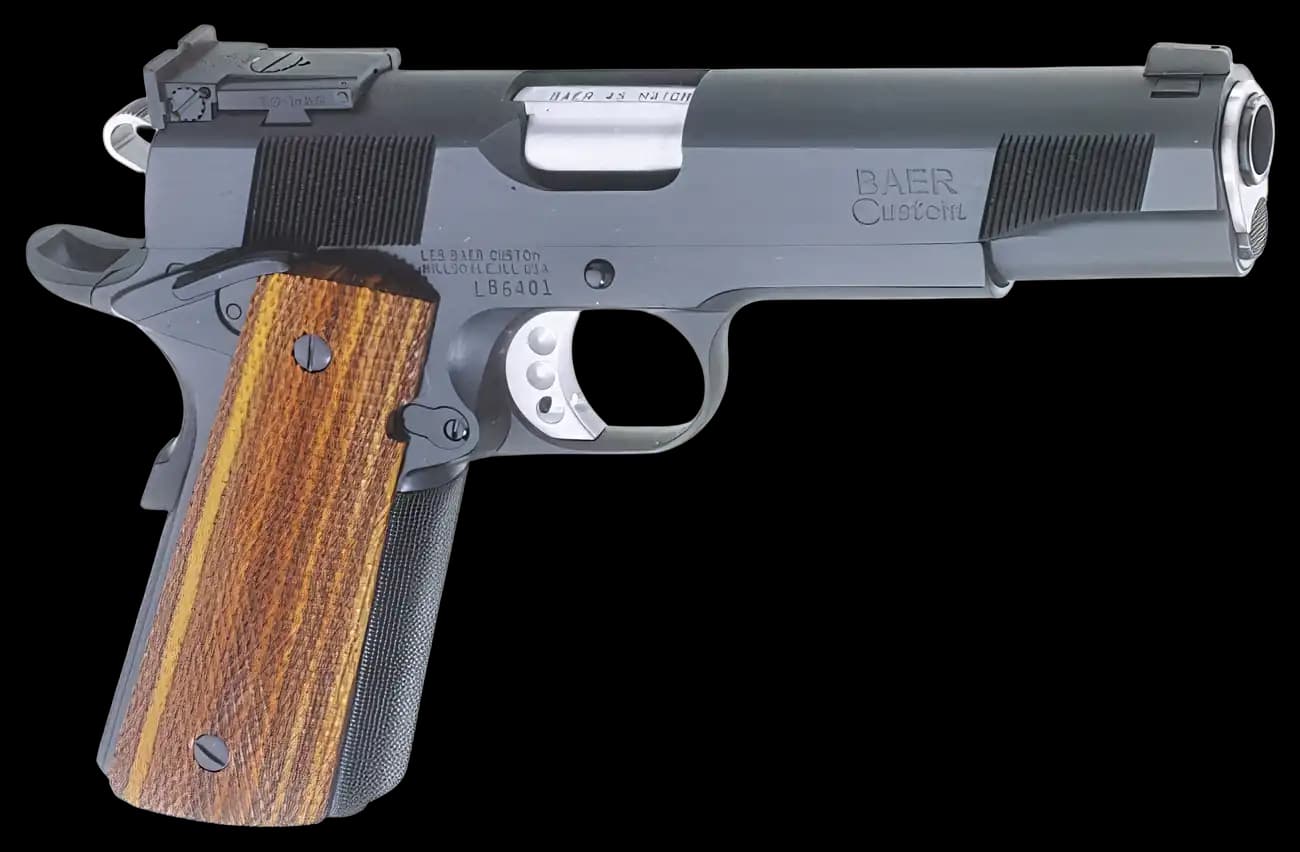
Through the 1990s and 2000s, the lineup fractured into an unusually granular set of variants; Baer's own dealers still joke that changing a single spec, a sight, a safety, a grip pattern, is often enough to earn a new model name. Premier, Concept, Custom Carry, Monolith, Stinger, and Boss all descend from the same core Government-frame pistol, differentiated mostly by sights, finish, and caliber options running from .45 ACP to 9mm, .38 Super, and 10mm. Baer expanded into rifles in the early 2000s, building AR-15s under the Ultimate AR name and later adding .308 bolt-action and AR-10 pattern rifles; reviewers routinely singled out the guaranteed half-minute-of-angle accuracy as unusual for a semi-automatic AR at the time. Illinois's tightening gun laws eventually pushed the company across the Mississippi River to LeClaire, Iowa, where it remains today.
Les Baer Custom has never chased volume. The catalog runs to dozens of pistol variants built largely by hand, at prices well above mass-production 1911s but below full bespoke work, and the company still test-fires guns before they leave the shop. For a collector, the appeal sits less in any single landmark model than in the range: a Hillsdale-marked pistol from the 1990s, a Thunder Ranch Special from the years of the Clint Smith partnership, or an early SRP tracing its lineage to the FBI contract, each tells a different chapter of the same shop's history, one still being written from the same corner of eastern Iowa.
History & Milestones
Les Baer Custom Inc. is formally incorporated
After running Springfield Armory's custom shop, Baer incorporates his own company, initially based in Rock Island, Illinois, before settling in nearby Hillsdale.
FBI Hostage Rescue Team adopts a Baer .45
Roughly 225 Baer-built pistols on Para-Ordnance frames were delivered to the FBI's HRT, replacing their Browning Hi-Powers and becoming the basis for the civilian Swift Response Pistol.
SRP offered on Baer's own steel frame
Rising magazine costs and frame-supply issues lead Baer to build the SRP on his own single-stack steel frame and shorter Commanche length, alongside the original high-capacity version.
Thunder Ranch names its official carry pistol
Clint Smith's Thunder Ranch designates a Baer 1911 its "Thunder Gun," making Les Baer Custom one of only two makers authorized to use the Thunder Ranch name and logo.
Company enters the AR-15 rifle market
Baer introduces the Ultimate AR .223 Super Varmint, guaranteed to shoot half-minute-of-angle groups, launching a rifle line that would eventually include .308 and AR-10 pattern guns.
Monolith model joins the pistol lineup
A Commander-length pistol with a full dust cover and monolithic profile is introduced, aimed at shooters wanting a full-size feel in a shorter frame.
Operations move from Illinois to Iowa
Tightening Illinois gun laws prompt the company to relocate manufacturing from Hillsdale, Illinois to LeClaire, Iowa, where it remains headquartered.