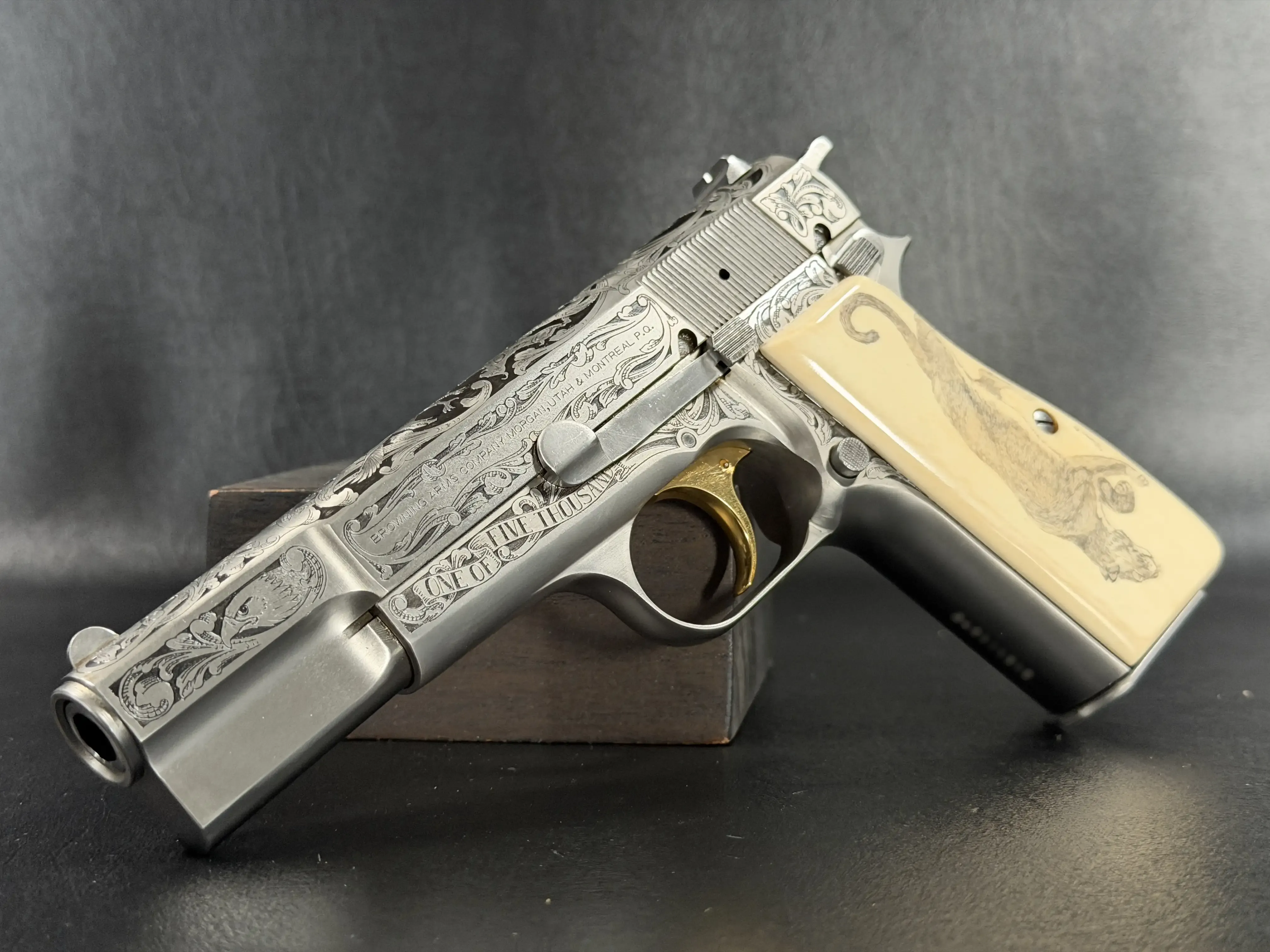
In 1878, John Moses Browning built a single-shot rifle in his father's gun repair shop in Ogden, Utah, and judged it better than anything sold in stores at the time. He and his brother Matthew Sandefur Browning turned the family shop into Browning Brothers, and John's rifle went into small-batch production. About 600 were made before a Winchester representative arrived in Ogden in 1883 and bought the design outright for $8,000. That sale opened a nineteen-year arrangement in which Browning sold Winchester the patents behind the Model 1885, 1886, 1892, 1894 and 1897, among others, while continuing to run the family gun shop under his own name.
The partnership ended over money. In 1899, Browning brought Winchester a new design, a recoil-operated shotgun that would become the Auto-5, and asked for royalties on each unit sold instead of a single payment. Winchester refused. Browning tried Remington next, but the company's president died of a heart attack before a deal could be signed. Rather than negotiate further in the United States, Browning sailed to Belgium and signed with Fabrique Nationale d'Herstal in 1902. The Auto-5 became the first commercially successful semi-automatic shotgun, and FN's willingness to pay royalties set the pattern for Browning's later designs, including the pistol Colt would manufacture as the M1911.
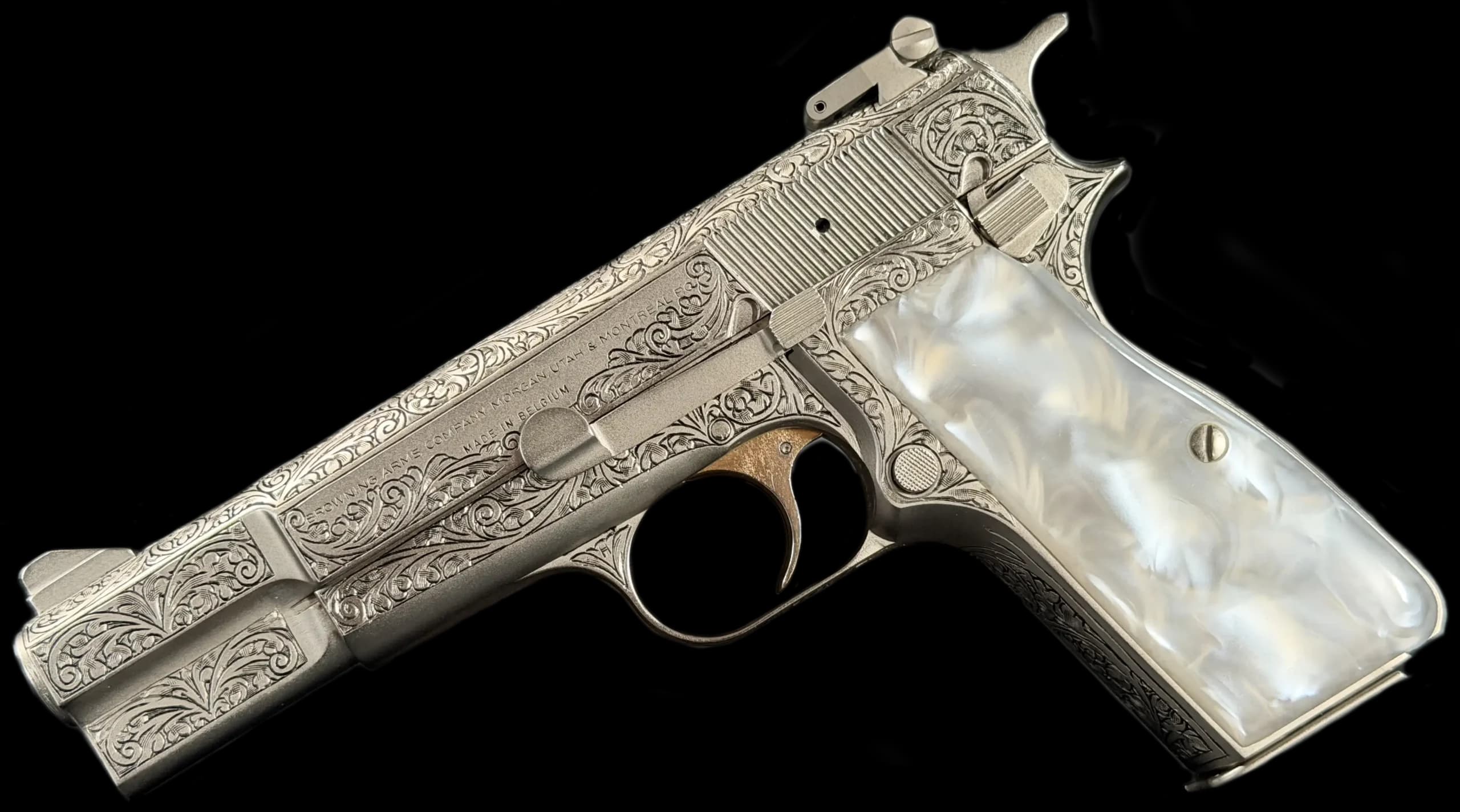
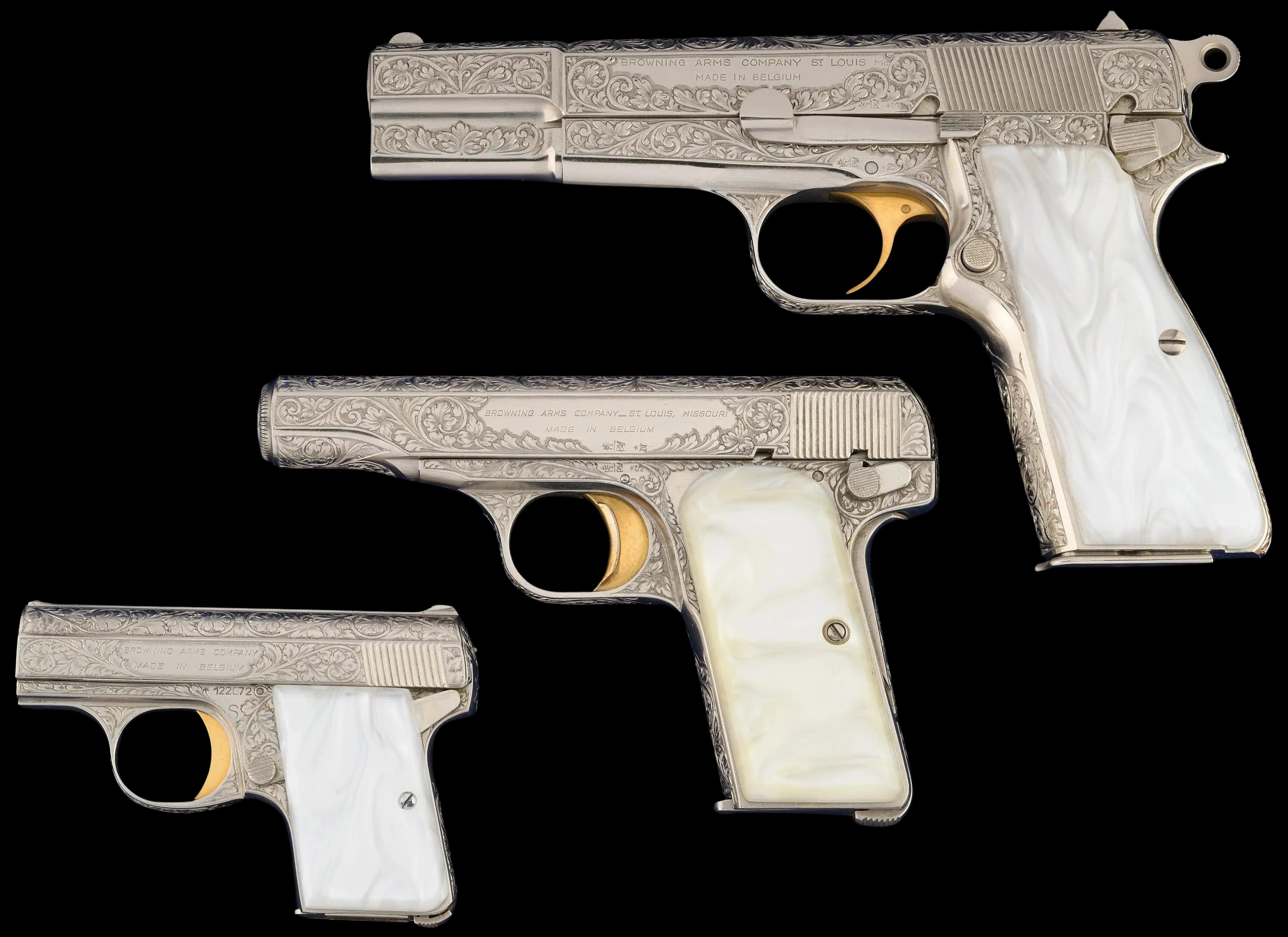
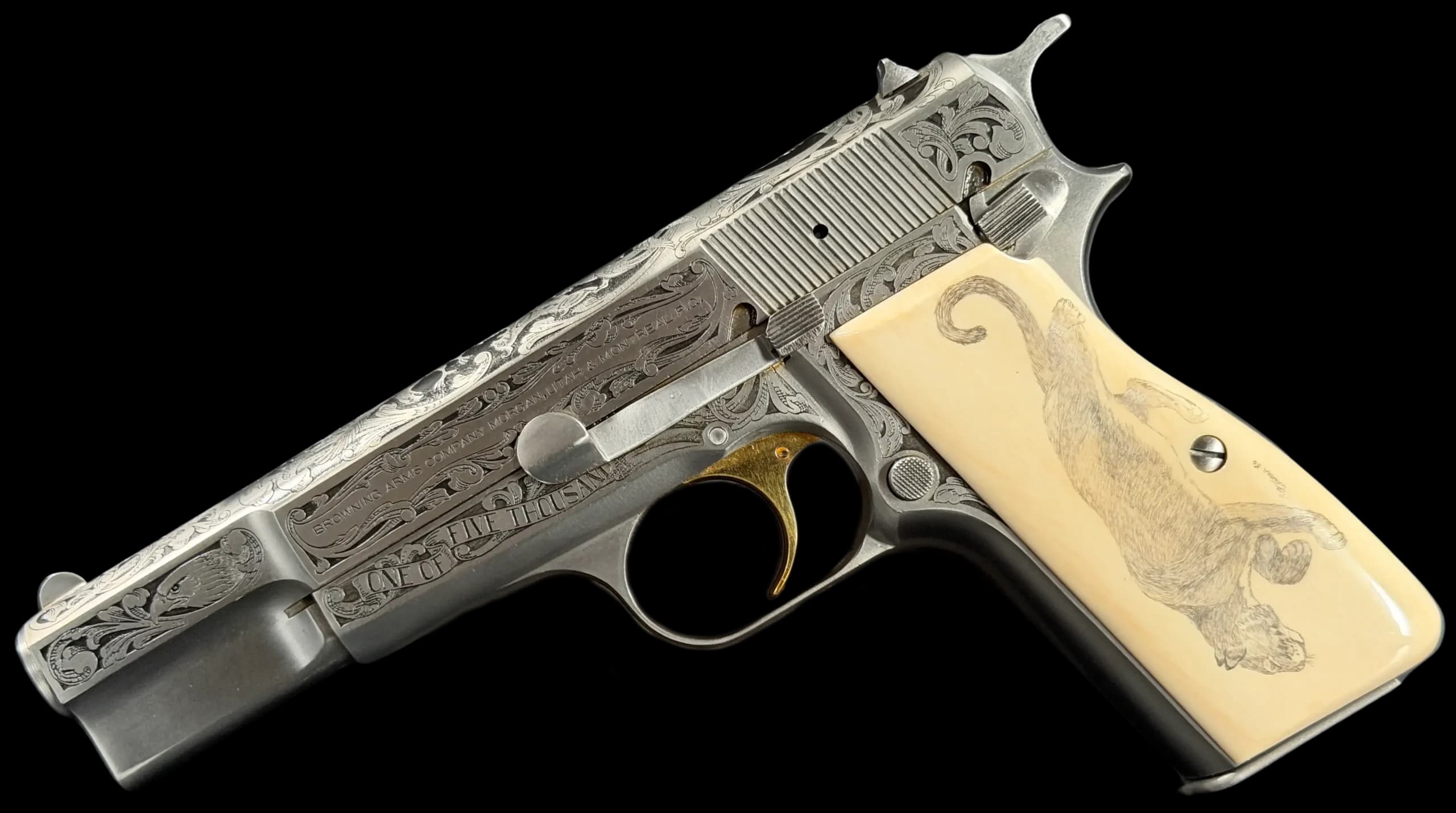
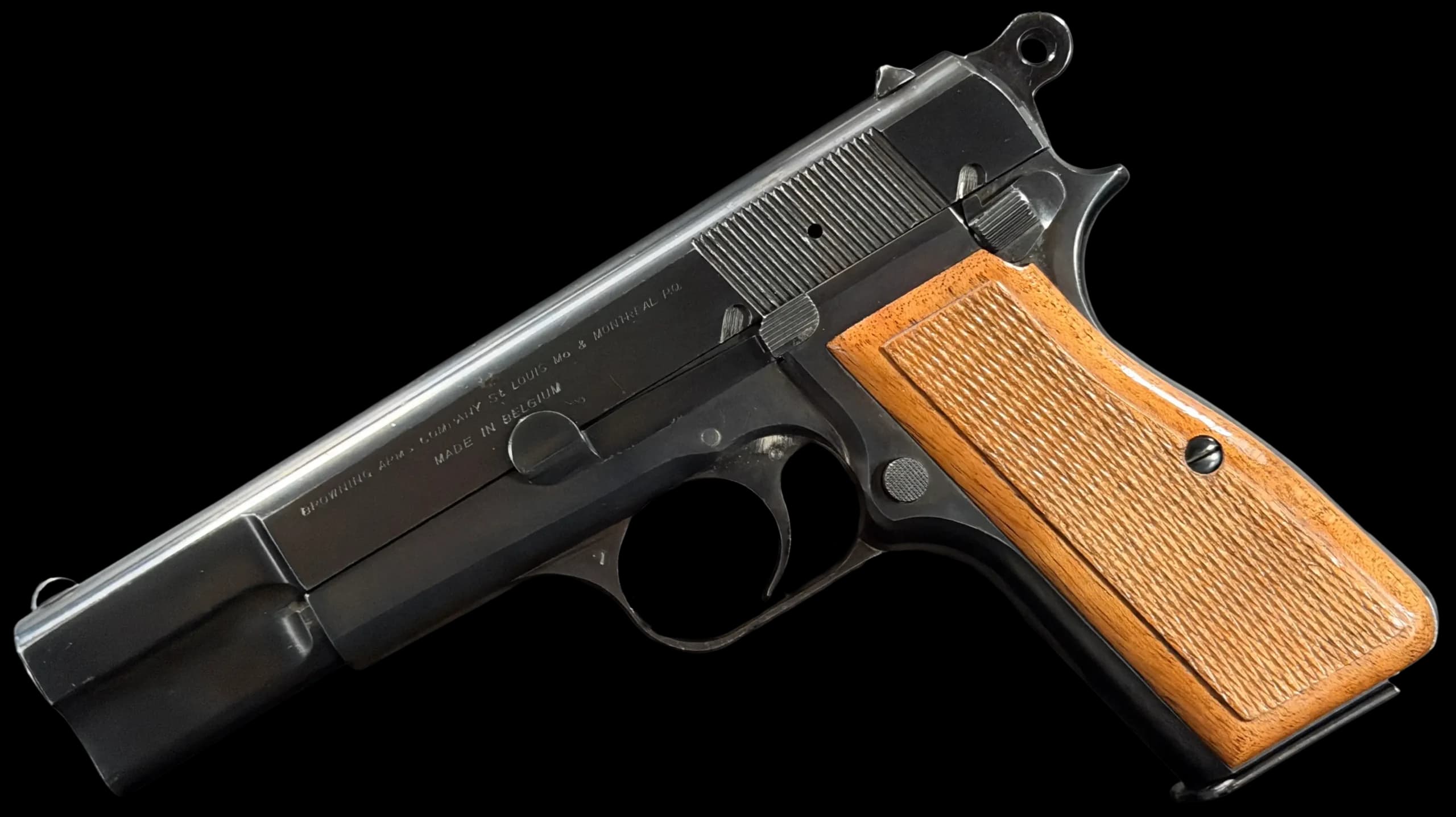
Browning kept working until the end. He died at FN's offices in Herstal, near Liège, in November 1926, mid-project on a new self-loading pistol. His colleague at FN, chief designer Dieudonné Saive, completed the work; the pistol reached production in 1935 as the Hi-Power, and Belgium adopted it as a service sidearm that same year. Over the following decades, more than fifty armies did the same, making it one of the most widely issued military pistols of the twentieth century, though for most of its run it was sold under the FN name in Europe and the Browning name in North America. Browning's other military legacy runs deeper still: the M1918 Browning Automatic Rifle armed U.S. infantry from the trenches of the First World War into the Vietnam era, and the M2 .50-caliber machine gun he patented in the 1920s remains in American service today.
The Browning Arms Company itself was formally incorporated in Utah in 1927, a year after John's death. The Superposed over-under shotgun, John Browning's last design project, reached the market in 1931 and remained Browning's flagship for four decades. The company headquarters moved from Ogden to nearby Morgan, Utah, in 1969. Manufacturing had already begun shifting east: Browning contracted with the Japanese maker Miroku starting in the mid-1960s, first for the BL-22 rimfire rifle, then for the Citori over-under in 1973 and the BPS pump shotgun in 1977. FN Herstal bought Browning outright in 1977, folding a partnership that had run for most of a century into a single corporate structure. Ownership passed again in 1990 to GIAT Industries and in 1997 to the Walloon regional government of Belgium, which now holds Browning under the Herstal Group alongside FN Herstal and Winchester Repeating Arms.
Today's Browning lineup is built around the A-Bolt (1985) and its successor the X-Bolt (2008) in bolt-action rifles, the BAR semi-automatic hunting rifle introduced in 1967 (a civilian design distinct from the military M1918, though developed in part by Browning's grandson Bruce), the Cynergy (2004) and Maxus (2009) shotguns, and the Buck Mark .22 pistol, made in Salt Lake City since 1985. Most current production runs through Miroku in Kochi, Japan, a relationship now approaching sixty years. For a collector, the appeal of the Browning name has as much to do with how far its patents traveled as with any single factory: nearly all of John Browning's major designs were also built under license by Winchester, Colt, Remington, Savage, and FN, so a Browning-marked gun sits at a crossing point in the broader history of American and European small arms manufacturing.
The clearest record of that history is kept close to where it started. The Browning Firearms Museum, housed in Ogden's Union Station, holds the company's factory collection and early production guns spanning Browning's career. Among collectors, pre-war Belgian-made Auto-5s and factory-engraved Superposed grades remain especially sought after, in part because Belgian production of both is finite and increasingly scarce.
History & Milestones
Browning Brothers gun shop opens in Ogden
John Moses and Matthew Browning begin building firearms in their father's Ogden, Utah shop, starting with a single-shot rifle John designed at 23.
Winchester buys Browning's first rifle patent
Winchester purchases the single-shot rifle design for $8,000, opening a nineteen-year licensing relationship that produced the Models 1885, 1886, 1892, 1894 and 1897.
Auto-5 begins production with FN in Belgium
After Winchester declines to pay royalties on a new design, Browning partners with Fabrique Nationale d'Herstal to build the Auto-5, the first commercially successful semi-automatic shotgun.
M1918 BAR enters U.S. Army service
The Browning Automatic Rifle is issued to American troops late in the First World War and remains in U.S. service, in various forms, into the Vietnam era.
John Moses Browning dies in Belgium
Browning dies at FN's Herstal offices at age 71, mid-project on the pistol design that would become the Hi-Power.
Browning Arms Company formally incorporated
The business is organized in Utah under the Browning Arms Company name, a year after its founder's death.
Superposed over-under shotgun reaches market
Browning's last design project became the company's flagship shotgun and remained so for more than four decades.
Hi-Power pistol adopted by the Belgian Army
FN completes Browning's unfinished pistol design; Belgium adopts it as a service sidearm the same year, the first of more than fifty armed forces to do so.
FN Herstal acquires Browning Arms Company
FN buys Browning outright, formalizing a business relationship dating to the late 1890s; the BPS pump shotgun is introduced the same year.
A-Bolt rifle and Buck Mark pistol launch
Browning introduces its first purpose-built bolt-action hunting rifle and its U.S.-made .22 target pistol, both still in production in updated form.