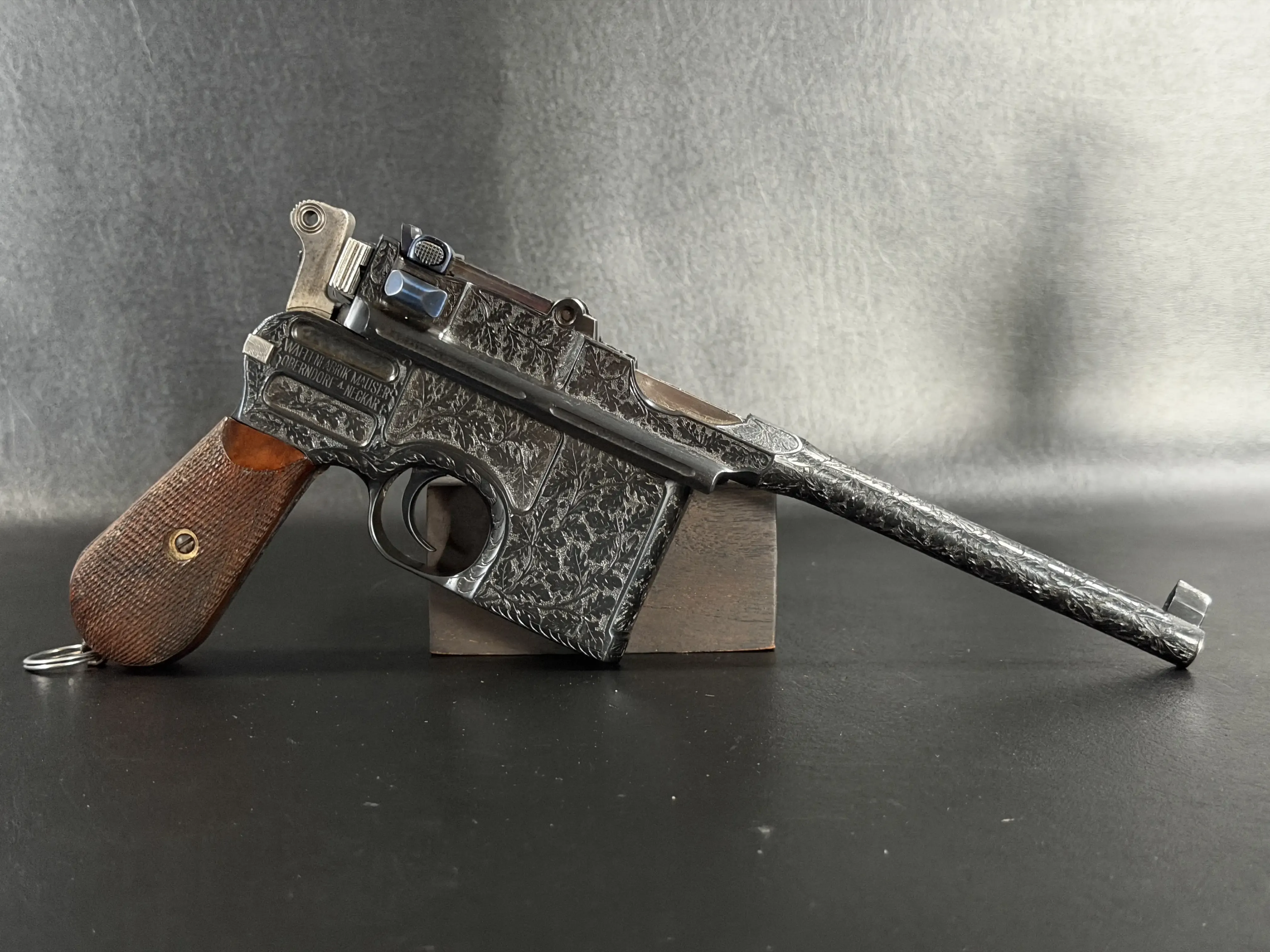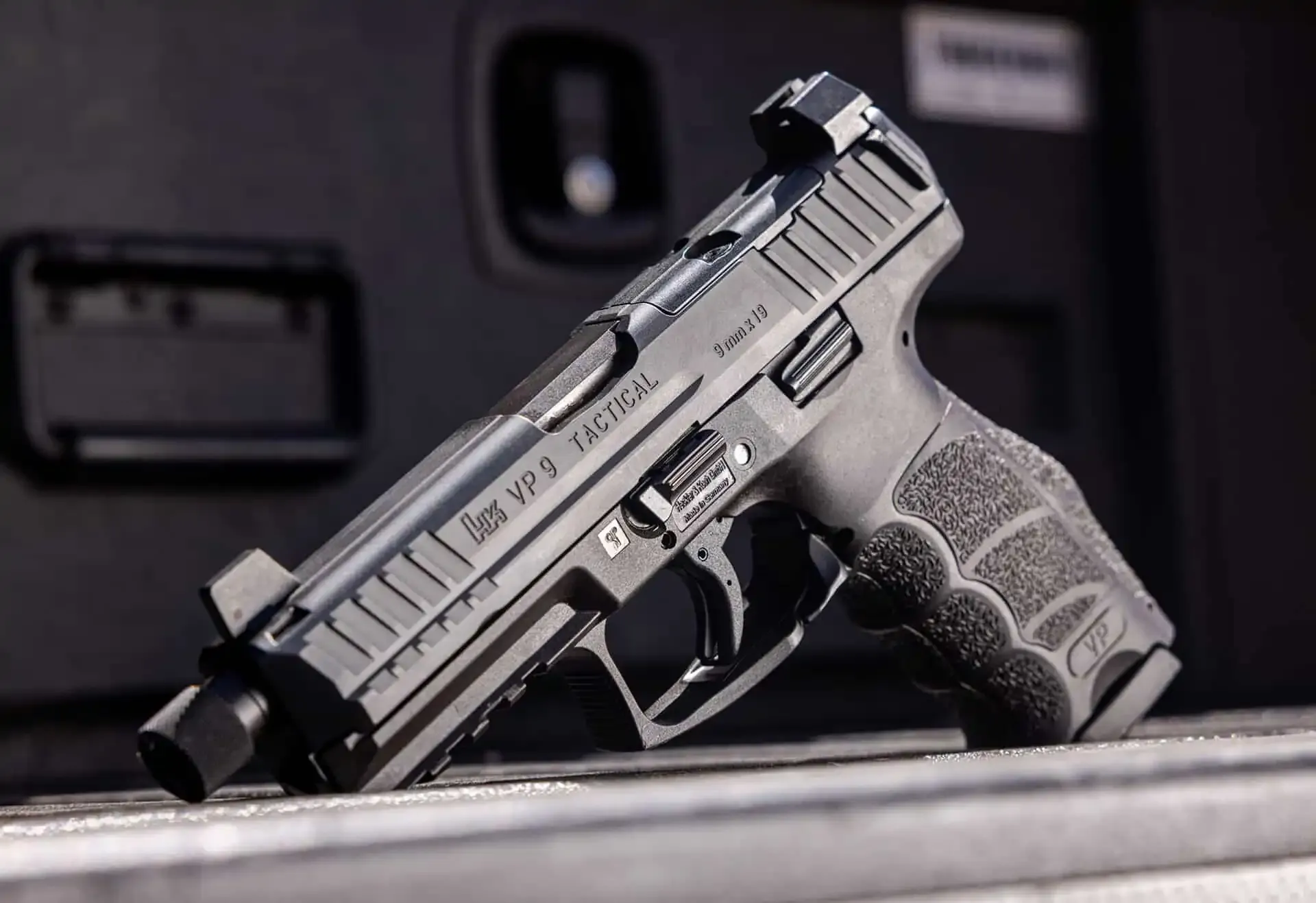
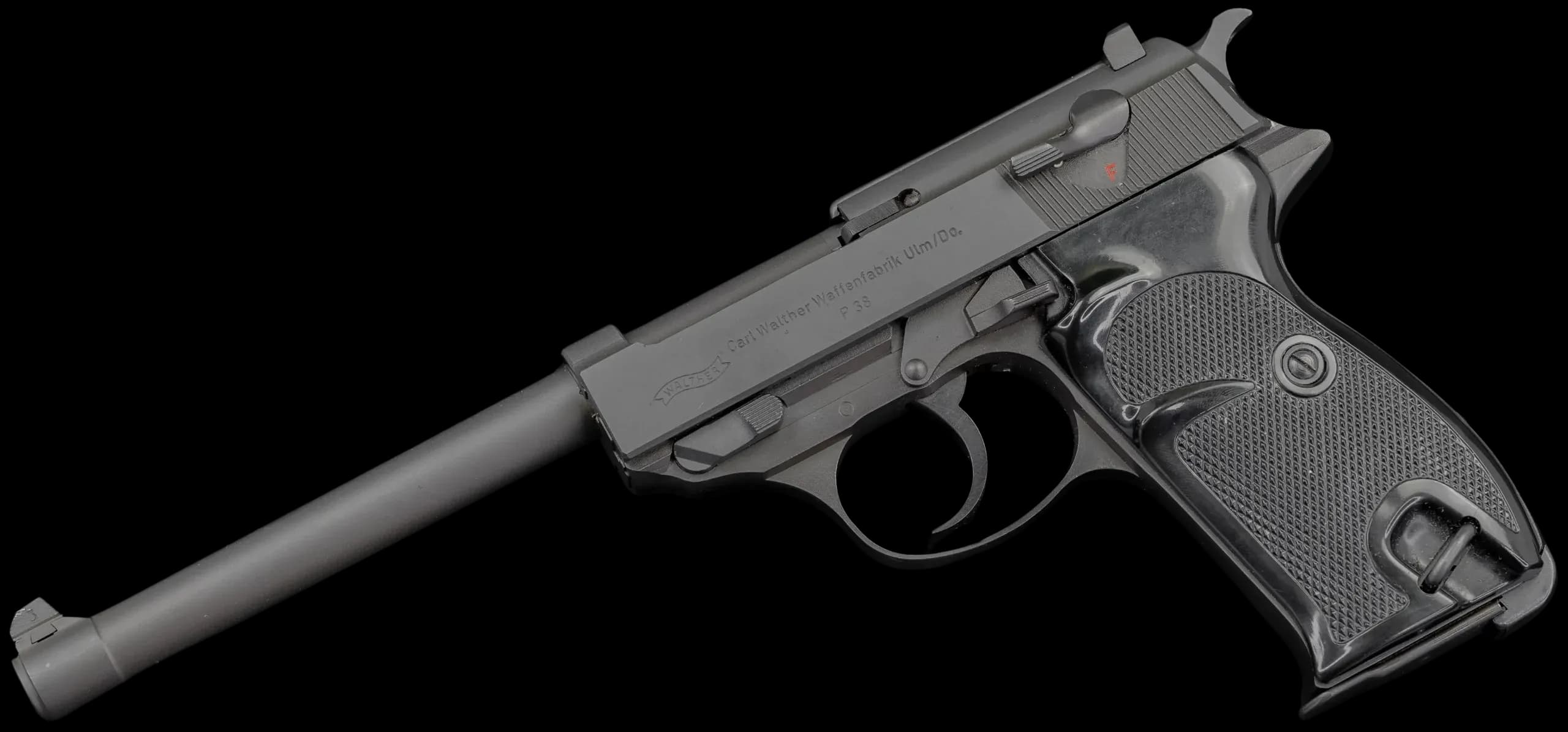
Key Takeaways
- Walther’s move from Zella-Mehlis to Ulm separates its pre-1945 heritage from its postwar recovery and later pistol development.
- The PP and PPK established Walther’s influential compact-pistol line, while the P38 led to the postwar P1 and influenced the P5.
- Collectors should evaluate factory legends, serial numbers, proof marks, date codes, mechanical features, condition, and documentation together.
Walther’s history is divided by geography. Zella-Mehlis was the birthplace of the company’s prewar pistols, including the PP, PPK, and P38. Ulm became the center of its postwar recovery and produced the P1, P5, P88, and later generations of defensive and sporting firearms.
For collectors, that transition provides a useful framework for evaluating Walther pistols. Factory legends, serial numbers, proof marks, date codes, and mechanical features should be examined together. No single marking establishes a pistol’s complete history.
Walther’s Beginnings in Zella-Mehlis
Carl Wilhelm Freund Walther established an independent gunsmithing workshop in Zella-Mehlis, Thuringia, in 1886. He initially produced hunting and target rifles built around Martini and Aydt actions. As the business expanded, Walther opened a small factory in 1903.[1]
Carl’s son Fritz became particularly interested in self-loading pistols while completing additional training in Berlin. After returning to Zella-Mehlis in 1908, he and his father completed the prototype that became the Walther Model 1. A German patent was granted in June 1911, after which production began in 6.35 mm Browning.[1]
Successive compact pistols followed, but the decisive development arrived in 1929 with the Walther PP.
The PP and PPK
The PP, or Polizeipistole, was introduced in 1929. It was a straight-blowback semiautomatic pistol with a fixed barrel, exposed hammer, and double-action/single-action trigger system. Its slide-mounted safety also allowed the hammer to be lowered without firing the chambered cartridge.[1][2]
Walther followed the PP with the shorter PPK in 1931. Both pistols were developed with police use in mind, although they also found a substantial civilian market.[1]
The PP established a basic mechanical and visual pattern that remained closely associated with Walther for decades. For collectors, however, “PP” and “PPK” are only starting points. Production period, caliber, factory markings, proof marks, finish, configuration, and documented history all affect how an individual example should be classified.
A Zella-Mehlis slide legend generally places a Walther within the company’s pre-1945 manufacturing period. Even then, the legend should be evaluated alongside the serial number, proof marks, component markings, and physical characteristics. A factory inscription alone does not prove originality, institutional issue, or association with a particular owner.
The P38 and Wartime Production
Walther entered the military-pistol market with the P38, a locked-breech 9 mm service pistol intended to replace the Pistole 08 gradually. Demand exceeded Walther’s production capacity, and German authorities directed Mauser and Spreewerk to manufacture the P38 as well.[1]
Walther’s company history states that approximately 1.2 million P38 pistols were produced by the end of the war, with Walther accounting for roughly 580,000. Because several manufacturers participated, wartime P38 identification requires more than recognition of the model name. Manufacturer codes, serial numbers, acceptance marks, proof marks, and component consistency must be examined together.[1]
The P38 was mechanically distinct from the blowback-operated PP family. Its locked-breech system and service-pistol format later provided the foundation for Walther’s postwar P1 and influenced the development of the P5.
War’s End and the Move to Ulm
The end of the Second World War brought Walther’s operations in Zella-Mehlis to a close. Fritz Walther escaped with a small collection of design drawings and the rights to more than 80 patents. He then began rebuilding the company near Ulm.[1]
The restarted business initially relied on office equipment and calculating machines rather than firearms. By April 1949, it had completed its 1,000th calculating machine. Firearms production resumed in Ulm with air rifles, the first 100 of which were ready for shipment by the end of 1950.[1]
Walther subsequently returned to the PP, PPK, and P38 families. The postwar P38 was developed into the P1, which became a sidearm of the newly established West German Bundeswehr. Other Ulm-era pistols included the TP, TPH, PP Super, P5, and P88.[1]
This history makes the factory location important, but collectors should avoid treating “Ulm” as a complete description. The Ulm period spans several decades, different models, changing proof requirements, and multiple commercial arrangements. A pistol must be evaluated within its particular production context.
The P5 and P88
The P5 carried the P38 lineage into a more compact postwar service pistol. Although its appearance and controls differed from those of the P38 and P1, its place in Walther’s historical sequence is clear: it belonged to the group of defensive pistols developed after firearms production was reestablished in Ulm.[1]
The P88 followed as another Ulm-era service pistol. It represented a further move away from the external form of the P38 family and toward the higher-capacity service-pistol market of the late 20th century.[1]
For collectors, condition and completeness are particularly important with discontinued models such as the P5 and P88. Original magazines, boxes, manuals, test targets, and accessories can add context, but they should not be assumed original to the pistol merely because they accompany it. Serial numbers, markings, and period-correct packaging must still agree.
Mechanical condition should also be assessed separately from exterior appearance. A pistol with an attractive finish may still contain replaced, altered, or heavily used internal components.
Corporate Change and the P99
In 1993, Wulf-Heinz Pflaumer and Franz Wonisch of the Umarex group acquired Walther. According to the company’s history, 90 percent of Walther’s shares were purchased, while the remaining interest stayed with members of the Walther family.[3]
The change of ownership was followed by renewed investment in the Ulm operation. At the 1996 IWA trade fair, Walther presented the P99, a polymer-framed, striker-fired service pistol developed under chief designer Horst Wesp and his team.[3]
The P99 incorporated interchangeable backstraps, a double-column magazine, and several trigger-system configurations. These variations matter in the collector market because two pistols carrying the P99 designation may differ mechanically and operationally.[3]
The P99 also marked a clear break from the metal-framed PP, P38, P5, and P88 generations. It established the polymer-frame and striker-fired direction that continued through later Walther defensive-pistol families, including the PPQ and PDP.
Expansion in Ulm
As Walther’s business recovered, the company outgrew its existing Ulm premises. Construction of a new 12,000-square-meter facility began in 2004. Walther occupied the building in 2005 and formally inaugurated it in 2006, the company’s 120th-anniversary year.[3]
Walther also acquired the Hämmerli brand and associated rights in 2006. The two companies already shared a postwar history: Hämmerli had manufactured the Walther Olympia pistol under license when occupation restrictions prevented firearms production in Ulm.[3]
These developments strengthened Walther’s sporting and defensive operations while preserving its historical connection to European target-pistol production.
Understanding German Proof and Date Marks
German proof marks record official testing. Under the current German Proof Ordinance, firearms and other highly stressed components must receive the applicable official proof mark. A proof-house location mark and a year mark must also appear on a highly stressed component.[4]
The proof year may be shown using the final two digits of the year. German regulations also permit an alphabetic code:
- A represents 0
- B represents 1
- C represents 2
- D represents 3
- E represents 4
- F represents 5
- G represents 6
- H represents 7
- I or J represents 8
- K represents 9
A two-letter code therefore represents the final two digits of the proof year.[4]
Collectors should distinguish the proof date from the manufacturing or shipping date. Proofing normally occurred close to production, but the mark directly establishes only when the firearm or component passed the applicable test.
Proof marks also should not be confused with military, police, or other government acceptance marks. A proof mark records testing under the proof system. An acceptance or property mark may document a separate institutional process.
A Disciplined Collector’s Examination
A credible evaluation begins with the physical pistol. Before accepting a seller’s description, collectors should:
- Record every visible serial number and suffix.
- Photograph both sides of the slide, the frame, the barrel chamber, and the trigger-guard area.
- Identify the complete factory legend rather than relying on the model designation alone.
- Decode the proof year where the applicable marking system permits it.
- Check whether numbered or proofed components are consistent with one another.
- Look for evidence of refinishing, altered markings, replacement parts, or added engraving.
- Require documentary evidence for claims of military, police, government, or notable-person ownership.
Boxes, manuals, magazines, test targets, and other accessories should receive the same scrutiny. An accessory can be correct for the period without being original to the individual pistol.
Walther’s journey from Zella-Mehlis to Ulm produced several distinct collecting fields rather than one continuous category. A prewar PP, wartime P38, postwar P5, and polymer-framed P99 should each be judged against the standards of its own manufacturing period. Careful interpretation of physical evidence remains more reliable than an attractive but undocumented sales narrative.
Frequently Asked Questions
What distinguishes a Zella-Mehlis Walther from an Ulm Walther?
Zella-Mehlis is associated with Walther’s pre-1945 production, while Ulm became the company’s postwar manufacturing center. Factory legends should still be checked against serial numbers, proof marks, and physical features.
When were the Walther PP and PPK introduced?
Walther introduced the PP in 1929 and the shorter PPK in 1931. Both were developed for police use but also found a substantial civilian market.
How is the P5 related to the P38?
The P5 continued the P38’s locked-breech mechanical lineage in a more compact postwar service-pistol design. It should not be viewed as simply a shortened P38 because its form and controls were substantially revised.
What does a German proof-year code establish?
It records the year in which the firearm or proofed component passed official testing. It does not necessarily identify the exact assembly or shipping date.
How should collectors authenticate a Walther pistol?
Collectors should compare all serial numbers, factory legends, proof marks, date codes, mechanical features, and accessories. Claims of institutional use or notable ownership should be accepted only when supported by credible documentation.
Sources
- Carl Walther GmbH, “The First Century”.
- Dave Campbell, American Rifleman, “A Look Back at the Walther PP”, April 6, 2018.
- Carl Walther GmbH, “The Second Century”.
- German Federal Ministry of Justice, German Proof Ordinance, Section 9.
As a firearms enthusiast with a background in website design, SEO, and information technology, I bring a unique blend of technical expertise and passion for firearms to the articles I write. With experience in computer networking and online marketing, I focus on delivering insightful content that helps fellow enthusiasts and collectors navigate the world of firearms.
Comments
Be the first to leave a comment.
Be the first to read new editorial features, collector guides, and brand spotlights.