Key takeaways
- The military sought a common sidearm that fired NATO-standard 9 mm ammunition to replace its mix of .45-caliber pistols and .38-caliber revolvers.[1][3]
- Beretta charged more per pistol than SACO, but its lower magazine price helped put its evaluated package about $3 million below SACO’s.[1][4]
- The GAO concluded that the Army unfairly excluded Smith & Wesson’s 459M and should have evaluated its price.[1]
SACO offered the U.S. Army a lower price per pistol in the 1984 XM9 pistol trials. Beretta won with a lower price for the full package of pistols, magazines, and spare parts. The Army’s comparison counted four spare magazines per pistol, making Beretta’s lower magazine price decisive.[1][2]
Why the military wanted a 9 mm sidearm
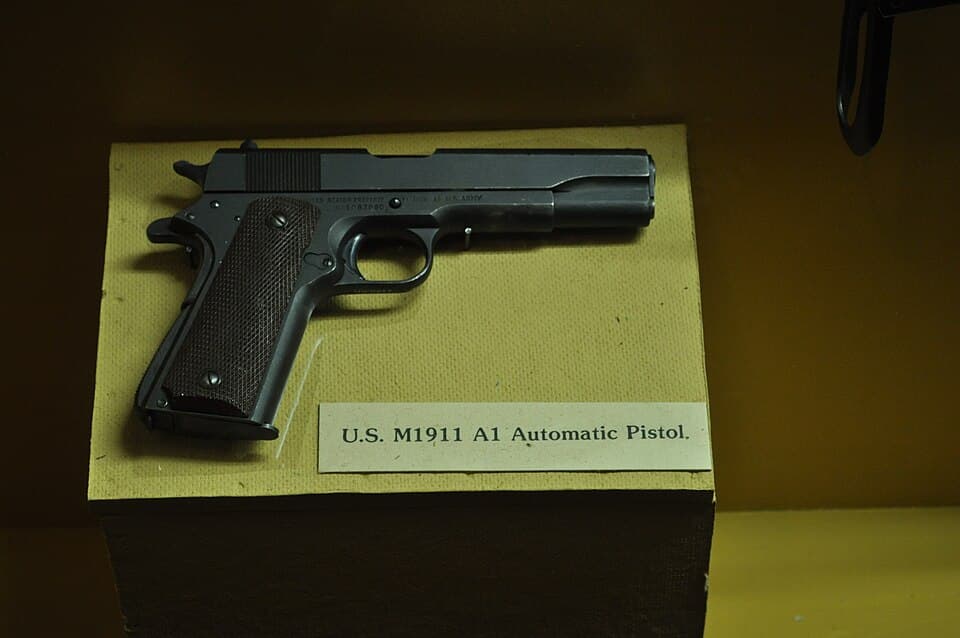
In 1978, the House Appropriations Committee recommended standardizing military handguns and ammunition to reduce supply and maintenance costs. By 1980, the Department of Defense had concluded that a pistol firing NATO-standard 9 mm ammunition could replace the services’ .45-caliber pistols, including the M1911A1, and their .38-caliber revolvers.[1][3]
Preliminary Air Force tests favored Beretta. The Army considered those tests insufficiently controlled to justify an award without competition. Four manufacturers entered the first Army competition in late 1981. None met every mandatory requirement, and the Army canceled the competition in February 1982. A joint-service committee revised the requirements so commercially available pistols would have a better chance of qualifying.[1][3]
What the Army tested in 1984
The Army tested reliability and durability at Fort Dix. At Aberdeen Proving Ground, it evaluated performance in mud, salt water, heat, and cold, as well as compatibility with different types of ammunition. At Fort Benning, soldiers of different sizes and experience levels fired the pistols as part of the handling evaluation.[1]
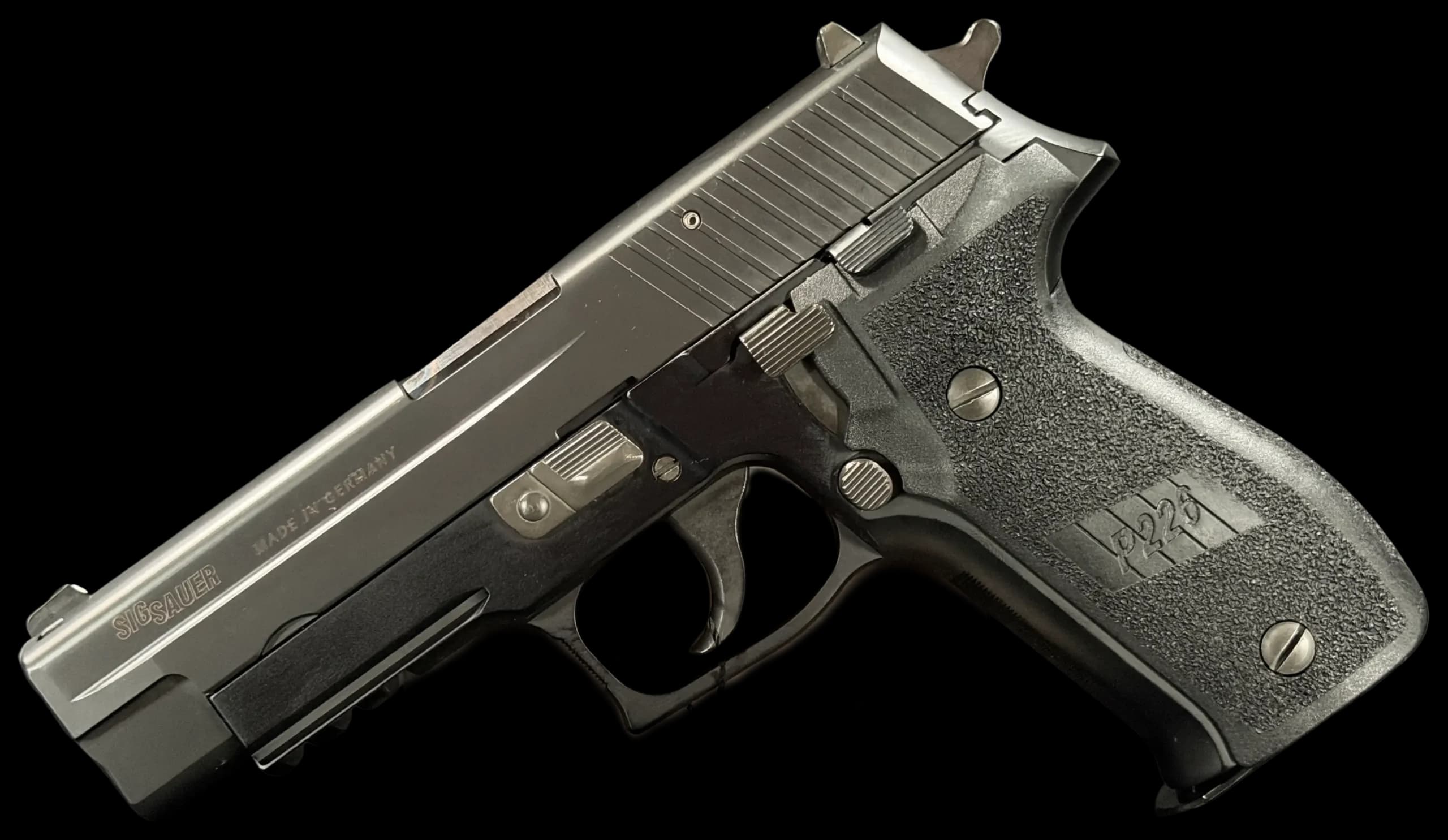
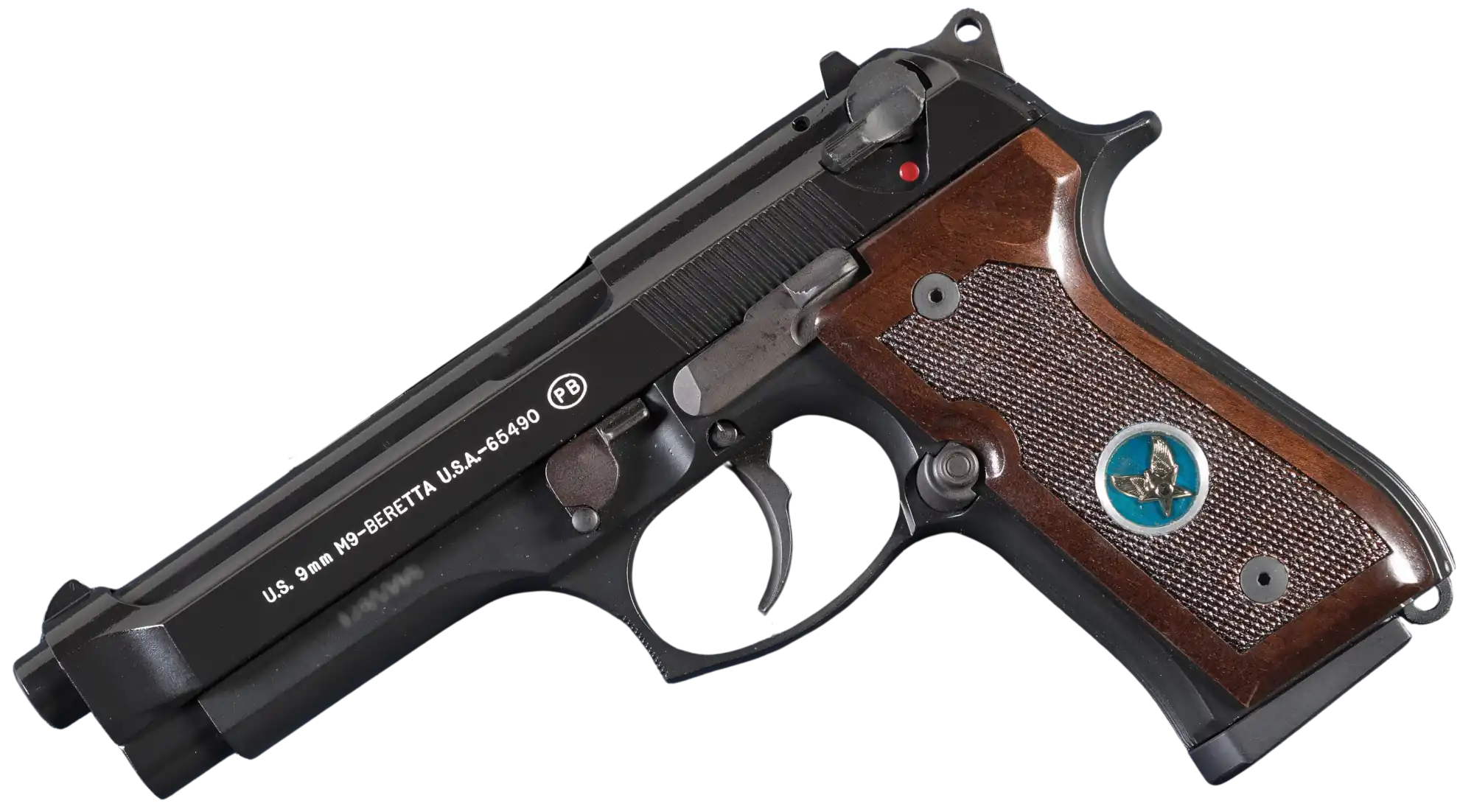
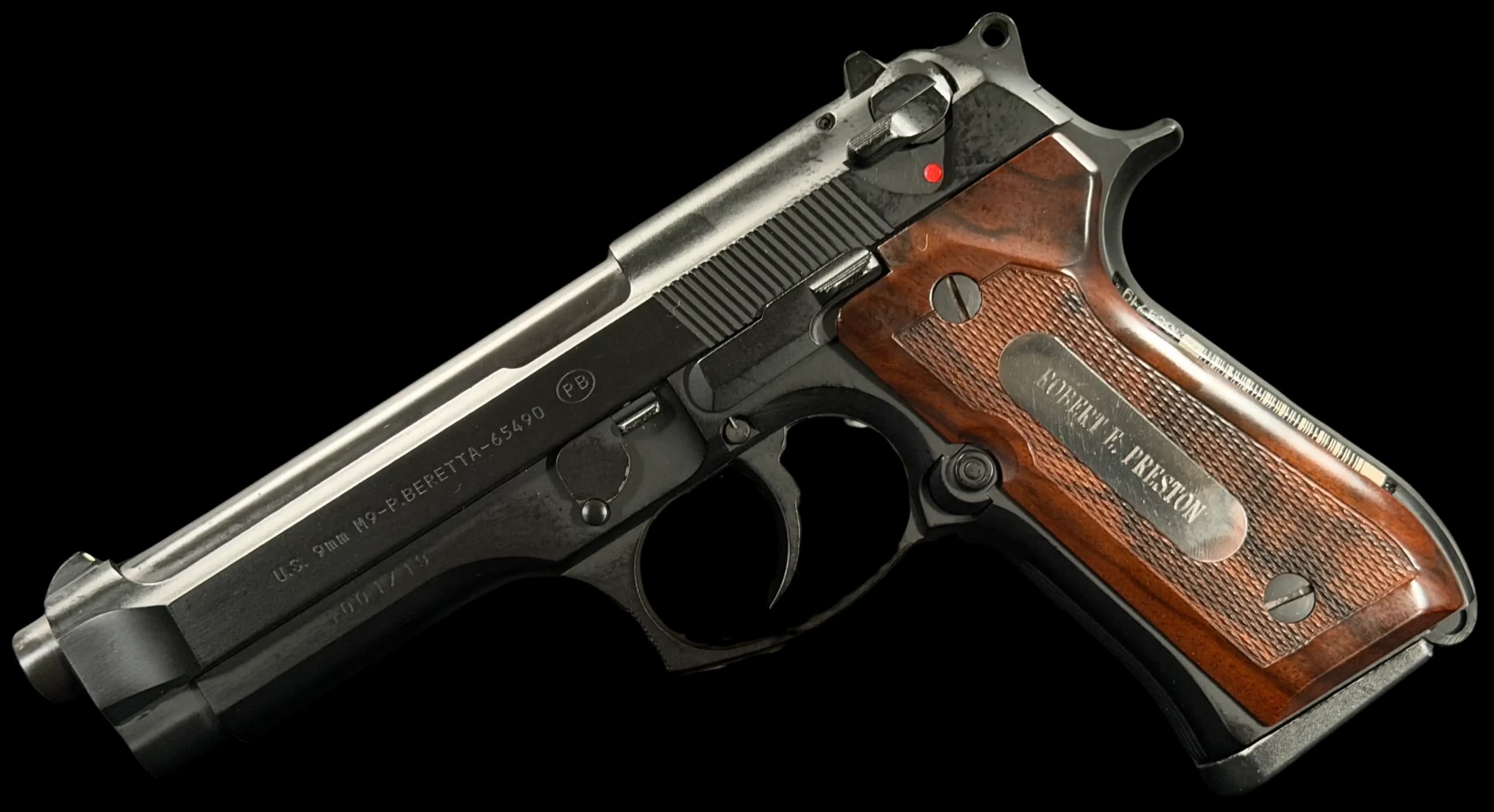
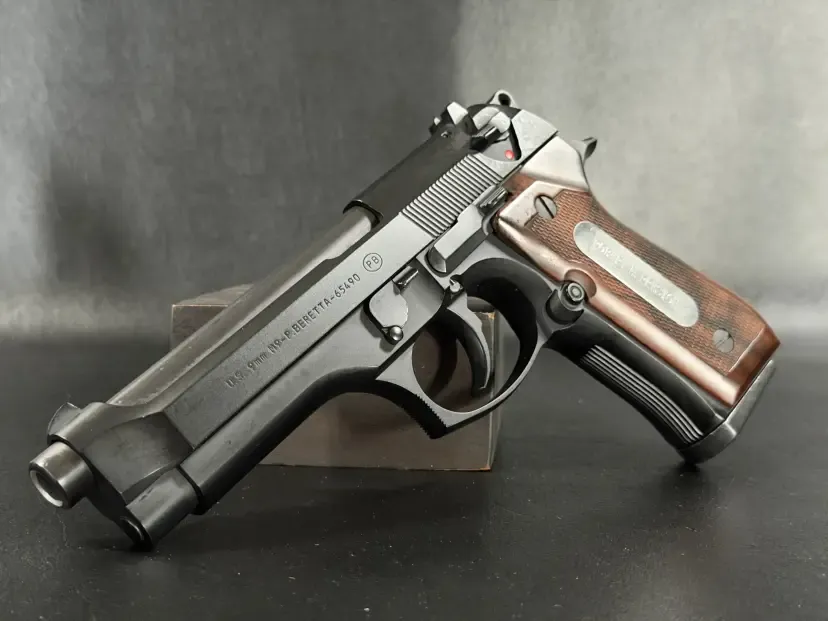
Eight manufacturers entered. Two withdrew, and the Army disqualified four. The Army judged only two pistols technically acceptable and invited their suppliers to submit prices. They were the Beretta 92SB-F and the SIG Sauer P226, submitted by SACO Defense Systems Division of the Maremont Corporation.[1]
How magazine prices changed the result
Cost was one of six factors in the Army’s evaluation. SACO led after the initial offers. In its final offer on December 11, 1984, Beretta cut its pistol price from $217.84 to $178.50. SACO held its price at $176.33 per pistol.[1][4]
Beretta quoted $9.30 per spare magazine and $209.42 per spare-parts set. SACO quoted $11.95 per magazine and $221.79 per set. The Army’s price comparison counted four spare magazines per pistol and one spare-parts set per ten pistols. Each set covered the components of a complete pistol except the frame.[1]
Appendix IV of the U.S. General Accounting Office investigation shows that SACO was nearly $300,000 cheaper for pistols and parts alone. Including magazines brought Beretta’s five-year evaluated total to $74,762,307, compared with $77,816,402 for SACO. That price advantage of about $3 million gave Beretta the higher overall score.[1][4]
The Army announced its selection on January 14, 1985. Protests and litigation delayed the contract signing with Beretta U.S.A. until April 10.[1][4] The pistol received the designation M9 and was first issued in 1986.[2][5]
What the 1986 GAO investigation found
The GAO found no deliberate favoritism in the 1984 Army tests and no indication that a secret agreement with Italy influenced the award. The firing-pin test challenged as covert took place at Fort Dix, as specified in the test plan. The GAO could neither confirm nor rule out a leak of SACO’s prices to Beretta.[1]
Federal courts upheld Smith & Wesson’s exclusion, but the GAO concluded that the Army had unfairly eliminated the company’s 459M. A metric conversion error had set the firing-pin energy threshold too high. The Army also required each test pistol to last at least 5,000 rounds after telling entrants that 5,000 rounds was the required average. Smith & Wesson’s three test pistols averaged at least 6,000 rounds. The GAO concluded that the 459M should have advanced to the price round. Because the Army never evaluated Smith & Wesson’s price, Beretta’s cost advantage was established only against SACO.[1]
Related profiles · Colt M1911A1 · SIG Sauer P226 · Beretta 92 and M9 family
Frequently asked questions
What did the Army test in the 1984 XM9 pistol trials?
The Army tested reliability, durability, ammunition compatibility, and performance in conditions including mud, salt water, heat, and cold. Soldiers also fired the pistols in handling tests.[1]
Which pistols reached the final round?
The Army advanced the Beretta 92SB-F and the SIG Sauer P226 to the price round. SACO Defense Systems submitted the P226.[1]
How did magazine pricing affect the award?
Beretta quoted $9.30 per spare magazine, compared with SACO’s $11.95. At four spare magazines per pistol in the Army’s evaluation, that difference reversed SACO’s price lead on pistols and parts.[1]
When did the Army choose the Beretta M9?
The Army announced its selection on January 14, 1985, and signed the contract on April 10. The M9 was first issued in 1986.[1][5]
Why did the GAO conclude that Smith & Wesson was unfairly excluded?
The Army set the firing-pin energy threshold too high because of a metric conversion error. It also applied a 5,000-round minimum to each pistol after telling entrants that 5,000 rounds was the required average.[1]
Sources
[1] U.S. General Accounting Office. Pistol Procurement: Allegations on Army Selection of Beretta 9-mm. as DOD Standard Sidearm. GAO/NSIAD-86-122, June 16, 1986, pp. 1–8, 14–24, 46–52.
[2] U.S. General Accounting Office. “B-232681.2, B-232681.3.” February 9, 1989.
[3] Comptroller General of the United States. Proposed Program for New 9-mm. Handguns Should Be Reexamined. PLRD-82-42, March 8, 1982, pp. 1–2, 5.
[4] U.S. Court of Appeals for the First Circuit. Saco Defense System Division v. Weinberger. 806 F.2d 308, pp. 309–310, December 3, 1986.
[5] Lacdan, Joe. “Army to begin fielding new modular handguns in November.” Army News Service, July 21, 2017.
As a firearms enthusiast with a background in website design, SEO, and information technology, I bring a unique blend of technical expertise and passion for firearms to the articles I write. With experience in computer networking and online marketing, I focus on delivering insightful content that helps fellow enthusiasts and collectors navigate the world of firearms.
Comments
Be the first to leave a comment.
Be the first to read new editorial features, collector guides, and brand spotlights.