
On October 14, 1959, an Italian proof house returned the first production sample of a reproduction of the 1851 Colt Navy revolver to a small, new workshop in Gardone Val Trompia, the gunmaking valley outside Brescia. The workshop belonged to Aldo Uberti, a Beretta-trained gunsmith who had spent years polishing stocks and fitting parts before opening his own shop that year to build components for other manufacturers. The Navy revolver was something different. At the request of American importer Val Forgett and his Navy Arms partners, who had identified a market for shootable copies of Civil War-era pistols that had grown too scarce and valuable to fire, Uberti built a working reproduction rather than a display piece. It became the company's actual starting point.
Uberti's approach rested on a simple premise: originals worth collecting were also worth shooting, provided the copy was faithful in more than silhouette. His training under Beretta and at the Zanardelli gunmaking school gave him the tooling background to match dimensions and lockwork, not just outward appearance, and this became the standard the company held to as its range grew from the 1851 Navy into other Colt and Remington percussion patterns, the 1860 Henry rifle, and eventually the Winchester lever guns.
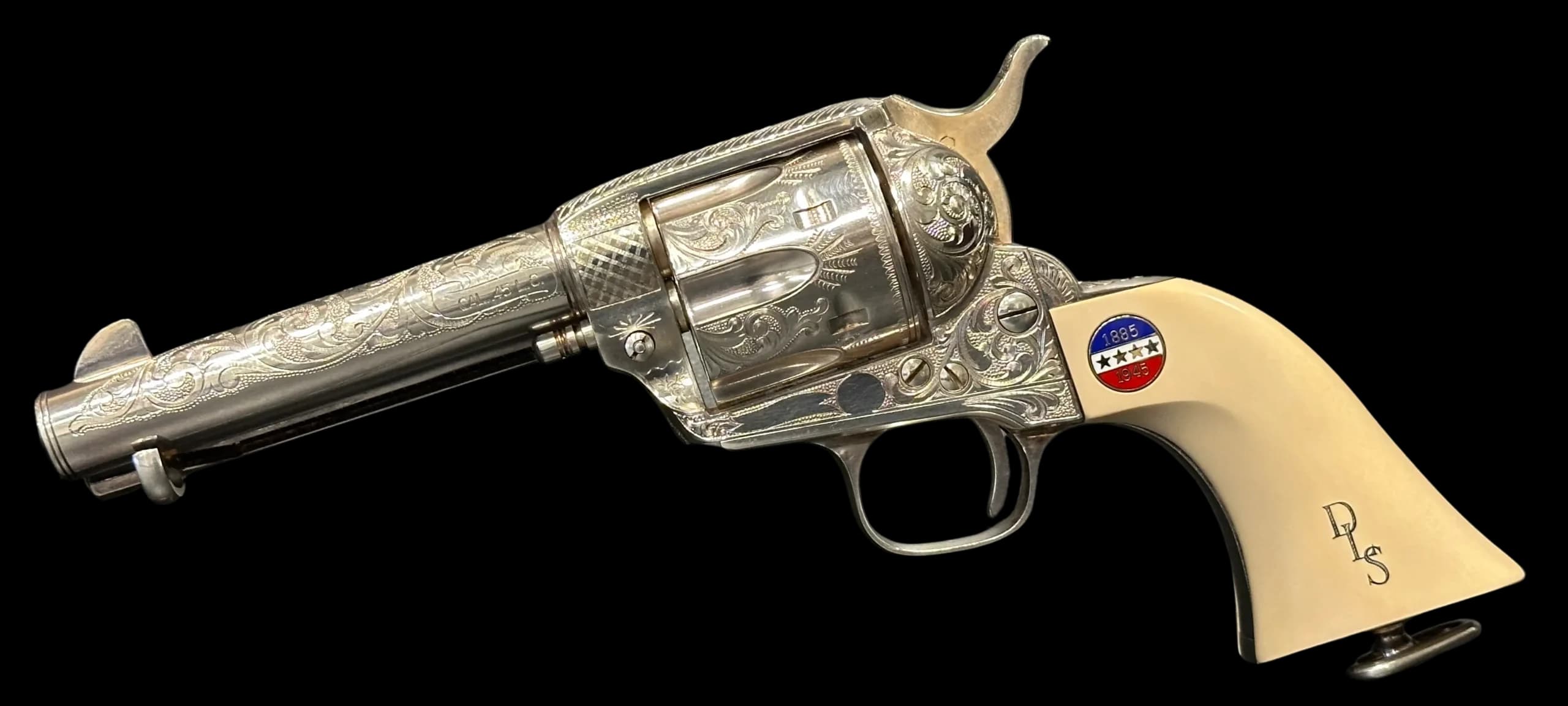
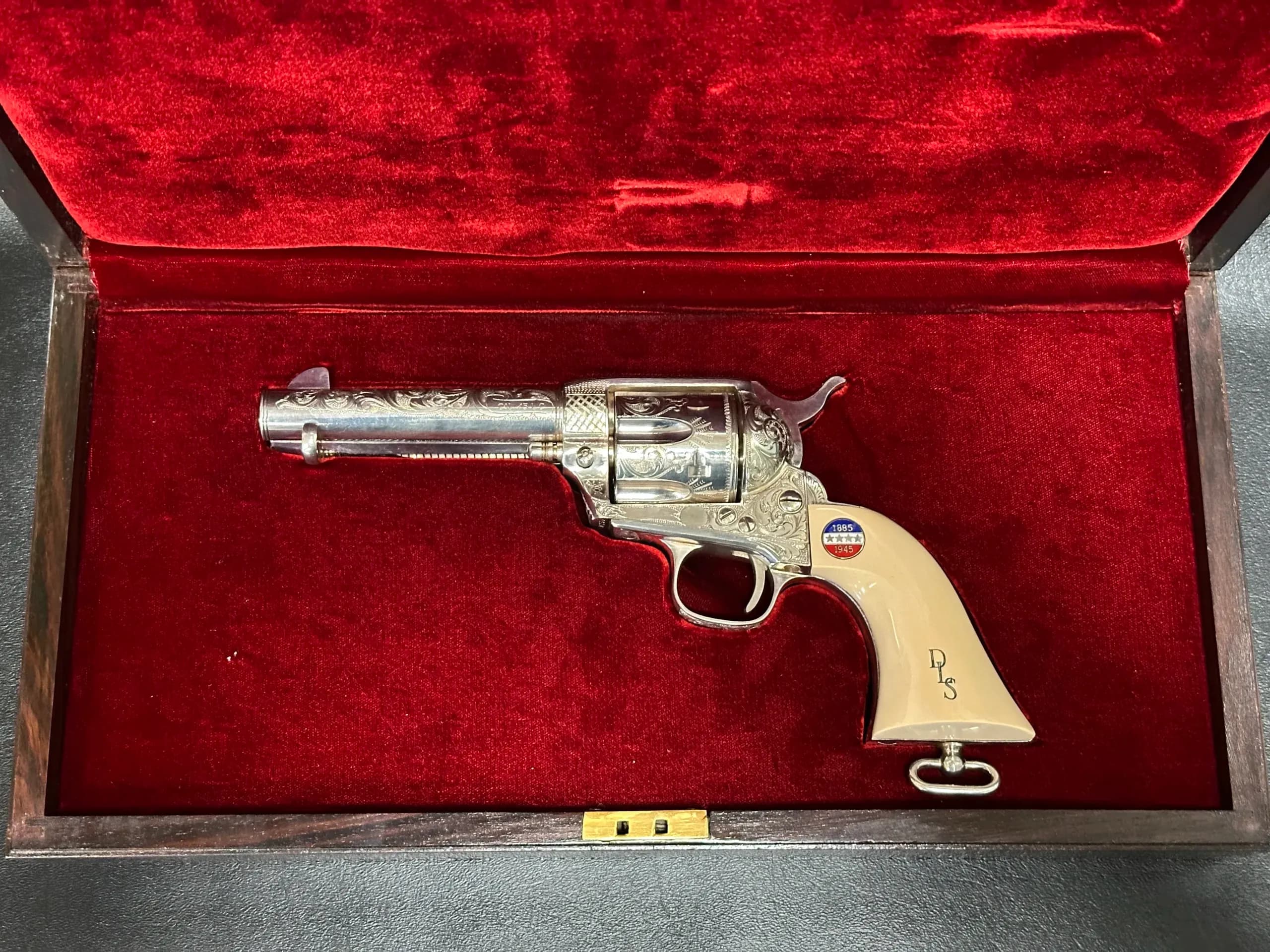
The company's visibility changed in the mid-1960s, when director Sergio Leone came to Gardone Val Trompia for the guns that would appear in A Fistful of Dollars, For a Few Dollars More, and The Good, the Bad and the Ugly. The films put Uberti revolvers in front of an international audience and pulled the business well beyond its original market of collectors and re-enactors. Around the same period, in 1966, by the company's own account, Uberti added a reproduction of the Colt Single Action Army, later sold as the Cattleman. It has since become the most recognizable model in the catalog and, alongside the 1873 Winchester-pattern rifle, a mainstay of the Cowboy Action Shooting sport that took shape in California in the early 1980s and was formalized under the Single Action Shooting Society in 1987.
Aldo Uberti ran the company until his death on March 21, 1998. His sons kept the business operating afterward, and, by the company's own account, it joined the Beretta group in 2000 (some trade references date the purchase to late 1999), an arrangement facilitated by a family connection, since Uberti's wife was related to the Berettas. Beretta financed a move into a new factory building in Gardone Val Trompia in 2002 and added CNC machinery to a production process that had relied heavily on hand-fitting. Uberti remains at that address today, operating within the Beretta group alongside Benelli, with US sales and distribution handled through Benelli USA in Accokeek, Maryland.
For a collector, Uberti occupies an unusual position: a manufacturer built entirely around firearms whose originals are otherwise locked away in museums or advanced collections, bought by its customers as often to be fired as to be displayed. Alongside the Cattleman, the catalog now runs from Walker and Dragoon-pattern percussion revolvers through Schofield-style top-breaks and lever and single-shot rifles up to the 1894. Uberti also supplies frames, cylinders, and barrels to other firearms brands, including Beretta, Taurus, and Cimarron Firearms. Its guns have appeared on screen well beyond the Leone films, in Westerns from True Grit to Tombstone, and remain a standard reference point for re-enactors and Old West shooting sports.
History & Milestones
Aldo Uberti opens his own workshop
Trained at Beretta and the Zanardelli gunmaking school, Aldo Uberti founded his own srl in Gardone Val Trompia to build components for other manufacturers, then returned the company's first reproduction 1851 Colt Navy revolver from the Italian proof house that October.
Sergio Leone commissions guns for his westerns
Director Sergio Leone visited the Gardone Val Trompia workshop to source revolvers for A Fistful of Dollars and its two sequels, putting Uberti's guns in front of an international movie audience for the first time.
Uberti introduces a Colt Single Action Army copy
The company added its reproduction of the Colt Single Action Army, later marketed as the Cattleman, which became Uberti's flagship model and remains its best-known cartridge revolver.
Cowboy Action Shooting emerges as a sport
The competitive discipline that became Cowboy Action Shooting began in California, built around single-action revolvers and lever rifles of the type Uberti had been producing for two decades. The sport was formalized under the Single Action Shooting Society in 1987.
Aldo Uberti dies; his sons continue the business
Aldo Uberti died on March 21, 1998, after nearly forty years running the company he founded. His sons kept the workshop operating in the period immediately following his death.
Beretta folds Uberti into its group
By the company's own account, Uberti joined the Beretta group in 2000 (some trade references date the deal to late 1999), beginning the ownership structure that continues today.
Uberti moves into a new factory
Beretta financed a move into a modern, purpose-built factory in Gardone Val Trompia, adding CNC machinery to a production process that had previously relied heavily on hand-fitting.
Stoeger Industries begins importing Uberti to the US
US import and distribution shifted to Stoeger Industries of Pocomoke, Maryland, formalizing the supply chain that brought Uberti products to the American market.
Uberti marks the 1873 rifle's 150th anniversary
To mark 150 years since the Winchester 1873's introduction, Uberti released a limited engraved anniversary rifle, continuing its practice of tying new variants to historical milestones of the guns it replicates.