
In the years after the 2008 downturn, a precision manufacturer in Butler County, Pennsylvania, was looking for new work. Penn United Technologies, a machining firm that had spent decades cutting parts for the medical and aerospace industries, began exploring whether it could apply the same tolerances to something far less clinical: a 1911 pistol. Rob Bianchin, a Canadian-born economist who had taken US citizenship after a visit to Philadelphia's Constitution Center, left him wanting to own a piece of the American story he'd just read about; he saw the opportunity and built a company around it.
The premise was narrow and specific. Where most 1911 makers rely on skilled hand-fitting to make loose factory tolerances work together, Cabot set out to machine parts precisely enough that they would interchange without hand labor, the way an aerospace component does. Frames and slides are cut from solid American billet steel rather than cast or metal-injection-molded, and tolerances are held to the thousandths of an inch, in places to the millionths. Cabot introduced itself to the public at the 2011 NRA Annual Meeting in Pittsburgh with four models, starting around $4,300, a price that drew as much skepticism as attention from a market used to paying far less for a 1911.
The brand's reputation took shape around specific, visible choices rather than general marketing. Its original flagship, the Jones, was named for Carl Jones, Penn United's late founder, and carried a star-pierced trigger and "Trinity Stripe" cocking serrations designed as a quiet nod to his faith. In January 2015, Cabot introduced the S-Class, its S100 Government and S103 Commander models, at roughly half the price of the original line, and used the S103 platform to build a true mirror-image left-handed 1911, requiring the frame, slide, and eight other components to be re-engineered from scratch rather than simply flipped.
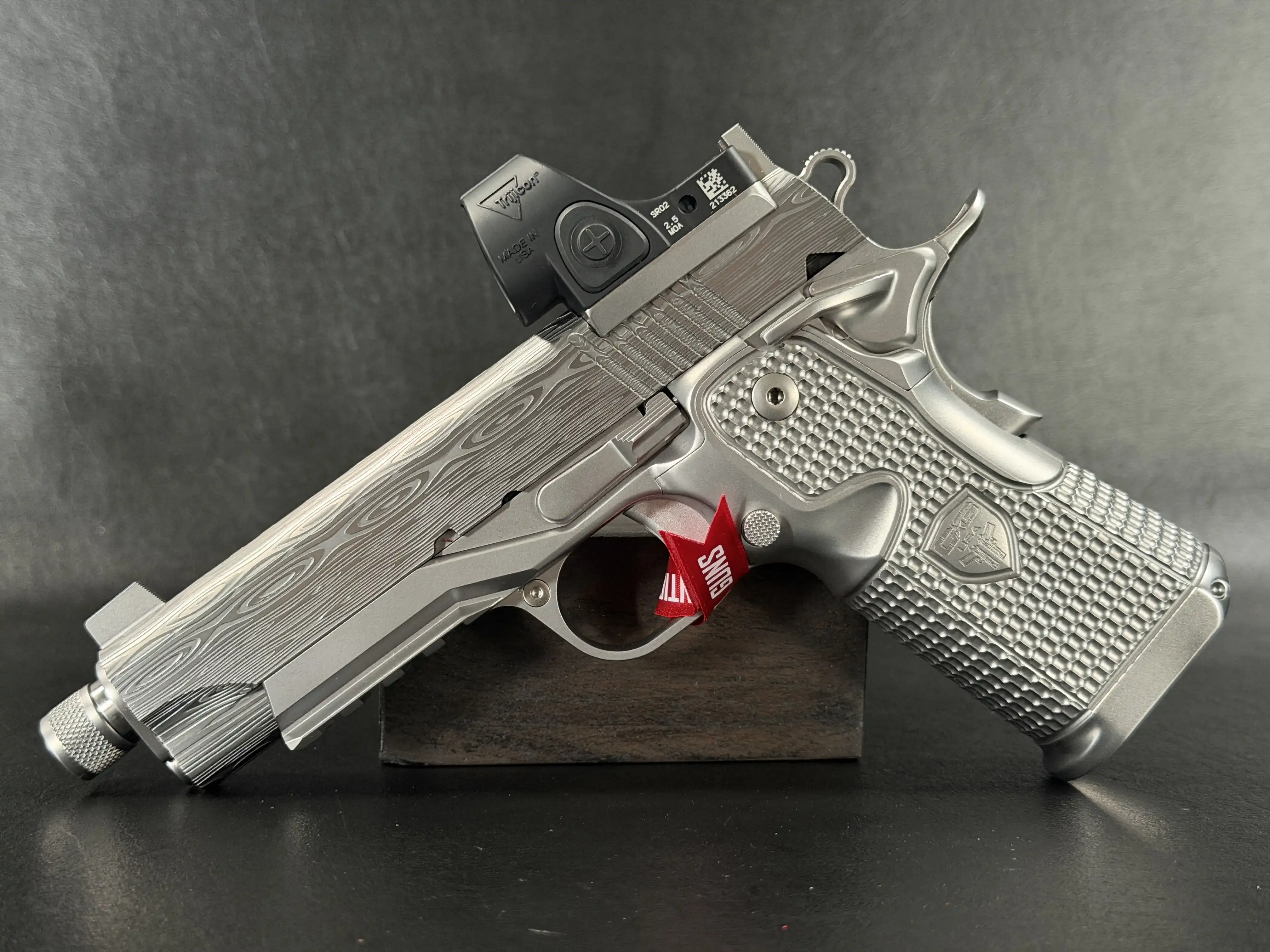
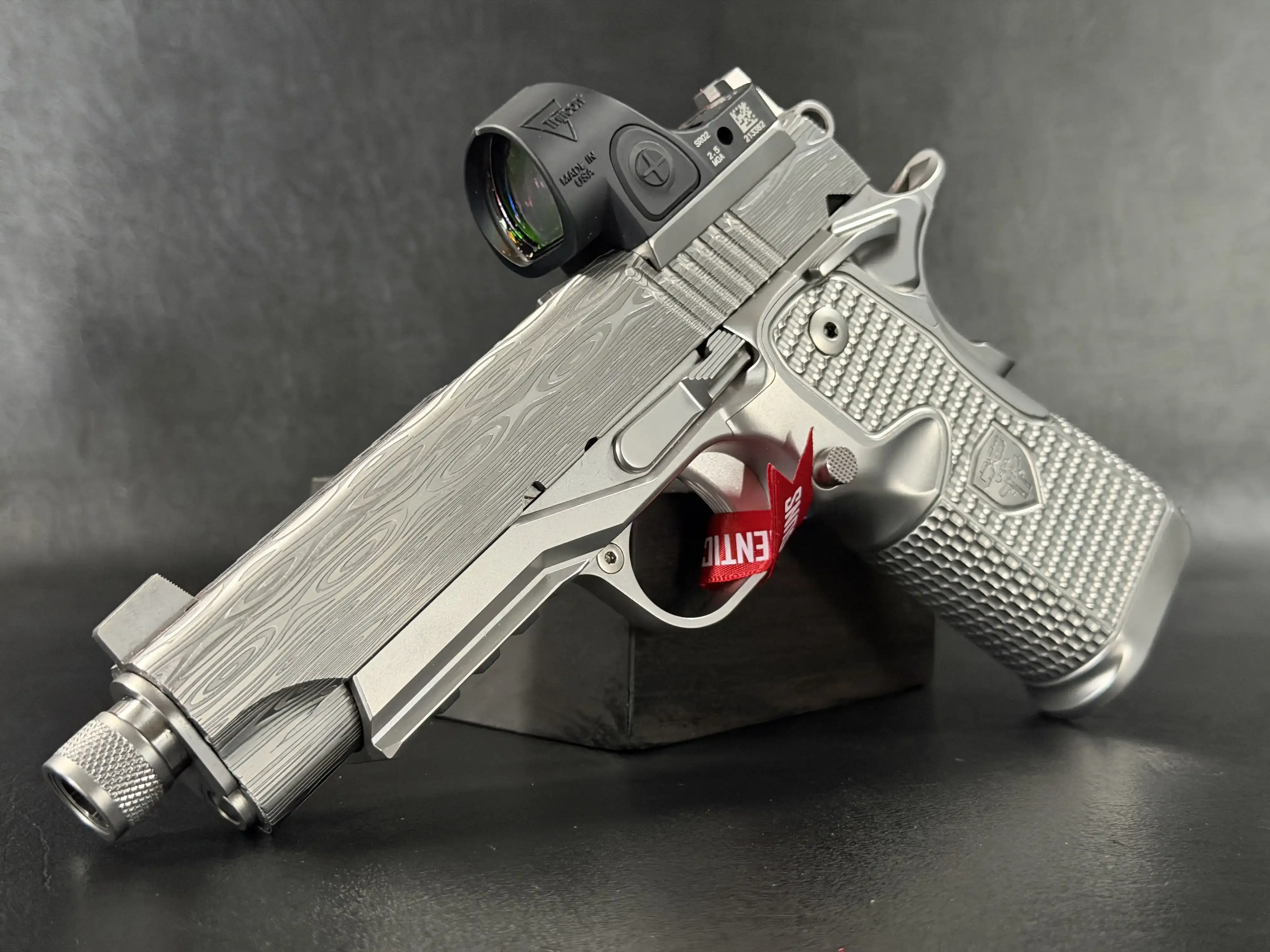
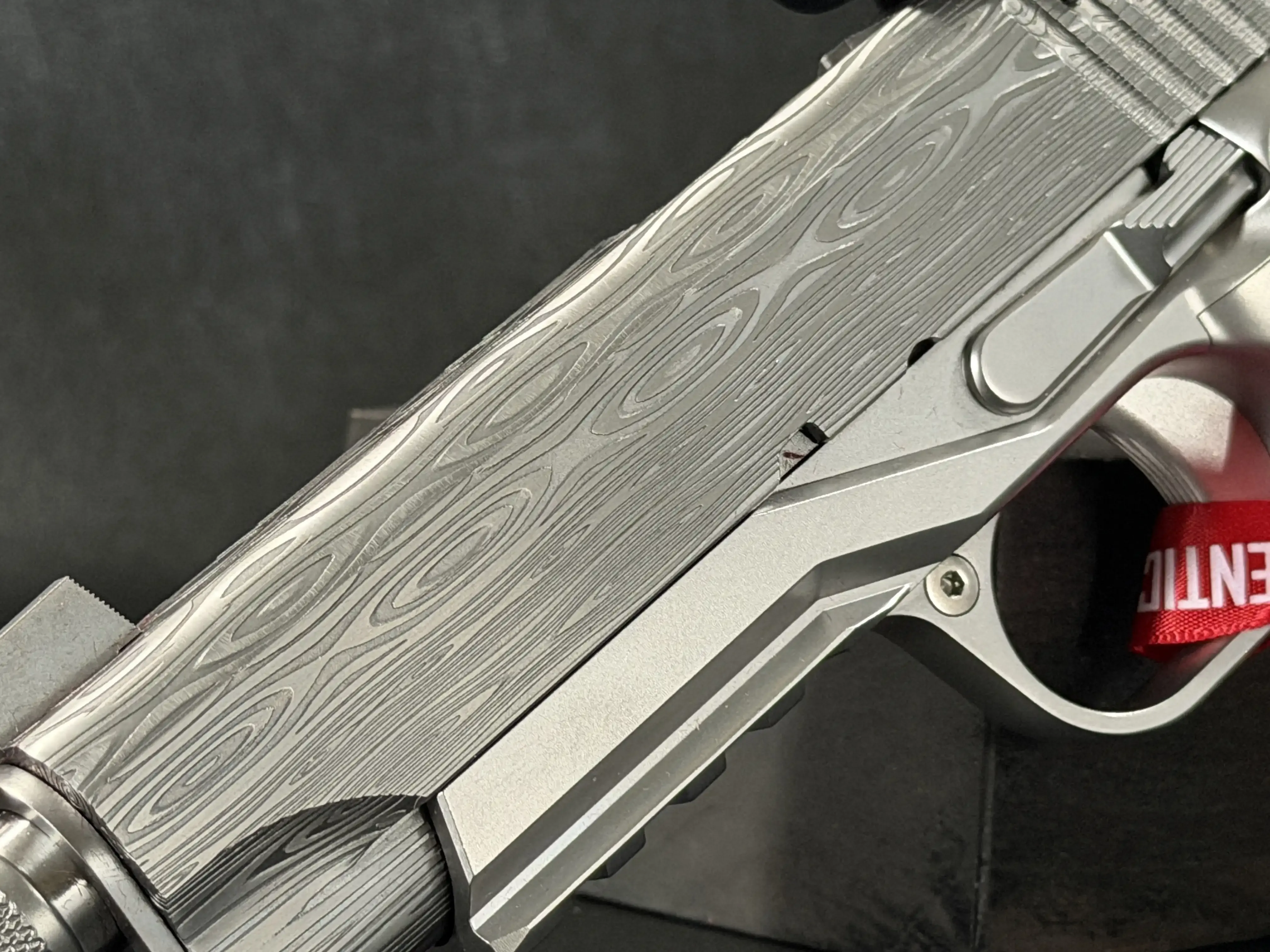
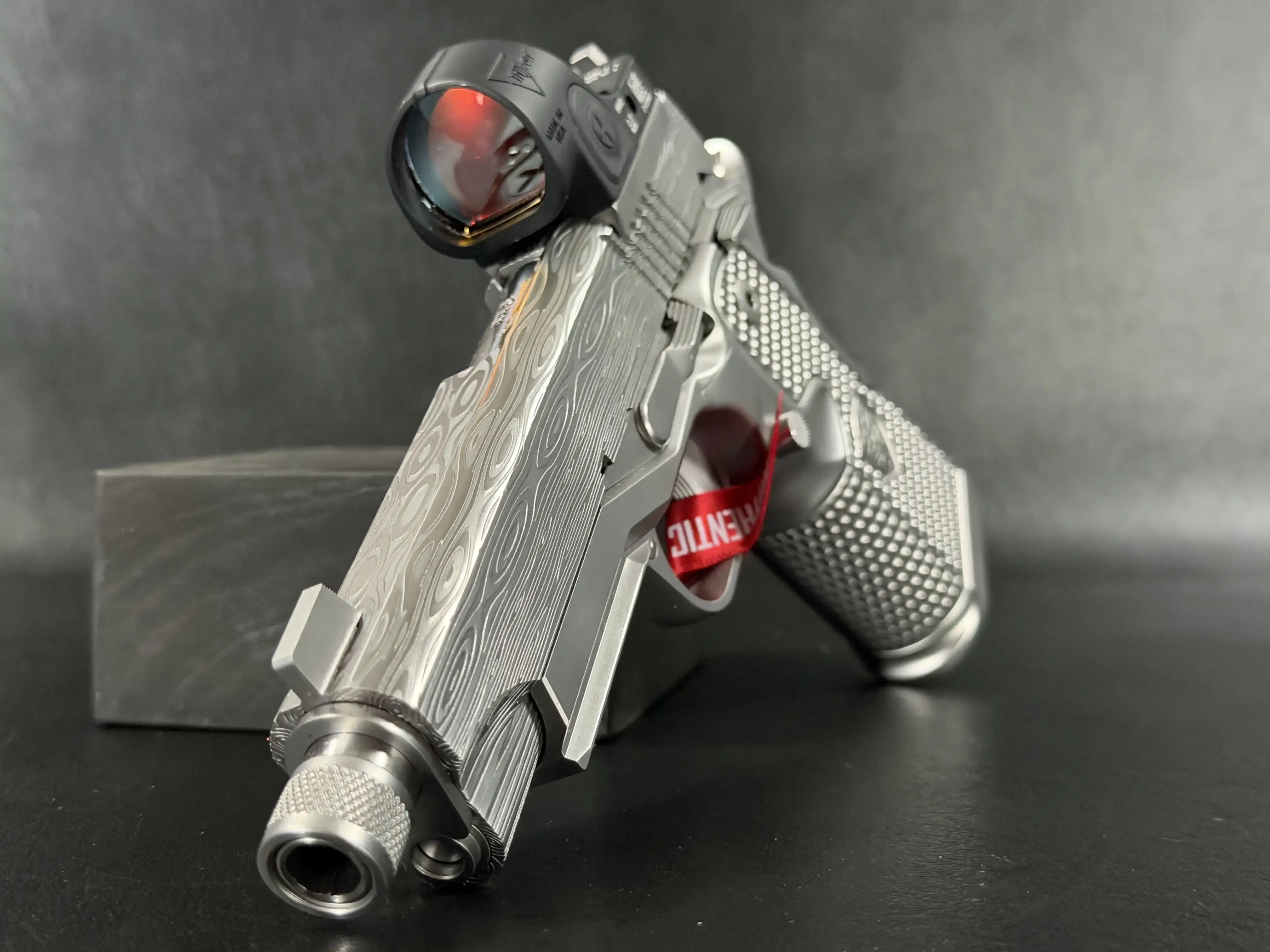
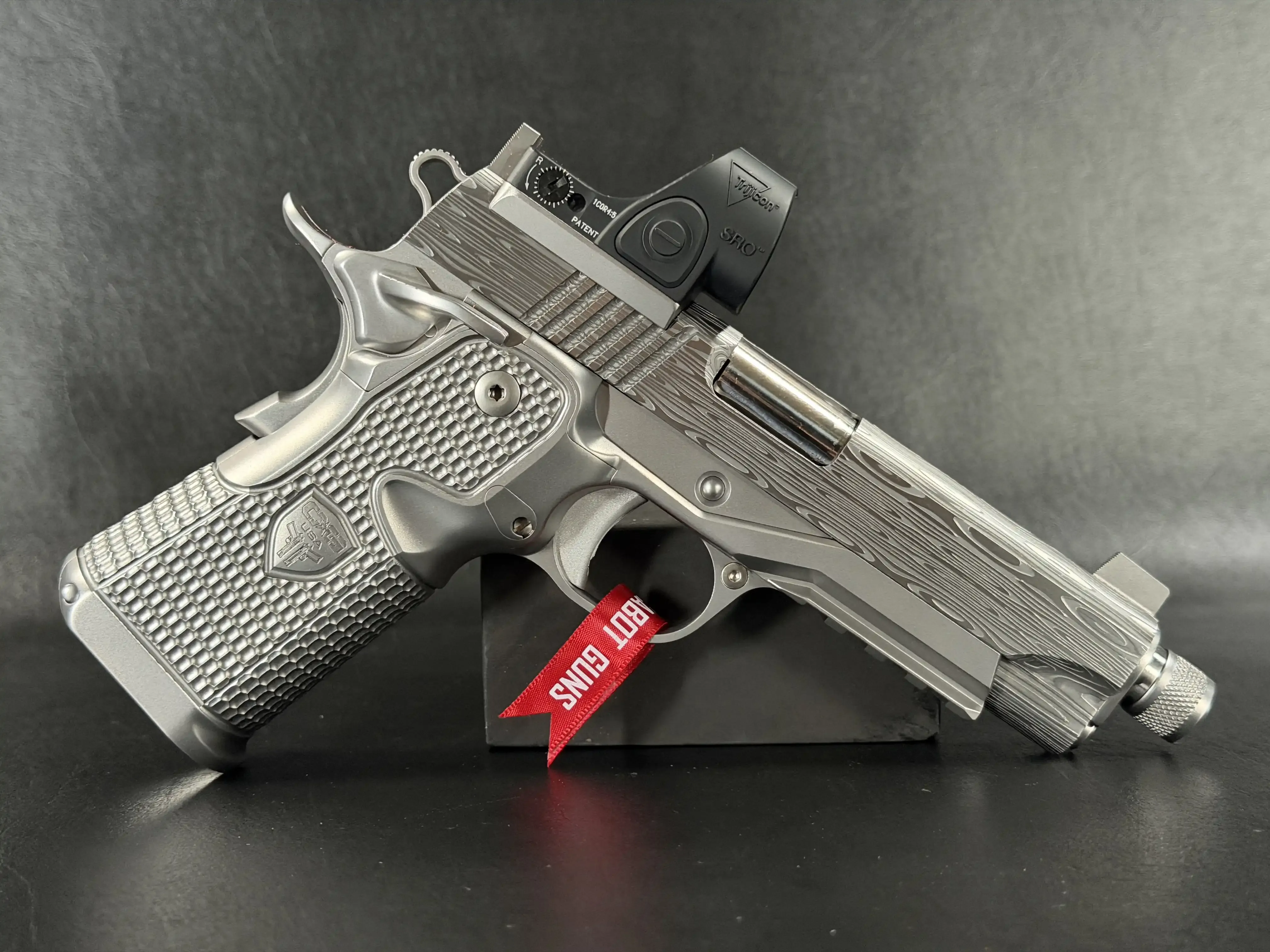
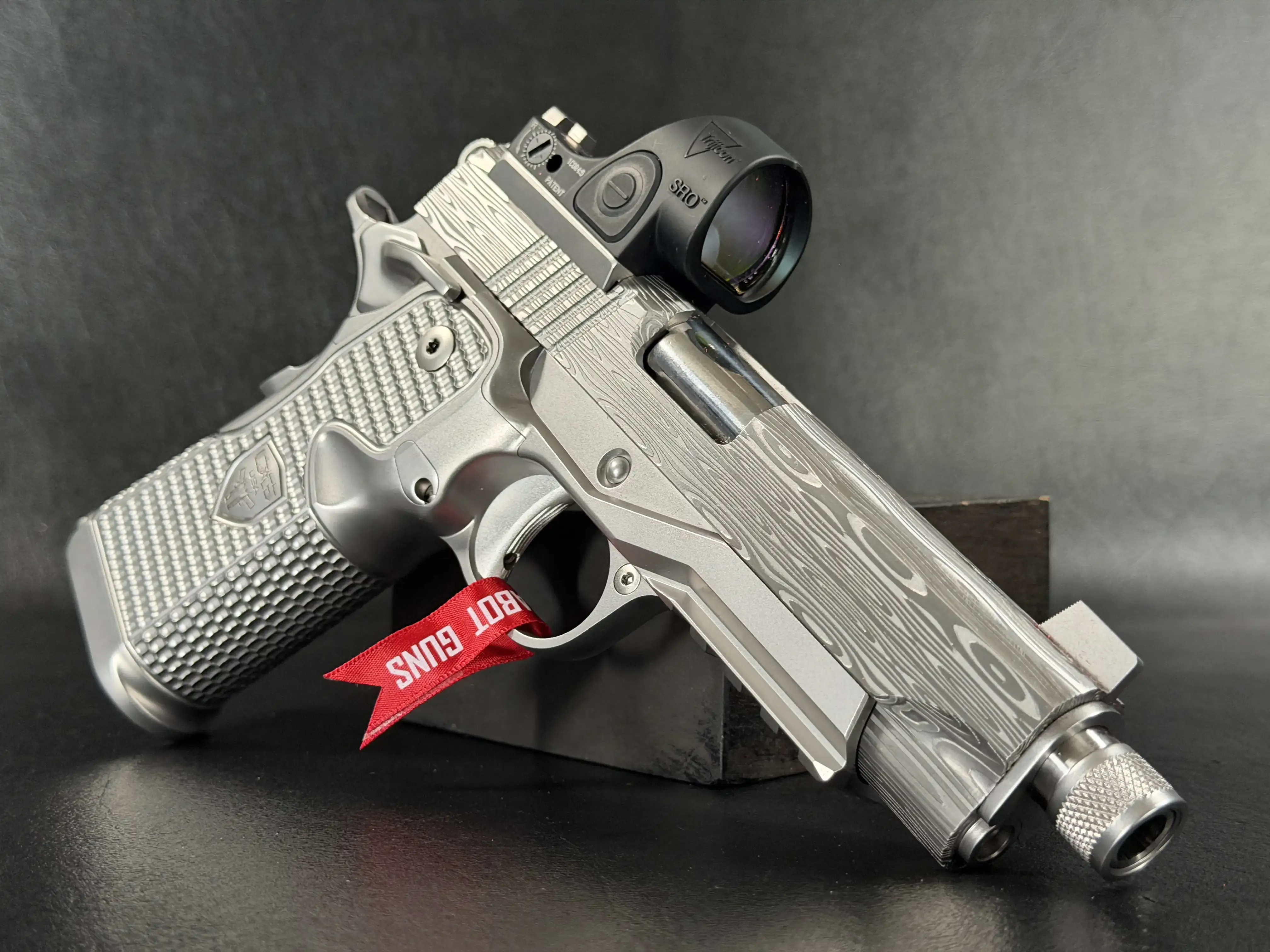
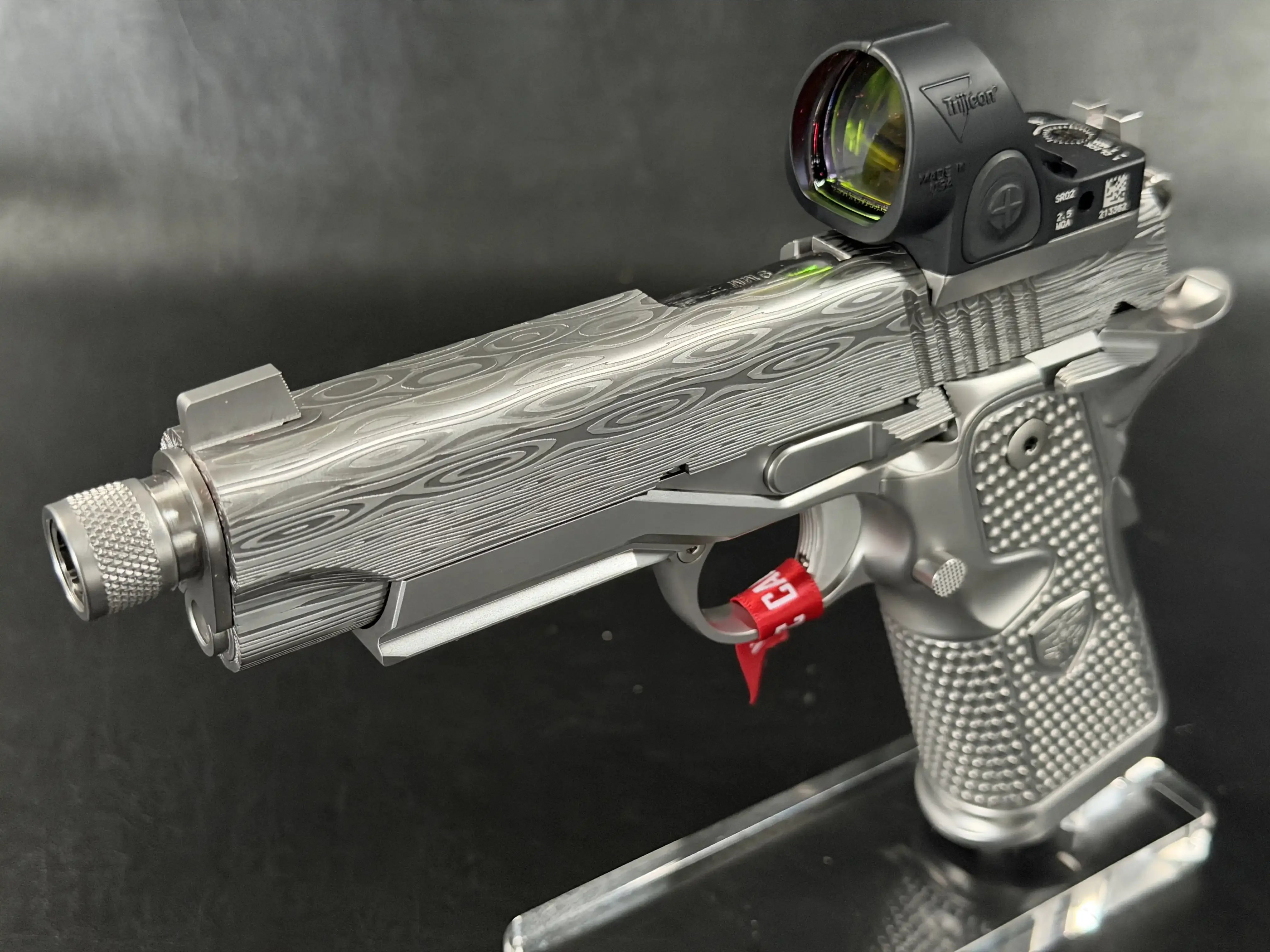
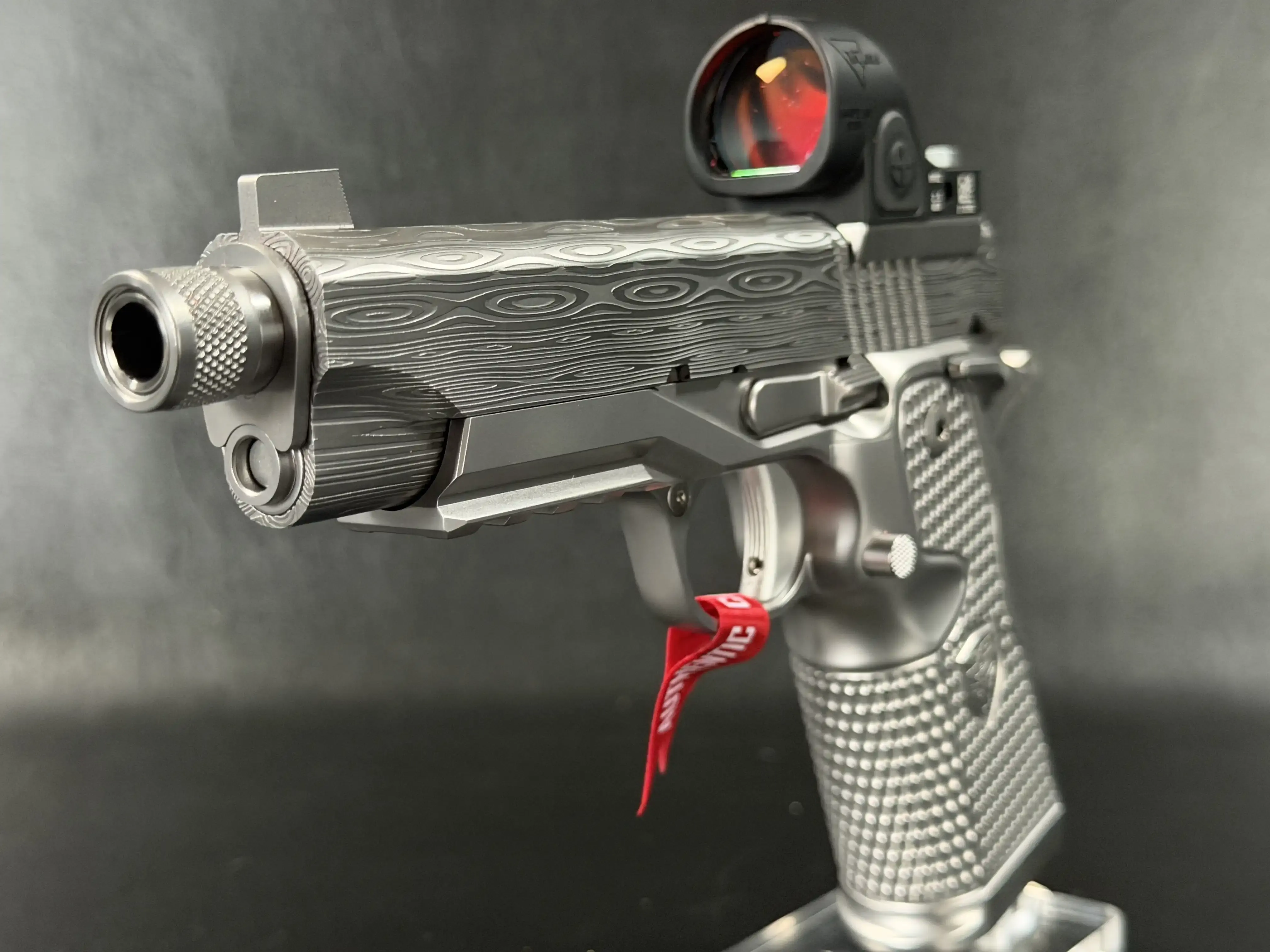
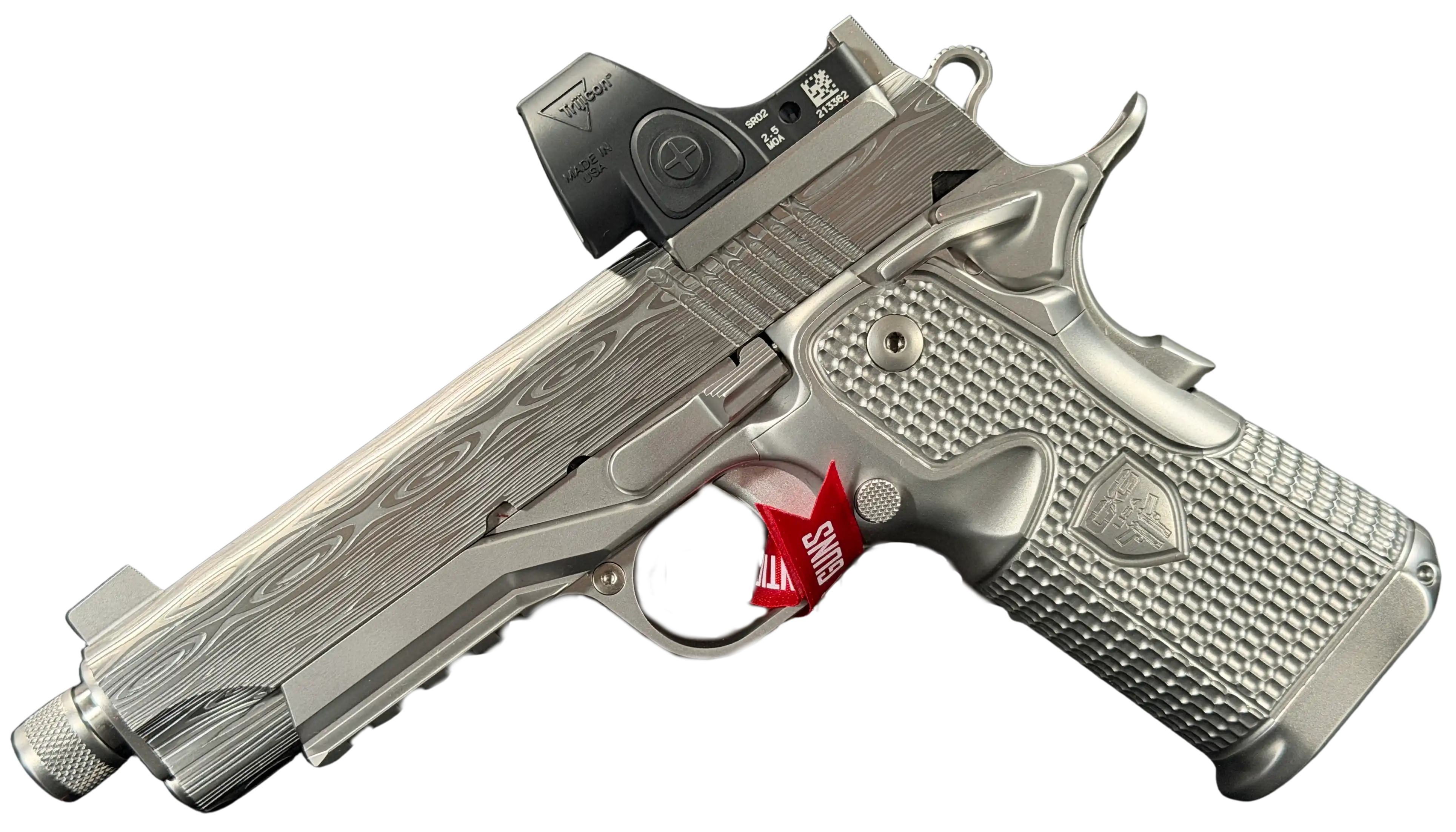
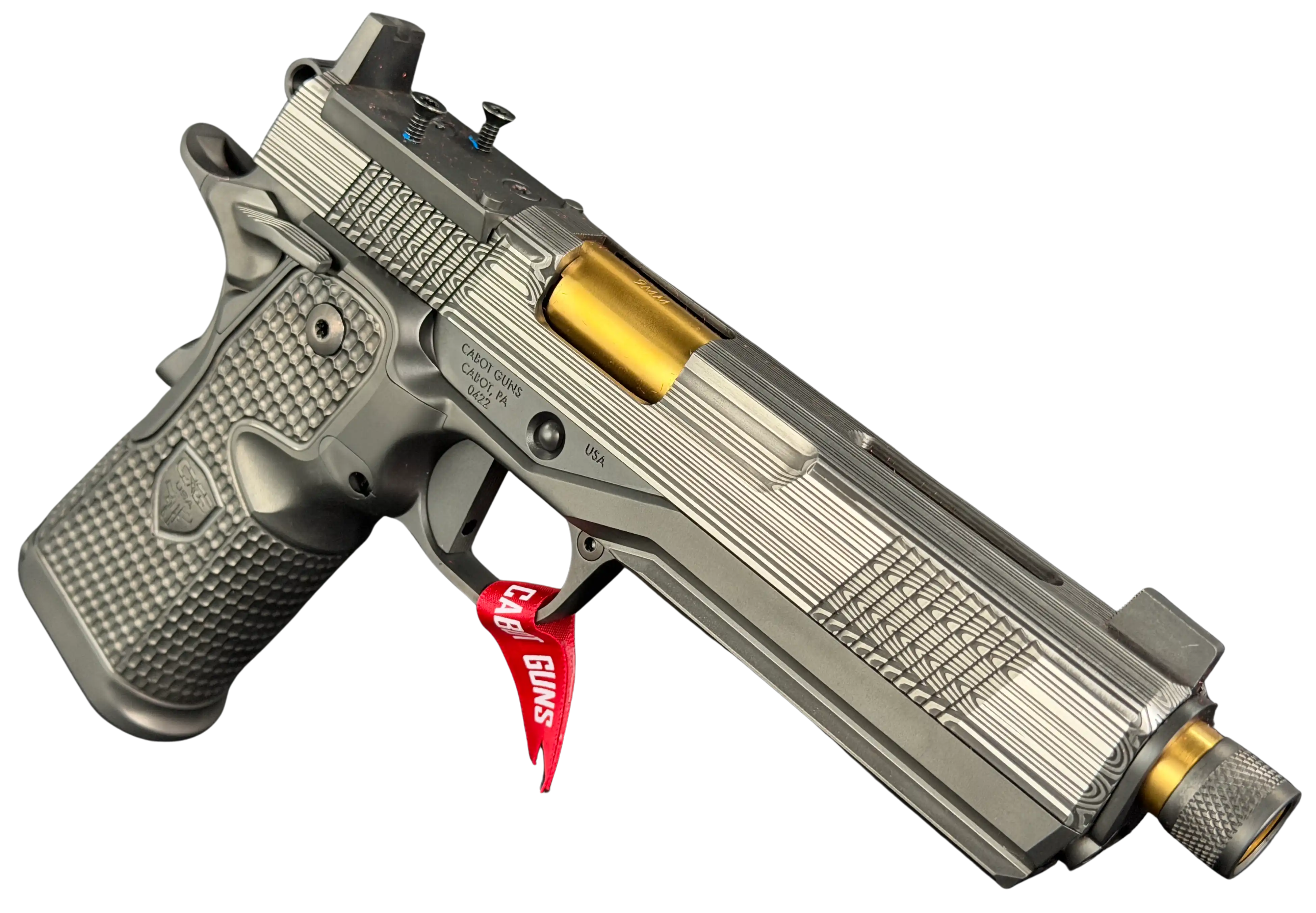
Few 1911 makers have attempted a genuine mirrored build, and Cabot's version became one of the more discussed technical achievements in the custom 1911 world. Around the same period, Cabot became the first maker to put a forged Damascus slide, rather than the more common powdered Damasteel, on a production 1911, working with blacksmiths Jason Morrissey and Robert Eggerling to produce steel that could survive the pressures of firing.
The moment that put Cabot in front of an audience well outside the gun world came in 2016, when the company unveiled the Big Bang Pistol Set at the NRA Annual Meeting in Louisville: a matched left- and right-handed pair of 1911s machined almost entirely from a 77-pound section of the Gibeon meteorite, listed at $4.5 million. That same year, Cabot acquired Alchemy Custom Weaponry, a small hand-fitted 1911 shop founded in Geneseo, Illinois, in order to bring gunsmith Rob Schauland onto the team; Schauland now runs Cabot's second manufacturing site, a dedicated facility in Fort Wayne, Indiana, which also produces a more accessible line in the $2,500 to $3,000 range under the Alchemy name.
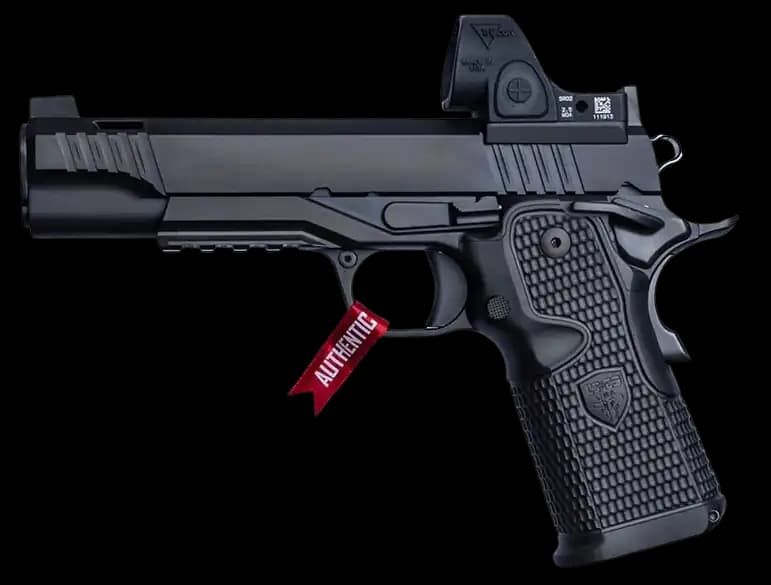
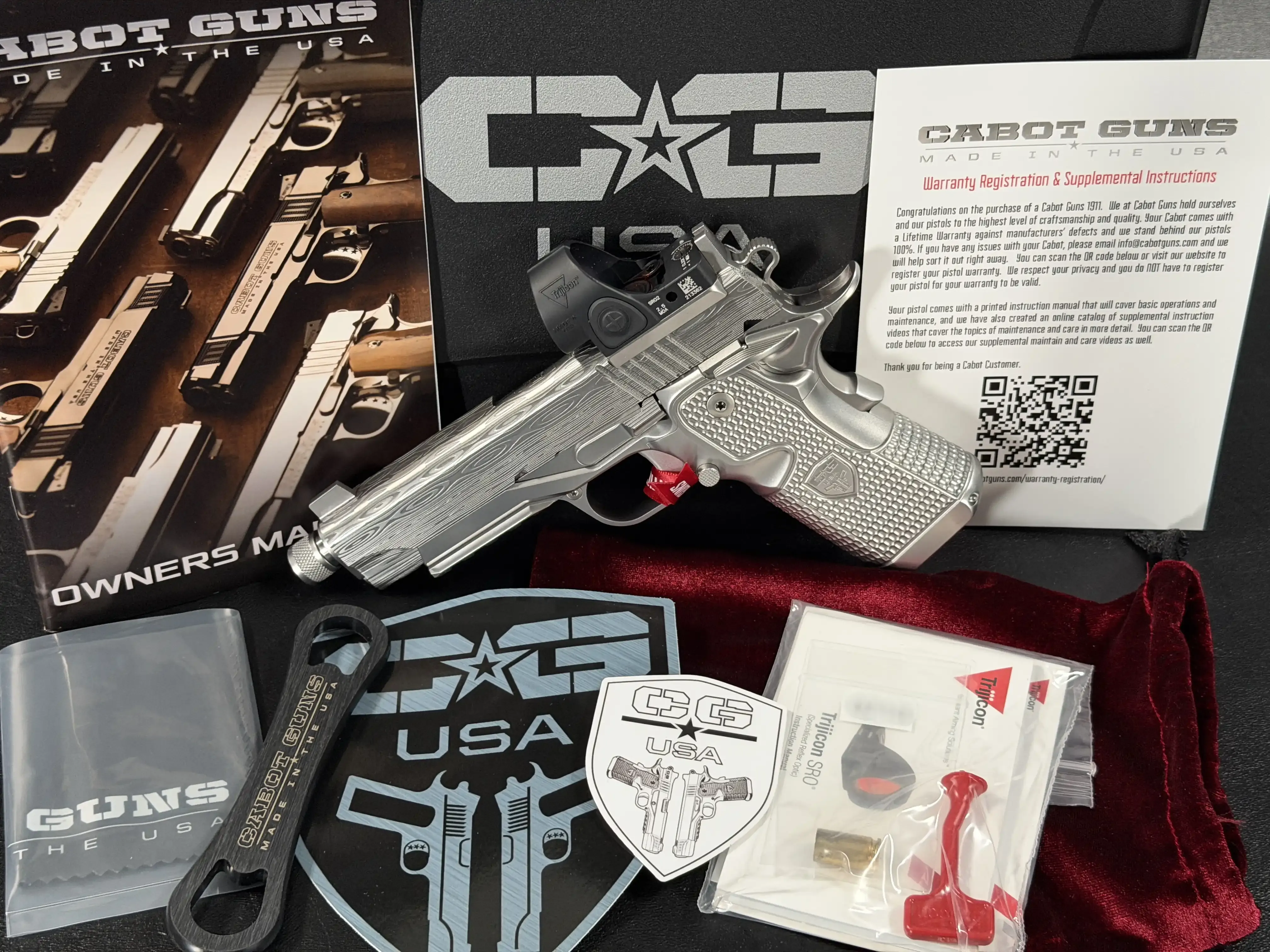
Cabot has continued to use its Fort Wayne facility and its relationships with specialist metalworkers to produce one-off and limited pieces well beyond a standard catalog: guns finished in Damascus and set with gemstones, a pistol crowned with lunar meteorite, and, for the 80th anniversary of D-Day in 2024, a pair of pistols forged with iron-rich sand collected from the Omaha and Utah beach landing sites, made in partnership with blacksmith and Vietnam veteran Ray Rybar, with proceeds directed to veteran charities. The Apocalypse, a Damascus-slide, red-dot-ready model built for use rather than display, extended that material's work into a more duty-oriented line and was featured in GUNS Magazine in 2023.
For a collector, what distinguishes Cabot within the custom 1911 field is less any single model than the manufacturing premise underneath all of them. Competitors such as Wilson Combat, Ed Brown, and Nighthawk Custom build their reputations on hand-fitting; Cabot's is built on removing hand-fitting from the equation and applying aerospace-tolerance machining to a 113-year-old design instead. That approach, plus a willingness to build guns from materials no other manufacturer has used in a working firearm, is what has kept Cabot's pieces moving through both the gun press and the broader collector world since 2011.
History & Milestones
Cabot debuts at the NRA Annual Meeting
Rob Bianchin introduces four 1911 models, machined by Penn United Technologies to aerospace tolerances, at the NRA Annual Meeting in Pittsburgh, with prices starting around $4,300.
Flagship Jones honors Penn United's founder
The Jones, Cabot's original full-size model, debuts with a star-pierced trigger and Trinity Stripe serrations named for Carl Jones, the founder of Cabot's manufacturing partner.
S-Class opens a lower price tier
Cabot launches the S100 and S103 at roughly half the price of its original models, and uses the platform to build its first true mirror-image left-handed 1911.
Big Bang Pistol Set unveiled
A matched pair of 1911s machined largely from a 77-pound piece of the Gibeon meteorite is shown at the NRA Annual Meeting in Louisville, listed at $4.5 million.
Acquisition of Alchemy Custom Weaponry
Cabot acquires the Geneseo, Illinois, shop of gunsmith Rob Schauland, who becomes general manager of a new dedicated manufacturing facility in Fort Wayne, Indiana.
Tenth-anniversary Damascus and meteorite pieces
Cabot marks ten years with a run of bespoke pistols, including the Impact ONE, combining Damascus steel with fragments of Gibeon meteorite and nickel.
Apocalypse featured in GUNS Magazine
The Damascus-slide, red-dot-ready Apocalypse appears in the April issue of GUNS Magazine, extending Cabot's forged-Damascus work into a duty-oriented model.
D-Day 80th anniversary pistols
Working with blacksmith Ray Rybar, Cabot forges a pair of pistols using iron-rich sand collected from the Omaha and Utah beach landing sites, with proceeds going to veteran charities.