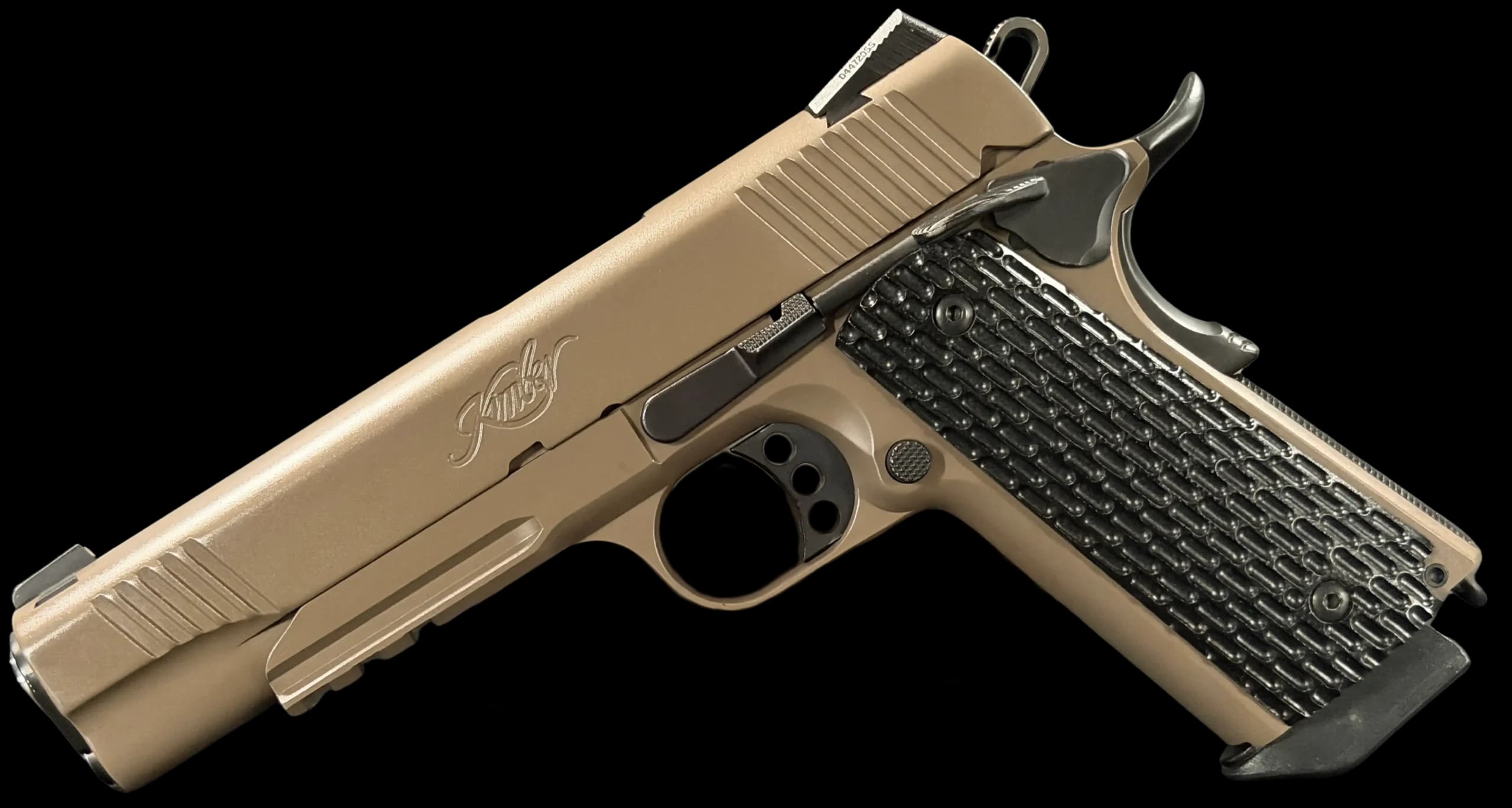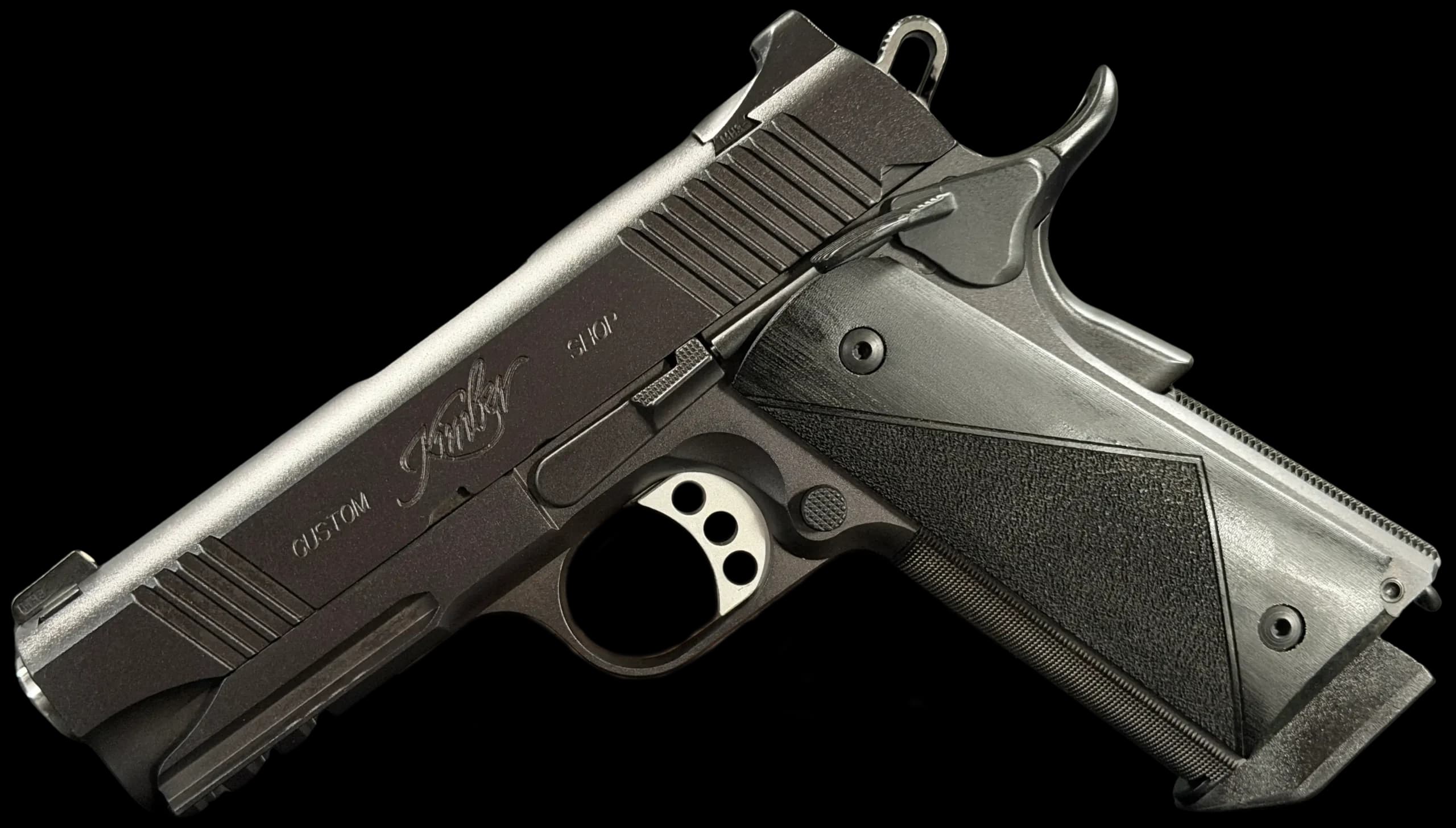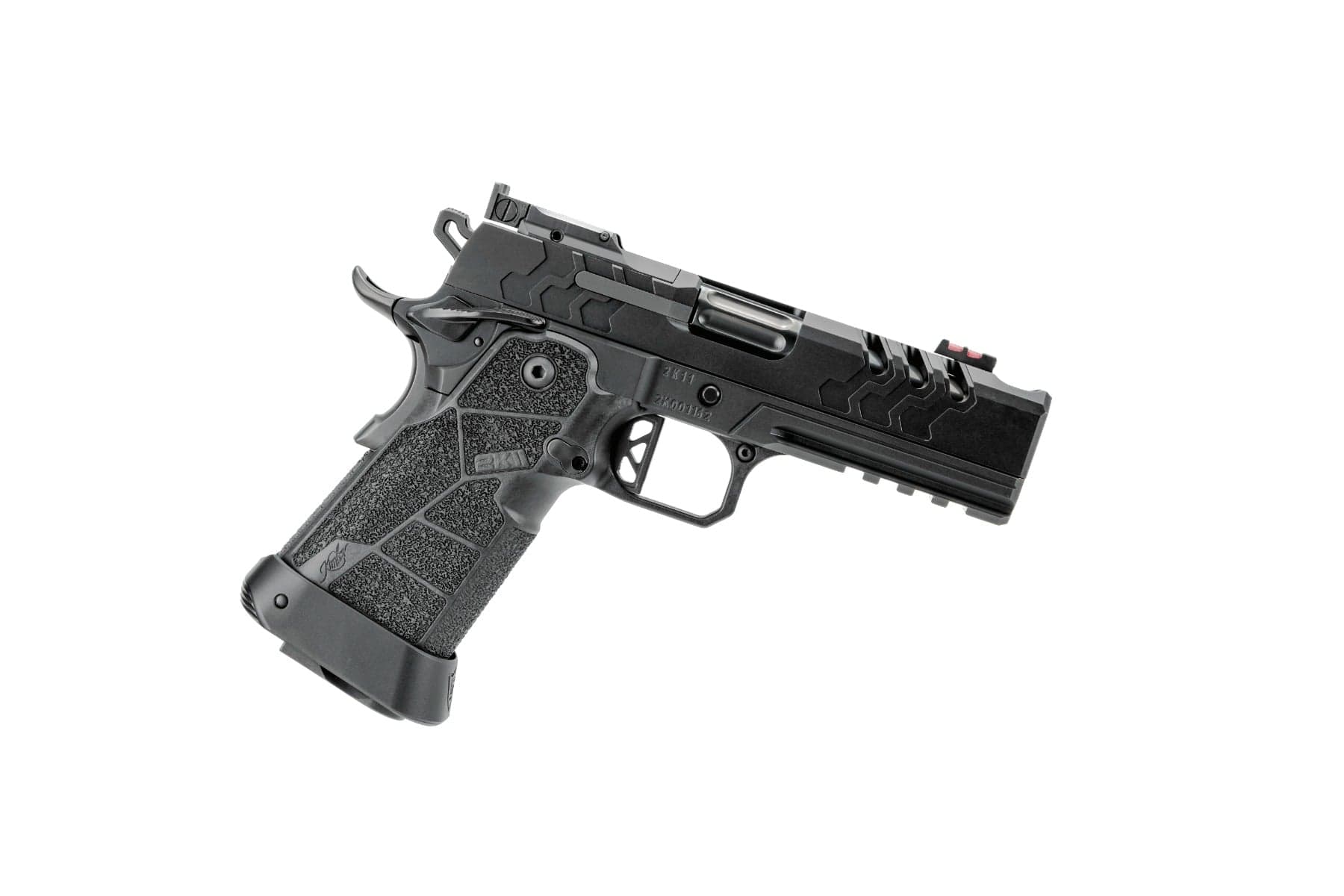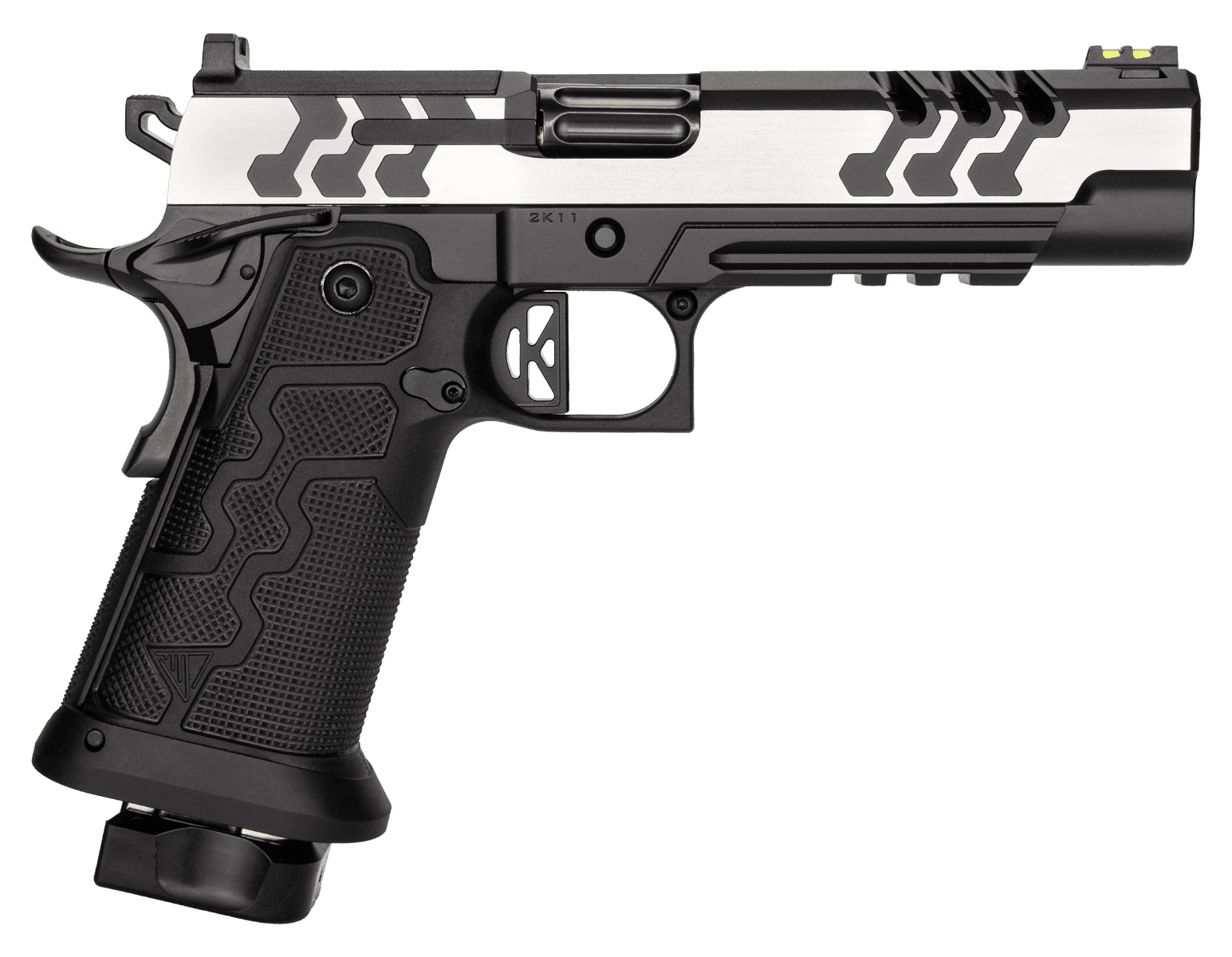
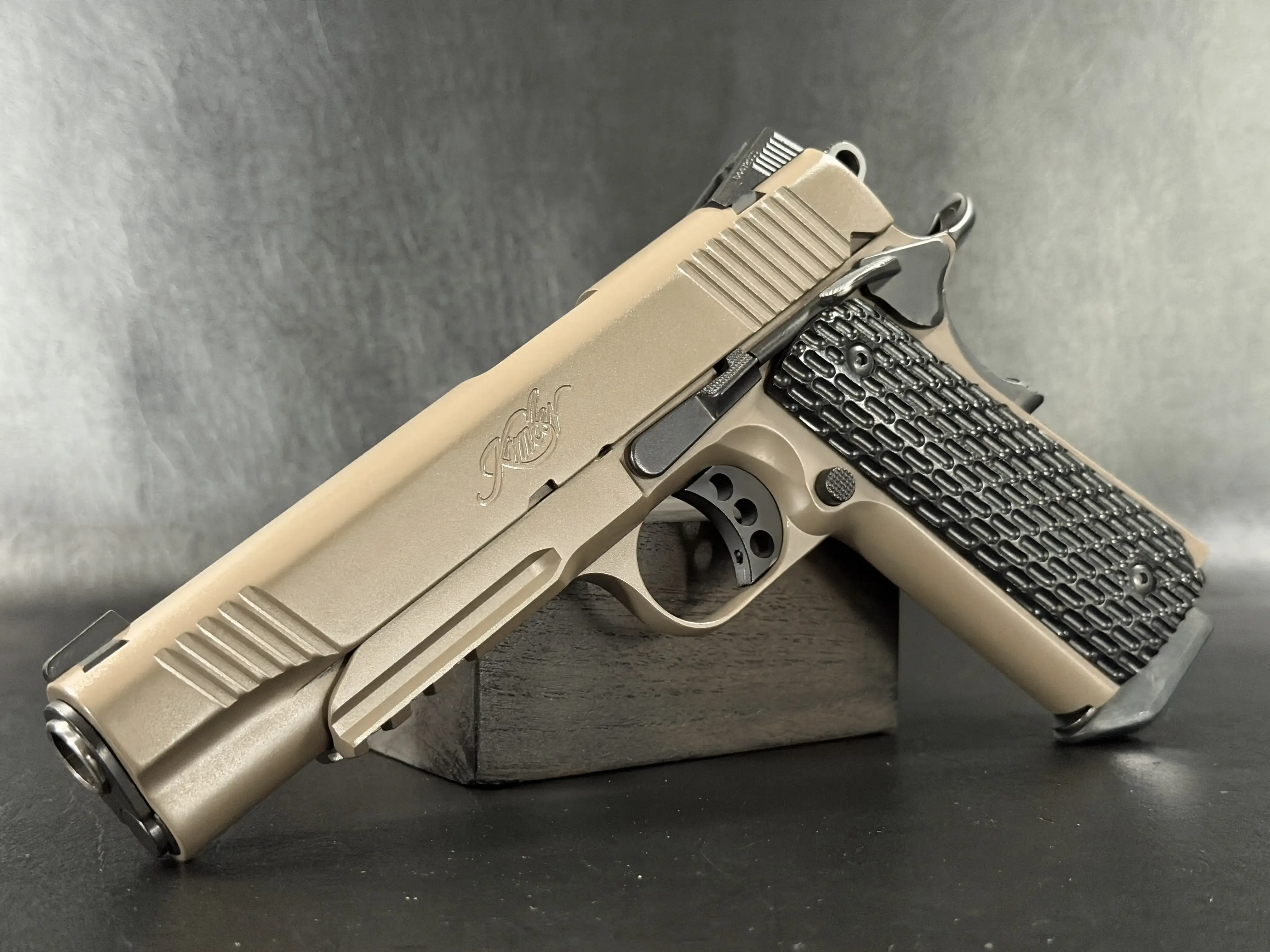
At the 1995 SHOT Show, a pistol sat under glass with its serial number and manufacturer's mark hidden beneath the grip panels. It was, in fact, built by Caspian Arms, and it was being shown as a prototype for a company that had no business making 1911s at all. Two years earlier, that company had been reduced to a rimfire rifle maker trying to rebuild itself out of bankruptcy. The pistol on that table would become the Kimber Custom, and within two years, it would help redefine what a factory-built 1911 was expected to include.
The company started differently. Jack Warne, an Australian who had run the firearms maker Sporting Arms (Sportco) in Adelaide, moved to Oregon in 1968 and, with his son Greg, founded Kimber of Oregon in 1979 in the small town of Clackamas. Kimber of Oregon built a name on accurate .22 long rifle sporters, added a second plant in nearby Colton, and acquired the Brownell quick-detachable scope mount system.
The run ended badly: a private stock offering meant to fund the M89 Big Game (BG) rifle fell short, the company was sold in 1989 to timber executive Bruce Engel's WTD Industries, and it soon sought bankruptcy protection. Several Oregon-era employees, including Dan Cooper, left in 1990 to start what became Cooper Firearms of Montana; Jack Warne departed to found his own scope-mount business.
Greg Warne tried to revive the name in the early 1990s, tracking down original tooling that had ended up in a Portland-area junkyard. With financial backing from New York wholesaler Les Edelman, the two founded Kimber of America in Yonkers in 1993 and again focused on rimfire rifles. Edelman then bought out Warne's stake, and in late 1996, he acquired Jerico Precision, a Yonkers defense-machining firm, renaming the combined company Kimber Manufacturing.
The Oregon rifle plant closed in 1997, and production consolidated in New York. Working with 1911 specialist Chip McCormick, Edelman built the new Kimber Custom around features that had previously belonged to the custom-shop world: a beavertail grip safety, extended slide stop, and ambidextrous thumb safety, all as standard equipment on a factory gun. It was, by most contemporary accounts, the first mass-produced 1911 line to ship that way.
Rifles did not disappear from the lineup. In 2001, designer Nehemia Sirkis scaled down a pre-1964 Winchester Model 70-pattern action into the 84M, a short action built specifically around the .308 Winchester case family. The following year, that action went into the Montana, an ultralight carbon-fiber-stocked hunting rifle that weighed roughly five and a half pounds, and set the direction for later featherweights, including the Mountain Ascent, Adirondack, and Subalpine.
On the handgun side, institutional adoption became part of the brand's record: the LAPD SWAT unit standardized on a modified, specially marked Custom TLE II in 2002, other law enforcement agencies followed with their own approved variants, and a modified Kimber 1911 was fielded by Marine Corps units assigned to Special Operations Command in the early 2000s. The company also weathered a serious internal problem in this period: a former CFO was indicted in 2004 for embezzling roughly $10 million from Kimber and an affiliated wholesaler, and was later convicted.
Kimber's product line has broadened well beyond the 1911 platform since then: the Solo (2011) was its first striker-fired, non-1911 pistol; the K6S (2016) was its first revolver; and the R7 Mako (2021) marked its first polymer-framed, striker-fired carry pistol, aimed squarely at the compact-carry segment dominated by Glock, SIG, and Smith & Wesson. Facing rising costs and political friction around its New York plants, Kimber announced a move to Troy, Alabama in 2018 and completed the relocation of its headquarters and manufacturing there in 2022.
The company remains privately held, with Leslie Edelman as president and CEO. For collectors, the pre-2000 production, spanning the last Oregon-made rifles and the earliest Yonkers-made 1911s, is generally regarded as the tightest fit and finish the brand has produced, though quality control in the following decade drew more mixed opinions from period reviewers.
History & Milestones
Kimber of Oregon founded in Clackamas
Jack Warne, previously the founder of Australian gunmaker Sporting Arms, and his son Greg start Kimber of Oregon, building a name on accurate .22 rimfire sporters.
Company sold amid financial trouble
A shortfall in funding for the M89 Big Game rifle forces a sale to timber executive Bruce Engel's WTD Industries; bankruptcy protection follows soon after.
Kimber of America founded in Yonkers
Greg Warne, backed by investor Les Edelman, buys back much of the original Oregon tooling and restarts the company in New York, again centered on rimfire rifles.
Jerico Precision acquired, company renamed
Edelman buys Yonkers machining firm Jerico Precision and renames the combined operation Kimber Manufacturing, setting up the pivot into handguns.
Oregon plant closes, first Kimber 1911 ships
Production consolidates in Yonkers, and the Kimber Custom reaches dealers, built with input from 1911 specialist Chip McCormick.
Model 84M short action introduced
Nehemia Sirkis scales down a Winchester Model 70-pattern action to .308-length cartridges, which becomes the basis of Kimber's modern rifle line.
LAPD SWAT adopts modified Custom TLE II
A specially marked Custom TLE II becomes standard issue for the unit, one of several law enforcement adoptions that shape Kimber's institutional reputation.
Kimber Solo launches
The Solo becomes Kimber's first striker-fired, non-1911 pistol, an early and imperfect step toward the compact-carry market.
K6s revolver introduced
Kimber enters the revolver market for the first time with the six-shot K6S, an aluminum-frame .357 Magnum snub.
Headquarters and manufacturing move to Troy, Alabama
After announcing the move in 2018, Kimber completed the relocation of its corporate headquarters and primary manufacturing to Troy, Alabama.