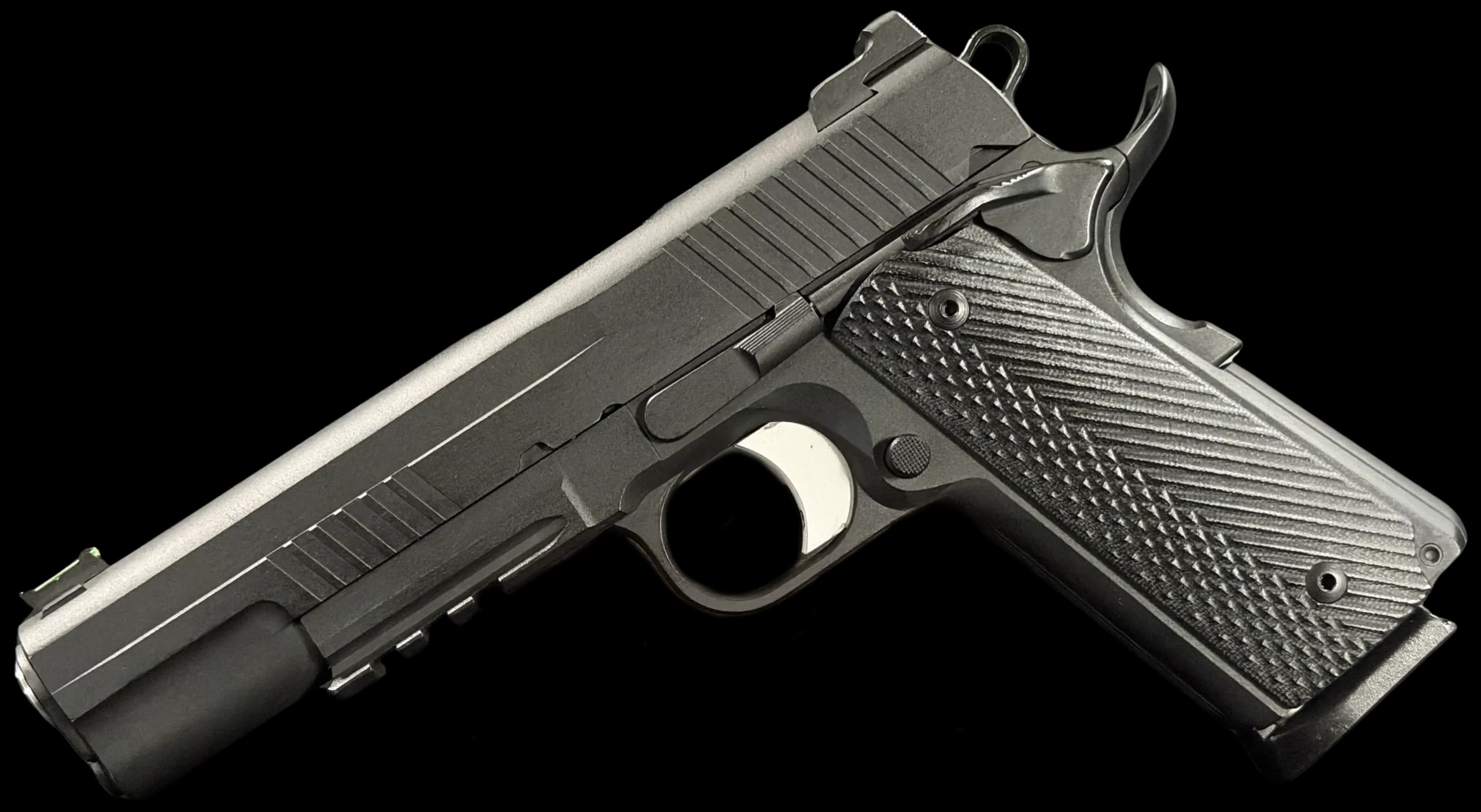

The road to Caspian Arms's shop in Wolcott, Vermont, is named Cal Foster Drive, after the man who built the company out of a machine shop that started in aerospace subcontracting. Calvert N. Foster Sr., a Korean War veteran, ran Foster Industries through the 1960s and 1970s, machining precision parts for clients such as Pratt & Whitney. By the early 1980s, some of that shop's work had shifted toward firearms companies, including Auto Ordnance, Detonics, and Randall. The exposure, combined with Foster's own interest in the 1911 as a hunter and longtime shooter, led him to a decision: manufacturers came and went, but a shop with its own product had more control over its future. Caspian Arms was founded in 1983 around that idea, built on the frames, slides, and small parts a pistolsmith needed to complete a custom 1911.
The decision to stay out of complete firearm manufacturing set the company apart from the start. While many 1911 makers assembled finished pistols, Caspian sold the raw materials for someone else's build: a receiver, a slide, an ejector, and a hammer, left for a gunsmith to fit and finish. Within a couple of years, the approach had built the company a reputation among pistolsmiths as a source for match-grade components precise enough that a builder no longer had to buy a factory gun, strip it down, and rework the rails and slide by hand. A custom 1911 could instead be built from the ground up on parts already machined to spec.
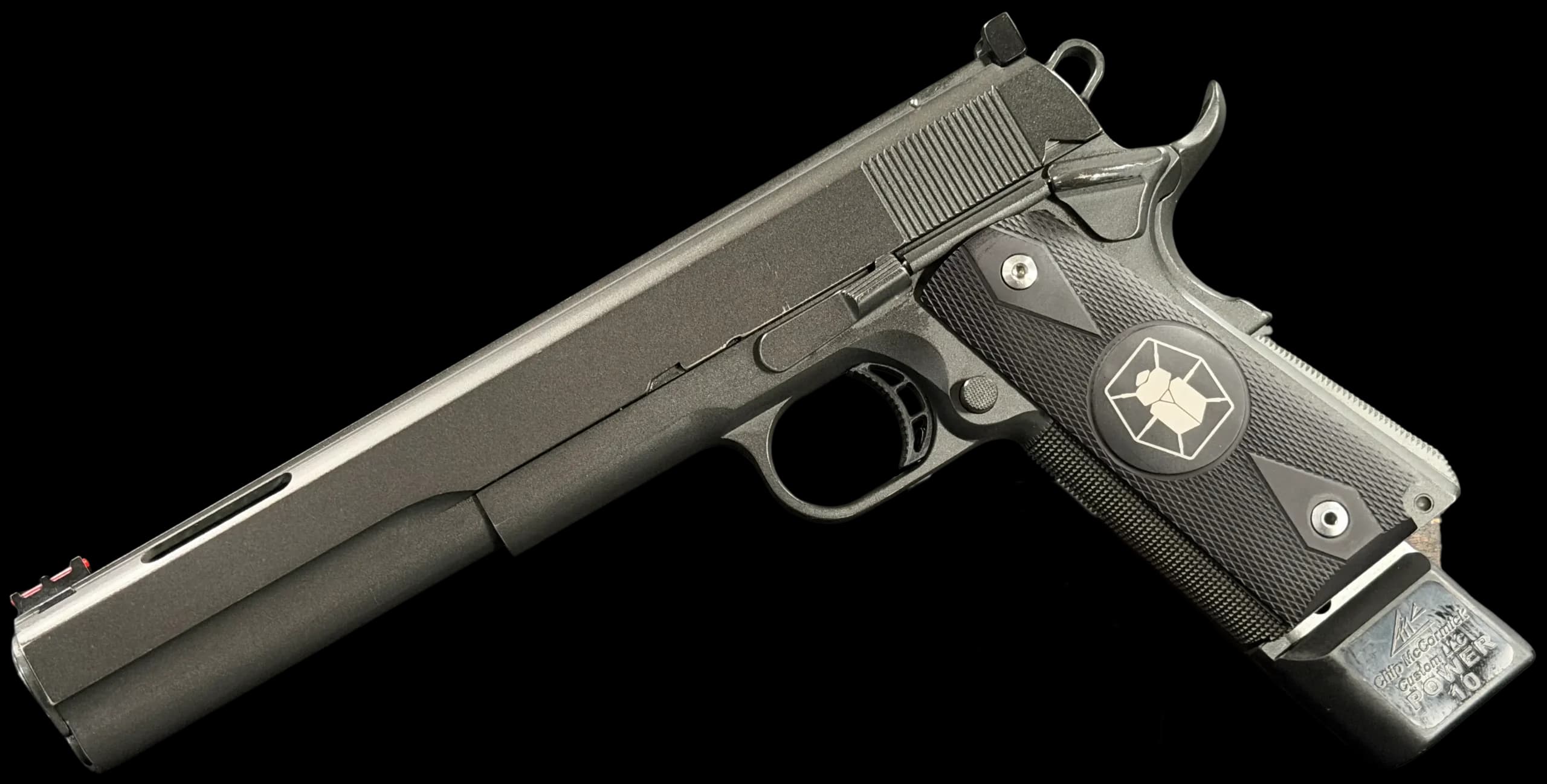
That reputation deepened through the rise of high-capacity 1911s in practical pistol competition. As USPSA's Open and Limited divisions took shape through the late 1980s and 1990s, wide-body frames capable of holding double-stack magazines became a fixture on the firing line, and Caspian's Recon frame became one of the platforms competitive builders reached for. The frame later served as the OEM basis for wide-body 1911-pattern pistols from other manufacturers, including Dan Wesson and Salient Arms. Caspian briefly sold assembled high-capacity magazine tubes of its own; it stepped back from that business in the mid-1990s and settled into the components trade that has defined it since, leaving magazines to makers who specialized in them.
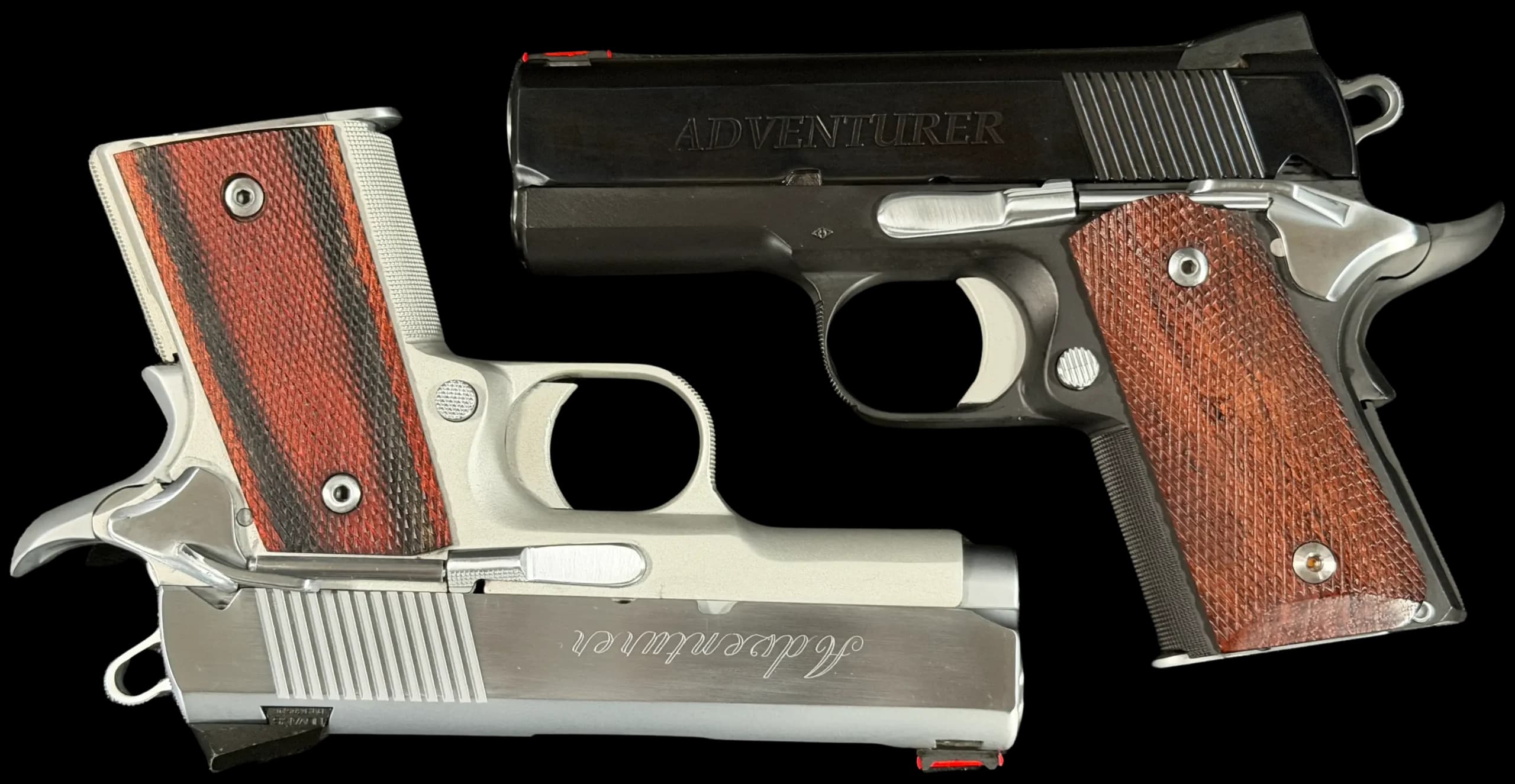
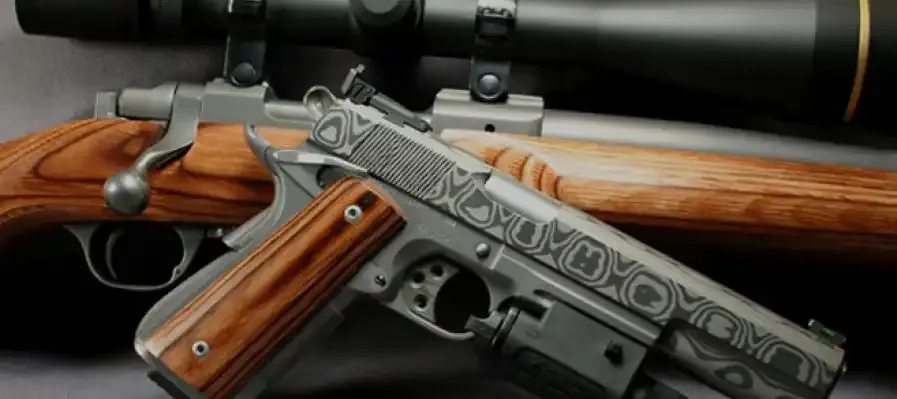
Cal Foster died in 2002. The company remains under the Foster family's ownership and operates today as a subsidiary of Foster Industries, still producing from the same Wolcott shop. Parts are machined from domestically sourced barstock, castings, and forgings on CNC equipment, a point the company has cited as a buffer against supply chain disruptions that have hit other manufacturers. The current catalog spans frame families from the Classic (built to the vertical-serration, GI-pattern look of the original 1911) through the Basic, Recon (wide-body), and Race Ready lines, paired with slides in Officer, Commander, Government, and Long lengths, in materials ranging from carbon and stainless steel to titanium and pattern-welded Damasteel.
For a collector, Caspian's relevance has less to do with any single pistol than with how many pistols exist because of it. Four decades of custom 1911s, from club-level USPSA guns to high-end presentation builds, carry a Caspian receiver or slide under someone else's polish, engraving, or checkering. A Caspian-marked frame is often the most reliable way to trace what a given custom 1911 is actually built on, which matters more to a serious collector than a finish ever will.
History & Milestones
Cal Foster builds an aerospace machine shop
Calvert Foster runs Foster Industries as a precision subcontractor for aerospace clients, including Pratt & Whitney, establishing the shop's reputation for accuracy before any firearm is touched.
Firearms work enters the Foster shop
Foster Industries begins machining for firearms companies such as Auto Ordnance, Detonics, and Randall, exposing Cal Foster to a business he decides needs its own product rather than contract work.
Arms is founded in Wolcott
Calvert N. Foster Sr. establishes Caspian Arms as a dedicated maker of 1911 frames, slides, and small parts for pistolsmiths, rather than complete pistols.
Match-grade component reputation takes hold
Pistolsmiths begin building custom 1911s from the ground up on Caspian receivers and slides rather than reworking factory guns, thereby establishing the company's standing among competitive shooters.
The Recon wide-body frame emerges
As high-capacity 1911s become standard in USPSA's Open and Limited divisions, Caspian's double-stack Recon frame becomes one of the platforms competitive builders use, and later supplies wide-body guns from other manufacturers.
Caspian exits high-capacity magazine production
The company sells its remaining stock of assembled magazine tubes at the USPSA Nationals and steps back from magazines to focus on frames, slides, and small parts.