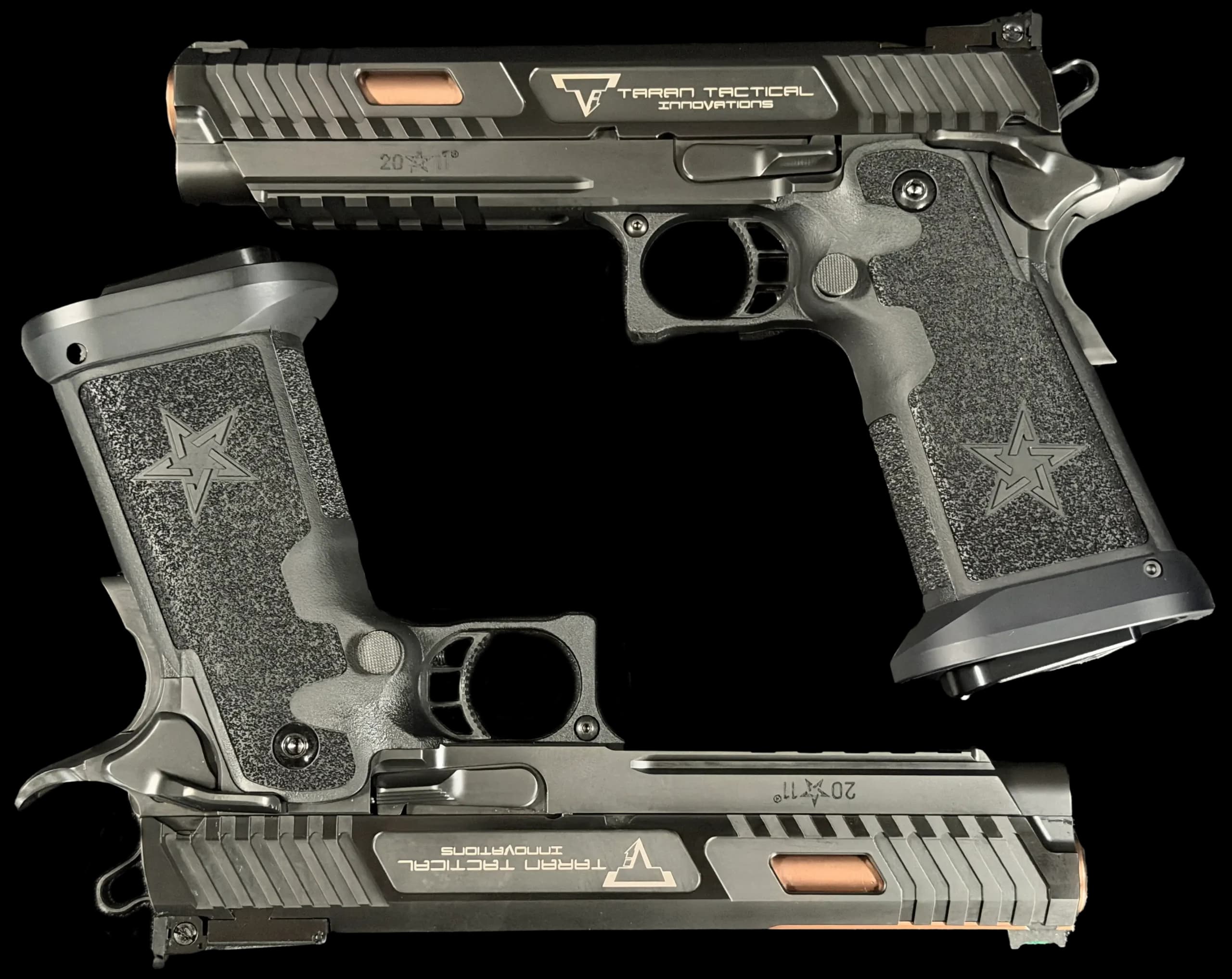
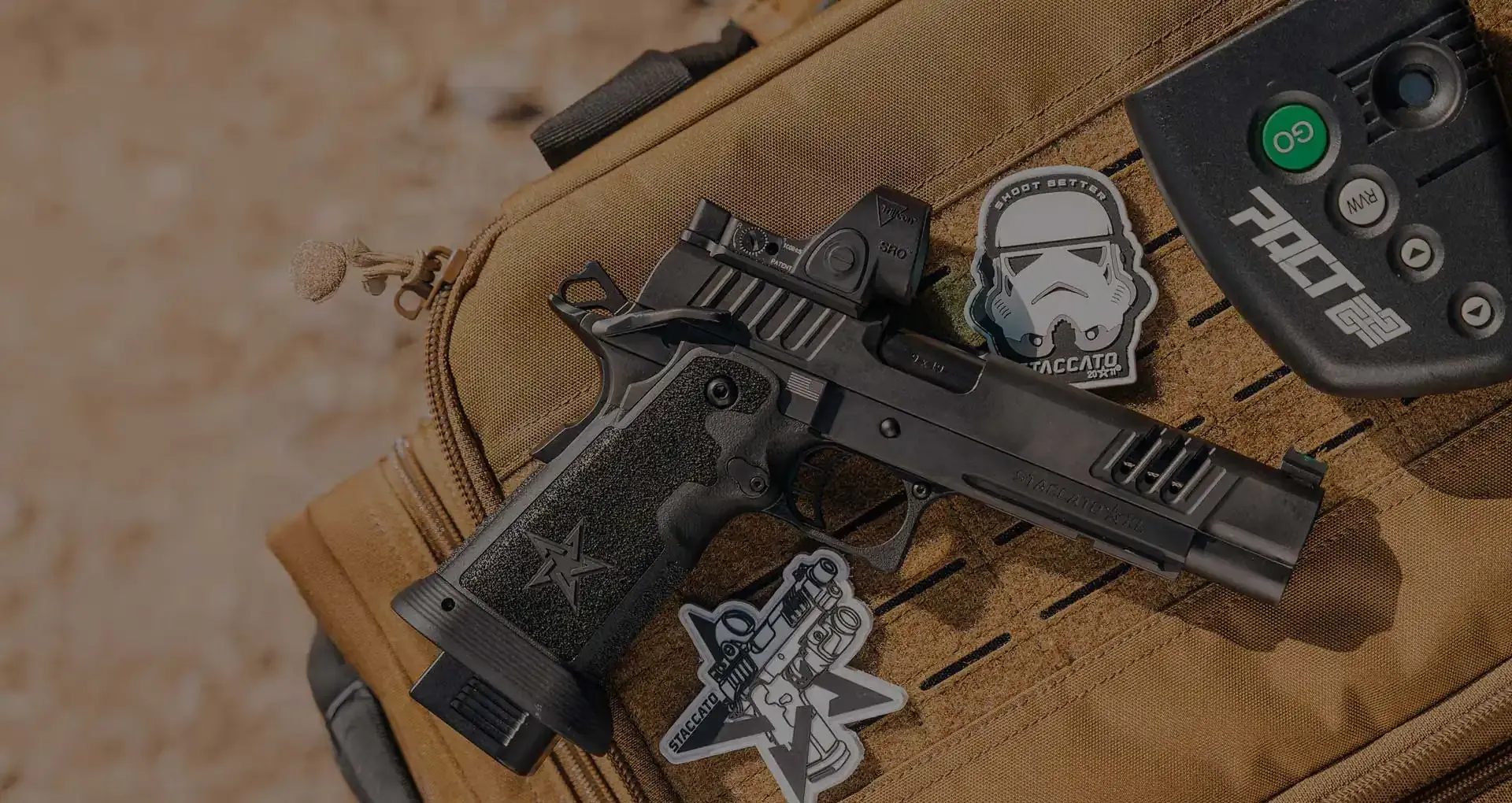

A single-stack 1911 holds seven or eight rounds and asks a lot of a shooter's hands: a narrow grip, a stout recoil impulse, and a magazine well never meant for speed. In the mid-1980s, a Central Texas gunsmith named Virgil Tripp was already reworking pieces of that formula, producing EDM hammers and sears for competitors in the young sport of practical pistol shooting. His shop, Tripp Research, sold its parts through Chip McCormick's company before Tripp began building complete guns under his own name. The limitation he kept running into was the one built into Browning's original design: single-stack capacity in a sport that increasingly rewarded speed and round count.
The turning point came in 1993, when engineer Sandy Strayer joined Tripp's operation. Strayer brought the design and drafting skills to solve the capacity problem properly, and the two men patented a modular frame: a steel upper section carrying the slide rails, mated to a separate, replaceable polymer grip module that could house a double-stack magazine. They called the result the 2011, a deliberate nod to the 1911 it was built to extend, and renamed the company Strayer-Tripp International, or STI. Strayer left within the year to start his own shop, and ownership of STI moved through several hands over the following decade, first to Dave and Shirley Skinner, who renamed it STI International in 1997, then in 2005 to STI's own employees, making it, by the company's account, the first employee-owned firearms manufacturer.
For most of two decades, STI's reputation was built entirely in the competition bays of USPSA and IPSC matches. Its guns won a disproportionate share of titles and became a fixture in the "race gun" category: light triggers, flared magazine wells, compensated barrels, and a well-earned expectation that a gunsmith would need to fine-tune the magazines before they ran reliably. That reputation, useful on a shot timer, kept the guns out of law enforcement holsters. The shift began in 2018, when Buck Pierson, a former Marine with a law enforcement sales background, joined the company and started asking a pointed question: how many police departments were carrying STI's guns? The answer was none. Pierson brought duty-oriented prototypes to agencies including the Long Beach Police Department SWAT team and the U.S. Marshals Service's Special Operations Group, and the feedback from that testing shaped a new model.
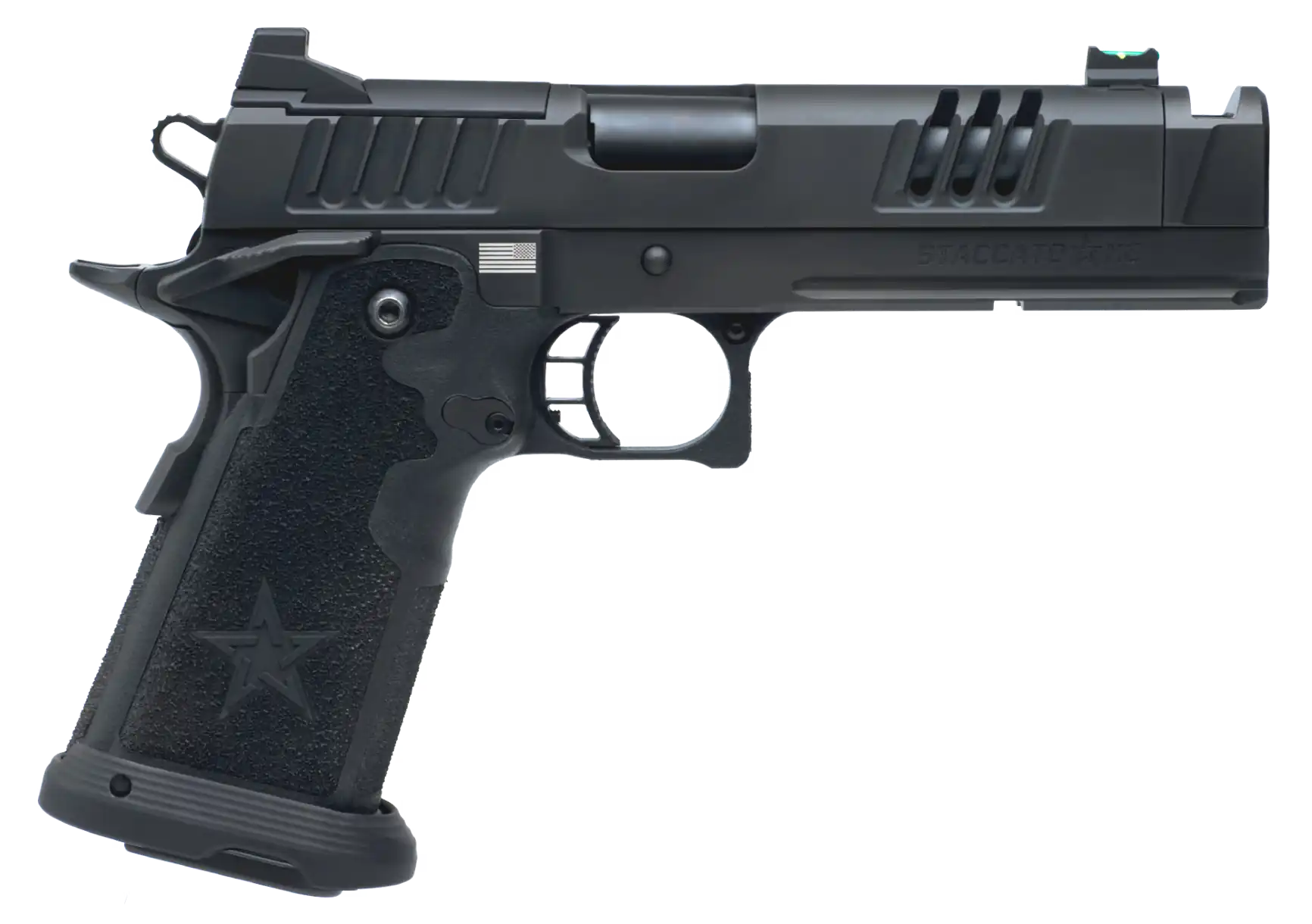
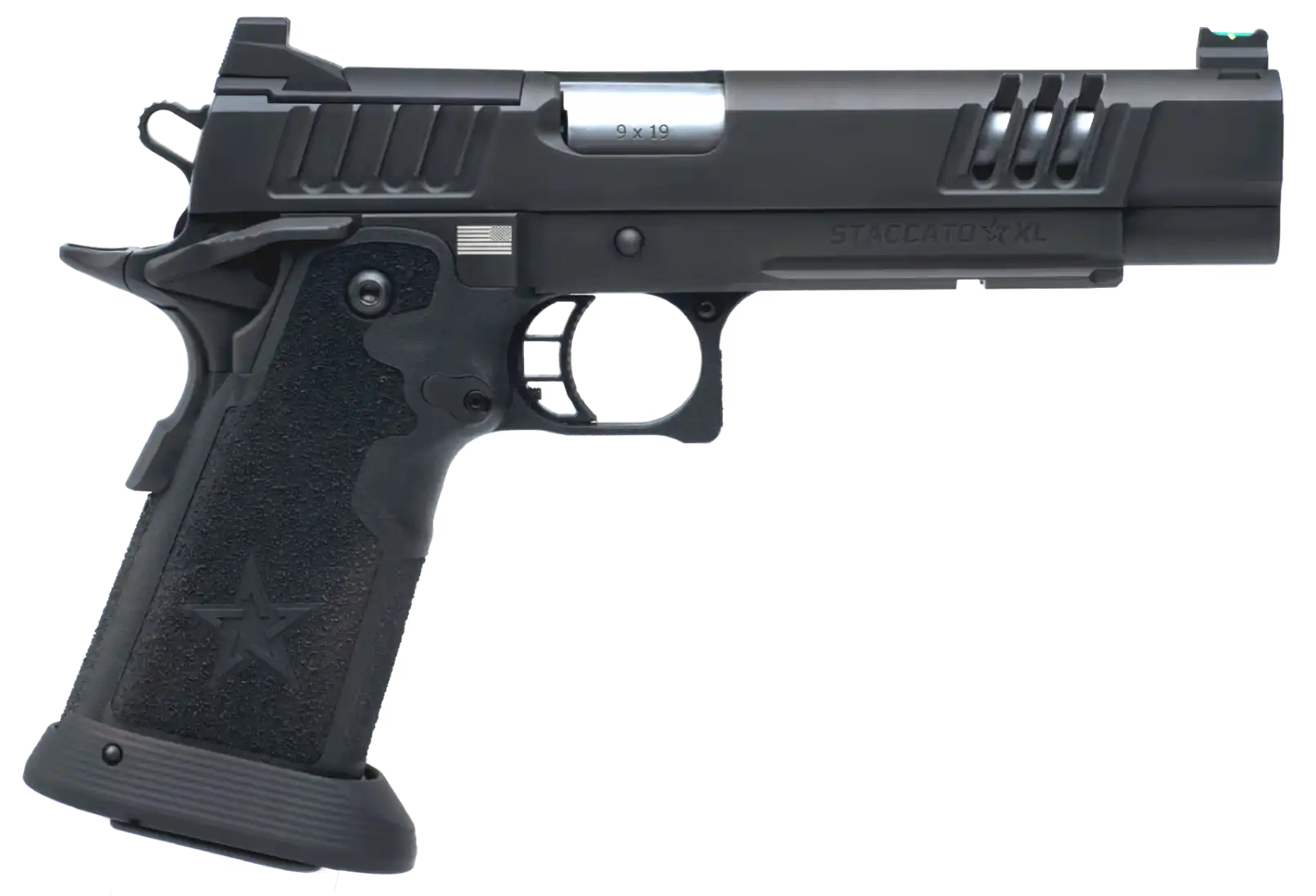
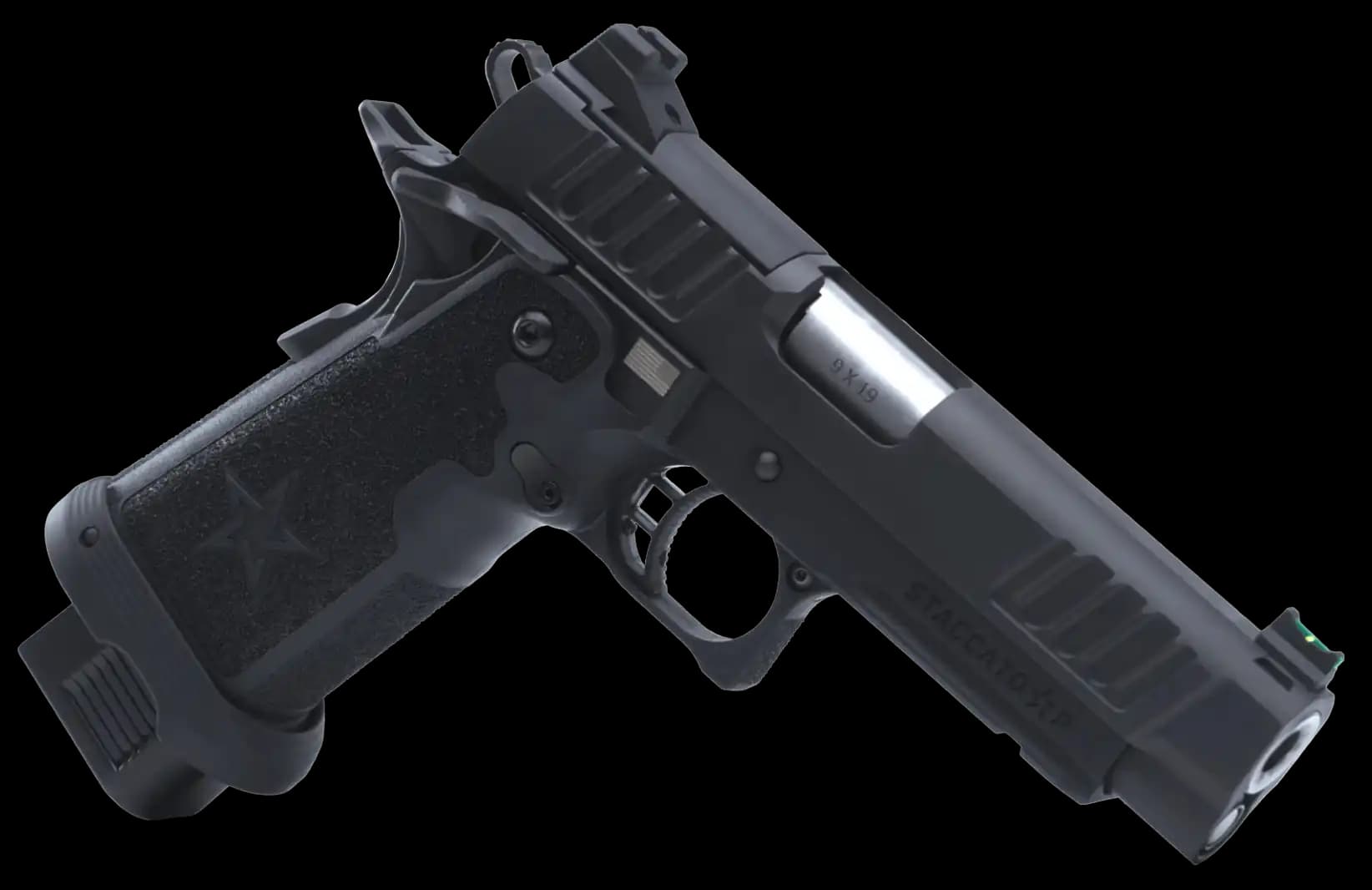
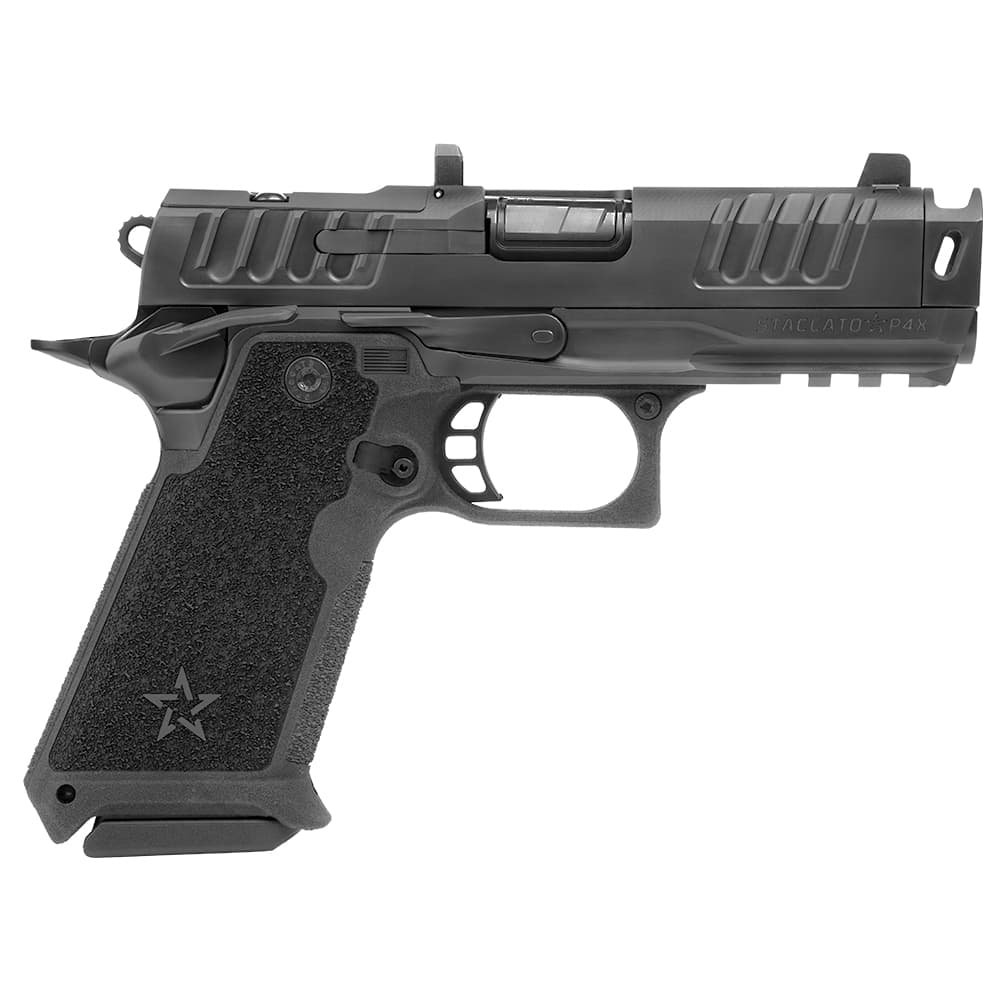
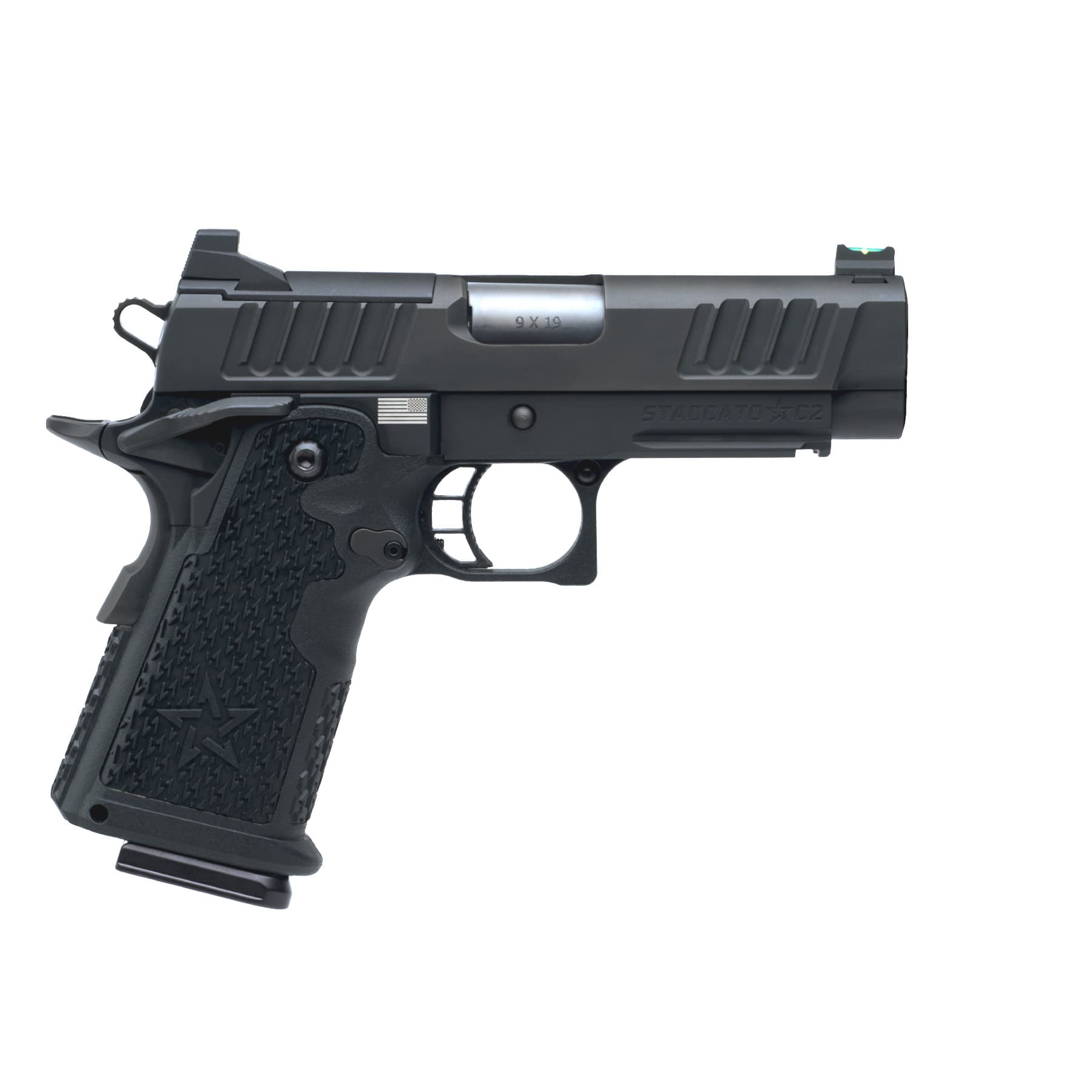
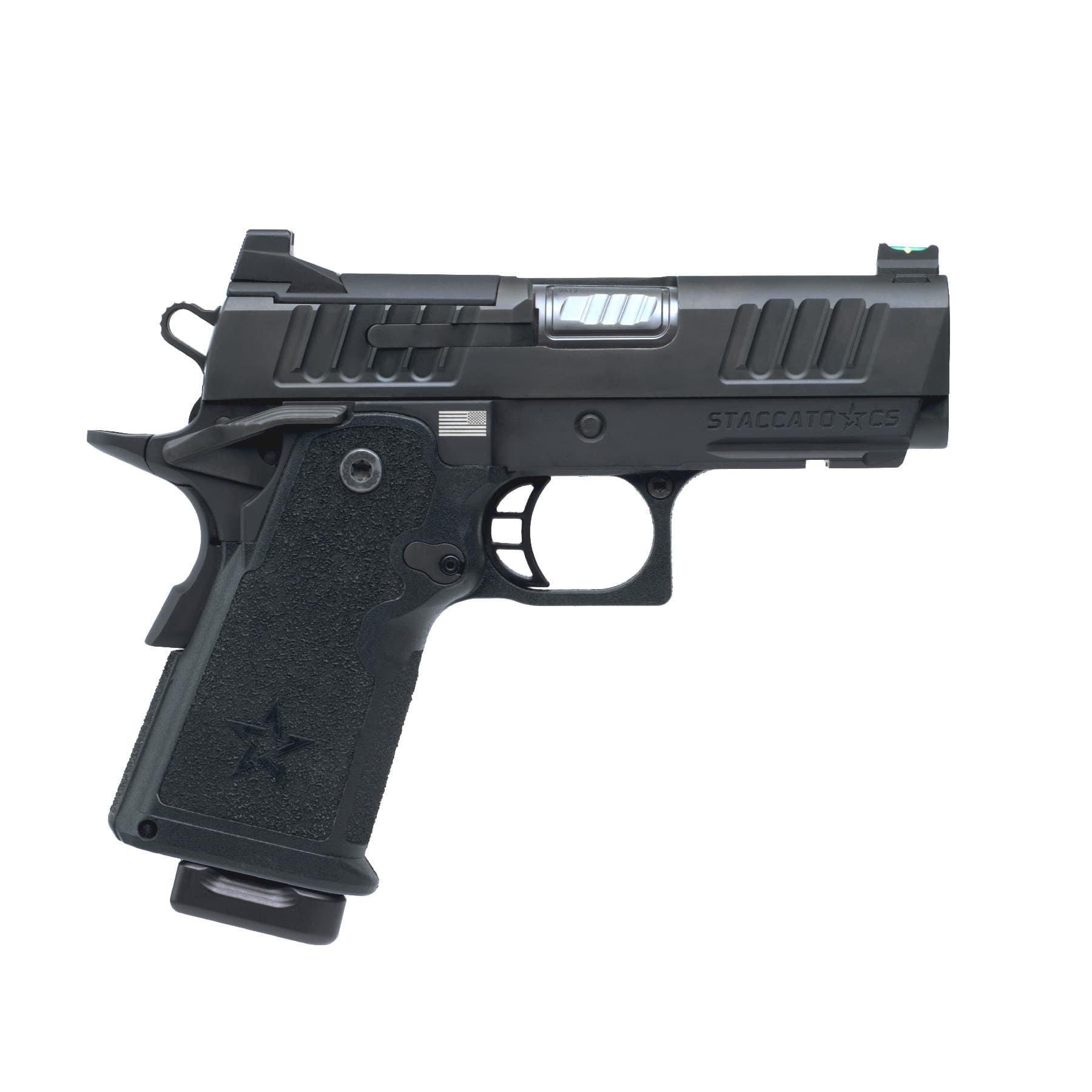
That model, released in 2019, was the Staccato P, and it marked the first time the company built a pistol specifically for duty and personal defense rather than the competition stage. The name stuck: in May 2020, STI International retired its old identity entirely and became Staccato, under CEO Nate Horvath, a Marine Corps veteran who had joined the company two years earlier. The rebrand coincided with a broader push toward reliability testing, magazine redesign, and a manufacturing standard built for officers who fire a few hundred rounds a year rather than competitors who fire tens of thousands. Agency approvals followed quickly, rising from roughly 150 departments in 2020 to the thousands within a few years, alongside adoption by units such as the Texas Rangers and the LAPD's Metropolitan Division.
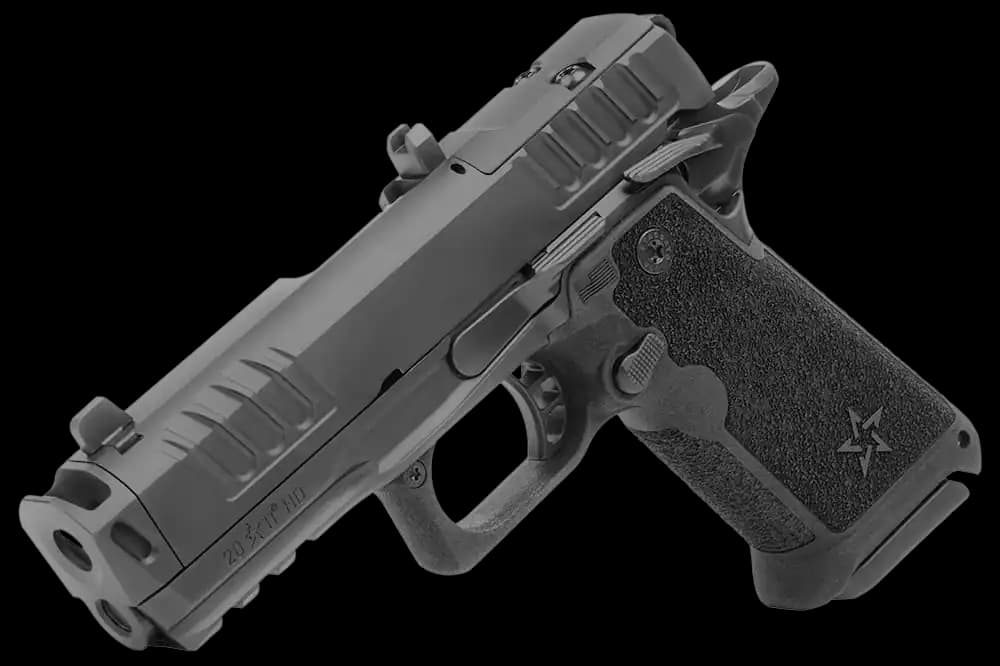
Staccato's footprint has continued to grow past the handgun itself. In 2023, the company relocated its manufacturing operation from Georgetown to a new facility in Florence, Texas, adding its own ammunition line and a members' shooting facility, Staccato Ranch, on the same property. In January 2025, the company introduced Staccato HD, a further reworked platform built around widely available Glock-pattern magazines, fully ambidextrous controls, and the removal of the grip safety that had defined every 2011 before it. For a collector, Staccato represents a rare case of a niche competition gunmaker becoming a mainstream duty brand without changing its underlying architecture. The early Tripp-era and STI-branded guns, increasingly scarce and pursued by 1911 and 2011 specialists, sit at one end of that story; the current HD-series pistols, developed alongside federal and municipal end users, sit at the other.
History & Milestones
Virgil Tripp founds Tripp Research
Gunsmith Virgil Tripp begins building custom M1911 parts and pistols for practical-shooting competitors, laying the groundwork for what becomes STI.
Strayer joins, the modular frame takes shape
Engineer Sandy Strayer partners with Tripp to design a two-piece frame separating the receiver from the grip, and the company is renamed Strayer-Tripp International.
The 2011 platform is patented
Tripp and Strayer's modular design, a steel upper mated to a detachable polymer grip housing a double-stack magazine, is patented, the mechanical basis for every Staccato pistol since.
The Skinners acquire and rename the company
Dave and Shirley Skinner complete their purchase of STI from Tripp and rename it STI International, setting its ownership course for the next two decades.
STI becomes employee-owned
Dave Skinner sells the company to its own employees, which STI describes as the first instance of employee ownership in the firearms industry.
Westwind Investors acquires STI
A private equity group buys the company, a change in ownership that precedes STI's pivot toward duty and defensive markets over the following two years.
The Staccato P launches
Built with feedback from agencies including the U.S. Marshals Service's Special Operations Group, the Staccato P becomes the company's first dedicated duty pistol and the source of the Staccato name.
STI is retired, Staccato becomes the company name
In May, STI International drops its longtime name entirely, adopting Staccato as the company's identity rather than just its duty line.
Manufacturing moves to Florence, Texas
Staccato relocates from Georgetown to a newly built facility that also houses its ammunition production and Staccato Ranch training and event grounds.
The Staccato HD family is introduced
The company launches a reworked pistol platform built around Glock-pattern magazines and fully ambidextrous controls, developed directly with law enforcement and government end users.