
Before Race City Defense became a name traded among double-stack 1911 ("2011") owners, Tyler and Adam ran a small machining and engineering operation in Mooresville, North Carolina, twenty-five miles outside Charlotte, supporting short-track and grassroots race teams that couldn't justify an in-house engineering shop of their own. Mooresville calls itself "Race City USA" for a reason: the town is dense with machinists, fabricators, and crew chiefs who serve the Charlotte area's motorsports industry, and the two founders came up in that culture of tight tolerances and fast turnarounds.
The move into firearms started informally. Tyler and Adam raced handguns alongside their motorsports work, and the machining discipline they applied to engine and chassis components carried over directly to building double-stack 1911s for themselves and friends. What began as builds for a small circle became a standalone brand when demand from outside grew beyond casual production.
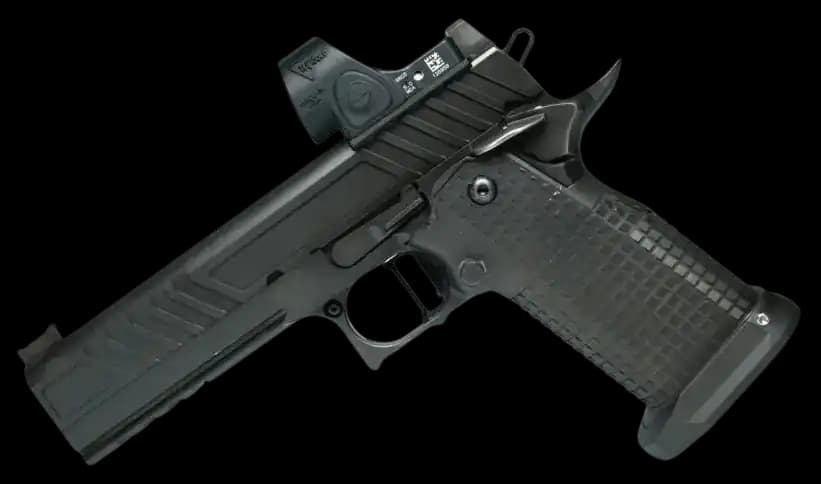
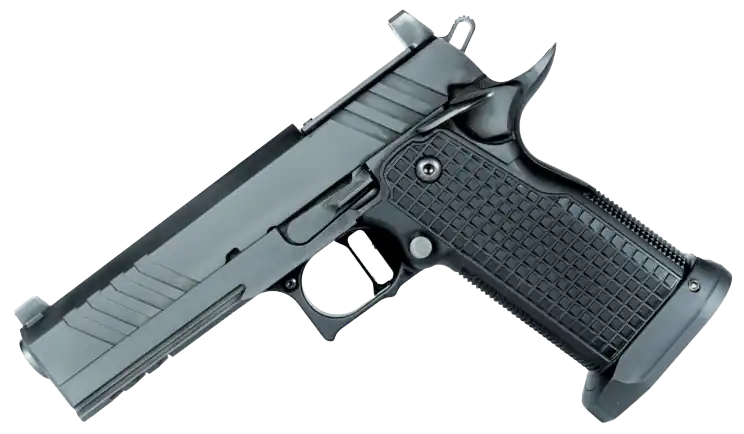
The RC9, a government-length double-stack 1911 in 9mm, became the brand's first cataloged pistol. Built around an Atlas Gunworks bull barrel and hardened steel internals, with a factory trigger in the 2.0 to 2.5 pound range, it set the template the brand has followed since: semi-custom fit and finish, an RMR-ready flat-top slide, and pricing (roughly $4,000 to $4,200 depending on configuration) below flagship 2011 houses, while inviting direct comparison to them in owner and reviewer discussion. The commander-length RC9C followed as a carry-oriented companion, trading barrel length for concealability without changing the internal specification.
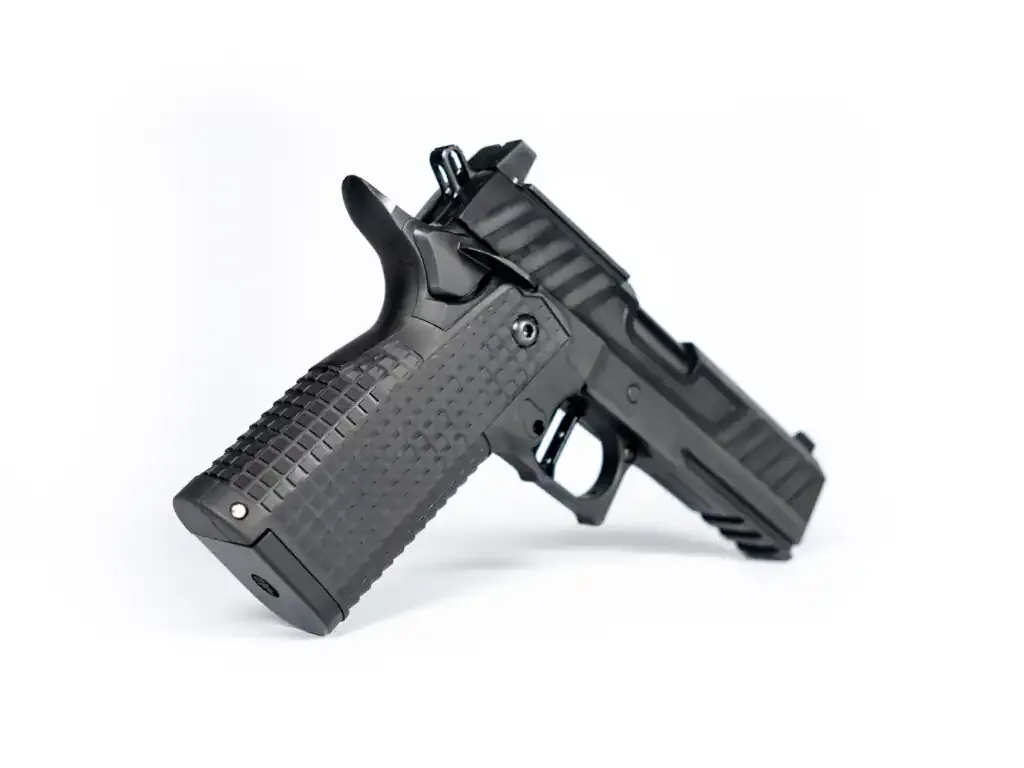
In January 2026, Race City Defense introduced the CORE 4.6, an all-metal double-stack 1911 priced at $2,995, close to $1,000 under the RC9 and RC9C. The CORE ships unported and in DLC black only, with a 3-pound trigger rather than the 2.0 to 2.5-pound unit on the flagship models, but keeps the Atlas Gunworks bull barrel and tri-top slide serrations that define the house look. The launch positioned the brand at a lower price point within the premium 2011 category, where sub-$3,000 entries with steel internals and a name-brand barrel remain uncommon.
Race City Defense remains a small operation. It sells through a limited network of specialty dealers rather than direct retail at scale, and RC9 and RC9C builds carry a stated lead time of around 120 days. That production tempo, combined with a lineup that has grown from one model to three, has kept the brand's public footprint modest: it circulates mostly within 1911/2011 forum communities and among a handful of YouTube channels covering the double-stack 1911 category, rather than in mainstream firearms press. For a collector tracking the newer wave of American 2011 manufacturers, Race City Defense is notable less for any single model than for the shape of its trajectory: a race-shop pedigree converted into a tiered pistol lineup in a compressed timeframe.
History & Milestones
Machine shop opens in Mooresville
Tyler and Adam start an engineering and machining business supporting short-track and grassroots race teams near Charlotte, North Carolina.
First handguns built for personal use
The founders begin applying their race-engineering machining skills to double-stack 1911 builds for themselves and friends, outside any commercial firearms line.
RC9 introduced as first cataloged pistol
The government-length RC9 becomes Race City Defense's first standalone product, establishing its Atlas Gunworks barrel and hardened-internals specification.
Specialty dealer network expands
Race City Defense pistols become available through a growing list of dealers, including Blackstone Shooting Sports, TAG Firearms, and Battlehawk Armory.
CORE 4.6 launches at $2,995
The brand introduces a lower-priced, simplified third model, extending the lineup below the RC9 and RC9C price point.