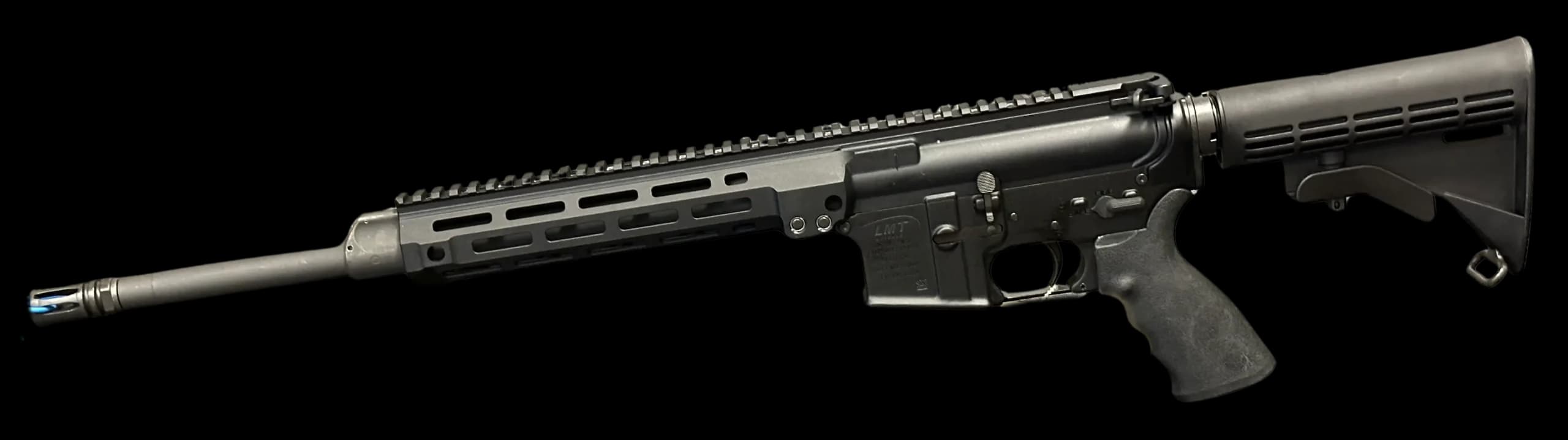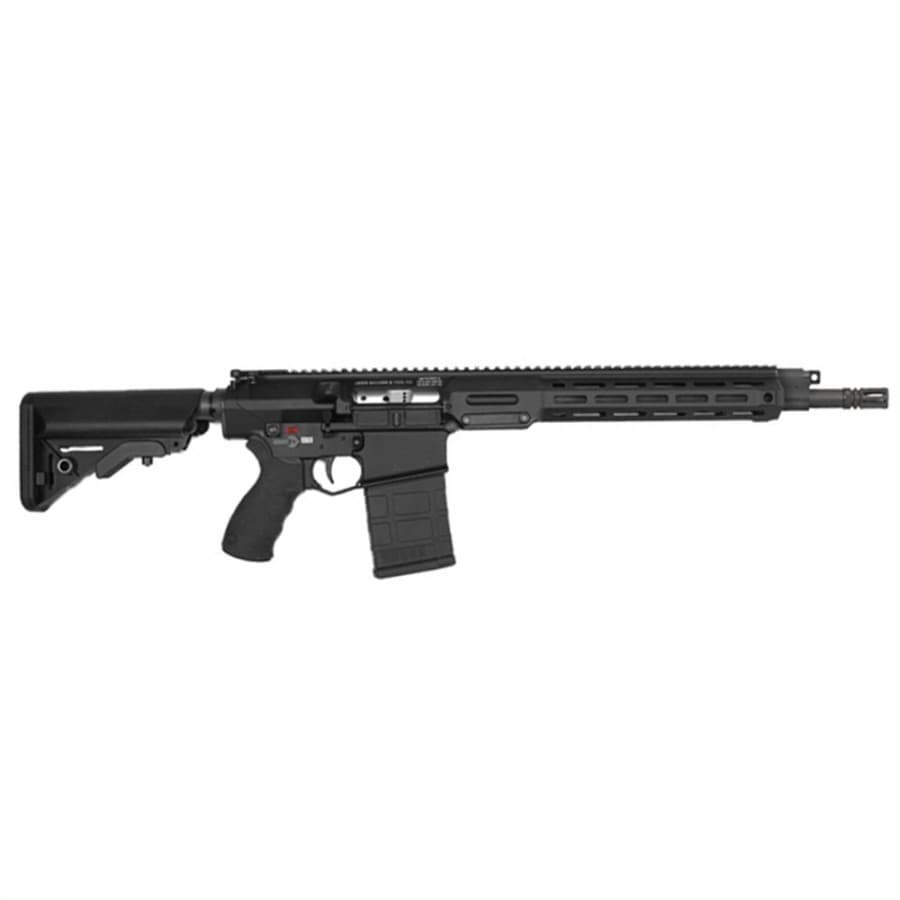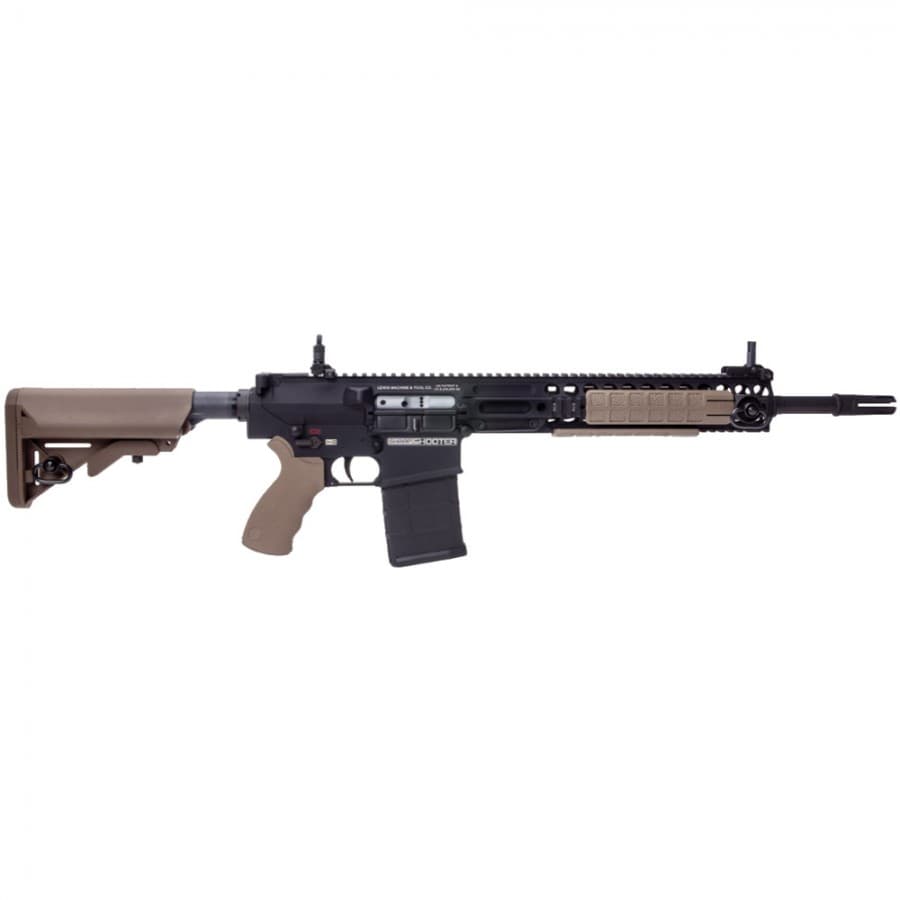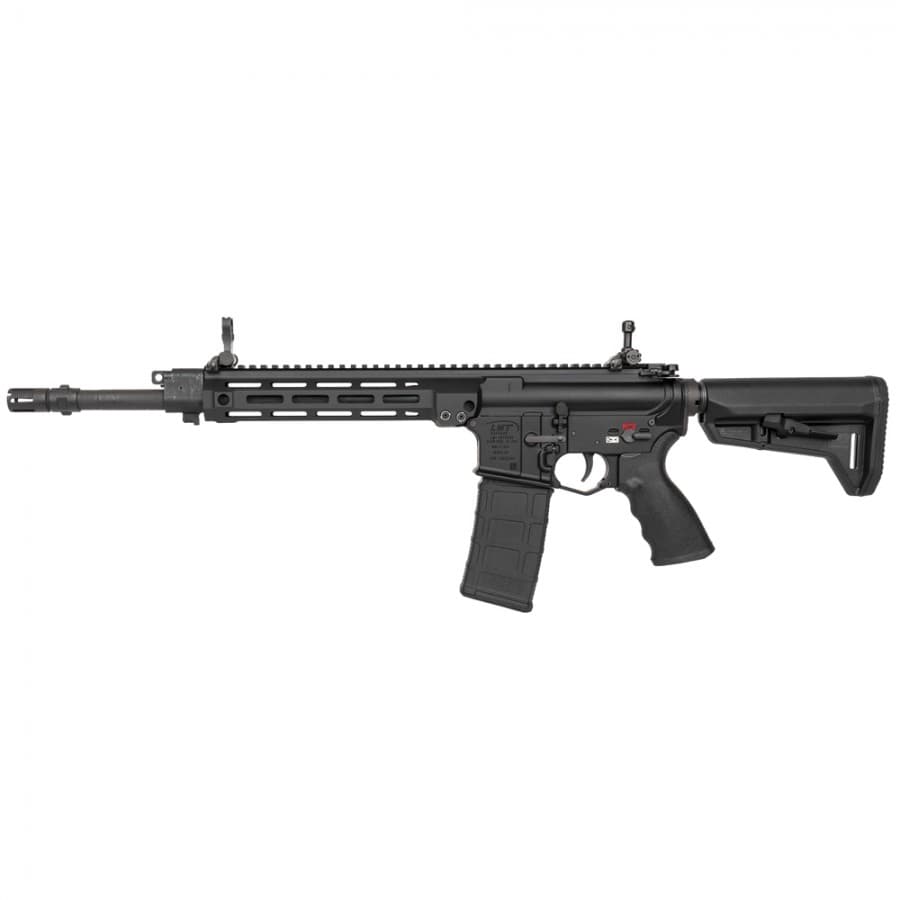
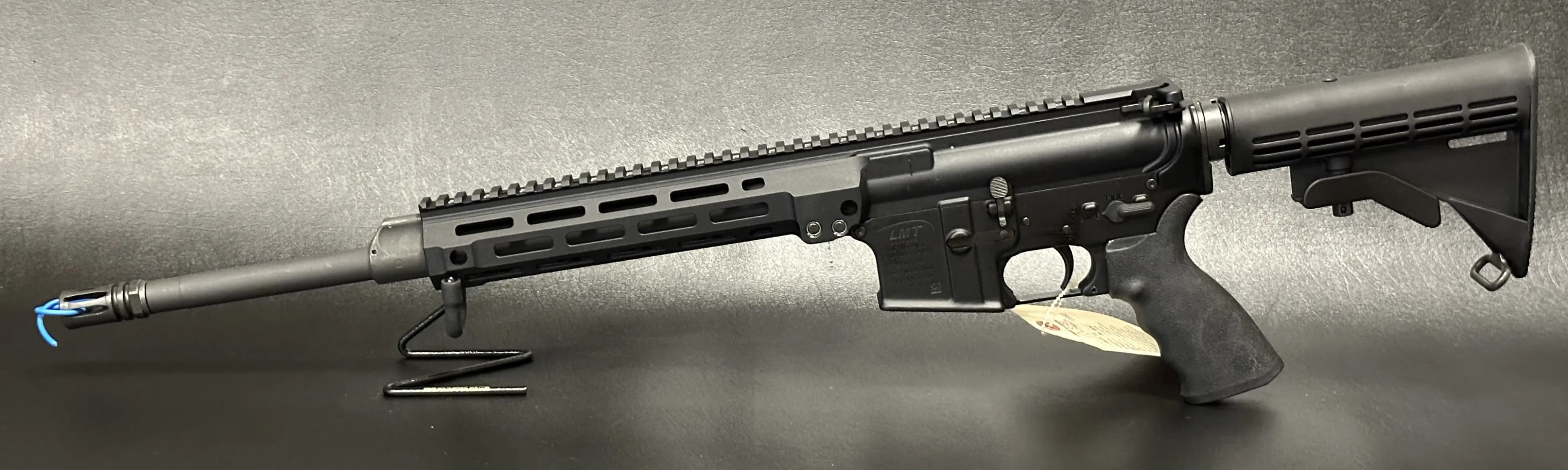
An eight-pound block of 7075-T6 aluminum goes into the mill and comes out five hours later weighing 1.47 pounds. That block is the upper receiver of LMT's Monolithic Rail Platform, machined as a single piece rather than assembled from a receiver and a bolted-on rail. The MRP, developed in 2003 and publicly shown at the 2004 SHOT Show, is the clearest expression of how the company approaches a firearm: fewer joints, fewer parts that can shift zero, and more machining time up front.
That approach traces back to Karl R. Lewis, who started Lewis Machine & Tool in Milan, Illinois, in 1980 as a contract machine shop, producing firearm components for the U.S. government rather than complete weapons. The early work was largely unglamorous: parts contracts, and for a period, forged FN FAL receivers supplied to Illinois-based DS Arms. In 1986, the company began manufacturing complete small arms for overseas sale, and by the early 2000s, it had also picked up direct contracts to build finished M203 grenade launchers for the U.S. Navy, including Naval Special Warfare units.
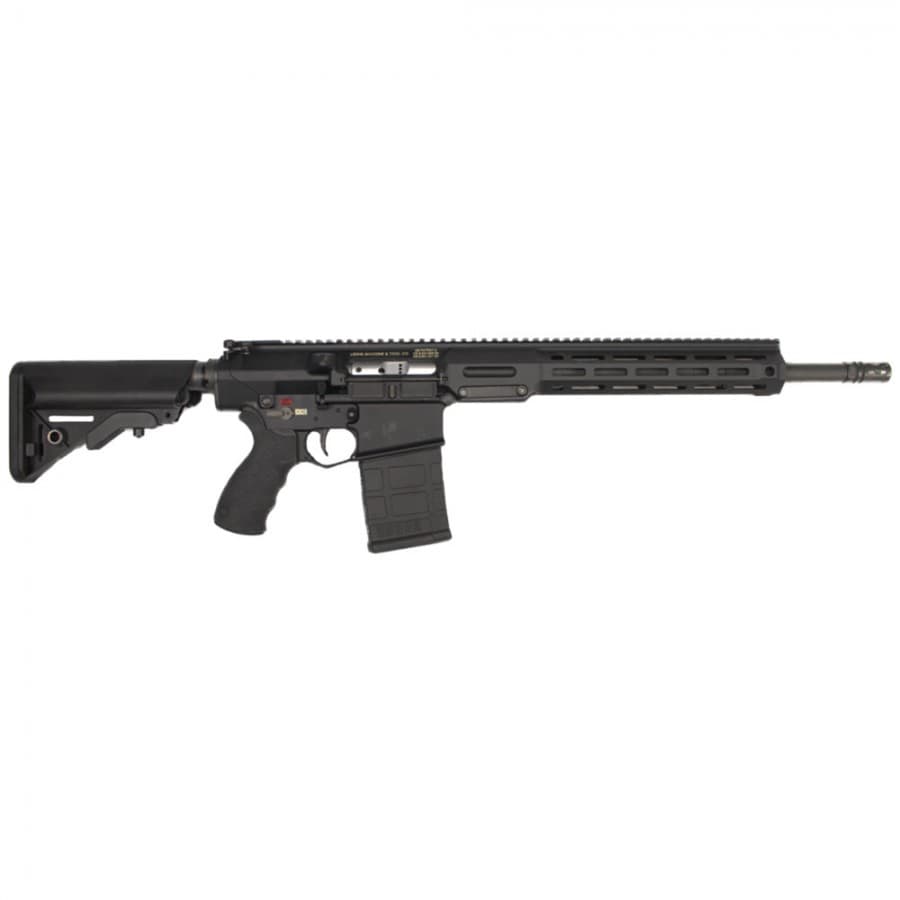
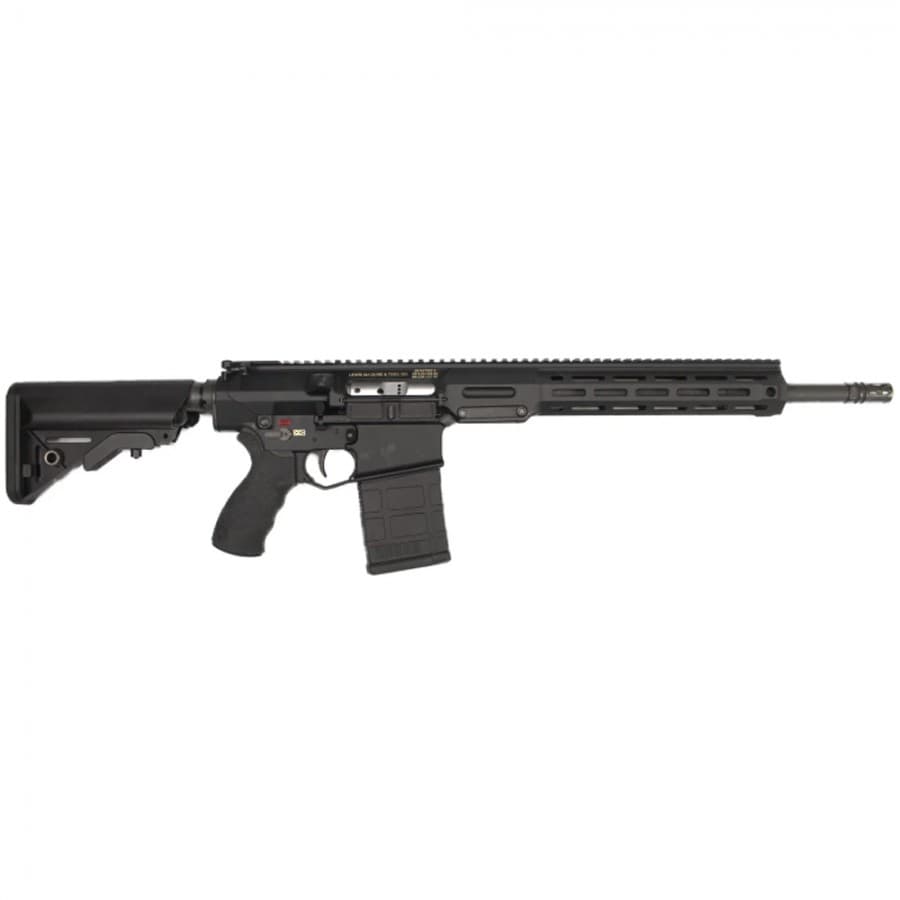
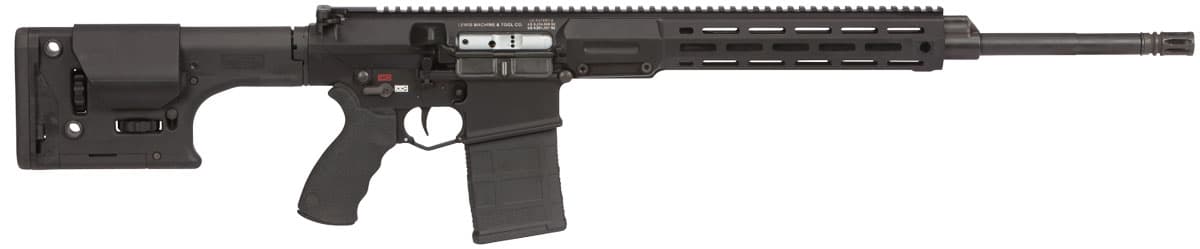
The MRP's quick-change barrel system, which lets an operator swap barrel length or caliber in a few minutes using two bolts, became LMT's signature. It extended into a 7.62x51mm platform, the LM308MWS, introduced in late 2009. That timing mattered: the same year, the British Ministry of Defense issued an Urgent Operational Requirement for a semi-automatic 7.62mm sharpshooter rifle for Afghanistan.
LMT, working with UK distributor Law Enforcement International, beat out the HK417, FN SCAR-H, and other entrants; the rifle was type-classified as the L129A1 in October 2009 and reached British troops in Afghanistan by mid-2010. It became the first new infantry rifle issued to UK forces in two decades, and by the end of 2014, more than 3,000 units had been supplied. In 2024 and 2025, LMT and LEI were awarded a further contract, worth roughly £20 million, to upgrade the in-service L129A1 fleet to the L129A2 standard, which adds 6.5 Creedmoor capability alongside the original 7.62mm chambering.
The 2010s saw two more national contracts for LMT's fully ambidextrous MARS (Modular Ambidextrous Rifle System) platform. In 2015, New Zealand's Ministry of Defense awarded LMT a NZD 59 million contract for 9,040 rifles, designated MARS-L, to replace the Steyr AUG across its armed forces; deliveries followed in 2017, and a 2018 report noted a warranty replacement of firing pins across the fleet after some had cracked. In 2019, Estonia selected LMT from a field of twelve manufacturers to supply up to 16,000 rifles under the national designation R20 Rahe, with the first 1,500 delivered in mid-2020.
That same year, LMT left Milan after roughly four decades and moved its headquarters and manufacturing operations twenty-some miles north to a purpose-built facility in Eldridge, Iowa. The company remains privately held and is still led by founder Karl Lewis as president. It has held GSA-qualified vendor status since 2005 and continues to compete for U.S. military contracts, including a 2020 award worth over $17 million for M203/M203A2 grenade launchers.
For a collector, the relevant thread running through the catalog is documentation: commercial variants that mirror military-issue configurations (the LM308MWS as the domestic counterpart to the L129A1, MRP-based Defender builds echoing SOPMOD-pattern furniture), where the interest tends to sit in the paper trail and contract history rather than in any individual public owner.
History & Milestones
Karl Lewis founds the company in Illinois
Lewis Machine & Tool opens in Milan, Illinois as a contract machine shop producing firearm components for U.S. government work, not yet complete weapons.
Company begins building complete small arms
LMT starts manufacturing complete small arms for overseas sale, moving beyond its original components business.
First complete grenade launcher contract
LMT is awarded a contract to build complete M203 grenade launchers for the U.S. Navy, including Naval Special Warfare, its first major finished-weapon contract of that kind.
Monolithic Rail Platform developed and introduced
The one-piece MRP receiver and quick-change barrel system is developed and shown publicly at SHOT Show, becoming the company's defining technical platform.
LMT qualifies as a GSA vendor
The company becomes a qualified General Services Administration supplier, opening direct purchasing access to federal buyers.
L129A1 adopted by British Ministry of Defence
LMT's 7.62mm LM308MWS, submitted with UK distributor LEI, wins a British Urgent Operational Requirement over the HK417 and other rifles and is type-classified as the L129A1 Sharpshooter.
New Zealand awards MARS-L contract
New Zealand's Ministry of Defence signs a NZD 59 million contract for 9,040 MARS-L rifles to replace the Steyr AUG across its armed forces.
Headquarters moves to Eldridge, Iowa
After roughly four decades in Milan, Illinois, LMT relocates its manufacturing and headquarters to a new, larger facility in Eldridge, Iowa; the same year, Estonia selects LMT for a 16,000-rifle contract designated R20 Rahe.
U.S. Army grenade launcher contract awarded
LMT is awarded a firm-fixed-price contract worth over $17 million to produce M203/M203A2 grenade launchers for the U.S. Army.