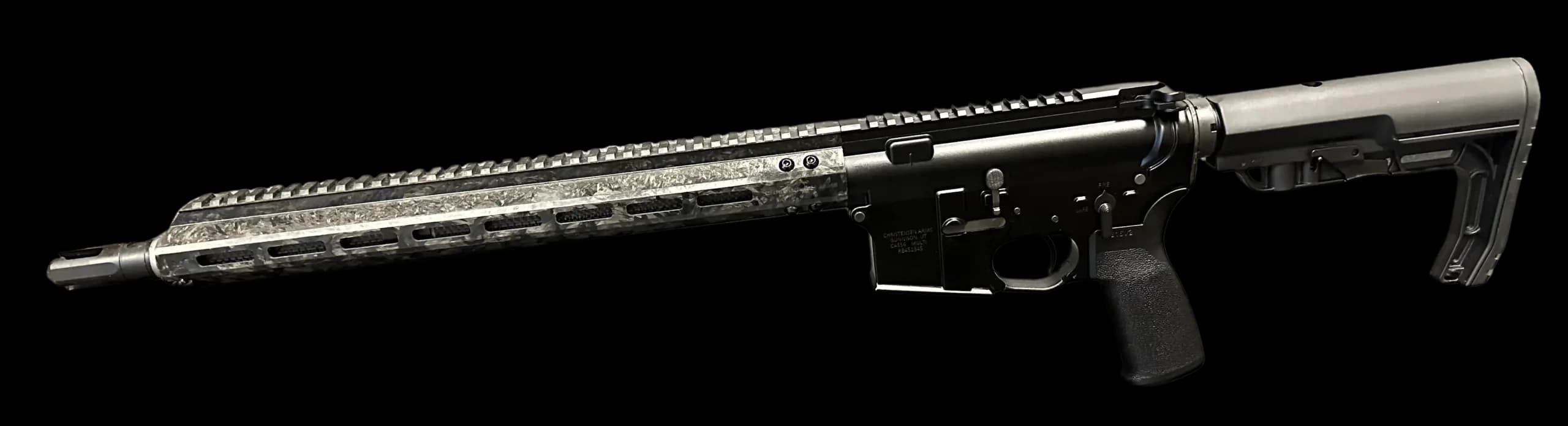
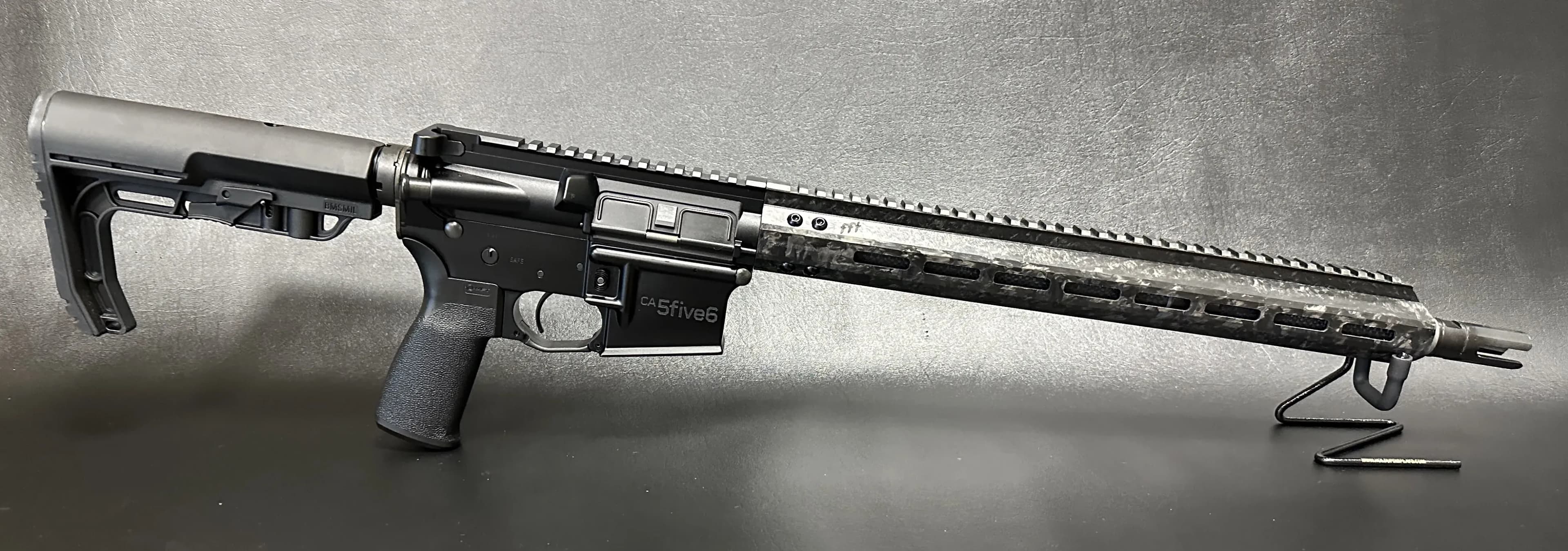

In 1993, Roland Christensen was running a small aerospace composites shop in Fayette, Utah, machining carbon fiber parts under the ACT Aerospace name, when he turned that expertise toward something outside his usual client list: a rifle barrel. Christensen held a doctorate in engineering and had spent years on structures where every ounce mattered. The question he asked was whether wrapping a steel barrel in carbon fiber could shed weight while holding the rigidity a rifle needs to shoot straight.
The early tests took place in Christensen's garage, alongside carbon fiber golf club heads, arrows, and baseball bats he had also tried to build. The carbon-wrapped .22 LR barrel was the version that stuck, and in 1995, that product line separated from the aerospace business and took the name Christensen Arms. The founding idea was narrow and specific: a hunter should not have to choose between a rifle light enough to carry into the backcountry and one accurate enough to trust at distance. A thin steel liner wrapped in carbon fiber addressed both problems, cutting weight while the carbon jacket managed heat and helped maintain consistent barrel harmonics under repeated firing.
The lineup widened through the 2000s. The Carbon Cannon, introduced in 1998, proved the carbon-wrapped barrel concept scaled to large-caliber hunting cartridges, not just rimfire. By 2003, Christensen Arms had extended the same composite approach to the stock, producing what the company describes as the industry's first aerograde carbon fiber rifle stock. Growth pushed the company out of its original space in 2009, when operations consolidated in neighboring Gunnison, Utah, which remains its headquarters and sole manufacturing site. The following decade took the brand beyond bolt-action hunting rifles: the CA-15 brought an AR-15 platform built around the same materials, and the Mesa, launched in 2012, applied Christensen's manufacturing methods to a steel-barreled rifle at a lower price point, widening the customer base beyond the carbon-premium buyer.
2019 was a pivotal year on two fronts. In August, private equity firm Ancor Capital Partners acquired the company, with Dallas investor Vic Keller, through his firm KLV Capital, taking a stake and the chairman's role. That same year, the South Carolina Law Enforcement Division awarded Christensen Arms a contract for 410 CA-15 G2 rifles chambered in .223 Wylde, a rare instance of the brand's semi-automatic platform being adopted for institutional law-enforcement use rather than the consumer hunting and competition markets in which it is best known. The Traverse, a Monte Carlo-stocked hunting rifle that replaced the earlier Classic line, also launched in 2019. The following year marked the company's 25th anniversary, and its Modern Precision Rifle, a folding-stock chassis gun, won Shooting Illustrated's Golden Bullseye "Rifle of the Year" award for 2020.
Ownership and management have continued to shift since. Matt Fleming, formerly president and CEO of MidwayUSA, was named president of Christensen Arms in 2025, and Shane Meisel succeeded him effective January 1, 2026, with Fleming staying on through the transition as interim president. Vic Keller remains chairman.
For a collector, the appeal has less to do with age than with tracing a single manufacturing idea across three decades of product categories. The current lineup, Ridgeline for mountain hunting, Mesa as the steel-barrel entry point, Traverse for classic-styled hunting, MPR for precision competition, alongside the CA-10 and CA-15 semi-automatic platforms and a run of 1911 pistols, traces back to the same carbon-wrapped barrel Christensen tested in his garage. Early carbon fiber .22 LR rifles from the mid-1990s, along with the 1998 Carbon Cannon, mark the point where the idea moved from aerospace curiosity to firearm, and that transition is where the brand's specific collector interest tends to concentrate.
History & Milestones
ACT Aerospace opens in Fayette, Utah
Roland Christensen, who holds a doctorate in engineering, opens a composites shop that makes parts for the aerospace industry, laying the groundwork for what becomes Christensen Arms.
Carbon fiber barrel concept first tested
Christensen begins wrapping steel rifle barrels in carbon fiber in his garage, seeking to cut weight without losing rigidity or accuracy.
Christensen Arms established as its own brand
Carbon-wrapped .22 LR rifles become the first products sold under the Christensen Arms name, separating the venture from the aerospace business.
Carbon Cannon introduced
The carbon-wrapped barrel technology is proven on a large-caliber hunting rifle, extending it beyond rimfire calibers.
First aerograde carbon fiber stock produced
Christensen Arms extends composite construction from the barrel to the stock, per the company's own account of its history.
Manufacturing moves to Gunnison, Utah
Growth prompts the move of operations from the original Fayette shop to neighboring Gunnison, which remains the company's headquarters and sole manufacturing site.
CA-15 introduced
An AR-15 platform rifle marks the company's first move beyond bolt-action hunting rifles into semi-automatic modern sporting rifles.
Mesa launched
A steel-barrel option broadens the lineup to a lower price point, widening the customer base beyond the carbon-premium buyer.
Ownership change and South Carolina law enforcement contract
Ancor Capital Partners and KLV Capital take control of the company, and the South Carolina Law Enforcement Division orders 410 CA-15 G2 rifles, one of the brand's few documented institutional law enforcement contracts.
25th anniversary and Golden Bullseye award
The Modern Precision Rifle wins Shooting Illustrated's Golden Bullseye "Rifle of the Year" as the company marks 25 years since its founding.