
Remington Model 8 and 81: Browning’s Long Recoil Sporting Rifles
A practical, collector-minded look at Remington’s Model 8 and 81. Calibers, long recoil explained, police conversions, and what to check before you buy.

Call us any time at: (833) 486-6659
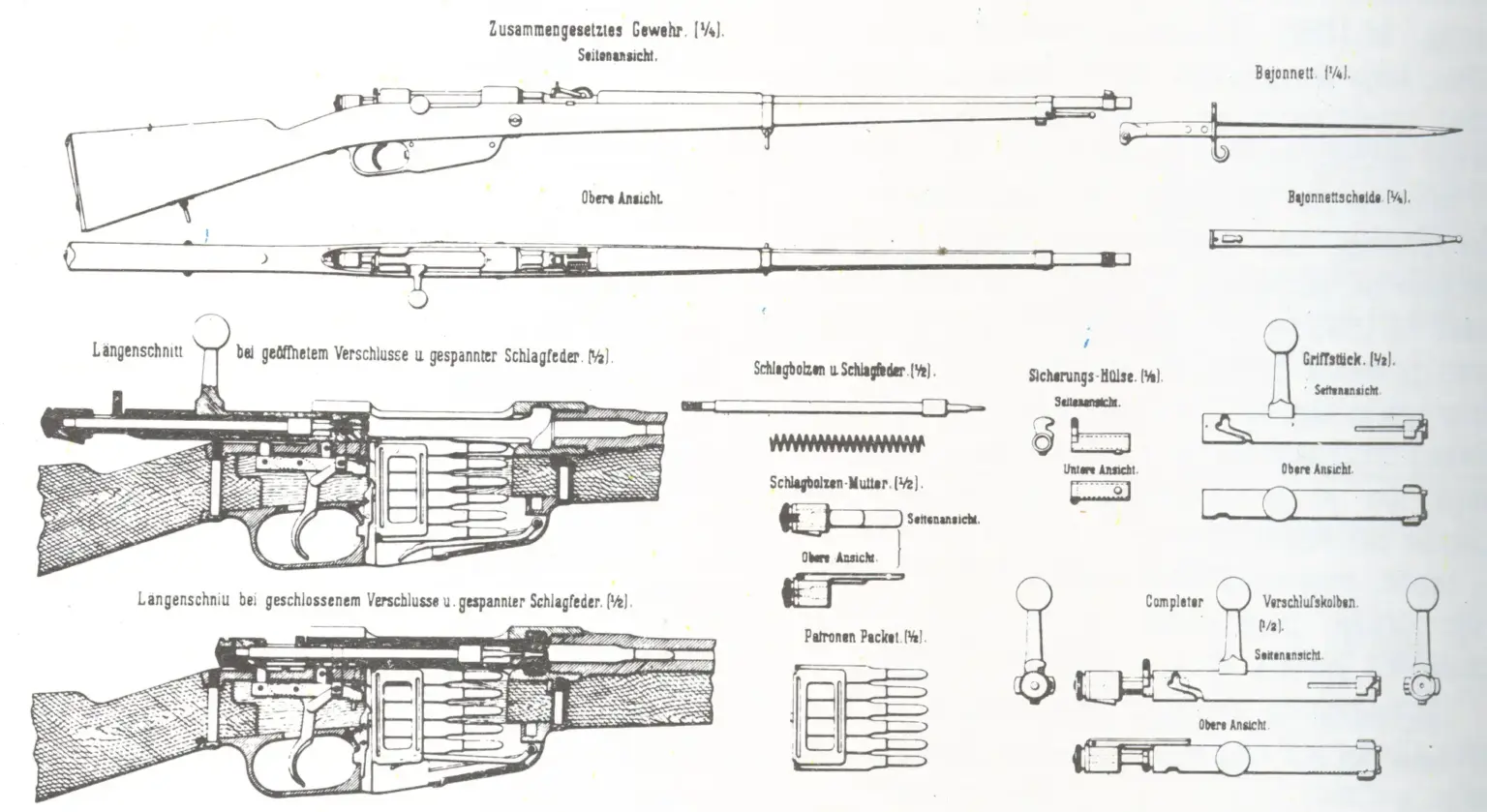
There is a comment tucked under a video that says a lot about Carcano rifles. A reader named William described the little carbine his dad gave him for Christmas in 1962. Price tag: 8 dollars and 88 cents. He shot surplus ammo and every round keyholed at 100 yards. Decades later he found what he’s certain was the same carbine in a shop, bought it back, and this time his son tried Prvi Partizan loads. The light bullet shot fine. The heavy one keyholed.
That small story captures the Carcano experience better than any spec sheet. Prices that were once lunch money. Ammunition quirks tied to how the Italians made their barrels. And enough service history to put honest wear on most examples you’ll handle today.
If you’re looking at a Carcano for the first time, or looking closer at the one you already have, this guide walks through the heart of the M91 family, from the original long rifle to the wartime M91/38s. We’ll talk cartridges, the famous gain-twist rifling, what production looked like when the world was on fire, and the small marks that tell big stories.
The Carcano story starts with a straightforward brief. Italy needed a modern smokeless-powder service rifle to replace its big-bore Vetterli-Vitali. The design that emerged, officially Fucile Modello 1891, took the Mannlicher en bloc clip system and paired it with a native Italian bolt and safety credited to Salvatore Carcano. It was simple, reliable, and it fed six rounds from a steel clip that dropped out when empty. That part matters for shooters and collectors because the clip is part of the system. Without it, the rifle is single-shot.
Adoption dates get repeated as 1891 for the model and 1892 for the start of production, and that lines up with period records. Production ramped up at Terni in 1892, followed by Torino and Torre Annunziata in 1893, and Brescia in 1894. The new rifle went to work quickly and stayed in soldiers’ hands through World War I and well into World War II. It was, by every honest measure, the Italian workhorse. For a visual primer and a good overview, Ian McCollum walks through this ground in The Italian Workhorse: Carcano M91 Rifle.
The core Carcano story is the 6.5x52mm rimless cartridge. Italian doctrine stayed with a round-nose bullet long after other nations moved to sharp spitzers, and early ammunition was paired to a barrel concept we’ll get to in a minute. If you only remember one thing on ammo: the rifle was built around 6.5×52, and most of the long service life sits on that foundation.
In the late 1930s, Italy tried a shift. The Model 1938 family arrived with a new 7.35 mm cartridge and a short rifle. In practice, logistics and wartime realities brought 6.5×52 right back into the picture, with many M38-pattern rifles chambered for the older round. If you see “Mod. 38” associated with 7.35 mm and also with 6.5 mm, that is not a mistake. Both existed, and the wartime years made sure both were carried.
Captured rifles add a wrinkle collectors love. During World War I, Austro-Hungarian forces took large numbers of M91s. A portion, estimated in period sources, were altered for 6.5×54 mm Mannlicher Schonauer because that cartridge could be produced domestically for Greece before the war. The Carcano Compendium covers that conversion wave and the reasons for it from the Austrian side. You will not trip over one of these every day, but if you encounter odd chamber stamps or ammunition that does not match expectations, this is one possibility in the historical record.
If you have heard one thing about Carcano rifling, it is probably this: they used gain twist on purpose. Instead of a constant twist rate from chamber to muzzle, the grooves tightened gradually as the bullet moved forward. The Italian ordnance boards were wrestling with two issues early on. Smokeless powders like Balistite were hot and erosive, and jacket material and quality control were still maturing. Period accounts note jackets stripping and fouling with conventional rifling. The answer, at least to Italian engineers in the 1890s, was to start the bullet spinning gently and bring it up to speed over the length of the bore. The Compendium summarizes that period decision well: the gaining twist was adopted to reduce stress on the bullet and improve barrel life with the available powder and bullets.
What does this mean for buyers and shooters a century later? Two practical things.
I do not treat gain twist as a magic accuracy trick, but I do consider it when I pick ammunition and when I evaluate a carbine that looks trimmed or refinished. If the crown sits too close to where the twist is still waking up, you will see it on paper.
The M91 family is not a maze, but it does have enough branches to confuse newcomers. The big categories help.
There are more sub-branches and detail codes, and if you like a fast visual pass, Surplused has a helpful identification page for the series. The key for buyers is to start with action type, barrel length, and cartridge, then look closely at sights and markings. Those four points usually tell you what you have.
Italy wanted to move on. The Army pushed for the new Fucile Mod. 38 and even aimed at a semiautomatic rifle, the Armaguerra Mod. 39, but the older Fucile Mod. 1891 remained the most common rifle in the ranks when World War II began. That held true until the armistice in September 1943, which split everything again.
German forces scooped up large numbers of Italian small arms after the surrender. Carcanos received German designations and went on issuing to security units and, late in the war, Volkssturm militia. If you ever wondered why some rifles wear odd late-war German stamps or rack numbers, that turbulent period is usually the answer.
Outside Europe, Carcano service did not end in 1945. Ethiopia, for example, held significant stocks of Mod. 91s, Mod. 38s, and M91/24 conversions left when Italy was pushed out in 1941. Militia use lingered into the 1950s, and small shipments from those stores later reached the United States as surplus. That is one reason you sometimes encounter rifles that look frozen in time, with local repairs, sun-bleached stocks, and a swirl of depot and unit marks from more than one country.
If you like this kind of production backstory, it is worth comparing the Italian path to another classic service rifle that had to weather rapid wartime changes. Our piece on the Lee-Enfield No.4’s wartime production and postwar life shows a very different industrial answer to similar pressures.
Italian state armories left plenty of clues on the metal and wood. The big four for early production are Terni, Torino, Torre Annunziata, and Brescia. You will typically find an arsenal name with a date on the barrel shank and a large round cartouche on the buttstock.
One marking is worth calling out because it answers a question many Carcano owners have the first time they drop a bore light in their rifle: TUBATA. Period rebuilds sometimes used a bore liner to renew a worn barrel, and those jobs were marked TUBATA on the barrel shank. If you see it, you are looking at an official reline from the interwar years. It does not doom the rifle’s accuracy. It does tell you a story about a rifle that stayed in service long enough to need a new lease on life.
Other details you might see include converted sight bases, especially on cut-down long rifles, and replacement stocks that lost their original cartouche. The example rifle described by one collector, made in 1896 at Torre Annunziata, had its stock lightly refinished and the butt cartouche thinned to a ghost. That kind of patina is common. Many Carcanos lived hard lives in uniform and under depot racks.
Carcanos filtered into the United States in more than one wave. Early surplus could be found on racks in the 1950s and 1960s for small money, which explains stories like William’s 8.88 Christmas carbine. After that era, additional rifles came in from various sources as stockpiles changed hands.
Some Carcanos show no import marks at all. Others wear small importer stamps. The difference often reflects when and how the rifle entered the country. From a collector perspective, the presence, size, and placement of an import stamp can affect how clean the rifle looks and sometimes influences price. It is a preference more than a hard rule. I have seen handsome rifles with a small, neat importer mark and rough rifles without one. If import marks matter to you, inspect the rifle in good light and look closely along the barrel shank and other flat surfaces for tiny lettering.
What I avoid is building a story around the presence or absence of a mark. Provenance lives in documents and unit stamps, not just in an importer’s roll die or lack of one. The feel of a rifle is a piece of the puzzle, not the whole picture.
Shopping Carcanos is more straightforward when you accept what these rifles are and how they were built. A few touchpoints help.
If you want a sense of how the Carcano compares to other small-bores in practical use, there is a broader case to be made for paying attention to the category itself. The characteristics that made 6.5×52 workable for Italy show up in many small-bore choices that still make sense, which is why pieces like our note on why small-bore rifles still deserve attention keep getting traction.
I have met more than one Carcano that surprised me after I learned to read it. The long rifles soothe with their balance and rhythm. The carbines snap to the shoulder like they were made for fast work in tight places. The gain twist never felt exotic to me. It felt practical, the kind of answer a nation gives when it bets on a smaller bore and then has to make powder and jackets behave.
If your first range trip goes sideways, that does not mean you bought a bad rifle. It might mean you need a different bullet weight. It might mean your short barrel wants different expectations. Or it might mean you have an old soldier that was cut a little too short, and it wants to be appreciated for what it is, not what you hoped to make it.
For more historical depth on the M91 itself, McCollum’s walkthrough in the Italian Workhorse piece is a friendly place to spend a few minutes, and the Carcano Compendium’s M91 page fills in the period decisions that still shape your range day now. Between those and a careful look at your rifle’s markings, you will have what you need to buy with confidence and shoot with a smile.
Available
View Item
Available
View Item
Available
View Item
Available
View Item
Available
View Item
Available
View ItemA practical, collector-minded look at Remington’s Model 8 and 81. Calibers, long recoil explained, police conversions, and what to check before you buy.
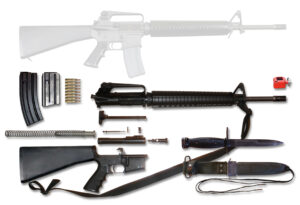
A collector’s look at Colt’s SP1 and early Sporters, from slickside uppers and pencil barrels to the rollmarks and small changes that hinted at the A2 era.
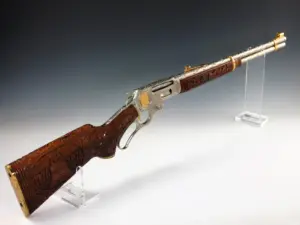
A practical, story-driven guide to reading JM vs REP barrel marks, understanding pre-safety 336s, Micro-Groove and Ballard-style rifling, and the smart checks to make before you buy.