
Remington Model 8 and 81: Browning’s Long Recoil Sporting Rifles
A practical, collector-minded look at Remington’s Model 8 and 81. Calibers, long recoil explained, police conversions, and what to check before you buy.

Call us any time at: (833) 486-6659
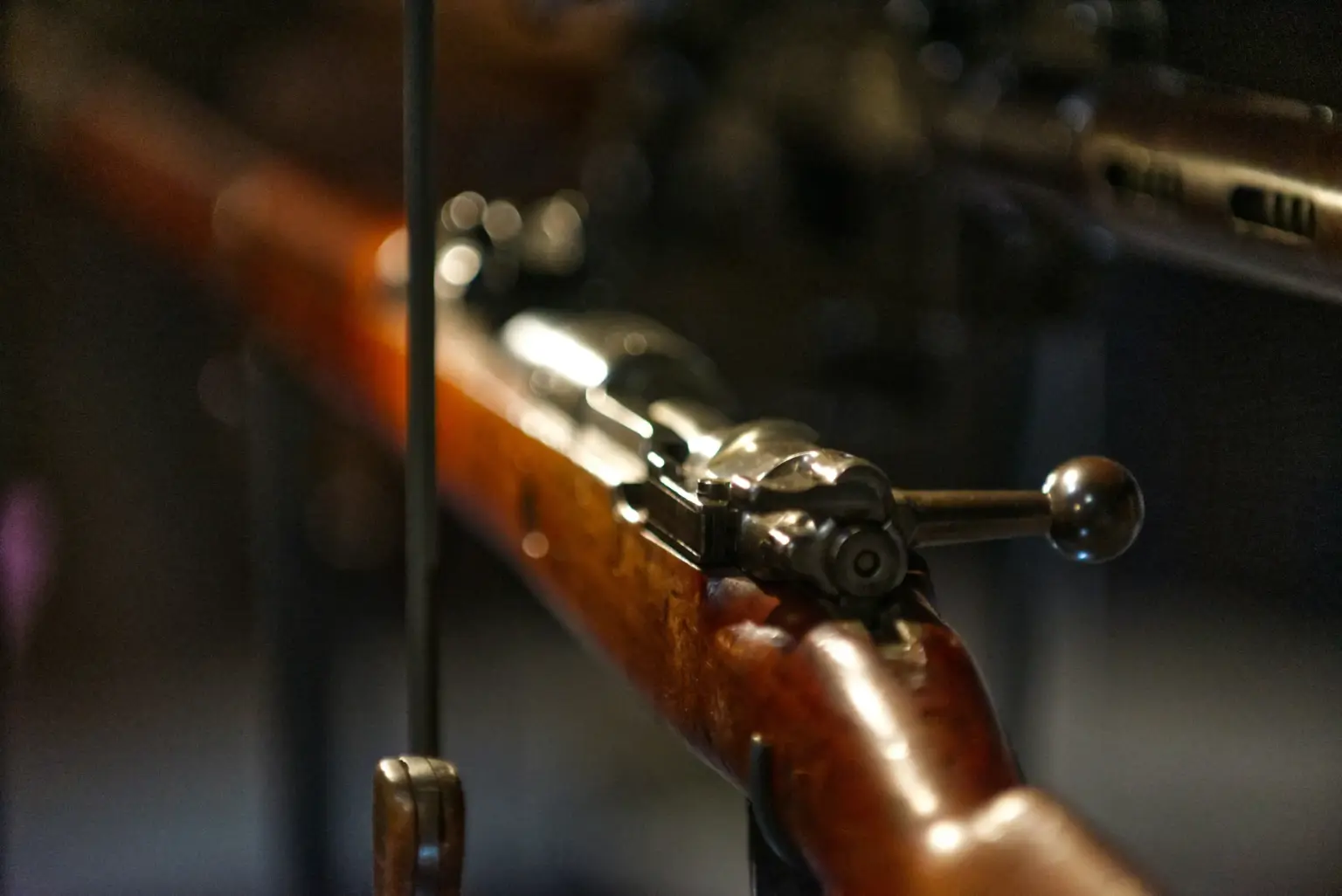
A few winters ago, on a quiet weekday evening, a friend brought a well-worn .22 to our local club. The rifle had a scuffed stock, honest dings, and a rear aperture that had seen more than a few seasons. We set up at 50 yards. Across the room, another bench glittered with stainless barrels and magnified scopes on magnums that needed their own zip code. The .22 printed a small knot of holes while the big boomers chased the center around the paper. Nobody was showing off. It was just a reminder that small-bore rifles have a way of pulling focus back to shooting itself.
That tug goes back a long way. In a 1954 American Rifleman piece on small bores versus big bores, the writer joked that it is almost always the Big Bore who goes after the Small Bore, not the other way around. The subtext is familiar even now. Caliber debates tend to get personal, but if you strip away the noise, small-bore rifles still stand on their own merits. For buyers looking for a useful rifle and for collectors looking for a story that still matters, small-bore is hard to ignore.
Small-bore shooting is a family of target disciplines that lean on smaller calibers, typically the humble and brilliant .22 Long Rifle, at distances generally of 100 yards or less. That often means you can shoot indoors or outdoors, which is part of the charm. It is contrasted with fullbore rifle shooting, which uses larger, higher-energy calibers and is almost always conducted outdoors. The key idea is simple. Less noise and recoil, ranges that are easier to find, and a focus on precision where a single missed breath shows up plainly on paper.
Because distances are shorter and cartridges are mild, small-bore makes room for more people and more places. That accessibility is one reason it never fades completely from the spotlight.
The small-bore story picked up speed in the late 19th century, when the .22 Long Rifle cartridge was introduced in 1887. It was a tidy solution to everyday shooting, and its ripple effect was huge. By 1900, a small-bore rifle could be bought in Britain for about a pound, bringing ownership within reach of skilled workers and the middle classes. The idea of precision practice that did not require sprawling ranges or deep pockets took hold, and it has never really let go.
On the target side, one name became a recurring character: the Winchester Model 52. Designed in 1918 and sold commercially starting in 1920, it arrived on the scene at the 1919 National Rifle Matches and stayed on the firing line for decades. The 52 helped define what a serious small-bore target rifle looked and felt like, and it remained one of the world’s leading small-bore target rifles until the 1960s. Then a new wave from West Germany pushed things further, with Anschütz, Feinwerkbau, and Walther driving modern competition design and features. Those surnames still ring out in clubhouses and on equipment lists.
That arc explains a lot of the racks used today. You will see rifles that wear the practicality of a century-old idea and rifles that represent a later, more refined take. All of them trace back to the same cartridge and the same problem to solve: precise, repeatable shooting at manageable distances.
Ask around any indoor league or small-bore match why people choose these rifles. You will hear variations on the same themes.
Those habits line up with what small-bore clubs and associations emphasize. The sport is described as a precision challenge that builds discipline and control, open to newcomers and serious competitors alike. If you want a rifle that will grow with you, small-bore makes that easy to arrange.
Small-bore lives in several lanes. Traditional prone and 3-position target shooting are the backbone, but there are other flavors. Lightweight Sporting Rifle, for example, shifts things toward versatile rifles shot standing, with balance and steadiness in the spotlight. Benchrest has its own pull, where the rifle rides front and rear support, and the group is everything.
The equipment follows the goals. High-quality optics help you see more, but they are only one part of the picture. Adjustable stocks make it easier to find a repeatable position. Clean, consistent triggers keep your break from rewriting the sight picture. And then there are the quiet but clever accessories that matter more the deeper you go. Shooting jackets and gloves stiffen the frame. A good sling turns your support arm into a tripod. None of this is fancy for the sake of it. It is all there to make a repeatable position possible and keep the rifle pointing where you told it to.
Collectors often have two roads into small-bore. One road carries you straight to the legends. The Winchester Model 52 is the obvious example. A clean 52 with its period sights and a stock that tells the truth about its use will always draw a crowd. The other road runs through the postwar target boom into German design, where Anschütz, Feinwerkbau, and Walther pushed precision in stocks, barrels, and triggers. Even if you are not chasing a specific model year, the lineage is clear once you pick them up and shoulder them.
Here is how I think about evaluating small-bore rifles on the collector side, without turning it into a treasure hunt.
What I avoid is telling myself that a small-bore is a financial instrument. That does not do justice to what these rifles are about. They are tools for drilling fundamentals and for enjoying time on the line. If they appreciate over time, that is a separate conversation.
The caliber debate is older than all of us. That 1954 American Rifleman essay pointed out, with a smile, that critics of small-bore are often the loudest, sometimes calling the small rifle unsporting or worse. Strip away the rhetoric, and you are left with simple questions. What are you trying to do, and what rifle best fits the job?
Small-bore rifles are not a replacement for full-power tools on big game. They were never meant to be. What they do, reliably and endlessly, is train a shooter to hold center and break shots cleanly. They also let more people participate, more often, at more places. That is hardly a scandal.
Spend a season shooting small-bore, and you will notice something. Your shot process becomes less mysterious. Breathing gets timed. The trigger does not surprise you so much as it arrives predictably. None of this is limited to .22 rifles. When you shift to other platforms, full-power rifles, shotguns, or pistols, the habits go with you. If you are a rimfire fan across the board, you might appreciate how those same fundamentals show up when you switch to a 22 pistol for practice. We wrote about that culture and why people stick with it in our piece on the Browning Buck Mark, which scratches a similar itch for clean triggers and feedback you can learn from.
Why the Browning Buck Mark Still Has Its Fans
There are many good paths. Here is a way to think about them without getting overwhelmed.
One quiet advantage of small-bore is where you can shoot. Because the distances are short and the cartridges are mild, small-bore happily lives indoors or outdoors. That opens the door to weeknight leagues, winter shooting, and year-round practice that builds consistency. It is also one reason the sport has thrived so well in places where long-range shooting is hard to find. You do not need a big footprint to make real progress.
Even if your heart belongs to rifles, it is hard not to notice the parallel conversation among shotgunners. Makers have seen a surge of interest in smaller gauges, with many shooters today spending real time with 20s, 28s, and the little 410s. Some argue that proportion and handling draw people to smaller guns, while skeptics like to point out that payload and pattern still matter. Whatever side you favor, the renewed affection for small bores in shotguns strengthens a broader truth that spills back into rifles. Lighter, more refined tools that demand focus can be deeply satisfying when paired with realistic expectations and plenty of practice.
If this is all new to you, the path into small-bore is refreshingly simple. Start by visiting a local club, especially one with an indoor small-bore night or a beginner-friendly match. You will find a social circle that is used to helping people sort out positions and equipment. The atmosphere tends to be unhurried and encouraging. Small-bore is known for being inclusive and for rewarding careful, patient work. That makes it a good place to learn without feeling rushed.
Here is a practical way to begin.
I do not think small-bore rifles are at war with anything. The 1954 debate reminds us that caliber talk can get louder than it needs to. Step away from the noise, and it becomes clear why the .22 Long Rifle remains a fixed star. It is precise at the distances that most of us have access to. It fits into homes, lives, and schedules without requiring a special occasion. It supports a network of clubs and matches that are as welcoming to newcomers as they are satisfying to long-time competitors. And for collectors, it carries a lineage that begins in the 19th century, runs straight through the Winchester Model 52, and branches into smart, modern precision rifles from makers that built their reputations on quiet excellence.
That old .22 from the winter range night is still going strong. The gloss has not come back to the stock, and the rear aperture still has a few marks from a long career. But it continues to do what small-bore rifles have always done. It asks for focus, rewards patience, and reminds you that the center of a target is the same size no matter which cartridge you bring to the line.
Available
View Item
Available
View Item
Available
View Item
Available
View Item
Available
View Item
Available
View ItemA practical, collector-minded look at Remington’s Model 8 and 81. Calibers, long recoil explained, police conversions, and what to check before you buy.
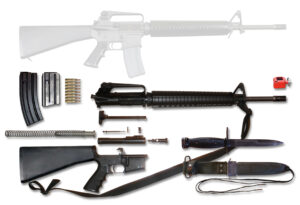
A collector’s look at Colt’s SP1 and early Sporters, from slickside uppers and pencil barrels to the rollmarks and small changes that hinted at the A2 era.
A practical, story-driven guide to reading JM vs REP barrel marks, understanding pre-safety 336s, Micro-Groove and Ballard-style rifling, and the smart checks to make before you buy.