
Remington Model 8 and 81: Browning’s Long Recoil Sporting Rifles
A practical, collector-minded look at Remington’s Model 8 and 81. Calibers, long recoil explained, police conversions, and what to check before you buy.

Call us any time at: (833) 486-6659
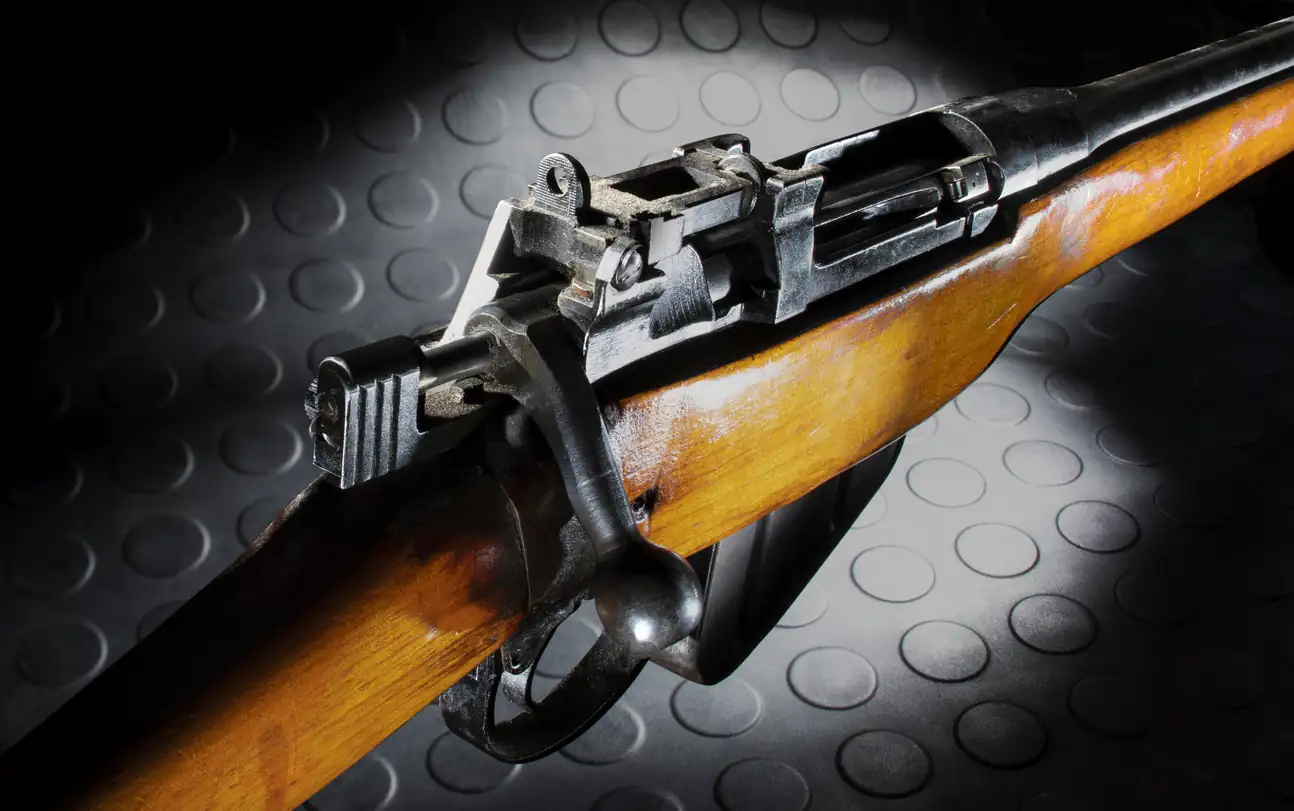
The first time I shot a No.4 seriously, it was a gray morning, and the air had that damp chill you get in early spring. The rifle felt alive, not fussy, and it told me what it liked. Run the bolt with purpose, close it as you mean it, and ten rounds of .303 British will thread a neat line across a 200-yard berm. There is a rhythm to a Lee‑Enfield, and the No.4 sings that rhythm as well as any of them.
The No.4 didn’t arrive as a clean slate. It grew out of the SMLE, the Short, Magazine, Lee‑Enfield, that carried the Commonwealth through the First World War. The SMLE had its virtues, among them a fast action and a 10-round magazine that, in trained hands, made impressive rapid fire possible. It is the rifle forever associated with the “mad minute,” the legendary burst of aimed shots a practiced soldier could deliver. Those fundamentals carried forward.
By the late 1930s, the British Army wanted a rifle better suited to modern production and wartime realities. The No.4 was answered in 1939, adopting much of the SMLE’s character while revising key details. It gained a heavier barrel and improved sights compared to its predecessor, changes that helped steady the rifle and simplified shooting for ordinary soldiers. Just as important, much of the design was tuned to speed up manufacturing and reduce costs without sacrificing functionality.
If you line up a well-kept SMLE beside a No.4, the family resemblance is obvious. But the No.4’s look is leaner and more purposeful, the accents of an army getting ready for a very big job.
The No.4 kept the core Lee action and its distinctive cock‑on‑close feel, where the final push of the bolt cocks the striker. That motion is part of what makes the rifle shoot so fast, and it stayed in the design for good reason. It also kept the 10 round magazine, loaded efficiently with stripper clips rather than loose rounds.
From there, the differences pile up. The No.4’s barrel is heavier than the SMLE’s, which helps manage heat and maintain point of impact through strings of fire. Sights were updated as well. Wartime rifles often wore simplified battle sights, practical and rugged, though many shooters today prize the No.4’s sight picture overall as a step forward from the earlier rifle. The action and furniture evolved toward strength where it mattered and simplicity everywhere else.
Several No.4s you’ll encounter were built with two groove rifling rather than the earlier five. That change was born of wartime expediency. Two groove barrels were quicker to produce, yet service experience found no practical difference in field accuracy, which is why the pattern continued after the war without any rush to revert.
Nothing about the No.4 was accidental. It was designed to be faster and cheaper to make than the SMLE, a rifle engineered for mass production under pressure. Features like a quick release bolt and straightforward battle sights reflect that reality. British factories and Commonwealth partners embraced the pattern, streamlining steps that did not affect reliability.
Canada’s Small Arms Ltd. at Long Branch is a good example of the No.4’s broad footprint. Long Branch began No.4 production in 1940 and carried on until 1955, with the bulk built during the war. If you’re handling a No.4 with Canadian markings, there is a good chance you are holding a Long Branch rifle. Collectors and shooters encounter both two groove and five groove Long Branch barrels, and many examples still wear the clean, no‑nonsense features that defined wartime assembly.
These choices were not just about speed. They were about keeping rifles in the hands of soldiers without creating a maintenance burden. The No.4 was not delicate. It was built to be used.
Although adopted in 1939, the No.4 first saw service in 1941. It quickly became the best‑known British rifle of the Second World War. The pattern spread across the Commonwealth, with British, Canadian, and New Zealand forces among its primary users in that conflict. Its practical ergonomics and that cock‑on‑close bolt gave troops a rifle that could keep up with training, weather, and battlefield grit.
Compared with peers of the period, the No.4 balanced speed and steadiness well. It did not pretend to be a delicate target gun, yet the rifle’s weight and sighting kept it honest out to meaningful distances. For those of us who still take them to the range, that is exactly what makes the platform satisfying. It feels like it was built for real people doing real work.
The No.4’s usefulness did not stop with the final shots of 1945. It stayed in British service as a sniping rifle into the Falklands era, a remarkable continuation for a pattern first fielded in 1941. Elsewhere, some Canadian forces continued to issue examples as late as 2016. A rifle does not stay that long without earning it.
Modernization took several forms. The No.4’s bolt and receiver proved to be solid foundations for postwar conversions to the 7.62 NATO cartridge. Two names stand out. The L39A1, a target rifle built on the No.4 action, gave marksmen a tidy, accurate platform in the newer calibre. The L42A1 carried the lineage into sniper service, again in 7.62 NATO, and represents one of the most interesting bridges from wartime .303 to Cold War expectations. For a collector, these conversions tell a story of continuity. For a shooter, they remind us why the basic mechanism aged so well.
There is a reason the No.5 looks familiar. It was based on the No.4, then shortened and lightened for use in dense terrain. Civilian conversation branded it the “Jungle Carbine,” a catchy label that stuck, though it was never an official title. The point here is lineage. Once the No.4 set the template, it spawned useful branches that lived their own lives.
Numbers do not tell the whole story, but they help set expectations before your first trigger press. Standard No.4 figures look like this:
As with any long‑serving military rifle, there are variations. Wartime features can be a little plainer, postwar rifles a little neater, and Canadian Long Branch examples often carry small differences that collectors enjoy cataloging. None of that changes what you feel when you settle in behind one. They are honest rifles that carry their weight with grace.
Condition matters more than a date stamp. Before you let a No.4 follow you home, I like to walk through a few simple checks. These do not require a bench full of gauges, just patience and a good light. If you are new to the pattern, keep a reputable gunsmith in the loop for the final green light.
If you want help naming parts and learning the rifle’s basic anatomy, the practical illustrations in the BYSA Lee‑Enfield manual are handy, especially the No.4 diagram that labels the controls clearly. You can find that in the Lee‑Enfield instructor manual.
Part of the No.4’s charm is how it behaves at the firing line. The cock‑on‑close stroke encourages a forward drive that keeps the sights steady as you get back on target. The recoil is present but not harsh, helped by the rifle’s weight and stock geometry. With that said, a good buttpad and a solid stance make long strings more pleasant, especially if you plan to chase your own version of the old rapid‑fire standards.
On the ammunition front, .303 British is very much alive. Factory loaded ammunition is still produced, including by PPU, and components exist for careful handloading. That keeps the No.4 practical for regular range use without turning every session into a treasure hunt. If you enjoy cross‑training on lighter rounds that stretch your time and budget, readers often find that small‑bore rifles still deserve attention alongside a classic .303. Skills transfer, and your shoulder will thank you on the third box of the day.
It is easy to get wrapped up in minutiae. That is half the fun. But even if you are just looking for a solid shooter, a few variation notes help frame what you are holding.
Two-groove vs. five-groove barrels are the most obvious dividing line in the wild. As noted earlier, two-groove barrels appeared to speed production and did not show a real-world penalty. It is normal to find both patterns in Canadian Long Branch rifles, with dates ranging from 1940 through 1955 and a heavy concentration during World War II. British production of the No.4 followed the same practical spirit, with wartime rifles wearing plain, sturdy fittings that favored speed and simplicity.
Sight furniture ranges from rugged battle sights to finer rear units that reward careful aiming. Wood can be anything from straight-grained and workmanlike to eye-catching walnut, but even the handsome sets were never meant to be delicate. Over the decades, many stocks were sanded, refinished, or repaired. Look for clean, honest work that preserves fit and function.
For a friendly overview comparing the SMLE and the No.4, including why the No.4 became the common World War II pattern, Henry Krank’s article is a quick, readable resource. If you want that side-by-side perspective, have a look at SMLE vs No.4.
There is a reason the No.4 is so often the first Lee‑Enfield a buyer brings home. It carries the shape of a century, from a 1939 redesign to the cold wind of the Falklands, with detours through target ranges and armories that refit them for 7.62 NATO. It is a rifle built for fast hands and steady eyes, friendly to new shooters and reassuring to old ones. Most of all, it feels like it has not forgotten what it was made to do.
If you come across one with a clean bore, honest wood, and a bolt that closes with that stern, smooth finish, your decision gets easy. The No.4 is more than a page in a book. It is a partner that still earns its place on the line, round after round.
Available
View Item
Available
View Item
Available
View Item
Available
View Item
Available
View Item
Available
View ItemA practical, collector-minded look at Remington’s Model 8 and 81. Calibers, long recoil explained, police conversions, and what to check before you buy.
A collector’s look at Colt’s SP1 and early Sporters, from slickside uppers and pencil barrels to the rollmarks and small changes that hinted at the A2 era.
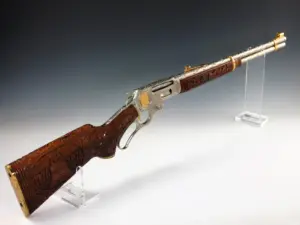
A practical, story-driven guide to reading JM vs REP barrel marks, understanding pre-safety 336s, Micro-Groove and Ballard-style rifling, and the smart checks to make before you buy.