
Remington Model 8 and 81: Browning’s Long Recoil Sporting Rifles
A practical, collector-minded look at Remington’s Model 8 and 81. Calibers, long recoil explained, police conversions, and what to check before you buy.

Call us any time at: (833) 486-6659
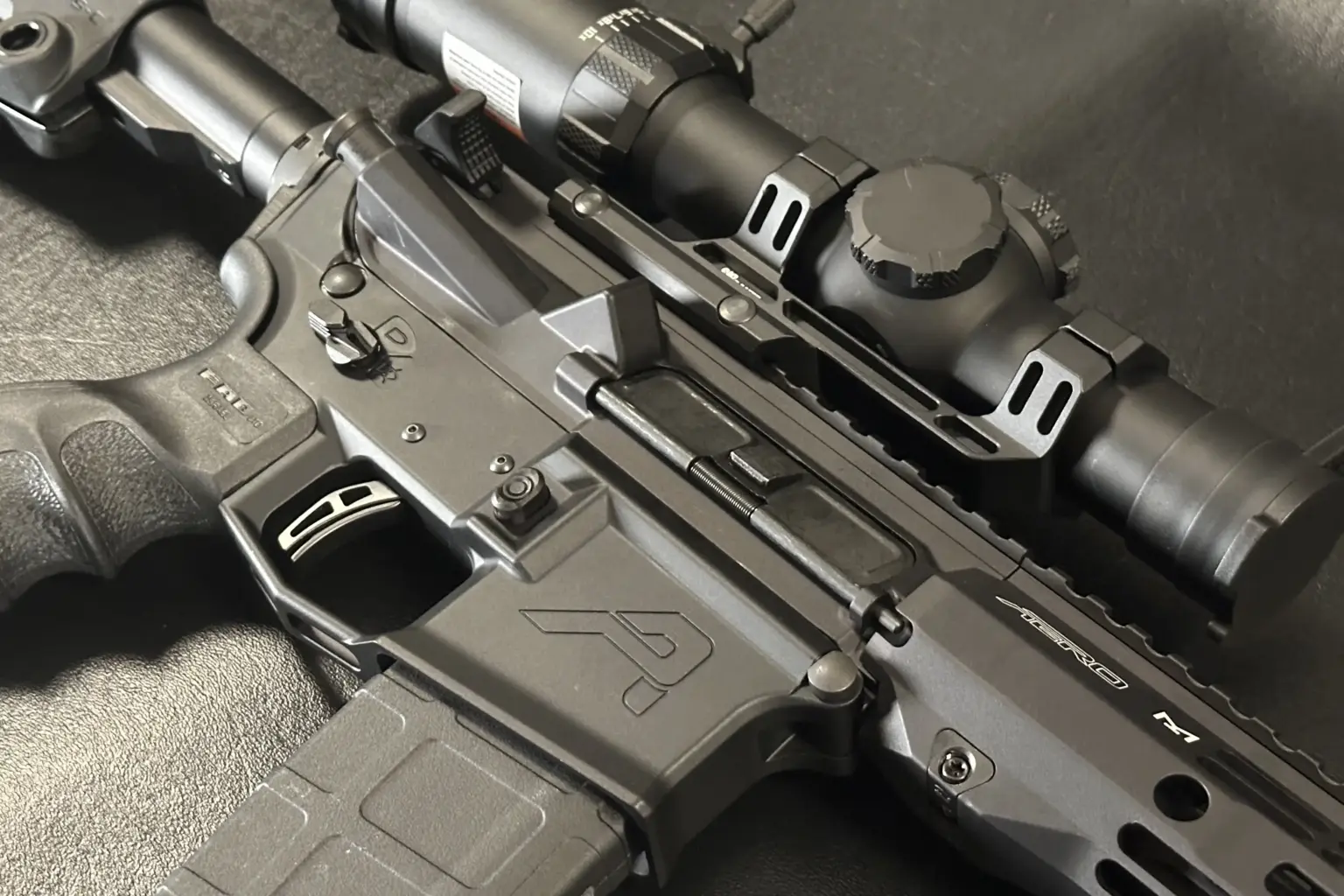
I have watched more than one range debate boil down to this: one shooter praises a slick billet set for its vault-tight fit, another shrugs and points to a beat-up forged carbine that just keeps stacking hits. The truth lives in the middle. If you frame the choice around purpose, materials, tolerances, and execution, the best option becomes obvious fast.
The AR-15 splits into two receivers: the lower holds the fire control and controls; the upper holds the barrel, bolt carrier group, and optics interface. Most buyers are choosing between three constructions:
You will also see 7075 vs. 6061 alloys, different finishes, and varying levels of completion. We will hit those after the big three.
Forging compresses and aligns the metal’s grain with the receiver’s shape. That yields high tensile strength in critical areas and keeps cost in check after minimal finish machining. It is why mil-spec receivers are forged and why forged uppers and lowers have such a long service record for reliability and value.
Good forgings are not sloppy. Quality forged receivers consistently maintain tight dimensions and weigh less than comparable billet designs. For most builds, forged is the shortest path to dependable function at a smart price.
Helpful overview: Liberty Safe on forged vs. billet receivers.
Billet receivers are carved from solid bar stock on CNC machines. That process makes features and geometry easy to customize and allows manufacturers to pursue very consistent dimensions. Well-executed billet sets often have a snug upper-to-lower interface and a cleaner exterior finish because everything is cut on the mill.
Liberty Safe notes quality billet work commonly holds tolerances around ±0.005 inch. Some vendors claim even tighter tolerances, but the point is consistency and repeatability when the machining and QC are in place.
Trade-offs: billet does not get the grain-alignment benefit of forging, so designers often leave a bit more material for stiffness. That can add a small amount of weight and cost due to extra machine time. On the plus side, billet is where you see practical quality-of-life features like integrated trigger guards, threaded bolt-catch pins, and upper-to-lower tension screws, which are easy to implement when you start from a block. See examples in Pew Pew Tactical’s receiver roundup.
Monolithic uppers combine the receiver and handguard into a single piece, creating a very rigid top rail. The payoff is minimal deflection when you load a bipod, brace on barricades, or mount lasers and night vision that demand a rail that stays put. The tradeoff is modularity. You are locked into that handguard profile and length, so changes later mean swapping the whole upper.
Forged receivers have a strength advantage due to grain alignment. That is why military-pattern receivers are forged. The context that gets lost in arguments: for most civilian use, both forged and well-designed billet receivers are more than strong enough. The extra tensile strength of forging only becomes decisive in the most extreme use cases.
Weight differences are real but small. Billet sets are often a touch heavier to maintain stiffness, typically about an ounce, according to practical comparisons. If you are chasing meaningful weight savings, you will find bigger wins in barrel profile, handguard, optic, and stock long before the receiver set.
“Tight tolerances” get tossed around a lot. Focus on the dimensions that influence reliability and accuracy:
Billet construction makes it easy for manufacturers to hold very consistent fits across a matched set. Liberty Safe quotes around ±0.005 inch for quality billet machining. But the takeaway is simple: process control and inspection matter more than the label on the box.
Further reading: AT3 Tactical’s guide to lower receivers breaks down tolerances, materials, and finish terms in plain language.
Finish: Type III hardcoat anodizing is the standard for wear and corrosion resistance. Cerakote adds color and additional surface protection, usually applied over anodizing. Raw aluminum is for projects, not finished rifles you intend to run hard.
Most of what you feel at the trigger break lives in the upper: barrel, bolt, and optics alignment. If your budget favors one half, prioritize the upper and its machining quality. A forged 7075 upper from a reputable maker is rarely a bad call, and a well-executed billet upper can be excellent when the critical interfaces are right. On the lower, forged saves money without giving up function, while billet is where ergonomics, ambi controls, and style live.
For a balanced overview of how forged and billet receivers are made and finished, see Liberty Safe’s guide. If you want a consumer-level comparison, 80 Percent Arms explains typical cost and feature differences between forged and billet lowers.
Mil-spec usually refers to a forged 7075 receiver built to the military-pattern blueprint and hardness specifications. It is a baseline, not a trophy. Plenty of billet sets exceed the baseline in some areas and deviate in others in terms of features or styling.
Completion levels:
For a plain-English refresher on materials, finishes, and completion terms, see AT3 Tactical’s guide.
Process choice matters, but execution matters more. Forged receivers remain the value and durability baseline. Billet brings consistent fit and feature flexibility when the machining is right. Monolithic uppers deliver stiffness for specific roles. Start with your purpose, favor 7075 when strength margin matters, and buy from makers known for clean machining and inspection.
Want more detail on the tradeoffs and examples to browse? Check these clear, no-drama resources:

Available
View Item
Available
View Item
Available
View Item
Available
View Item
Available
View Item
Available
View ItemA practical, collector-minded look at Remington’s Model 8 and 81. Calibers, long recoil explained, police conversions, and what to check before you buy.
A collector’s look at Colt’s SP1 and early Sporters, from slickside uppers and pencil barrels to the rollmarks and small changes that hinted at the A2 era.

A practical, story-driven guide to reading JM vs REP barrel marks, understanding pre-safety 336s, Micro-Groove and Ballard-style rifling, and the smart checks to make before you buy.