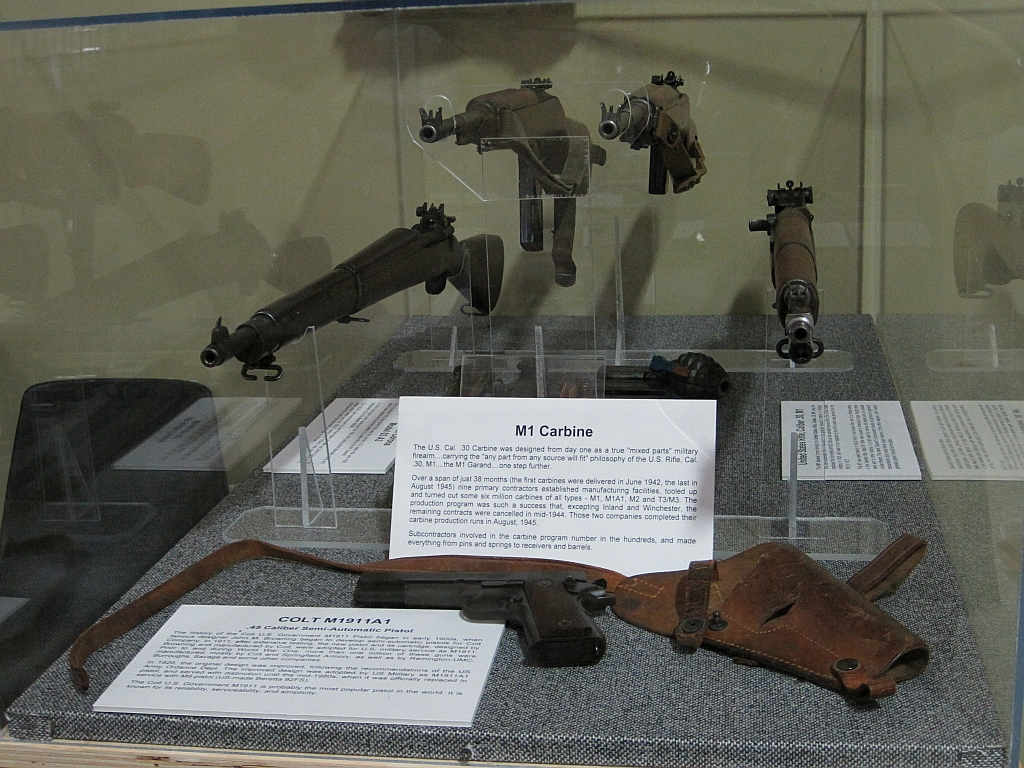
I still remember the first time someone handed me a 1918 Colt frame wearing a wartime Remington Rand slide. The owner wanted to know if he had something special. He did, just not in the way he expected. That pistol was a story you could hold in your hands, a very honest government rebuild that had done its job and then some. If you collect U.S. service pistols, you learn quickly that originality lives and dies on the little things. Finishes, proof marks, small parts, the way a trigger breaks the light. They all matter.
This guide walks through the elements that actually help you sort original M1911 and M1911A1 pistols from rebuilds, understand maker variations, and decide what is worth paying for. We’ll keep it practical and focused on the stuff you can confirm at the bench.
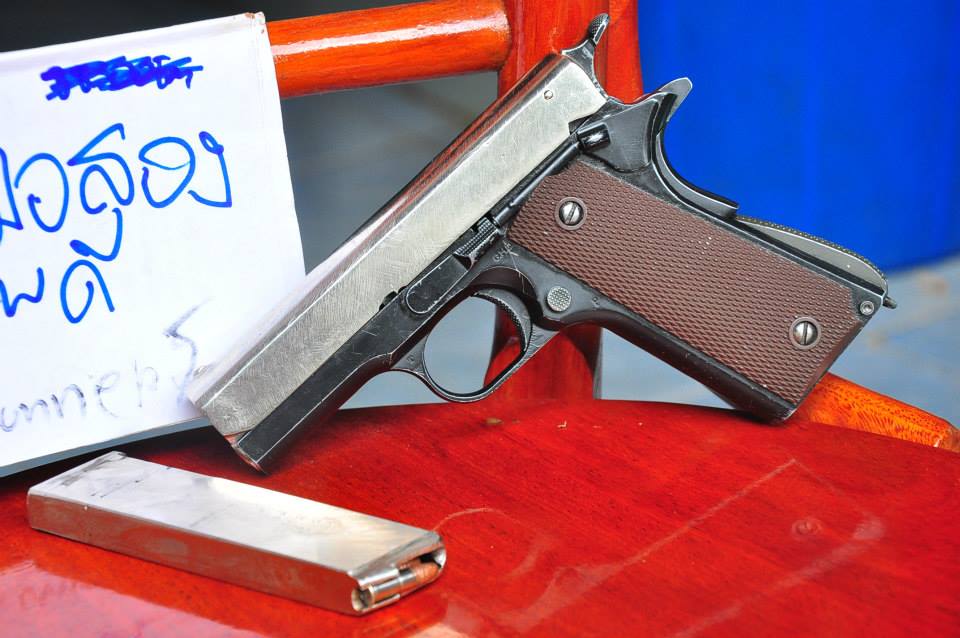
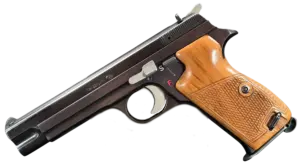
Colt M1911a1 Right Side View with Magazine, shown in detail view, supports the article’s focus on M1911 and M1911A1 U.S. Service Pistols: Maker Variations, Small-Parts ID, Arsenal Rebuild Marks, and What Collectors Look For.
Why these pistols keep us guessing
The government bought the M1911 and later the M1911A1 from multiple contractors, all built to the same blueprint. Interchangeability was the point. It kept guns fighting across two world wars and long after. The catch is that it left collectors with a million combinations to puzzle over later. Slides were swapped, parts were replaced without ceremony, and depot armorers were not concerned with future value. As the folks at The Sight M1911 note, a Remington Rand slide fits a Springfield Armory frame just fine, and you’ll see that kind of pairing often on issued guns that kept working for decades.
To make sense of any one pistol, you work from the frame out, you sanity check the slide, and you let the small parts and finish tell you what happened to it. It sounds straightforward, but the devil is in the details.
Who made them: WWI and WWII contractors
Let’s set the roster first. During World War I production of the M1911, major contractors included Colt, Springfield Armory, and Remington-UMC. With the M1911A1 update and the wartime surge in World War II, five companies produced pistols to government order:
Colt
Ithaca
Remington Rand
Union Switch and Signal
Singer Sewing Machine Company
One detail that matters for scarcity: Singer’s M1911A1 output was very small. The m1911.org identification notes peg it at approximately 500 pistols, which makes authentic Singer-marked frames the white whales of the genre.
If you want to go deeper on contracts, foreign marks, and year-by-year production context, Charles Clawson’s guide is the standard short reference on military M1911 and M1911A1 pistols. It organizes contractor data, proof marks, and rebuild information in a way that rewards close reading.
Reading the frame: quick maker tells
Your first and best clue to who made a U.S. service .45 is the frame. Slides move around. Frames tend to stay married to their serial numbers and inspector marks. The m1911.org identification notes summarize several useful frame tells that cover most pistols you’ll encounter:
Colt M1911A1: look for the VP proof in a triangle at the left front of the trigger guard, a GHD inspector mark, or the way M1911A1 is stamped without spaces.
Singer: serial number with an S prefix.
Remington Rand: serial number preceded by NO rather than No.
Union Switch and Signal: an RCD inspector mark or a distinctive double spacing in the M 1911 A1 legend.
Ithaca: a geometric proof on the front left of the trigger guard, shapes like a triangle or arrowhead.
Reserialized ordnance guns: an X prefix to the serial number. On these, the maker is not identifiable from the serial itself.
These are rules of thumb, not absolutes, but they solve the puzzle for the large majority of genuine U.S. service frames. If something does not line up, step back and make sure you are not dealing with a commercial frame, a modern reproduction, or a pistol that has been significantly altered post-service.
Collectors use the word mixmaster for pistols that have had slides or other major parts swapped during service or rebuild. The thing to remember is that mixmaster does not mean fake. It usually means the gun did its job and a government armorer kept it going using parts that were on hand. That can be as honest as it gets, just different from factory-correct.
Because the manufacturer’s name appears on the slide and not on the frame, slide swaps are the most common source of confusion. A Remington Rand slide on a Colt frame is completely believable on a depot-overhauled pistol. When value is your focus, let the frame’s maker and the overall set of parts and marks steer your expectations.
Small parts that speak volumes
The small parts give away era and updates quickly. They are also the first things an armorer would change.
Trigger: The original M1911 had a long trigger. The M1911A1 update went to a shorter trigger for improved ergonomics. Many early pistols that were carried into World War II were updated with the short trigger during rebuilds, which can confuse new buyers when they see a 1918 frame wearing an A1-length trigger.
Mainspring housing: M1911 pistols used a flat mainspring housing with a lanyard loop. M1911A1 pistols used an arched mainspring housing. As with triggers, conversions happened during rebuilds, especially in the early World War II period.
Grips: M1911s were issued with walnut grips. M1911A1s were issued with molded grips, often described as Bakelite. If you see a 1911 with molded grips and a parkerized finish, you should immediately be thinking arsenal rebuild, not factory-original finish.
Finish: M1911 pistols were blued when they left their makers. According to The Sight M1911’s rebuild overview, there were no parkerized M1911 pistols issued originally. M1911A1 pistols were issued parkerized, which is why so many World War II guns wear that matte green-gray tone.
It is tempting to call a gun original because most of the parts look right. Resist that. Originality is about a consistent story. If the serial number points to a WWI Colt and the finish and grips say late depot rebuild, trust the parts and the finish.
If you are interested in how service sidearms evolved across the 20th century and why these changes happened, our broader look at how service pistols changed over time gives useful context that connects the M1911 family to what came next.
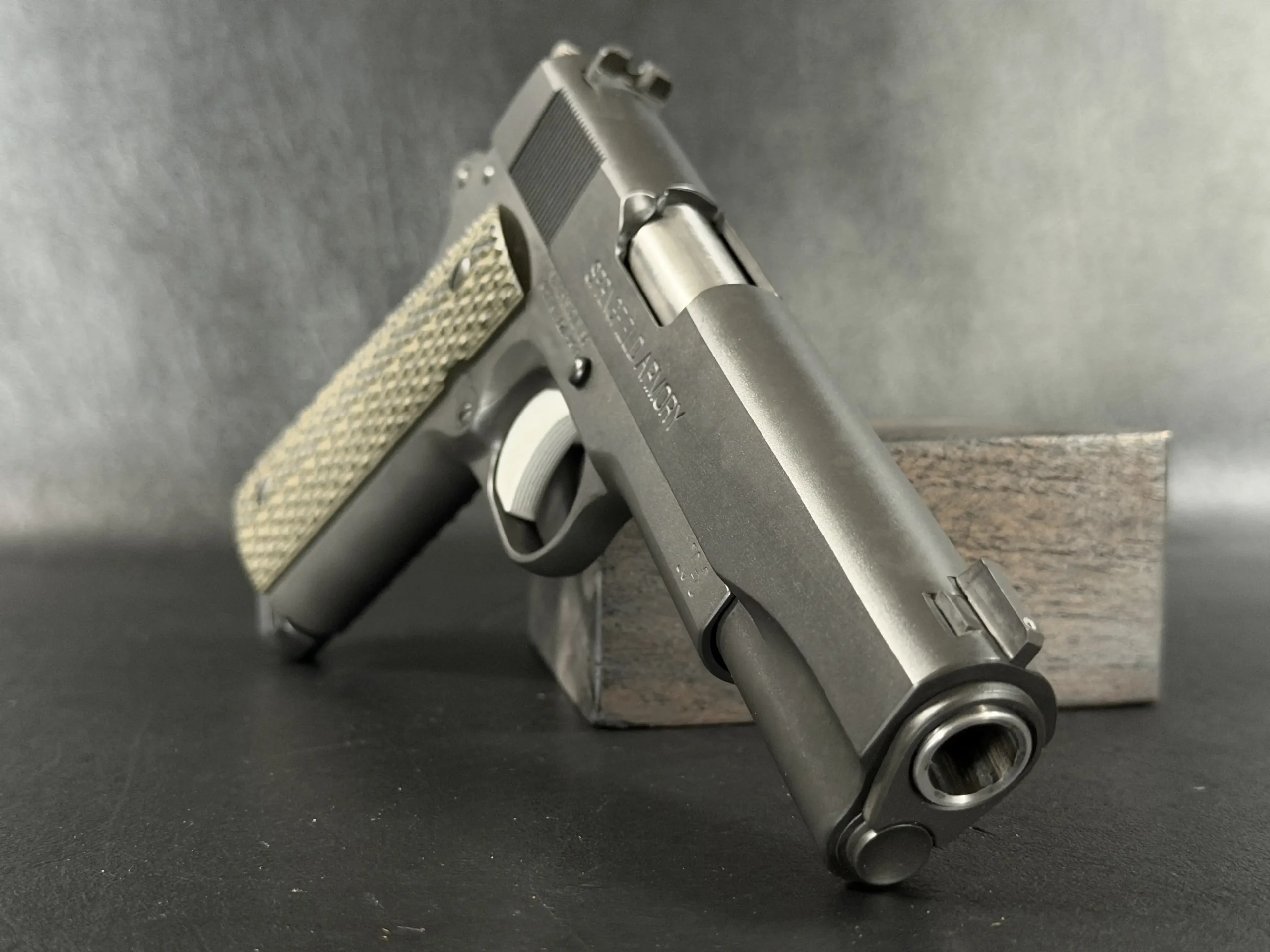
Hilton Yam Custom Delta 1911, shown in close-up detail, supports the article’s focus on M1911 and M1911A1 U.S. Service Pistols: Maker Variations, Small-Parts ID, Arsenal Rebuild Marks, and What Collectors Look For.
Barrel markings that help date and sort
Barrels are their own rabbit hole. They are also high-swap parts, so treat them as one puzzle piece rather than the whole picture. The Sight M1911’s barrel markings page lays out the main families you will see:
Colt M1911 barrel markings
Springfield Armory M1911 barrel markings
Remington-UMC M1911 barrel markings
Singer Mfg. Co. barrel markings
High Standard M1911A1 barrels
Flannery Bolt Co. M1911A1 barrels
Post World War II government contract barrels
Seeing a High Standard or Flannery Bolt barrel in a World War II parkerized M1911A1 is expected. Finding one in an otherwise untouched WWI-blued M1911 is a strong clue that the pistol went through a later rebuild. Proof marks also matter here. The P proof mark appears in the collector literature and is one of the basic checks for service barrels and slides. Exact placement and style vary by maker and time period.
Arsenal rebuilds: finishes, grips, and depot codes
Government overhauls started not long after the pistols were first issued and continued for decades. During World War II, large numbers of WWI-made M1911 pistols were reconditioned and refinished. The Sight M1911 rebuild overview captures the most useful tells:
M1911 pistols originally left the factory blued with walnut grips. If a WWI-era serial number wears a parkerized finish or molded grips, you are looking at a rebuild.
M1911A1 pistols were originally parkerized and had molded grips. That combination is not a rebuild tell by itself. You need to look for parts mixing or depot stamps.
There were no G.I. M1911 or M1911A1 pistols produced with factory nickel finishes. A nickel finish on a U.S. service frame is a later refinish and a major hit to collector value.
Parts interchangeability is a blessing and a curse. Armorers swapped slides and small parts freely to put guns back in service, with no regard for matching manufacturers.
Rebuild facilities often marked their work. The m1911.org notes mention that many overhauled pistols were stamped with a code for the facility. One example given is AAA for Anniston Army. You will encounter other facility marks as well. These stamps are usually small and can be faint, so take your time under proper light.
Marine Corps pistols are notoriously hard to prove without documentation, but there are some distinctive rebuild marks from the postwar era that provide a path. As USMCWeaponry has outlined, pistols overhauled by Marine depots in the 1950s and beyond often received an electropenciled O followed by a dash and the last two digits of the year. Later practices added the depot identifier behind the O, with an A for Albany or a B for Barstow.
You will also see the same larger themes as Army depot work. Many Marine pistols from earlier contracts were parkerized during rebuilds, and some M1911s had their triggers swapped to the shorter A1 type and their mainspring housings updated to the arched style.
This is one of those cases where a small, shaky looking mark carries a lot of weight. If you find a pistol with a clear USMC-style electropencil mark and other consistent signs of rebuild, you have a credible Marine overhaul story, even if you cannot pin it to a specific unit without paperwork.
Foreign proofs and British marks
Foreign marks on U.S. .45s are a deep and often misunderstood subject. They can add interest, but only if you recognize them and understand why they are there. Clawson’s condensed guide covers foreign proofs and acceptance marks, including British, Canadian, and Russian. Two British items that come up frequently in collector circles are the British Purchasing Commission’s Crown over W mark and the Birmingham Proof House private view marks. If you are staring at tiny crowns or lettered ovals, grab a reference and slow down. These can be legitimate and period-correct, but they can also be misread.
Serial numbers and dating: proceed with care
Serial numbers are a starting point, not the finish line. They tell you what the frame started life as. They do not tell you what a government armorer did to it in 1943. Clawson’s guide organizes serial ranges and year-by-year production notes for M1911 and M1911A1 pistols, and that is where many collectors begin when they are trying to place a frame in time. Just remember that serials and dates only help when the rest of the pistol agrees with the story.
One quirk you will bump into is the X prefix assigned to some reserialized ordnance pistols. Those frames are legitimate U.S. service guns, but you cannot identify the original maker from the serial alone. You have to lean on inspection marks, proof stamps, and small-part details.
What collectors look for
Every collector has a slightly different list, but the broad themes are consistent.
Original finish and correct grips for the model and era. A factory-blued M1911 with walnut panels is the ideal for a WWI-era pistol. A mid-war M1911A1 with a parkerized finish and molded grips is expected. Nickel on a U.S. service frame is a red flag.
Coherence across parts. Slide, frame, barrel, and small parts should tell a consistent story. An M1911 frame with an A1 trigger and arched mainspring housing is probably a rebuild, which is fine if that is what you are buying. If the seller calls it untouched, ask pointed questions.
Legible and correct markings. Inspector initials, proof Ps, and maker proofs in the right spots. The frame tells are key for Colt, Remington Rand, US&S, Ithaca, and Singer frames. Look for the VP triangle on Colts, the NO prefix on Remington Rand, the RCD or spacing tells for US&S, the geometric proof on Ithaca trigger guards, and the S prefix for Singer.
Depot or service history indicators. Army or USMC overhaul marks can make a pistol interesting for a service-usage collection. Electropenciled O-YY or O-A and O-B are very specific Marine rebuild tells from the postwar era.
Scarcity. Singer’s very small production makes any genuine Singer-marked frame scarce. Be wary of restamped slides or creative claims. Proof your hunches against known tells and trusted references.
Above all, collectors value honesty. A straight-shooting arsenal rebuild with clear marks, correct postwar parts, and no funny business often beats a suspiciously perfect pistol that cannot explain its own details.
Practical buyer tips and red flags
Start with the frame. Confirm the maker using reliable tells. Let the frame set your expectations for the rest of the pistol.
Check finish against era. Blued equals original M1911. Parkerized on a WWI serial likely equals rebuild. Parkerized on a WWII M1911A1 is normal.
Grip sanity check. Walnut on M1911s, molded panels on M1911A1s. Odd combinations can be rebuild or later replacements, so calibrate your price accordingly.
Barrel as a data point, not a verdict. High Standard and Flannery Bolt barrels are common on wartime M1911A1s and as replacements. Postwar government contract barrels show up too.
Look for depot stamps. Small rebuild codes, such as AAA for Anniston Army on some pistols, add context. For Marines, electropenciled O-YY and later O-A or O-B are strong tells.
Walk from nickel. A G.I. frame in nickel is a refinish and not factory. Value takes a real hit.
Trust patterns over any single claim. If two or three details disagree with the sales pitch, slow down.
Keep a pocket reference. Clawson’s one-volume condensed guide and the m1911.org quick ID page save you from guesswork when time is short.
The marketplace is full of good guns with complicated lives. If you enjoy reading the metal, the U.S. .45s will reward you over and over again.
Two last notes before you go shopping. First, military pistols like these can cross international lines and come with foreign marks that are legitimate for their story. British Purchasing Commission Crown-Ws and Birmingham private view marks are known in the literature. Second, serial number charts and contract lists are great tools, but always back them up with what your eyes see on the frame, the slide, and the small parts under good light.
If you want a concise reference that pulls these threads together, Clawson’s condensed volume on Colt .45 service pistols from 1911 to 1945 remains the go-to for collectors who like to check the exact wording of marks and the way they moved over time. It also covers proofs and foreign markings beyond the basics discussed here.
As a firearms enthusiast with a background in website design, SEO, and information technology, I bring a unique blend of technical expertise and passion for firearms to the articles I write. With experience in computer networking and online marketing, I focus on delivering insightful content that helps fellow enthusiasts and collectors navigate the world of firearms.
Two FALs can look identical until a magazine will not lock. This field guide cuts the confusion around metric vs inch patterns, receiver cuts, para parts, surplus kits, and what matters to collectors.
A practical, collector-minded look at Remington’s Model 8 and 81. Calibers, long recoil explained, police conversions, and what to check before you buy.
A collector’s look at Colt’s SP1 and early Sporters, from slickside uppers and pencil barrels to the rollmarks and small changes that hinted at the A2 era.