
Remington Model 8 and 81: Browning’s Long Recoil Sporting Rifles
A practical, collector-minded look at Remington’s Model 8 and 81. Calibers, long recoil explained, police conversions, and what to check before you buy.

Call us any time at: (833) 486-6659
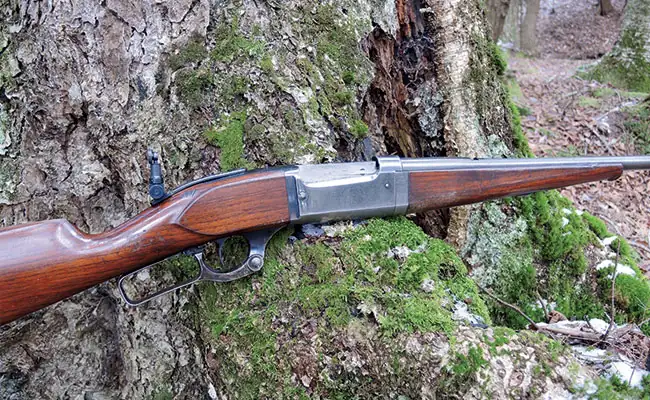
The first time I watched a Savage 99 roll a cartridge onto the elevator, I understood why old-timers spoke about that rifle with a half-smile. Years later, I handled a bone-stock Model 110 with an AccuTrigger that broke clean and honest, and I understood how Savage survived lean years without losing the plot. There’s a straight line between those two moments. The company has a habit of solving practical problems in ways that make sense to people who actually shoot, not just people who design.
If you’re weighing a used Model 99, shopping a new 110 with AccuFit, or just deciding if Axis or 110 fits your budget and goals, it helps to see how the pieces fell into place. Savage history isn’t just dates and model names. It’s a pattern of simple ideas that stick.
In 1899, Savage launched the rifle that would frame its early identity. By 1920, the name had been shortened to Model 99, and the company had grown through acquisitions, including the purchase of Stevens Arms. The Model 99 stayed in production long enough to earn its own mythology, and it bowed out at the Westfield, Massachusetts plant in 1998. That end date matters for collectors. It tells you the lever era is closed and finished at Savage, with a firm bookend that newer buyers can recognize when they see Westfield-marked receivers and late-production details.
Ask folks why the 99 still has a following, and you’ll get practical answers. It was forward-looking for its time, and it kept that reputation across decades. That sensibility — to build rifles around useful ideas — shows up again and again in Savage’s story.
The company didn’t sit idle between lever-gun milestones. Through the first half of the 20th century, Savage bought A.H. Fox, Davis-Warner, and CrescentArms, and took on contracts that stretched the factory floor and proved the brand could build at serious volume. In 1938, Savage accepted a contract with Auto-Ordnance for .45-caliber Thompson submachine guns. In 1940, it secured U.S. government contracts for Browning 30- and 50-caliber machine guns. And in 1941, the company produced British Lee-Enfield rifles at Stevens, turning out roughly 1.2 million rifles in record time.
That kind of output left marks on the company and the workforce. After World War II, Savage closed its Utica plant in 1946 and moved operations to Stevens. Not long after, in 1960, all production consolidated at Westfield, Massachusetts — a place that still reads as home base when you look at the rollmark on many a well-traveled hunting rifle.
Amid all this, there were small, clever tools that stuck with shooters. In 1945, Savage introduced the Model 24 over-under in .410 over 22 LR. If you grew up with one in the truck behind the seats, you already know why a simple .410 and 22 pairing still makes sense.
By the late 1950s, Savage had a new anchor. The Model 110 arrived and never really left. Designed by Nicholas L. Brewer, it launched in .30-06 Springfield and .270 Winchester and was priced at $109.75 when introduced. Those aren’t just trivia points. They explain why the rifle caught on fast with American hunters who needed dependable accuracy without spending like a bespoke shop customer.
There’s a reason Savage calls the 110 the longest continuously produced bolt-action rifle in America. It has held that spot through multiple refreshes, including a redesign in 1965 credited to Robert Greenleaf. Through industry cycles and company ownership changes, the 110 kept a place on the rack in gun shops across the country, often as the value pick that didn’t shoot like a compromise.
There’s also a detail worth noting for shoppers who care about eras. Savage’s own materials date the 110’s introduction to 1958, and that lines up with how the brand frames the rifle’s legacy today. If you shop by year, that’s the benchmark Savage uses in its public-facing history of the platform.
If you want a deeper look at how Savage traces the 110 story across decades, their overview in The Savage Model 110: History of an Iconic Rifle lays out why the company treats this pattern as its backbone.
In 1995, Savage returned to private ownership under Ronald Coburn. The company’s own retelling makes it clear he staked the future on the Model 110 and the value it delivered. That choice leaned hard on Savage’s production consistency, smart cost controls, and the rifle’s reputation for accuracy. The gamble worked. You still see echoes of that decision in how the lineup is built today — lots of 110 variations, straightforward features, and price points that make sense for buyers who expect performance without the boutique markup.
While we often sort rifles by features and chamberings, this moment is a reminder to sort brands by judgment. Betting on the 110 wasn’t fancy. It was right.
In 2002, Savage changed the conversation about factory triggers. That’s not hyperbole. For years, production rifles tended to ship with heavy pulls as a safety hedge. Savage wanted better. Ron Coburn pushed for a trigger that could be mass-produced, break crisp, and remain safe.
Two engineers, Scott Warburton and Bob Gancarz, were tasked with building it. The result was AccuTrigger, a user-adjustable design with a unique safety concept. In the resting position, even with the safety in fire, the trigger directly blocks the sear’s movement. That detail isn’t just marketing copy. It’s the mechanical heart of why AccuTrigger could be both light and safe in real-world use, including the kind of bumps and drops that can happen on a ladder stand or during a clumsy moment in camp.
For readers who want the full factory account of the design challenge and how AccuTrigger works, Savage’s own look back at twenty years of the system lays out the goals, the engineering, and why it changed expectations for production rifles.
From a buyer’s perspective, AccuTrigger matters because it shows up everywhere in the modern Savage ecosystem, from flagship 110s to the Axis II series. It also moves the needle where it counts — on practical accuracy and shot confidence.
Seven years after AccuTrigger, Savage added AccuStock in 2009. The idea was a rigid bedding interface built into the stock to help keep action and barrel where they belong. If you’ve ever chased a wandering point of impact on a lightweight sporter after a long hike and a cold morning, you appreciate any factory feature that guards against stock fit issues. The company followed that with a budget-friendly bolt action in 2010, simply named Axis.
Savage tells the Axis story as an evolution that started with the Stevens Model 200, a plainspoken rifle made from 2005 to 2013 without the then-new AccuTrigger. Axis launched in 2010 with a low MSRP that undercut a lot of rivals. Buyers noticed the accuracy for the price. In 2014, Savage expanded the recipe with the Axis II XP, which brought AccuTrigger to the platform. In 2018, Axis received a Generation II stock with more ergonomic lines. The company relaunched Axis again in 2024 with a broader family approach, proof that this entry point continues to matter. If your budget sets the limits, today’s Axis lineup is built for that conversation.
Rimfire fans weren’t left out. In 1994, Savage added Lakefield production to support rimfire manufacturing, and in 2012 the company introduced the Rascal youth 22 LR — a nod to the next generation looking for a small, simple first rifle that fits. And in 2015, Savage rolled out the A17, notable for being the first semi-auto designed to safely cycle the speedy 17 HMR using a delayed blowback system. If you’ve ever wanted more time between breaks at the bench while shooting 17 HMR, that design note still raises an eyebrow.
By 2018, the company was answering a different question. Shooters had long customized comb height and length of pull with spacers, pads, and aftermarket stocks. Why not build adjustment into the rifle from the start and make it normal?
AccuFit did exactly that for the Model 110, letting buyers adjust comb height and length of pull with included components. Factory fit isn’t a glamorous phrase, but it’s the reason a hunter can buy a rifle on Friday, set it for their dimensions over the weekend, and shoot it well on Sunday without hunting for extra parts. Savage frames AccuFit as a meaningful boost to the 110’s accuracy potential because a rifle that fits is easier to shoot consistently. That’s common sense with real payoff at the range.
You’ll also see AccuFit evolve. The current Model 110 with AccuFit V2 is pitched as a first in its category — an adjustable-stock hunting rifle that truly aims to fit every size of shooter out of the box. The idea tracks with Savage’s pattern. Take a practical tweak, scale it, and make it normal for regular buyers.
The story keeps moving. In January 2026, Savage announced a new chapter for the 110, spanning 16 purpose-built models, new cartridge offerings, and left-hand options. The company paired that news with a reminder of where the rifle started: introduced in 1958 by Nicholas L. Brewer, initially chambered in .30-06 and .270, and sold at a price that ordinary hunters could reach.
Releases come and go, but this one matters because it shows a platform that can still grow without losing what made it sticky. Choice, fit, and a clean trigger — that mix still brings new shooters into the fold while keeping old hands interested.
If you want the official rundown of that 2026 update, Savage’s announcement page lays out the scope and where the company sees the 110 going next.
Shopping across decades can feel like comparing apples and hammers. Here’s a straightforward way to sort your options.
Whichever path you pick, try the trigger and shoulder the rifle. The point of these Savage features isn’t to sit on a spec sheet. It’s to feel right in your hands.
Collecting Savage brings a few natural signposts.
The big lever era runs from the 1899 launch to the final 1998 Model 99s at Westfield. That closing date separates truly vintage examples from late-production rifles that some buyers prefer for practical field use. You will also see the Stevens connection resurface, especially in wartime production history and in the 1946 move of operations to Stevens facilities. Those details can anchor how you read markings and era clues.
Oddballs and side paths have their own charm. The Model 24 over-under in .410 over 22 LR dates to 1945 and ties the brand to the kind of practical, shareable small-game gun many families still remember. If you grew up with a Model 24, it can be hard not to smile when you spot one on a rack in decent condition.
On the bolt-gun side, the 110 line invites a different kind of collecting. Instead of chasing rare wood or one-year-only variants, you can map major milestones. Pre-AccuTrigger examples sit on one side of 2002. AccuTrigger era guns span most of what we now consider modern Savage. AccuStock arrives in 2009. AccuFit, a major usability shift, hits in 2018. And the 2026 expansion shows the platform still branching in new directions, including left-hand models and additional cartridges.
As always, condition trumps most other factors. These rifles were meant to live outside. Honest wear is part of the story, but mechanical soundness should lead the decision.
It’s easy to talk features and forget what happens at 100 yards on a busy Saturday with your coffee cooling under the bench. A well-set AccuTrigger changes your focus. You settle in, you press, and the shot breaks without the surprises or the extra effort you might remember from older factory triggers. It’s not a magic trick. It’s a small slice of predictability that helps you call shots and tighten groups.
AccuFit does something similar for your shoulder and cheek weld. Set length of pull for your build and layers. Match comb height to your optic. Then leave it alone and let your body stop working around the rifle. If you’ve ever worn too much clothing for a winter zero and found yourself crowding the scope or hunting for the same cheek connection twice, you already know why this matters.
Axis delivers a different kind of satisfaction. You line up a budget rifle, you set expectations modestly, and the holes stack better than you planned. That experience has sold more than a few Axis rifles to friends at the range who came out to shoot something else and left thinking about the price tag.
And the old Model 99? It isn’t about chasing benchrest numbers. It’s about the feel of a design that carried a lot of hunters further into the woods than their bank accounts suggested they could go. If you buy one, go shoot it with respect for what it is. Let it tell you where it still shines.
Look back over a century of Savage and you see the same moves repeated with new parts. Practical features, scaled for normal shooters. Manufacturing choices that keep price in reach. Models that stay in the line long enough for people to form actual opinions. That rhythm carried the company from the thoughtful 1899 lever to the modern 110 with an adjustable trigger and a stock you can tune at your kitchen table.
If you want one rifle that ties the story together, a current-production Model 110 with AccuTrigger and AccuFit does it neatly. If you want to understand how Savage held on through thick and thin, remember that a clean break on a good trigger and a rifle that fits its owner will always have a following.
When you shoulder a 110 at the counter and feel that break for the first time, you’re not just testing a feature. You’re feeling the company’s best answer to the same question its founders asked: how do we make this shoot better for real people who actually go outside?
Further reading from the source:
Available
View Item
Available
View Item
Available
View Item
Available
View Item
Available
View Item
Available
View ItemA practical, collector-minded look at Remington’s Model 8 and 81. Calibers, long recoil explained, police conversions, and what to check before you buy.
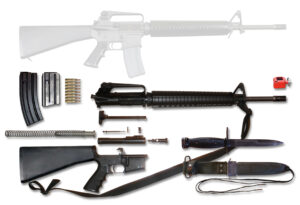
A collector’s look at Colt’s SP1 and early Sporters, from slickside uppers and pencil barrels to the rollmarks and small changes that hinted at the A2 era.
A practical, story-driven guide to reading JM vs REP barrel marks, understanding pre-safety 336s, Micro-Groove and Ballard-style rifling, and the smart checks to make before you buy.