
Remington Model 8 and 81: Browning’s Long Recoil Sporting Rifles
A practical, collector-minded look at Remington’s Model 8 and 81. Calibers, long recoil explained, police conversions, and what to check before you buy.

Call us any time at: (833) 486-6659
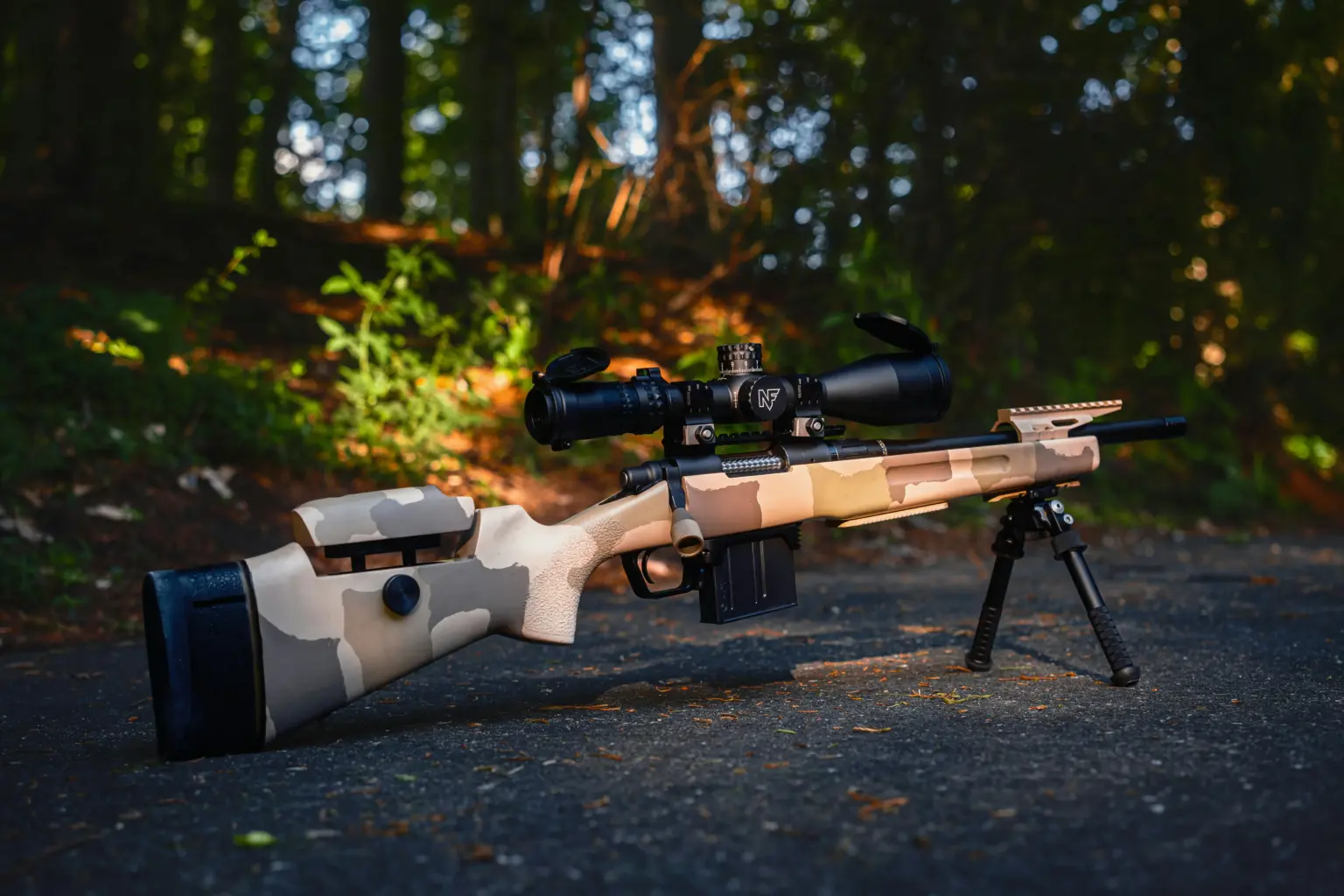
The first time I set a 1960s BDL on the bench next to a modern, well-used hunting 700, I had that odd sense of déjà vu you only get with designs that just work. Two rifles separated by decades, different stocks and finishes, yet the same feel when the bolt closes and the same quiet promise when the safety flicks forward. The Model 700 is one of those rare constants. It arrived in 1962 and never left the stage.
If you are considering buying one, collecting a few, or simply trying to understand what makes a good 700 great, it helps to walk the timeline. The story spans Mike Walker’s engineering, a push for out-of-the-box accuracy, a blizzard of factory trims and calibers, and triggers that changed character over time. And under all that, a simple question has echoed for sixty-plus years: how accurate should a Model 700 be, really?
The Model 700 did not appear out of thin air. The foundation was laid in the postwar Model 721 and 722 series, a clean pair of bolt actions developed by Mike Walker and his team. According to period coverage, the 700’s mechanism carried forward the proven guts of those rifles while wearing a more refined suit. Early advertising leaned into the idea of three rings of steel around the cartridge head: the bolt shroud, the chamber, and the receiver ring. That messaging resonated, but the real draw was how the rifle shot and handled.
Timing helped. In 1962, Remington also introduced the 7mm Remington Magnum, and the two rose together. The 700 arrived with sleek lines and sound engineering, and since buyers were ready to try a modern belted 7mm, the pairing stuck in the public mind. A few early details now matter mainly to collectors. As chronicled by Wayne van Zwoll, first-year magnum barrels measured a hair under the stated length and reached the advertised 24 inches by 1965, while the .243, 6mm, .270, .280, .308, and .30-06 standard barrels moved from 20 inches to 22 inches in 1964. Five years after launch, the 700 received its first visual refresh: a longer bolt shroud, a jeweled bolt, a restyled stock, and machine-cut checkering. If you handle a late 1960s BDL, the cues are right there in the metal and wood.
Throughout the 1970s, the rifle’s appearance continued to evolve. Remington traded a satin stock finish for a tough RKW gloss, and in 1973, left-hand models joined the catalog. By then, the Varmint Special with a heavy, sightless barrel had shown up, initially in .22-250 and later .25-06. Those chamberings had been standardized by Remington in 1965 and 1969, and they fit the 700 like a glove.
Remington’s own literature has long called the Model 700 the most accurate out-of-the-box production rifle on the market. It is a bold line, and the reputation built behind it for a host of reasons that go beyond any single feature. Guns & Ammo summed up the formula as a combination of design choices and production methods that reinforced one another.
Start with the receiver. The 700’s cylindrical receiver is a stiff tube, and stiffness pays dividends when the cartridge fires and vibrations begin. The bedding system matters too. Production 700s free floated the barrel while keeping two subtle V-shaped contact points at the very front of the forend. That little bit of fore-end pressure helped tame barrel whip without crushing the whole tube in wood.
Mike Walker and his team also chased speed in the firing cycle. The rifle has a very fast lock time — around 3.2 milliseconds is the figure often quoted — thanks to the bolt, firing pin, and trigger design working in sync. Less time between sear release and firing pin strike means less chance for the shooter to introduce wobble into the shot.
Other small things add up. Factory barrels were held to tight bore and groove tolerances; crowns were cut straight and uniform; chambers were on the snug side with a relatively short leade; and the recessed bolt face positioned the cartridge consistently. Finally, the rifle shipped with a single-stage trigger that broke cleanly instead of letting off like a soggy hinge. Put those ingredients together, and you have the bones of a rifle that tends to print well for most hands, most of the time.
If you want the company’s own snapshot of the platform and its variants, Remington’s Model 700 history page lays out the model lineage, calibers, and years.
Triggers deserve their own lane because buyers constantly ask about them. The 700 launched with a Walker-team single-stage unit known for a sharp, crisp release. That trait shows up in period descriptions right alongside the fast lock time. Over the decades, Remington produced the rifle with different factory triggers and different approaches to user adjustability. Collectors and shooters often talk in broad eras rather than by specific trade names, and for practical buying, that is not a bad approach.
Rifles from the 1960s through the cosmetic refresh of 1967 and into the 1970s commonly present that glass-rod break most people think of when they picture a classic 700. If you pick one up at a shop, work the bolt on an empty chamber, confirm clear, then dry-fire it with the muzzle pointed safely. You should feel a distinct take-up and a clean snap rather than a long creep and a mushy wall. That feel is a hallmark of the period and part of why many older rifles still see the deer woods every fall.
As production marched on, Remington introduced revised trigger groups, with changes to how factory adjustments were handled. The company also responded to consumer preferences and manufacturing refinements by altering geometry and settings over time. The net result is that two new-in-box 700s, made years apart, can exhibit very different pull weights and travel, even though both are single-stage designs intended to be safe and consistent.
From a buyer’s perspective, labeling those changes as separate generations is less useful than a hands-on check. Ask these simple questions:
Any adjustment to a 700 trigger should be approached with care and respect for the mechanism. If a used rifle shows signs of home-spun tinkering, factor in the cost of having a qualified gunsmith inspect and properly set it up. A clean, consistent 3.5 to 4-pound break is a sweet spot for many field rifles, but the real target is safe and predictable operation for the way you use it.
The Model 700’s metal silhouette is one reason it photographs so well. The swept bolt handle with checkered knob, the trim tang, and the tidy receiver ring are familiar across decades. Still, there are timestamps you can read without a date code. The longer bolt shroud and jeweled bolt introduced around five years ago in the late 1960s and early 1970s rifles added a certain sparkle compared to first-year guns. Machine-cut checkering replaced earlier patterns, and by the mid-1970s, that resilient RKW gloss finish had taken over on many stocks and remained popular far longer than fashion critics predicted.
Another change that mattered to real shooters came in 1973 when Remington put left-hand, left-stock 700s in the book. Southpaws who had been running right-hand bolts sideways finally got factory love. The Varmint Special that had joined the line earlier provided a second personality for the action with a heavy, untapered barrel and no sights. Paired with standardizing of cartridges like .22-250 and .25-06, it gave varmint shooters and long-range paper punchers a different feel without going to a custom shop.
There are far too many 700 trims to list in a short stretch of paragraphs, but certain names come up again and again at shows and counters. Remington’s own roll call puts the core ADL and BDL lines in 1962 and keeps the BDL running to the present. The ADL ran from 1962 to 2004. Those two badges form the base and the step-up trim for a huge number of sporting rifles, with differences in stock and metal appointments that are easy to spot once you have seen a few.
The BDL Heavy Varmint ran from 1967 to 1985 and helped anchor the varmint and target side of the family alongside later heavy-barrel offerings. Left-hand BDLs appeared in 1973 and ran through 2004. On the workhorse end, the Sportsman 78 provided a value package from 1985 to 1989. The Mountain Rifle, introduced in 1986 and listed through 2020, is the rifle many hunters picture when they think of a trim, field-friendly 700 trimmed for long walks and steep climbs.
Law enforcement and precision shooters will recognize the 700 Police variant, which appears in corporate history with a 1986 start date. That model carried the action into more formal precision roles and cemented the idea that a factory 700 could serve both the deer woods and a squad car rack with different furniture and barrels. On the high end, Custom Shop runs included the D-Grade and F-Grade in the 1962 to 1982 window, the Custom C from 1969 to 1982, a Safari High Grade that spanned 1971 to 2000, and later High Grade I through IV that flowed through the 1980s.
For quick reference, here are several factory-labeled variations and their years, taken from company listings:
If you are comparing rifles, these labels help you understand intended use and trim level at a glance. Wood, metal finish, barrel contour, and slight hardware differences usually make the purpose obvious in hand.
Part of the 700’s long run is how well it followed and sometimes led trends in chamberings. From the start you could get popular standards like .30-06 Springfield and .308 Winchester, both of which are still listed today. The 7mm Remington Magnum, introduced alongside the rifle in 1962, remains part of the story. Over time the action wore just about everything from petite varmint rounds to thumper magnums.
Company records capture some of the more interesting dates:
The catalog also featured classics like the 7×57 Mauser and 8mm Mauser as periodic Classic editions, along with .300 Savage, .300 H&H Magnum, and others that sparked collectors’ interest. One thing you can bank on: the 700’s chambering list is broad and often tied to the year and trim you are holding. If you are hunting a specific chambering, check date stamps and factory markings carefully.
As early as 1966, Remington was building 700-based rifles for military and police use. Company records and period reporting note that 995 M40 sniper rifles were delivered for service in Vietnam, based on a 700 mechanism. That connection pushed the action into a role well beyond the deer blind and showed what it could do with careful assembly and good ammunition.
On the civilian side, the 700 Police model, which appeared in the mid 1980s, marks a more formal link to law enforcement buyers and competitive precision shooters who wanted heavy barrels and stable stocks from the factory. The fact that the same action served both roles suggests underlying rigidity and repeatability.
Ask five rifle shooters to define accuracy, and you will get ten answers. With the Model 700, it is easy to get lost in slogans and internet one-upmanship. It is better to define what matters to you and then see how the rifle stacks up.
If you are buying a hunting 700, accuracy means predictable groups with the ammunition you plan to carry and a clean break that lets you call your shots. For a varmint or target setup, you may be looking for steady heat tolerance over a longer string and a stock that does not shift the point of impact off a bag. A practical way to evaluate a rifle in either role is to shoot a few different loads, keep notes, and pay attention to the conditions you can control:
The 700’s reputation for out-of-the-box performance comes from structural traits you cannot see at a glance: a stiff receiver, good crowns and bores, consistent chambers, and a trigger that lets you do your job. If a used rifle is not grouping, assume nothing. Many rifles wake up when old copper is scrubbed out, bases are reset and torqued, and the right load is chosen. Some owners add a careful glass bed or torque tune to settle the action in its stock. Those are valid steps, but start simple.
With six decades of production, the best first step is to decide what you want the rifle to do. Hunt elk and deer in the Rockies. Pick off prairie dogs. Shoot paper at a distance. Collect a particular year or chambering. The 700 can do all those jobs because the factory built it for them.
For a traditional field rifle, the 700 BDL and ADL lines from the 1960s through the 1990s give you the look and feel many of us grew up with. Check for honest hunting wear, a clean bore, a straight crown, and a trigger that breaks the same way every time. If the stock wears that famous RKW gloss, scratch resistance is a plus. Do a simple function check. If everything is sound, there is a good chance the rifle will shoot as well as you can steady it.
Look for Heavy Varmint and Varmint Special markings, smooth bolt travel, and barrels free of abuse. A heavy-contour 700 is often satisfying on the bench because it settles in bags and resists heat better than a pencil sporter. Bring a few loads suited to your chambering and see which ones. If your interest leans toward formal competition, you may find that some shooters still start with a 700 action as a base for further work.
On 700 Police models and similar trims, pay attention to stock rigidity, barrel throat condition, and even lug contact if you have a competent smith in your corner. Many of these rifles have lived on a steady diet of match ammunition. Proper cleaning matters, and so does examining the scope base footprint. This is where a consistent trigger and solid bedding deliver obvious returns.
If you shoot lefty, the 1973 introduction of left-hand, left-stock rifles opens up a neat sub-collection. The bolt handle and ejection are where they should be, and you still get all the caliber variety of the platform. They remain scarcer on racks, so patience can pay off.
Custom C, D, F, Safari High Grade, and the later High Grades add embellishment and often more careful finishing. These are the rifles you buy with your eyes and hands as much as with a chronograph. Condition and completeness matter more here than in a working gun. Factory boxes, papers, and original configuration add appeal for collectors of these grades.
The Model 700 continues in production, with modern runs reflecting current tastes and materials. Remington has even outlined recent moves to expand manufacturing and R&D capacity. That churn keeps the line alive for new buyers while the older guns quietly gain another year of stories.
If the company’s knack for long-lived designs interests you, my look at a sibling scattergun digs into why some Remingtons just stick around. See The Remington 870: Design, Variants, and What Sets Great Examples Apart for that tour.
The Model 700 endures because its core was right on day one. Mike Walker’s team borrowed what worked from the 721 and 722, stiffened and refined it, and paid attention to how small parts add up. The result is a rifle that wears countless faces yet feels familiar in the hand. If you are shopping, start with the job you want done, handle a few examples from different eras, and let the basics guide you: clean bores, straight crowns, solid stocks, and a trigger that helps instead of hurts. Most 700s will meet you there. Many will surprise you.
Available
View Item
Available
View Item
Available
View Item
Available
View Item
Available
View Item
Available
View ItemA practical, collector-minded look at Remington’s Model 8 and 81. Calibers, long recoil explained, police conversions, and what to check before you buy.
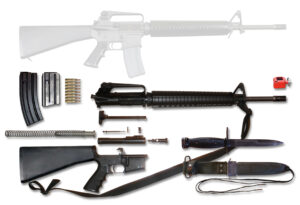
A collector’s look at Colt’s SP1 and early Sporters, from slickside uppers and pencil barrels to the rollmarks and small changes that hinted at the A2 era.
A practical, story-driven guide to reading JM vs REP barrel marks, understanding pre-safety 336s, Micro-Groove and Ballard-style rifling, and the smart checks to make before you buy.