
In December 1904, the small-arms plant at Rock Island Arsenal assembled its first complete Model 1903 rifle, serial number 1. That rifle is now held by the Rock Island Arsenal Museum. Its completion came forty-two years after Congress, by an act of 11 July 1862, established an arsenal on a federal island in the Mississippi River between Rock Island, Illinois, and Davenport, Iowa. The island had been home to Fort Armstrong from 1816 to 1836, and the original plan called for a storage and repair depot, not a factory.
No individual founded the Arsenal. It was created by statute, and its physical form is owed to its early commanding officers. Maj. Charles P. Kingsbury, the first of them, began the Clock Tower Building, which was finished in 1867 and is the only structure built from the original plans. From 1863 to 1865, the island also held a prison camp where, by the Army’s count, 12,192 Confederate prisoners were confined, and 1,964 died. Brevet Brig. Gen. Thomas J. Rodman, in command from 1865 to 1871, drew the master plan that moved the works to the center of the island and called for ten stone manufacturing shops in two rows, one for general ordnance and one for small arms. His successor, Daniel W. Flagler, carried out most of the construction between 1871 and 1886. The last stone shop was completed in 1893.
The small-arms row stood largely unused until 1899, when Congress appropriated funds to equip it for rifle production. The decision followed the Spanish-American War, during which the Arsenal’s workforce rose to nearly 3,000. Planning for Model 1903 production was ordered in June 1903; about 70 skilled workers were transferred from Springfield Armory in early 1904, and the plant was rated at 125 rifles a day, compared with Springfield’s 400. Production stopped on 17 November 1913, resumed in late February 1917, and the last complete rifles were made in fiscal year 1920. Two details matter to collectors. Rock Island changed to the improved receiver heat treatment at serial number 285,507, and it adopted nickel steel receivers in 1918, roughly a decade before Springfield. Bruce Canfield, writing in American Rifleman, advises treating Rock Island rifles below 285,507 as suspect.
Rifles were never the whole of the work. The Arsenal took up artillery carriage manufacture in the 1890s, and the Army’s Infantry Equipment Board, sitting there in 1909 and 1910, developed the Model 1910 web equipment in its shops. Canfield identifies Rock Island as the principal maker of Model 1905 bayonet scabbards and of the leather Model 1903 and Model 1907 slings until the First World War. During that war, it produced recoil mechanisms for the French 75mm field gun, and in the spring of 1919 it received an order for 100 Mark VIII tanks, which it completed in 286 days. In the Second World War, employment peaked at 18,675 in July 1943. The Army’s own account credits the Arsenal with 85,000 machine guns and 715,000 machine gun barrels, and dates the end of .30 caliber machine gun manufacture to 1945.
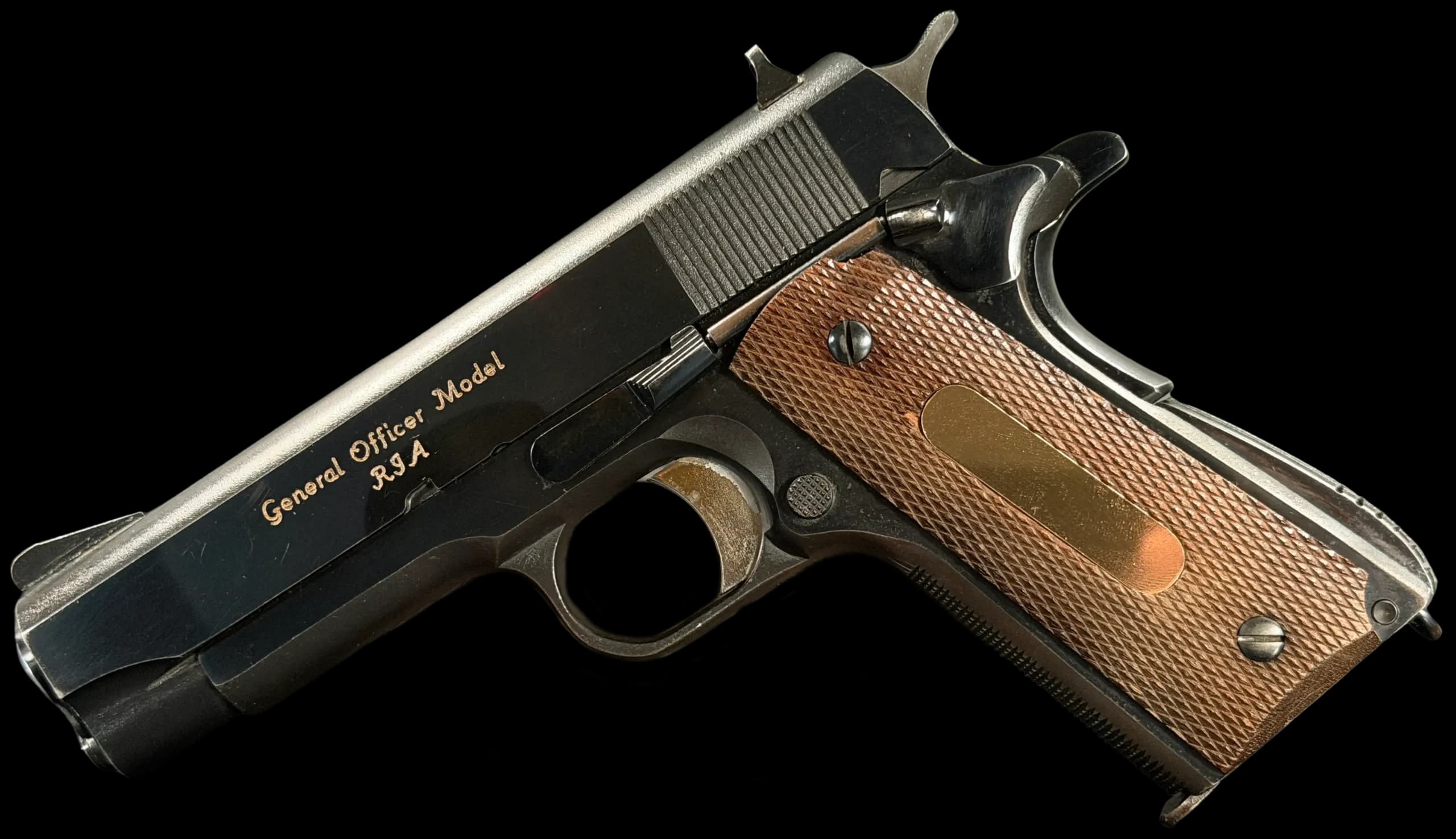
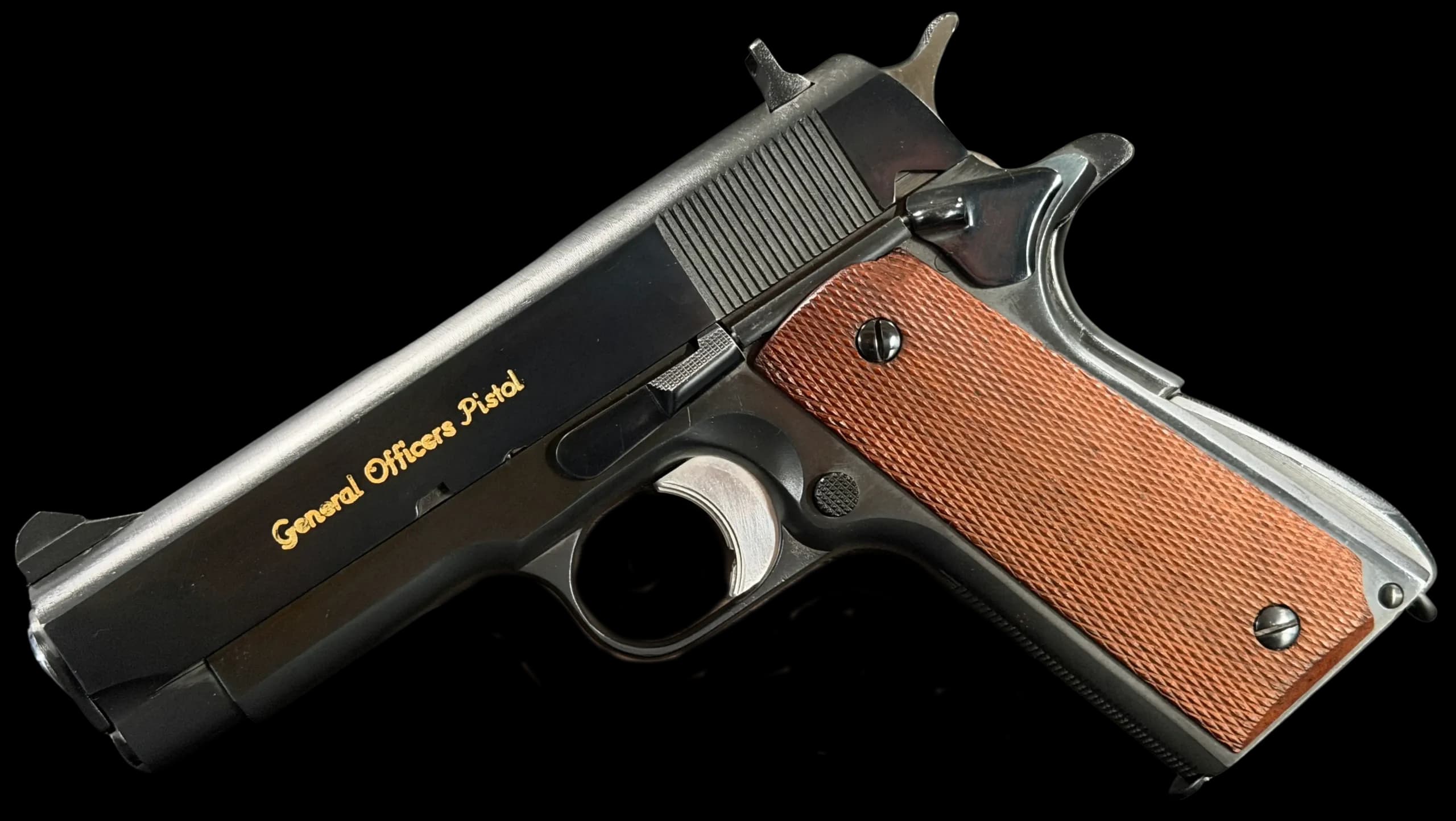
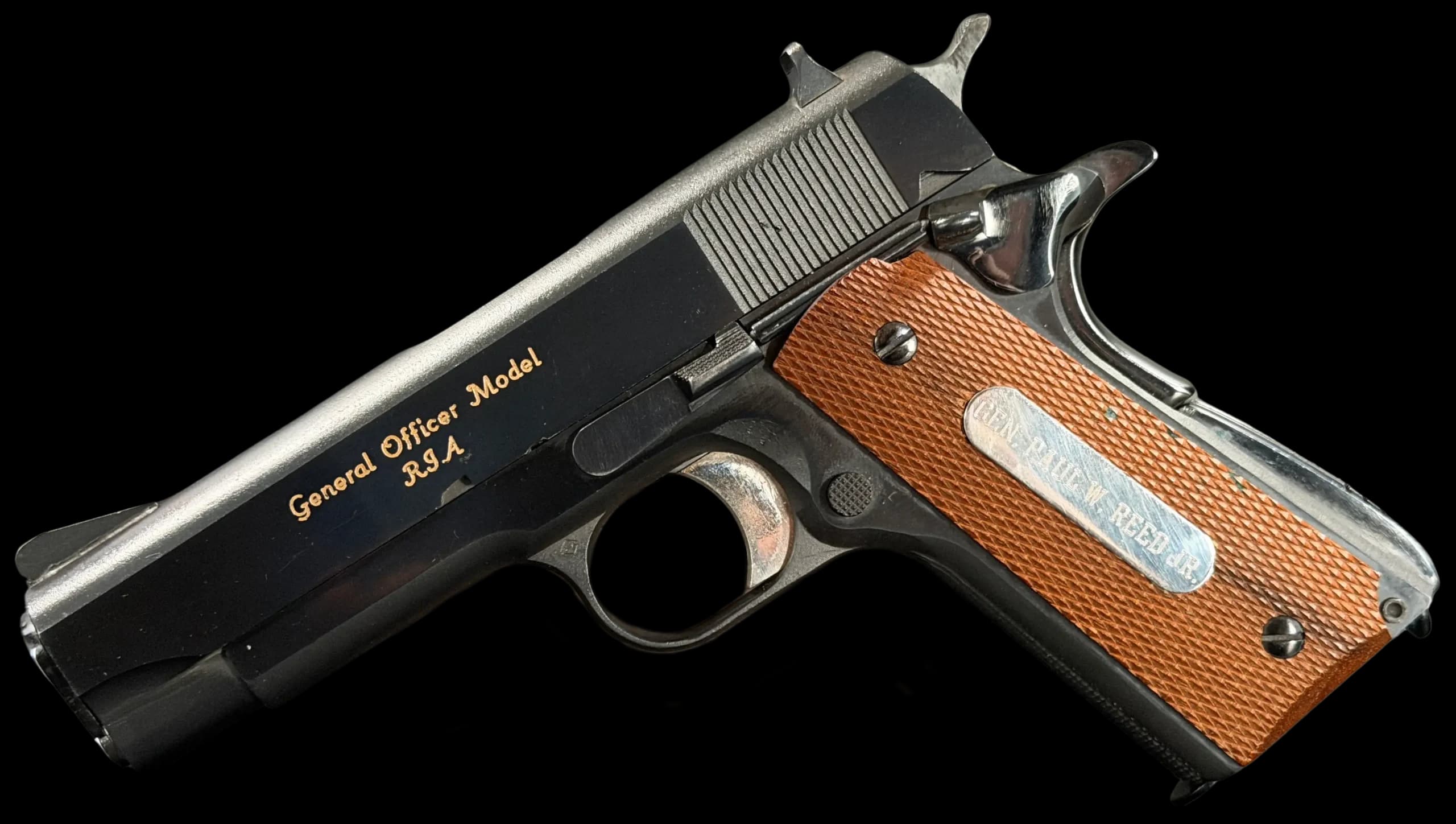
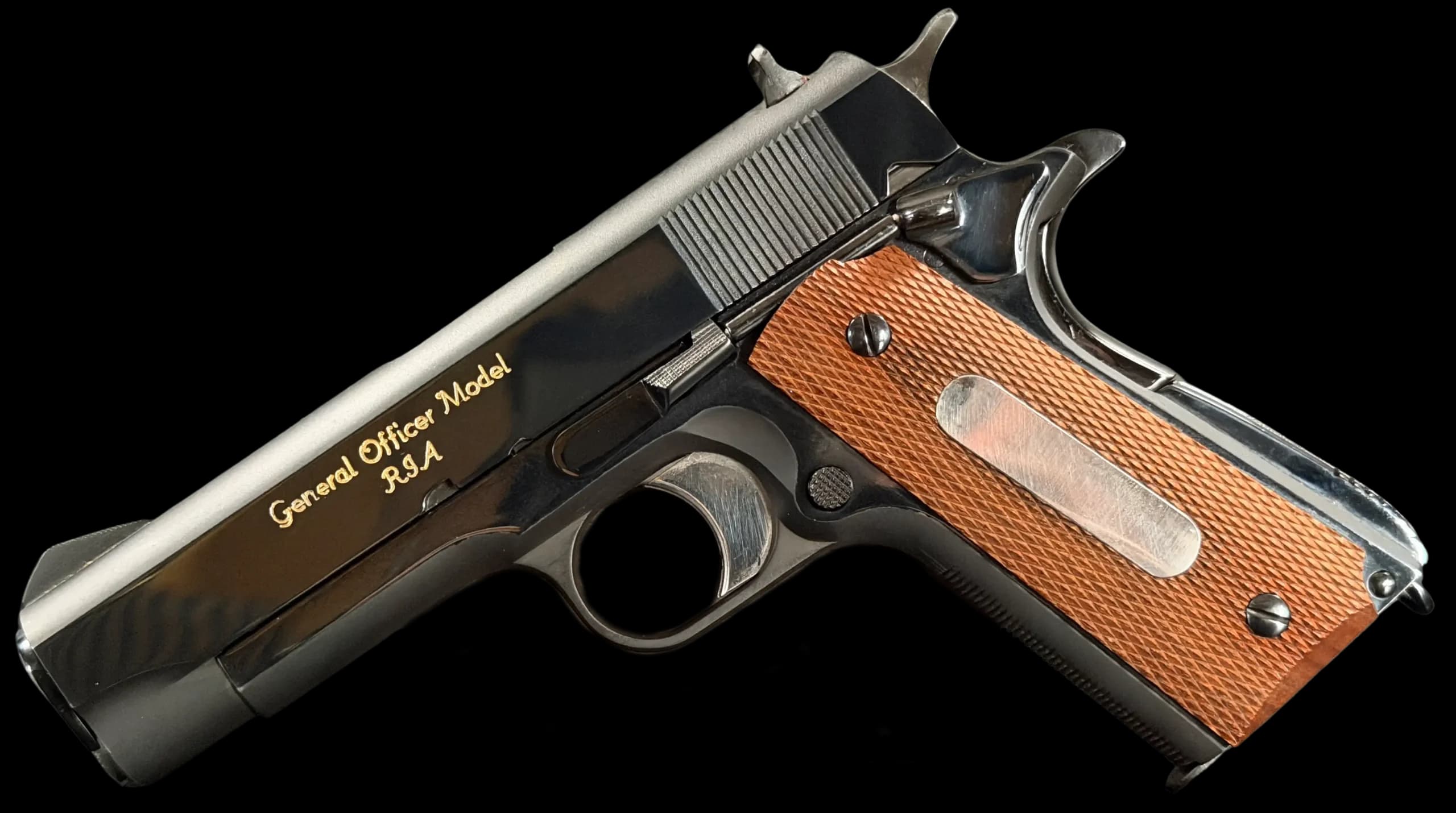
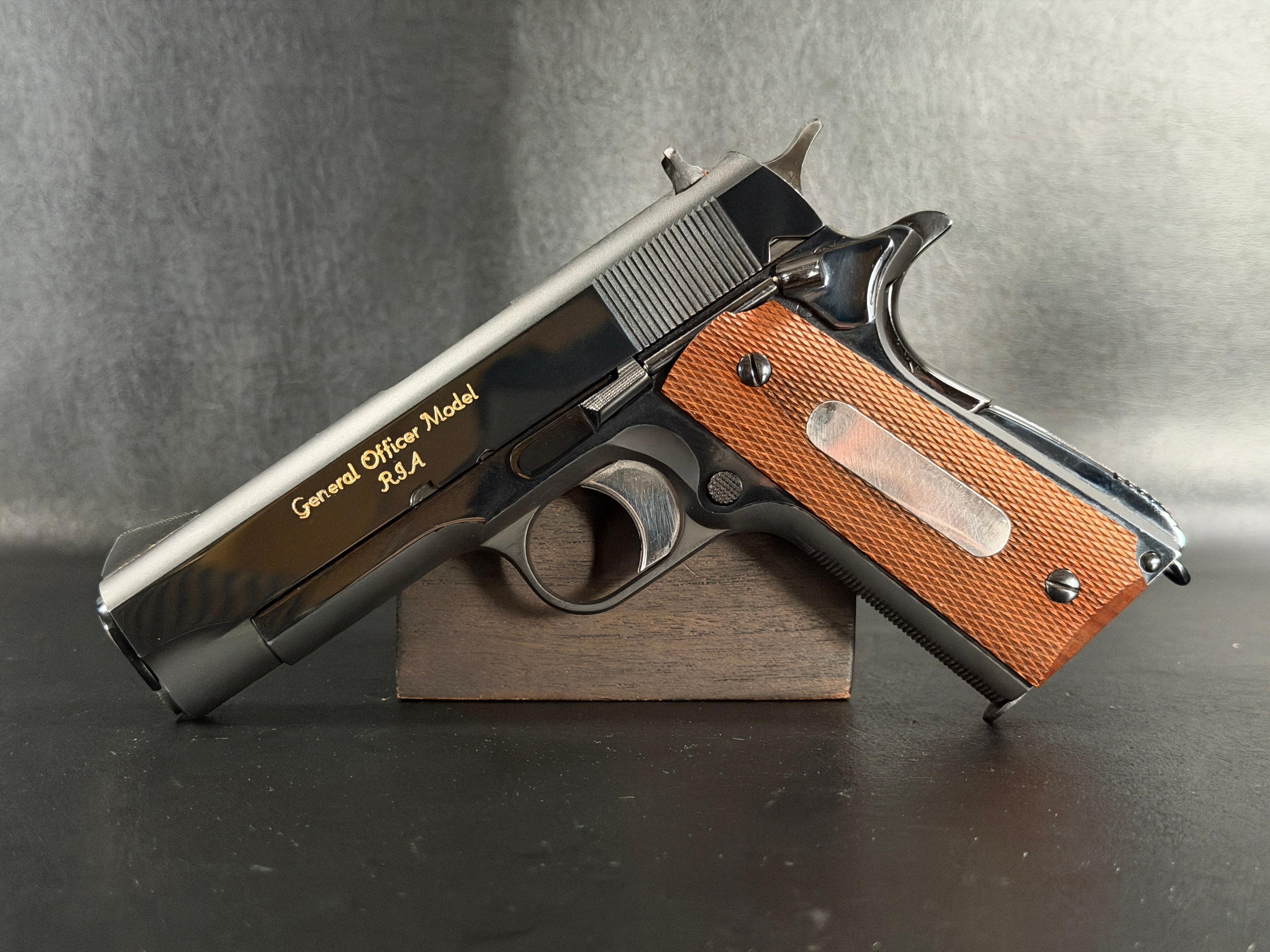
Springfield Armory closed in 1968, and Rock Island took on broader responsibility for small-arms design and production as that closure approached. Two products of the period draw collector attention. According to Maxim Popenker, the Arsenal converted 1,435 National Match M14 rifles into XM21 sniper rifles, first fielded in Vietnam in 1969. The M15 General Officers pistol was designed by Dale Hoffman, the Arsenal’s superintendent of small arms, tested in 1971 and adopted in 1972; Ian McCollum reports that 1,004 were built from stock M1911A1 pistols with a 4.25-inch barrel. The Army describes the M15 as a .45 caliber pistol produced at Rock Island Arsenal, records that general officer pistols carry serial numbers prefixed “GO”, and notes that the M9 followed in 1984.
The Arsenal remains an Army-owned installation on 946 acres. Its factory operates as the Rock Island Arsenal Joint Manufacturing and Technology Center, which the Army describes as its only vertically integrated metal manufacturing facility and its last Army-owned forge and foundry. The Rodman-plan stone buildings form a National Historic Landmark district. The museum, opened on 4 July 1905, is by the Army’s account its second oldest and holds 1,215 small arms. For collectors, the interest is, in our reading, a matter of documentation: Rock Island arms were made or reworked for government issue, and the published serial ranges and receiver changes allow a given rifle to be placed within that record.
History & Milestones
Congress Establishes Arsenal on Rock Island
An act of 11 July 1862 created the Arsenal on the former Fort Armstrong reservation. It was planned as a storage and repair depot.
1865
Brevet Brig. Gen. Thomas J. Rodman took command and drew a master plan for ten stone manufacturing shops at the centre of the island. Daniel W. Flagler carried out most of the building from 1871 to 1886.
1893
Shop K, the last of the ten stone shops, was finished in 1893. It later housed small-arms assembly.
Congress Funds a Rifle Plant
Congress appropriated money to equip the nearly empty armory shops with small-arms machinery. The plant was rated at 125 rifles a day.
First Rock Island Model 1903 Assembled
Rifle serial number 1 was assembled in December 1904 with help from workers transferred from Springfield Armory. It began the Arsenal’s only run of service rifle manufacture.
Receiver Heat Treatment Changes at 285,507
Rock Island adopted the improved heat treatment at serial number 285,507 and began using nickel steel receivers the same year. The serial number is the dividing line collectors use for these rifles.
Arsenal Receives Order for Mark VIII Tanks
An order for 100 Mark VIII tanks arrived in the spring and was completed in 286 days.
Wartime Employment Peaks at 18,675
Employment reached 18,675 on 7 July 1943. The Army credits the Arsenal with 85,000 machine guns during the war.
National Match M14s Become XM21 Rifles
Popenker reports that 1,435 National Match M14 rifles converted at Rock Island were first fielded as XM21 sniper rifles in Vietnam.
Army Adopts the M15 General Officers Pistol
The Arsenal-designed M15 was adopted after 1971 trials and built from stock M1911A1 pistols. It remained the general officer pistol until the M9 followed in 1984.