
Remington Model 8 and 81: Browning’s Long Recoil Sporting Rifles
A practical, collector-minded look at Remington’s Model 8 and 81. Calibers, long recoil explained, police conversions, and what to check before you buy.

Call us any time at: (833) 486-6659
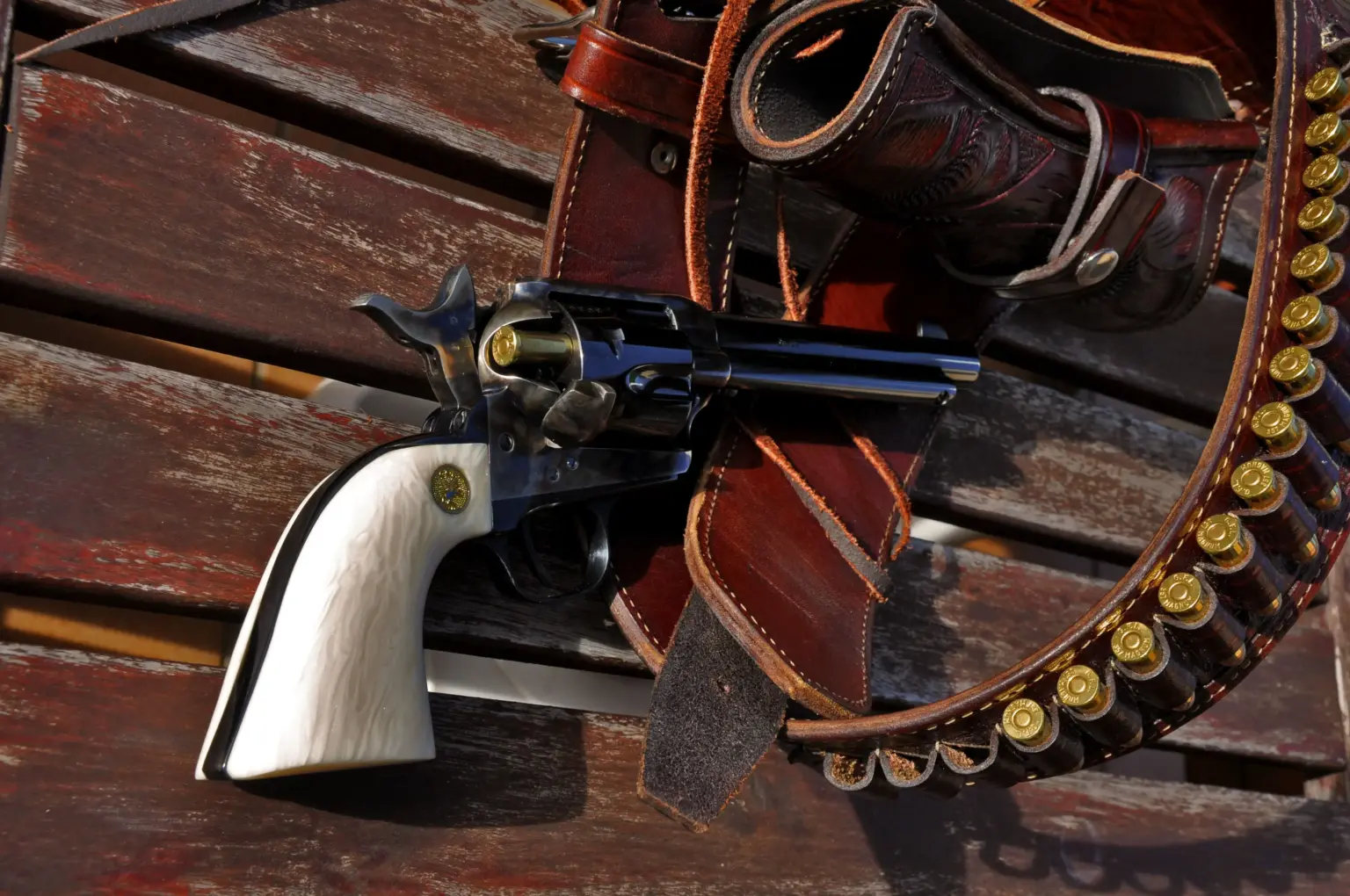
There is a certain kind of revolver that always seems to sneak into the range bag or ride along in the farm truck, transported safely and legally. It is not flashy. It does not roar. It just does work. I am talking about the rimfire revolver, the unassuming little wheelgun that has taught more people to shoot than just about anything else and still earns its keep long after bigger guns steal the headlines.
Set aside the memes about tiny bullets and put aside the horsepower contests. If you look at how shooters actually use handguns in the real world, you start to see a pattern. The rimfire revolver keeps showing up where it matters: when you are teaching someone new, when you are trimming down pests around a barn, when you need a simple, steady tool that will not rattle your teeth or your budget. And for the collector crowd, the story gets even more interesting.
Rimfire had a head start in the cartridge era. In 1857, Daniel B. Wesson’s .22 Short set off the race toward self-contained ammunition, and that little round is still with us. Rock Island Auction’s historical overviews note that the .22 Short remains in production as the oldest commercially made cartridge, with the .22 Long arriving in 1871 and the .22 Extra Long by 1880. Of course.22 Long Rifle would soon become the dominant rimfire we all know.
Rimfire was not always a small-bore story either. Rock Island Auction highlights how large-bore rimfire cartridges like .44 were widely used on the civilian market and even by some foreign militaries. A striking example is the Turkish contract Smith & Wesson New Model No. 3 chambered in .44 Henry Rimfire, a revolver matched to the Ottoman Empire’s purchase of Winchester Model 1866 rifles. Matching a service revolver to the same cartridge as a service carbine made a lot of sense to 19th-century logisticians.
Things heated up after the Rollin White patent expired in 1869. Suddenly, everyone could legally get in on the bored-through cylinder game. Colt started converting percussion revolvers to take cartridges and launched diminutive pocket guns like the Colt House and Colt Cloverleaf in .41 rimfire. In the derringer world, .41 rimfire was king for a time, with the Moore’s Patent pistols that Colt later kept selling as their First and Second Model derringers. Even when Colt cooked up the Open Top revolver, William Mason had his eye on the .44 Henry rimfire thanks to its frontier popularity.
Centerfire eventually took over above .22 for power and durability reasons, but rimfire never went away. That split history is important because it explains why so many of us still feel at home with a rimfire revolver on the belt or in the bag.
Look at what a rimfire revolver actually offers, and the case becomes clear without any romanticism.
Important safety note: unsuppressed .22 rimfire is still loud enough to damage hearing. Wear eye and ear protection, use a safe backstop, and follow local laws about discharge on private property.
Writers at Petersen’s Hunting have pointed out how useful rimfire handguns are on the farm and in the field precisely because they are easy to carry and easy to shoot. When an impromptu chore pops up, the little revolver in your kit gets used. That is the whole point.
Smith & Wesson leaned into this decades ago by labeling their small-frame rimfires as kit guns. As American Handgunner explains, “kit” did not mean you had to assemble it. It meant the gun lived in your fishing kit or saddlebag, always ready to finish a job or dispatch a pest. The Model 34 and its K-frame cousins, like the Model 17, became the sort of guns people throw in with their gear as naturally as a pocketknife.
ShootingSavvy makes a similar point with a tour of camp-friendly rimfire revolvers, highlighting how handy a small .22 wheelgun can be for trail work, for nailing steel at the campsite, or for the occasional snake that insists on sunning itself right across your path. That is not chest-thumping romance. It is just the reality that a light, accurate handgun is a good companion outdoors.
If you are nodding along here, you might also enjoy our broader take on wheelguns in Why Revolvers Still Appeal to So Many Shooters, which pairs well with the rimfire angle.
If there is one theme that pops up again and again in serious handgun writing, it is this: practicing with a .22 pays off. American Handgunner’s coverage of rimfire practice for handgun hunters lays it out clearly. You can rehearse the same grip pressure, sight picture, trigger press, and follow-through on a rimfire at a fraction of the cost and fatigue. When it is time to pick up the big revolver again, your hands already remember what to do.
That training value is not just for hunters. Anyone who carries or competes benefits from more trigger time, and rimfire makes that realistic. Muscle memory is built from repetition. Rimfire gives you repetition without the flinch, and that matters. It is also the best way I know to introduce new shooters to revolver controls. They get the cylinder latch, the loading rhythm, and double-action staging without fighting blast and recoil.
On storage and simplicity, Pew Pew Tactical notes that revolvers can be an appealing low-maintenance choice for some owners. It is worth adding the common-sense nuance that modern magazine springs tend to wear out more from repeated cycling than from simply remaining loaded. Regular inspection and maintenance are smart regardless of the platform.
Plenty of shooters dismiss .22 as too easy. American Handgunner pushes back on that attitude and celebrates rimfire accuracy as its own kind of joy. When a good rimfire revolver prints neat clusters, it rewards discipline. That little reward loop is why so many of us keep a .22 on hand as our range reset button. Slow down, watch the front sight, surprise yourself with the break, and enjoy the tidy holes appearing exactly where you called them. It is therapy, only with hearing protection.
High-end rimfire revolvers exist, too. American Handgunner’s coverage of a .22-caliber Freedom Arms Model 83 illustrates how a premium .22 that mirrors a centerfire hunting revolver can serve as a perfect trainer. When the grip, trigger, and sighting system match your big-game revolver, your rimfire practice becomes a one-to-one rehearsal.
One of the quiet superpowers of a rimfire wheelgun is how many cartridges it can digest. ShootingSavvy points out that a typical .22 rimfire revolver can handle .22 BB caps, CB caps, .22 Short, .22 Long, and .22 Long Rifle in the same cylinder. Some models even offer a spare cylinder for .22 Winchester Magnum Rimfire so you can step up for tougher chores. Only use ammunition your revolver is chambered for and follow the manual for your specific model.
Maintenance tip: mixing Short, Long, and CB loads in a .22 LR chamber can leave a carbon-and-lead ring that makes later .22 LR rounds hard to chamber. Keep a brush and solvent handy and clean the chambers regularly. Also, some BB and CB caps are very low power. In longer barrels, there is a small but real chance of a stuck bullet. If a shot sounds or feels off, stop, open the firearm, and verify the bore is clear before continuing.
Convertible models deserve a special note. .22 WMR cylinders must be factory-fitted for the specific model. Do not fire .22 WMR in a .22 LR-only cylinder.
That adaptability makes sense when you think about it. Shorts for mild pest work, Long Rifle for everyday practice and small game, maybe a Magnum cylinder for when you want more punch. You do not need a closet full of handguns to cover those bases. A single revolver can live in several roles just by what you feed it.
As much as I like them, rimfire revolvers are not magic wands. Above .22 caliber, modern centerfire ammunition won the performance race and owns most defensive and duty niches. Pew Pew Tactical’s caliber advice for general-purpose defensive revolvers leans toward .38 Special or .357 Magnum, thanks to widespread availability and performance. That does not mean a rimfire revolver has no place for personal protection. It means you should be honest about the cartridge’s limitations and choose your tools with clear eyes and up-to-date training.
For many of us, the rimfire revolver is the teacher, the trail partner, and the farmhand. For urgent defensive roles, plenty of shooters step to centerfire. Knowing which hat each gun wears is part of smart ownership.
Shopping for a rimfire revolver can feel like standing at an old-fashioned soda fountain. Lots of flavors, all of them good, but each with a different feel. Here are some practical ways to narrow it down.
Single-action rimfires like the classic plow-handle style are slow to load but have light, crisp triggers and a timeless rhythm. Double-action rimfires offer faster loading and the ability to run double-action pulls for training. If your main goal is practicing for a centerfire defensive revolver, a double-action .22 makes sense. If you want campfire plinking and small game, a single-action still shines.
Short barrels carry easily and point quickly. Longer barrels give you sight radius and a little more velocity. Adjustable sights are a real plus if you plan to shoot a mix of .22 Short, Long Rifle, and .22 Magnum on convertible models. Expect different points of impact between loads and take time to confirm where each prints.
Some rimfire revolvers ship with two cylinders, one for .22 LR and one for .22 Magnum. Others are .22 LR only. If you like the idea of mild backyard practice that’s lawful and also offers a tougher small-game or varmint option, the convertible route is worth a look. Again, use only the correct, factory-fitted cylinder for .22 WMR and follow the manual.
There is no wrong answer here. If the idea of a kit gun speaks to you, the S&W Model 34 and the K-frame Model 17 have a following that American Handgunner has celebrated for years. On the single-action side, ShootingSavvy’s camp revolver roundup shows why a well-used Ruger rimfire can be the one that stays when others come and go. If you want to practice for serious handgun hunting or just crave top-tier fit and finish, the Freedom Arms .22 covered by American Handgunner is a reminder that premium rimfires exist for a reason.
Dry fire a few options. A good rimfire revolver encourages you to do things correctly. It rewards a smooth press and steady follow-through. Choose the one whose grip sits naturally in your hand and whose hammer and trigger make you smile. That is the gun you will reach for.
If you collect rimfire revolvers, you open a rabbit hole that runs from pocket curiosities to martial history. Rock Island Auction’s survey of the rimfire versus centerfire era includes some of the best stories.
For collectors, these pieces are not just about novelty. They bridge the gap between cap-and-ball and smokeless centerfire. They trace a path through patents, contracts, and the marketplace, reacting in real time to a new technology. If your collection leans on American revolvers of the 19th century, a rimfire chapter makes the story fuller.
Rimfire revolvers do not shout for attention. They do not need to. They just keep earning their spot in gun safes and gear bags because they solve common problems well. The historic thread runs from .41 rimfire derringers and .44 Henry service sixguns straight through to today’s camp and kit guns. The practical thread is even simpler: inexpensive practice, easy manners, useful accuracy, and the kind of versatility that lets one gun cover a lot of ground.
And if you find yourself smiling after a string of neat little holes at 25 yards, you will be in good company. As American Handgunner likes to remind us, rimfire accuracy has its own delight. That might be the most honest reason of all to keep a rimfire wheelgun on hand. It makes shooting fun, and that is how skills are born and kept.
If this subject resonates, you might also appreciate our broader look at wheelguns here: Why Revolvers Still Appeal to So Many Shooters.
Available
View Item
Available
View Item
Available
View Item
Available
View Item
Available
View Item
Available
View ItemA practical, collector-minded look at Remington’s Model 8 and 81. Calibers, long recoil explained, police conversions, and what to check before you buy.
A collector’s look at Colt’s SP1 and early Sporters, from slickside uppers and pencil barrels to the rollmarks and small changes that hinted at the A2 era.
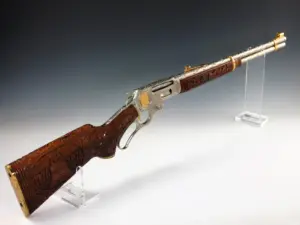
A practical, story-driven guide to reading JM vs REP barrel marks, understanding pre-safety 336s, Micro-Groove and Ballard-style rifling, and the smart checks to make before you buy.