
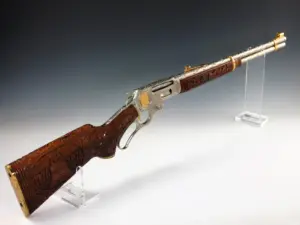
Remington Model 8 and 81: Browning’s Long Recoil Sporting Rifles
A practical, collector-minded look at Remington’s Model 8 and 81. Calibers, long recoil explained, police conversions, and what to check before you buy.

Call us any time at: (833) 486-6659
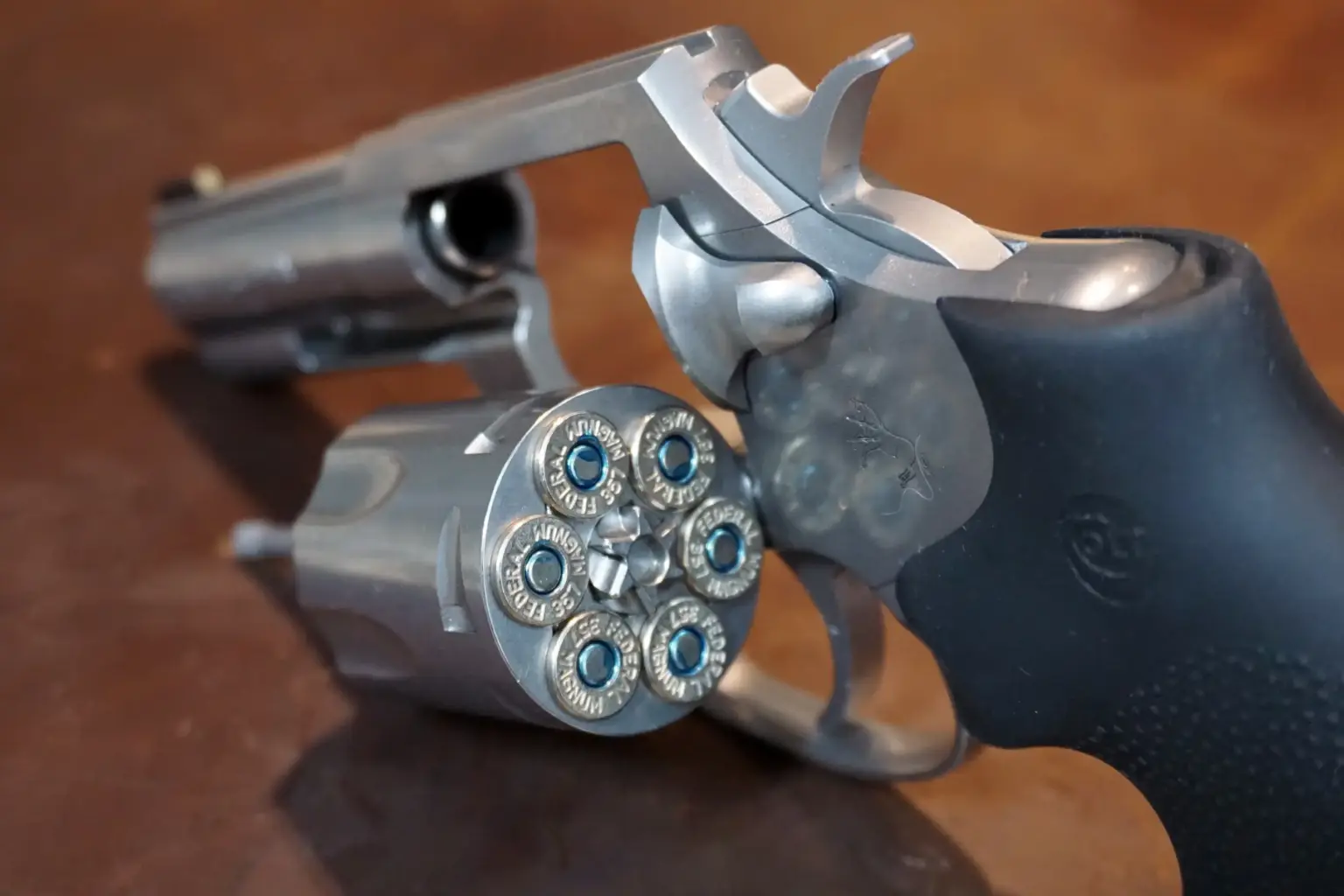
I’ve watched it happen a hundred times on a busy gun counter. The newest micro-compact pistols soak up the crowd, everyone talking capacity, and optics cuts. Then a stainless 4-inch .357 comes out of the case, and the room tilts. A couple of folks step closer. One asks to feel the trigger. Another says their granddad carried something like it. Suddenly, you’ve got a conversation that feels less like shopping and more like looking at an old photograph you somehow never stopped loving.
That is the quiet magic of the revolver. Semi-automatics may rule the sales charts and training classes, but wheelguns refuse to fade. Not out of stubbornness, but because they still do certain jobs in a way people find satisfying, confidence-inspiring, and, yes, practical.
For a long stretch of the twentieth century in America, the revolver wasn’t just popular, it was standard equipment. Police sidearms were almost uniformly wheelguns, and cinema helped give big-bore models a mythic glow. You can thank a certain San Francisco detective with a .44 for a chunk of that cultural gravity. Then the 1980s arrived with polymer frames and striker-fired triggers, and semi-autos surged. As Speer’s overview points out, modern autos brought reliability plus considerably more capacity, and their flatter profiles made them easier to conceal. That combination changed daily carry habits in a hurry.
So why didn’t revolvers vanish? Because many shooters still prize what they do well. And because even as autos improved, the wheelgun never stopped being relevant or enjoyable. Mark Gurney of Ruger told Shooting Sports Retailer that demand for both single-action and double-action revolvers remains strong. Yes, they tend to be pricier than many modern autos, largely because they cost more to build and require more handwork. But that, too, is part of the story.
New shooters often gravitate to simplicity, and a revolver’s manual of arms is easy to grasp. Press a button or thumb a latch, swing out the cylinder, load the chambers, and close it. On a double-action revolver, you press the trigger and it both cocks and releases the hammer. Controls are minimal, and the platform is forgiving of long breaks between range sessions. The Speer piece underscores this appeal to novices, and GUNS Magazine makes a similar case: there are fewer external bits to manipulate, you are not managing a magazine or a slide, and there are typically no manual safeties to fuss with.
Calling a revolver “simple” isn’t a dig at semi-autos. It is a nod to the reality that many people want a handgun they understand at a glance. For a buyer who finds slides and magazine-related malfunctions intimidating, the wheelgun’s start-here clarity is hard to beat.
Ask hunters why they favor revolvers in rough country, and you will hear the same line again and again: they work. GUNS Magazine puts it plainly, arguing you will see more stoppages with semi-autos than with revolvers over a lifetime of shooting. Taurus’s take goes a step further into the human side of the equation. Under stress, it is easy for people to cause problems with a semi-automatic. Poor grip pressure can turn into a mushy recoil platform. An errant thumb on the slide can slow the mechanism just enough to induce a malfunction. None of this means modern autos are fragile. It means that revolvers are less sensitive to the way they are held and cycled when adrenaline and awkward angles are in play.
That matters if you are tracking through brush, wearing gloves in cold rain, or climbing in and out of a truck with your focus split. A revolver’s mechanism is a clockwork that is either in time or it is not. You can clog it with mud, you can bend parts, you can get debris under the extractor star. They are not perfect. But in many messy, real-world circumstances where hands get shaky and lighting is poor, a solid double-action wheelgun offers confidence that is hard to replicate.
Let’s be honest about the obvious: capacity. Semi-autos own that column on the spec sheet. Most revolvers give you five or six rounds, maybe seven or eight in some larger frames. Reloads are slower and bulkier to carry. If you are measuring value primarily by on-board ammunition, a modern compact auto will win almost every time.
But capacity is not the only entry on the ledger. Recoil and shootability matter too. Shooting Sports Retailer notes a truth every counterperson has seen. Even a mild .38 Special can feel like a lot to a brand-new shooter, especially in a small, light frame. For recoil-sensitive folks, they suggest a .22 revolver to build fundamentals. That is a smart path. It is not about power; it is about confidence, hits, and a trigger press that becomes almost automatic. On the other hand, small- and medium-frame revolvers like Ruger’s SP101 series were designed to be easy to carry and manage, and they fill that bedroom-to-backpack niche well for many people.
If your daily carry life demands flat guns and fast reloads, a revolver might not be your primary. If you want a simple home-nightstand tool or a trail companion that shrugs off neglect, it is hard to dismiss the wheelgun’s case.
There is a corner of the handgun world where revolvers have never ceded ground, and that is hunting. The Speer article points out a key reason. When you step up to heavy revolver cartridges, you are looking at energy and bullet weights that surpass what most service-size semi-autos deliver. If you chase hogs in the thicket or sit in a stand where whitetails slip through at bow range, the heavyweight wheelgun is a natural choice. It is accurate in the hands of practiced shooters, it tolerates dirty days, and it puts big slugs where you point them.
Accuracy is its own conversation, and The Marksman Indoor Range touches a belief held by many shooters: a revolver with a non-tilting barrel and a good trigger can feel easier to shoot well. Some semi-autos rival or exceed that, of course. But as a class, big hunting revolvers earn their keep by pairing stout cartridges with practical field accuracy and a simple manual of arms. That trifecta keeps them on the belt long after the trend wave has moved on.
There is another reason wheelguns keep winning hearts. They look and feel like machines built by people. Shooting Sports Retailer highlights a behind-the-counter reality. Revolvers are expensive to make. Materials, machining, careful fitting, and the kind of handwork that has become harder to staff across the industry all add to costs. That is part of why you see price tags that sometimes exceed those on polymer autos.
But that cost buys a different kind of pleasure. A well-cut cylinder window, a smooth double-action stroke that stacks predictably, a set of sights that pop into the same plane every time you bring the gun up. These are tactile victories. The article makes a great comparison that rings true in parking lots everywhere. Big, powerful revolvers have the curb appeal of a 4WD diesel pickup. They are not the cheapest way to commute. They are not always the most practical tool. Yet they pull eyes and make their owners grin in a way that is hard to describe without resorting to the word soul.
GUNS Magazine has been recommending revolvers to new shooters for decades, and their reasoning is straightforward. They are simple to run and highly reliable. You point, you press. There is enormous value in that when you are building safe habits and learning how to manage a trigger under stress.
That said, it helps to pick the right niche inside the revolver world. A snub-nose .357 in a featherweight frame is a miserable teacher. A medium steel gun with a 3 or 4-inch barrel and .38 Special loads can be delightful. So can a .22 with decent sights and a smooth trigger. For the recoil-shy, the Shooting Sports Retailer’s advice to start small in caliber is spot on. Build your skills, then choose how much power and weight you really want to carry.
If your goal is a single, do-everything handgun for the house, the trail, and basic range work, a medium frame .357 Magnum double-action is still one of the great all-rounders. If you enjoy cowboy lines, a single-action in .357 or larger is pure fun on steel and still makes a worthy companion in the woods. If you want to deep-conceal something that won’t care how you grip it under pressure, a small-frame .38 Special finds its way into a lot of pockets.
Two related pieces that expand on those lanes, if you are weighing specifics:
Taurus’s overview offers a few practical notes for regular travelers and folks who bounce across state lines. Some travelers find airline inspections easier to navigate with a simple six-shot, and you are not tracking magazine capacity limits in jurisdictions that have them. Also, a plain revolver can be a less conspicuous companion than a tricked-out auto with a mounted optic and other accessories if you are concerned about how your gear reads to non-shooters. Those are situational considerations rather than legal advice, and laws vary widely, but they are part of the appeal for many low-drama owners.
Maintenance is another quality-of-life point. Revolvers reward basic cleaning and lubrication. You can mostly ignore them for a while, and they will still run, though carbon under the extractor can cause headaches if you never brush it away. Autos need attention, too, and modern ones are quite forgiving. Still, the perception that a wheelgun is happy to snooze on a nightstand and wake up ready has a basis in how it behaves.
The Marksman Indoor Range does a nice job of drawing this line for people sorting through their first wheelgun.
Single action: you thumb-cock the hammer for each shot. The trigger pull is typically light and crisp. These are the classic Old West profiles, easy to shoot well from a bench, and beloved by folks who like line dancing with history. For hunting and range fun, a strong single-action is hard to beat.
Double action: you can fire by simply pressing the trigger, which rotates the cylinder and drops the hammer. Most modern defensive revolvers live here. The double-action stroke takes practice to master, but once you are used to it, the consistency is comforting. Many double-actions also let you thumb-cock the hammer for a single-action shot if you want a more precise break.
Frame size and barrel length are the other big sliders. Smaller frames carry easier and kick more. Larger frames soak up recoil and stretch your sight radius, which helps at the range. Somewhere in the middle is usually where people find the best balance of control and carry.
Whatever revolver you choose, a few habits help you get the most out of it.
One last habit is softer than technique. Enjoy the experience. A polished cylinder turning under your thumb, a steady pull that breaks clean, steel that rings when you get it right. These are small pleasures that keep people loyal to revolvers long after they have filled their safes with polymer compacts.
Because they work. Because they make sense to people who want controls that do not need explaining. Because when things are muddy, cold, or stressful, a good wheelgun is less likely to be fussy about how you hold it or how the moment unfolds. Because if you hunt or live where big animals roam, heavy revolver cartridges are the straight path to serious handgun power. Because they wear their craftsmanship on the surface. And because they carry a century of stories that manage to feel current every time you close a cylinder and hear the faint click of potential.
Modern buyers chasing capacity and optics have good reasons, as The Avid Outdoorsman notes. Revolvers are not trying to win that race. They ask more of you in return for a different kind of confidence. That trade is still worth it to many shooters. The proof is not only in stories and nostalgia, but it is also in the steady sales, the packed revolver matches, the well-used hunting holsters, and the way a crowded gun counter goes quiet when a handsome wheelgun hits the felt. Some tools just always fit the hand.
Available
View Item
Available
View Item
Available
View Item
Available
View Item
Available
View Item
Available
View ItemA practical, collector-minded look at Remington’s Model 8 and 81. Calibers, long recoil explained, police conversions, and what to check before you buy.
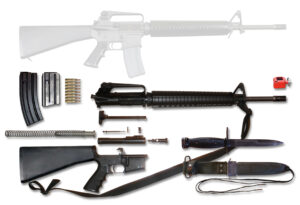
A collector’s look at Colt’s SP1 and early Sporters, from slickside uppers and pencil barrels to the rollmarks and small changes that hinted at the A2 era.
A practical, story-driven guide to reading JM vs REP barrel marks, understanding pre-safety 336s, Micro-Groove and Ballard-style rifling, and the smart checks to make before you buy.