There are guns you try once and move on from, and then there are guns you keep reaching for without thinking. For a lot of us, the Ruger Blackhawk falls into that second camp. It is a single-action revolver from another era, yet it somehow keeps showing up in trucks, on belts in elk country, and on the shelf behind the counter. When a tool refuses to fade even as tastes change and trends come and go, it is worth asking why.
Part of the answer is history you can hold in your hand. Part of it is the way the gun actually shoots. And part of it is Ruger’s habit of quietly making practical updates without spoiling the charm. Put those threads together, and you start to see why the Blackhawk continues to make sense for buyers, why collectors hunt particular variants, and why the general revolver crowd still nods respectfully when one shows up at the range.
A sixgun that refuses to fade
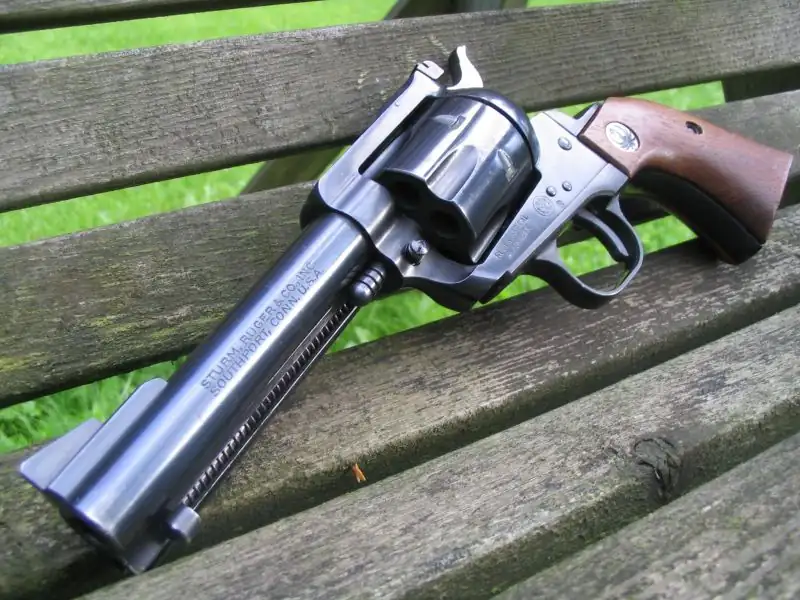
The first centerfire Ruger revolver landed in August 1955. Ruger called it the Blackhawk and launched it in .357 Magnum. The name came from one of Bill Ruger’s favorite cars, the Stutz Blackhawk, and the gun wore the bones of a classic single-action. But that’s where the pastiche stopped. The original Blackhawk was a flattop with a broad, square top strap and an adjustable rear sight, a different sighting setup than the rounded top strap of the old Colt Single Action Army it evoked. That change alone set the tone: nostalgia in the hand, function in the sights.
Those early guns found good traction. Westerns were popular, and the market had room for a tough single-action that didn’t feel like a museum piece. Ruger soon spun the Blackhawk into other chamberings, and its stronger, modern style frame made sense for magnum power levels at a time when shooters were pushing handguns harder and farther. Adjustable sights helped shooters tune to their load, rather than forcing the load to chase the sights.
What Ruger brought to the party in 1955
It is easy to miss how disruptive the sighting system was if you haven’t shot a rounded-top, fixed-sight single-action in bright light. The rounded top strap can give a false horizon, which muddies your picture. Ruger’s broad, flat top strap cleaned up that view. The early Blackhawks wore an adjustable Micro rear sight sunk into the top strap and a decent front blade. That gave shooters something that felt classic but hit like a modern handgun when you turned the screws to match your load.
That flattop approach wasn’t brand-new to the world, but Ruger built it in from day one on a stout, new production revolver. It stood out. The Blackhawk’s frame was sized along familiar lines, but the features made it more than a throwback. It was a shooter’s single action, not just a wall-hanger that nodded to the past.
Adjustable sights, flat top, and a stronger idea
Why does that matter today? Because the concept still works. Adjustable sights, a sturdy frame, and a good single-action trigger go a long way when you are choosing a handgun for field carry, hunting, or simply for the satisfaction of tight groups. If you appreciate a crisp break and a hammer you cock with your thumb, the Blackhawk gives you that experience with fewer compromises than the traditional fixed-sight pattern.
It is worth repeating the simple piece: adjustable sights are an advantage on a revolver that might see different loads. With a Blackhawk, you can chase the center with your screwdriver, not with your ammunition shelf. That was true in 1955, and it is true now.
Old Model to New Model – safety becomes standard
Early Blackhawks operated in the classic Colt style: half-cock the hammer for loading and unloading, and carry with the hammer down and the empty chamber under the hammer if you were being cautious. That gave the gun a certain rhythm, but it also kept the old compromises alive.
In the early 1970s, Ruger changed that rhythm without changing the essential feel. The New Model Blackhawk arrived with a transfer-bar system. In simple terms, that bar stays out of the way unless the trigger is pulled. If the trigger isn’t back, the firing pin can’t meet the primer. That one change meant single-action shooters could carry the gun with all six chambers loaded while keeping the hammer down. It is one of the main reasons the Blackhawk became the modern standard for single-action revolvers. The change is often dated to 1973 for the introduction of the New Model, and sources also point to 1972 as the year the transfer-bar concept was adopted across Ruger’s single actions. However you slice it, this was the shift that set the tone for every Ruger single-action that followed.
Practical note for buyers: if you are looking at an older “three-screw” Blackhawk, that is shorthand for the original lockwork, which uses three frame screws rather than the two pins you’ll find on transfer-bar guns. Ruger has offered retrofits on older guns, and the market treats original three-screws and retrofitted examples differently. Know what you are holding before you start talking about price.
Three screws, flattops, and why collectors care
Say “three-screw flattop” around a Ruger crowd, and you will draw out the collectors. Those early flat-topped guns hit a sweet spot of history and handling. The sight is set down into the top strap, the grip frame is a bit trimmer, and the package carries well. Collectors like them because they are where it all started. Shooters like them because they feel right in the hand.
A thoughtful take from vintage Ruger circles points out that the big change with the New Model wasn’t just inside the gun. Ruger also changed the frame sizes across different chamberings, which affects how a Blackhawk balances and how much it weighs on the hip. That is worth remembering when you compare examples across years. Not every Blackhawk feels the same when you close your eyes and wrap your hand around it.
The 50th Anniversary .357: back to where it began
Ruger’s 50th Anniversary New Model Blackhawk in .357 Magnum was more than a commemorative rollmark. Cataloged as NVB34-50, it aimed to echo the feel of 1955 while keeping the modern safety system. The small grip frame returned, this time in steel instead of aluminum, and the checkered hard rubber panels wore old-style black medallions. Ruger set the all-steel rear sight flush in the flattop again, just like the originals. Serial numbers started at 520-00001.
Because it is a New Model, the gun uses two pins instead of the three screws of the original lockwork, and it has a transfer bar. Ruger also added practical touches to the anniversary run, including a reverse-indexing cylinder pawl that aligns the chambers with the loading gate more easily and a refined hammer spring that smooths the cocking stroke. The result is a gun that looks right, feels familiar, and runs with the dependability shooters expect today. If you like the idea of the early flattop without the quirks of mid-century lockwork, the 50th is a smart target to look for.
Why hunters and field shooters keep coming back
Plenty of folks will tell you the Blackhawk earned its modern fan base out in the field. A good single-action trigger, stout construction, and chambers that span from mid-pressure loads to real magnums make it useful in the field. That is not just nostalgia talking. Writers who live with the gun in the field point to its ongoing popularity among handgun hunters. It has the right mix of controllability and punch in the common chamberings, and it shrugs off hard use.
If your interests lean toward action shooting with a classic look, Ruger’s fixed-sight Vaquero variant takes the Blackhawk’s basic form and gives it a simpler sight picture. Cowboy Action shooters adopted the Vaquero early, and it developed its own loyal following. The Vaquero uses a spring-loaded system that aligns the chambers neatly for quicker loading through the gate, and it ships with a clean, breakable trigger feel and fixed sights that match the old silhouette. That said, if you plan to run varied loads or shoot past typical CAS distances, the Blackhawk’s adjustable sights remain the practical choice.
Convertible cylinders and quiet versatility
One of the quieter tricks in the Blackhawk portfolio is the convertible-cylinder setup found on certain models, like the .357 Magnum package that ships with a second cylinder for 9 mm. It is straightforward: one cylinder is cut for rimmed .357 Magnum and .38 Special, the other for 9 mm. Swap cylinders, and you can run common semi-auto fodder through a single-action revolver.
There are a couple of caveats to keep in mind. A .357 barrel nominally measures around .357 inches in groove diameter, while common 9 mm bullets run a hair smaller. You can feel that difference in targets depending on the particular gun and ammo. Some owners end up favoring one cartridge over the other for accuracy. But as a practical matter, the system works, and that extra cylinder can make range trips cheap and cheerful when you have mixed ammo on hand. It also simplifies life if you keep both .38 Special and 9 mm on the shelf. For buyers, a clean convertible package is a nice value-add if you find one.
Blue or stainless, short or long – picking your Blackhawk
Ruger has produced Blackhawks in multiple finishes and barrel lengths for decades. That variety is part of the fun when you are shopping used or ordering new.
Finish first. Blue guns have the classic look. Depending on the period, many blued New Model guns used an anodized aluminum grip frame. That kept the weight down and slightly changed the balance. Stainless models typically use a steel grip frame. It adds a few ounces and changes the way the gun settles in your hand, which some shooters prefer. A long-time Blackhawk owner made that point plainly: the stainless grip frame gives the gun a bit more heft, and that can feel better on recoil and in slow-fire groups.
Barrel lengths run from around 4 5/8 inches up to the longer hunting-length tubes. The short barrel carries easily and clears leather fast. The mid-lengths balance well. The long barrels add sight radius and weight out front. No surprises there. What matters is how you plan to use the gun. A general-purpose field .357 with a 4 5/8 or 6 1/2 inch barrel is hard to argue with. If you are setting up a hunting rig and want to squeeze more speed and sight radius from a magnum chambering, the longer tubes start to make sense.
Frame size is the sleeper variable. Over the years, Ruger has built Blackhawks on different frames depending on chambering and vintage. Some runs, like the 50th Anniversary .357, returned to a trimmer feel that many shooters love. Others use a larger frame that soaks up recoil at the cost of a little extra bulk. If handling matters more than anything else to you, seek out the examples that match your hand. Pick up several if you can, blindfold your preconceptions, and see which one points naturally.
How it feels on the range
All the history and specs don’t matter if the gun doesn’t shoot. The Blackhawk does. Newer production guns tend to have little to no perceptible trigger creep. Older examples vary, which is normal for revolvers, but the general trend is friendly. If you are coming from striker-fired pistols, the single-action trigger will spoil you. If you are a double-action revolver fan and want a refresher on how those guns compare in feel and function, we put together a separate piece that walks through the appeal of that system too: What Makes Double-Action Revolvers So Enduring.
In .357 Magnum, a Blackhawk has a straightforward personality. It is strong, it is honest, and it shoots where you hold it as long as you match the sights to your load. If you reload or like to experiment with different bullet weights, adjustable sights are worth their weight. Plenty of Blackhawk owners settle on a 158-grain load for general use, then tweak sights seasonally if they move to a heavier hunting load. That flexibility is the quiet superpower of this platform.
As for the rhythm of running the gun, that is part of the charm. Open the gate, ease the hammer, the cylinder clicks around, and rounds slide in and out with a mechanical honesty that sends you back a few generations. The anniversary-style pawl that helps the chambers line up with the gate is a small but meaningful touch when you are wearing gloves or loading in dim light.
So why does the Blackhawk still matter?
Because it solves real problems without turning its back on what makes a single action enjoyable. Here are the pieces that add up.
- It keeps the sight picture honest. The flat top and adjustable rear sight give you a clean reference and a way to bring the point of impact to the point of aim.
- It modernized safety without ruining the feel. The transfer bar lets you carry a full cylinder with confidence while keeping the familiar single-action manual of arms.
- It wears different jobs well. From field carry to handgun hunting to steel-shooting weekends, there is a Blackhawk variant that makes sense.
- It offers a useful variety. Barrel lengths, blued or stainless finishes, and even convertible cylinders extend its reach without becoming gimmicks.
- It respected its own past. Anniversary runs and occasional returns to flattop form let new shooters experience what made the original special, while the New Model’s guts provide reliability.
For buyers, the takeaways are simple. If you want a modern, adjustable-sight single-action for real-world use, start with a New Model Blackhawk in the chambering that best matches your needs. If you want a gun that captures the spirit of 1955 but carries like a 21st-century tool, keep an eye out for the 50th Anniversary .357 flattop. If you are building a set for cowboy action fun, a Vaquero sits right next to it in the case for good reason. If you are a collector at heart, learn the difference between three-screw and two-pin guns, study how the frames and grips changed across years, and be ready to pounce when a clean early flattop shows up.
There is also a cultural note here. The Blackhawk keeps a way of shooting alive. It rewards pace, not speed for its own sake. It asks you to be present for each shot, to cock the hammer, and break the trigger with intent. That rhythm is a feature, not a bug. It is the same kind of quality that keeps other classics relevant long after their service days, and we have written about that with designs like the 1911 as well. If that side of shooting appeals to you, the Blackhawk is worth your time and a few boxes of cartridges.
Sources and notes
Historical details on the 1955 introduction, the flattop sighting system, and the 50th Anniversary .357 features come from American Rifleman’s look back at the first fifty years of the Blackhawk. Context on the flattop’s significance and the sight picture advantage appears in coverage from The Mag Life. The early-to-New Model safety change and transfer-bar description are supported by both American Rifleman and the Ruger Blackhawk page on Wikipedia. Sportsman’s Vintage Press discusses collectors’ interest in three-screw flattops and notes on frame sizing, as well as the limited-run medium-frame .357 flattop. Field-use impressions and comments on finish and grip-frame differences are drawn from ExhaustNotes. Broader popularity among hunters and notes on the Vaquero’s quick-loading feature and fixed sights are covered at GRITR Sports.