
Remington Model 8 and 81: Browning’s Long Recoil Sporting Rifles
A practical, collector-minded look at Remington’s Model 8 and 81. Calibers, long recoil explained, police conversions, and what to check before you buy.

Call us any time at: (833) 486-6659
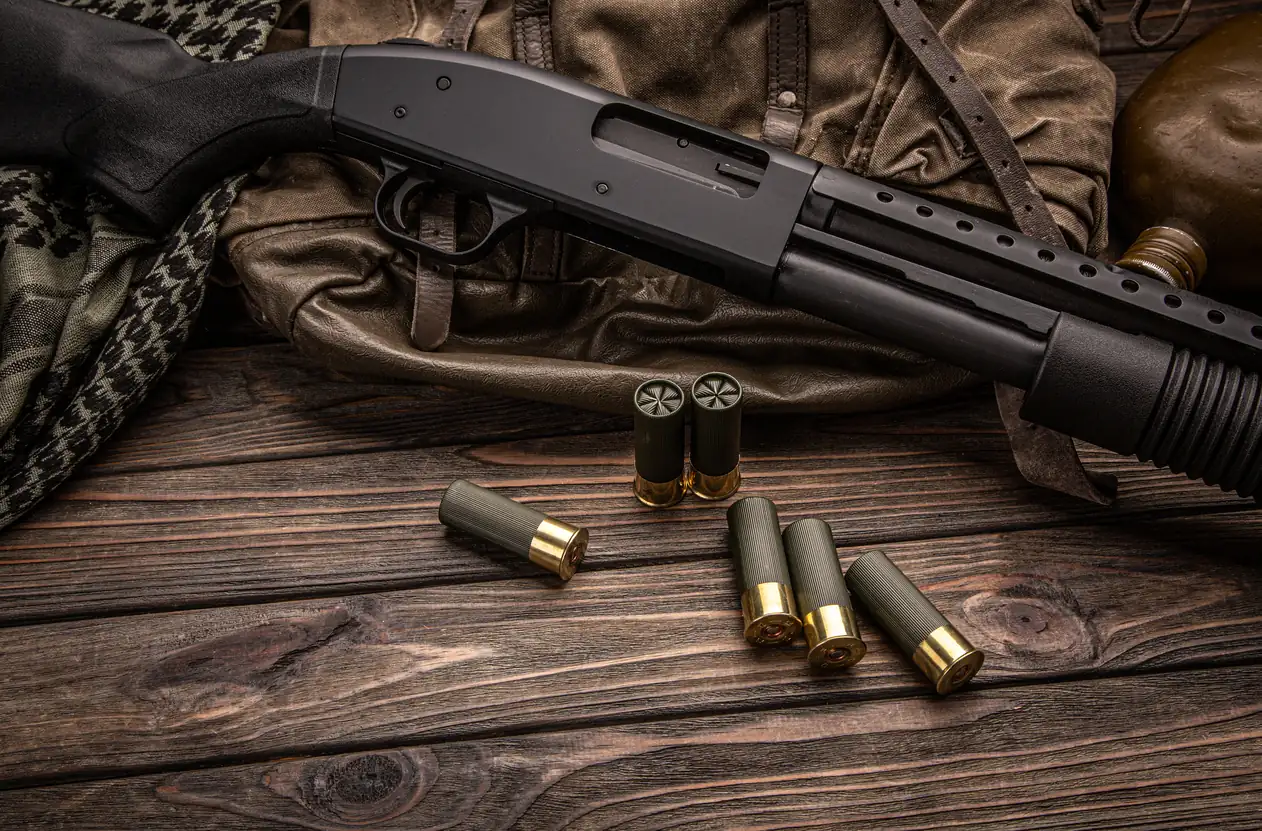
There is a certain sound that has followed American hunting seasons, training days, and graveyard-shift patrol cars for more than a century. It is short, metallic, and honest. You hear the forend run back and forth, and something in your brain fills the rest of the story. That sound is why pump shotguns still feel current, even with a century of newer ideas piled on top of them.
Yet nostalgia alone never kept a tool in use. Pumps stuck around because they deliver in ways that matter to people who actually haul guns through mud, cold, and long days. If you’re trying to understand why pump guns still earn space in modern safes, or you’re picking one up for the first time since bird season with your granddad, this is for you.
The slide-action shotgun began making its case in the late 19th century and never really left. The Winchester 1897 set a tone with an exposed hammer and a corn-cob forend. Later, models like the Remington 870 and Mossberg 500 turned that early promise into ubiquity. For a lot of people, say the word shotgun and an 870 flashes in their mind. One source even points out that more than 11 million 870s have been sold, which tells you how routinely these guns served regular people, not just specialists.
But popularity needs reasons. Let’s start with the mechanism.
A pump shotgun is simple where it counts. After a shot, you pull the forend straight back to eject the spent hull, then drive it forward to chamber a fresh shell. Your arm is the engine. That one fact explains a lot of what follows.
Because the cycling power is coming from you, not gas tapped off the barrel or inertia from recoil, pumps tolerate grime, cold, and oddball ammunition better than a lot of semi-autos. Writers have told the same story for decades: a pump that was dunked, dropped, and only occasionally cleaned keeps feeding and firing as long as you can shuck it. One waterfowling piece described an 870 that ran across 15 years with only a handful of cleanings. Mud made the slides sticky. Elbow grease made it run again.
There is a second practical benefit that tactical trainers and home defenders have leaned on for ages. If a round goes click instead of bang, you do not need the gun to cycle itself. You strip the dud and load a good one with a single stroke. It is hard to do that faster with any other action without deeper knowledge or extra manipulations. In a tight spot, fewer steps are good insurance.
Duck blinds and upland covers are no friend to moving parts. Gas systems collect fouling, cold sap oil thickens, and a long weekend turns best intentions about maintenance into a shrug. Semi-automatics offer faster splits and easier follow-ups, but if a dirty gun stops cycling, it stays stopped until you can get tools and time to work on it. With a pump, a little grit in the rails means you feel more resistance. Very often, a stronger stroke keeps things running, and the day goes on.
That is a practical advantage hunters and rural homeowners have counted on for a long time. It is also the reason pumps earned a reputation as blue-collar workhorses. They are not meant to be coddled. In most trims, they are plain, weatherproof, and relatively inexpensive compared to fancy break actions and feature-rich semis. They are tools first, and the market treated them that way.
It is worth being honest about the other side of the ledger. The pitch used to be easy: pumps were more reliable, semis were faster but fussier. That was true for a long stretch of the 20th century. Modern semi-automatics changed the math.
As one technical review put it, inertia and gas-driven designs of the last few decades matured to the point where they are now as reliable as pump guns in most applications, sometimes more so. Trainers who see thousands of rounds in classes have noted tough, modern semis that just need a periodic spring swap to keep running. Meanwhile, a hard-used pump’s manual linkages can show wear from the fast, forceful cycling that proper technique demands.
So why didn’t pumps fade? Even though semis are now excellent, the pump’s practical advantages did not disappear. They simply stopped being the only choice. Plenty of shooters still favor the simple manual of arms, the lower cost, and the fact that you do not have to keep the action’s gas system tuned to your chosen load.
Because you are cycling the action, pumps usually shrug at ammunition that makes some semis hiccup. Very light target loads, reduced-recoil rounds, or specialized shells may fail to generate the gas pressure or recoil energy required to operate many autoloaders. With a pump, if it fits and fires safely, your arm does the rest. That flexibility has kept pumps in service anywhere people mix loads or need to feed whatever shells they can find.
There is also the matter of clearing malfunctions. With a pump, the same stroke that loads and unloads also lets you sort out a dud, a stubborn hull, or a mix-up in the magazine. Simplicity does not mean zero training, but the basic sequence is easier for many people to learn and retain, even if they only practice occasionally. That ease of recall matters more in stressful moments than on the range.
Pumps made their name as affordable work guns. That was a deliberate design decision. The Remington 870, introduced in 1950, pared manufacturing costs enough to put a reliable repeater in regular hands. It also made maintenance easier. Pop out two pins and the trigger group lifts clear. Swap barrels with minimal fuss, and you can move from ducks to deer season without a new shotgun. When Remington’s fortunes faltered, folks worried the 870 was gone. New ownership brought it back, which says a lot about demand.
Mossberg charted a similar path. The 500 family earned a reputation for hardy, budget-friendly pumps that show up everywhere from small-town cruisers to first duck guns. The top-tang safety is intuitive for many shooters and is workable for right or left-handed use, especially with a traditional stock. If you plan on using a pistol-grip stock, just keep in mind that the safety becomes less natural to reach.
On the lefty-friendly front, the Ithaca 37 brings a neat twist. Based on a Browning design, it loads and ejects from the bottom. That solved two problems at once. Empty hulls go straight down instead of across a left-hander’s face, and the action is better shielded from falling snow and field crud. It is a classic that never really left the line, and slug variants like the Deerslayer still have a following where hunters prefer slugs for whitetails.
Each of the big names stuck for particular reasons:
None of this is flash. These guns survived because they kept doing regular jobs for regular people. They also became the backbone of a used market that lets new shooters step in without a big bill and lets collectors chase variations without having to chase auction houses.
Pumps also ride on cultural momentum. They show up in upland camps and on cold marsh mornings year after year. They hang behind back doors and sit on squad car racks. They star in cowboy matches where a Winchester ’97 still brings cheers. And yes, the racking sound is famous far beyond the gun world. You will hear folks say that sound freezes an intruder. It is a cliché for a reason, though it is not a strategy to count on. What matters more is that ordinary people trust the tool because it has proven itself across so many ordinary days.
The upland world, for example, can get caught up in side-by-sides and heirloom stories. Yet the pump has a long, practical streak in those same covers. Writers have noted the pump’s roots as the shotgun of working folks who wanted one gun to shoot birds in the morning, sit by for chores in the afternoon, and handle deer season later on. Pumps just kept racking shells and bringing birds to hand, quietly, without asking for much attention.
So where do pumps still make the most sense?
Semi-automatics are brilliant in their own right. They carry real advantages in recoil reduction and speed, and many modern designs run and run with minimal fuss. The point is not to pit the two against each other. It is to explain why a century-old manual repeater still earns its place without apology.
If you like history, you can touch, pump guns, which offer a path that does not require rare engraving or exotic wood. The Winchester 1897 is a natural place to start, bringing Old West flavor and a mechanical look that shows its era. The Ithaca 37 holds the record for the longest-produced American pump and gives you the quirky bottom-eject charm that stands apart on any rack. Remington 870s and Mossberg 500s, meanwhile, are a playground of barrel lengths, furniture styles, finishes, and sighting setups. You can learn a lot by handling a half-dozen examples over a few decades.
One of the easiest ways to enter the collector side of pumps is to start with a clean, common configuration you can shoot. Then learn what makes certain trims interesting. Shorter riot-style barrels, rifle-sighted slug guns, early production features, police-marked receivers, or bottom-eject oddities can all be interesting. None of those demands a glass case. These are shotguns you can keep running with simple parts and a little practice on a bench mat.
For a broader look at how classic firearms remain relevant because they do simple things very well, you might also enjoy our pieces on enduring designs like double-action revolvers, or on how a single-action like the Ruger Blackhawk still finds fans. Manual systems stick because they put the driver in charge.
New or used, the basics apply. Here is a simple checklist you can work through at a counter or your kitchen table.
There is a parallel here with other classic mechanisms. Some designs just solve a problem cleanly and refuse to age. The pump shotgun’s core pitch remains simple: it is a strong, affordable repeater that runs under stress, handles a wide span of ammunition without drama, and can be taught in an afternoon. Modern semi-automatics may match or beat it in certain lanes, and that is great news for everyone. But that did not erase the jobs a pump does well. It simply gave shooters more choices.
On a cold dawn when your gloves are damp, and the birds are coming fast, or on a summer range night when you are teaching a new shooter how to load, run, and unload safely, the pump’s virtues show without a speech. You feel them in the stroke, and in the way a no-frills shotgun goes about its work without asking you to baby it. That has always been enough.
If you are narrowing a short list, these stalwarts are easy to recommend based on long reputations described by hunters, instructors, and longtime shooters:
That list is not exhaustive, but it captures why pump shotguns remain more than a memory. They are still out there, taking scratches, feeding families, ringing steel, and teaching safe gun handling. They stayed relevant because they stayed useful, and that has a way of never going out of style.
Available
View Item
Available
View Item
Available
View Item
Available
View Item
Available
View Item
Available
View ItemA practical, collector-minded look at Remington’s Model 8 and 81. Calibers, long recoil explained, police conversions, and what to check before you buy.
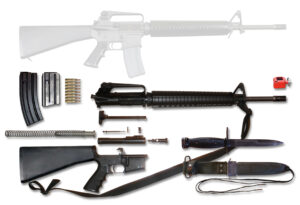
A collector’s look at Colt’s SP1 and early Sporters, from slickside uppers and pencil barrels to the rollmarks and small changes that hinted at the A2 era.

A practical, story-driven guide to reading JM vs REP barrel marks, understanding pre-safety 336s, Micro-Groove and Ballard-style rifling, and the smart checks to make before you buy.