
Remington Model 8 and 81: Browning’s Long Recoil Sporting Rifles
A practical, collector-minded look at Remington’s Model 8 and 81. Calibers, long recoil explained, police conversions, and what to check before you buy.

Call us any time at: (833) 486-6659
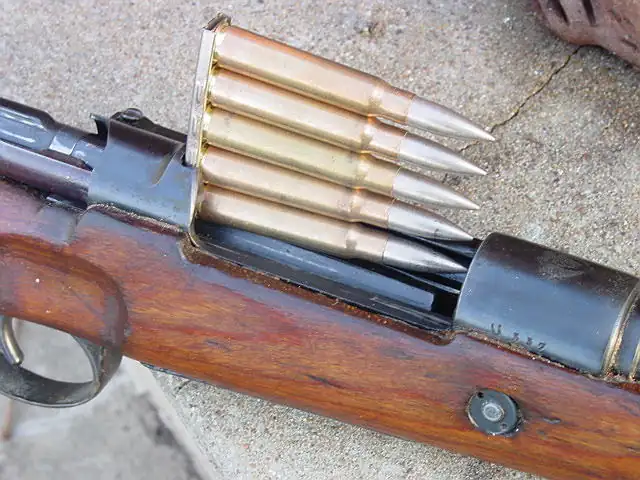
The first K98k that really made me stop and think sat on a folding table at a small show. The receiver was clean, the crest scrubbed, with a tiny factory code and a neat two-digit date on the ring. The stock had that deep, reddish sheen collectors argue about. The bolt bore a different number than the receiver, and an X lurked just ahead of the serial number. The tag called it “rare,” the price backed up the claim, and a couple of folks were circling.
I didn’t buy that rifle. But I did leave with a notebook full of markings and more questions than answers. If you’ve ever stood there trying to decode a K98k’s story from five square inches of steel and wood, this guide is for you. We’ll unpack factory and receiver codes, talk about wartime changes like laminated stocks, point out common capture and refurbishment marks, run through the small parts and accessories that get swapped or lost, and share practical ways to tell original from reworked without a microscope.
German wartime production deliberately obscured its sources. Instead of stamping the factory name right on the receiver, the K98k wore alpha-numeric codes that obscured where it was built. The idea was to make it harder for enemies to target specific plants and harder for saboteurs to track output. If you’ve ever seen a row of K98ks and wondered why the receivers say 42 or 147 instead of “Mauser” or “Sauer,” you’ve seen that system doing its job.
The earliest production runs used what collectors call the S prefix system. In that scheme, the manufacturer was represented by a number, and the year by a letter. Then, in 1936, the system changed again. The year of manufacture switched to a plain numeric date stamped into the receiver ring. Some runs carried all four digits of the year, others only the last two. One factory, Berlin-Suhler, didn’t fall neatly into the S prefix format at all, which is the kind of exception that keeps collectors leafing through notes at tables.
If you want a concise overview of how the code system evolved, American Rifleman’s explanation of Mauser Kar. 98k receiver codes is a handy reference point. It hits the high points of the transition and underscores why these marks matter when you’re trying to place a rifle in time and space.
Even a short list of examples helps you get your bearings. On K98k receivers, you’ll often encounter:
Those associations show up across collector references and are frequently noted by sellers. As a practical matter, once you spot a code and a date, you can start asking better questions: does the stock type, finish, and small parts style line up with what you would expect for that time and place; do the inspection stamps look right; and does the gun feel like one story rather than three stitched together?
As the conflict progressed, the format of factory marks continued to evolve. You will run into later two- or three-letter factory codes on receivers as well. The underlying goal was the same: concealment. Treat them the same way you treat the numeric codes; look for congruence with other features on the rifle and remember that the code is one piece of the puzzle, not the whole picture.
Here is a truth about K98ks that eases a lot of anxiety for buyers: subcontracted components are normal. Stocks, bolt parts, sight bases, and other bits came from different shops that fed the main assembly plants. Those suppliers left their own small marks, and you can find a well-preserved rifle with a mosaic of tiny stamps that all belong there.
Serial numbers are a different subject. German practice was to number the major parts to the rifle, and you’ll see matching numbers on a receiver, bolt, floorplate, and stock when things have stayed together. But these rifles lived long lives. They were serviced in wartime, captured, stored, reissued, and reworked again after the war. Mismatched numbers are common. That does not make a K98k bad; it just changes which questions you ask and how you weigh the price.
One more practical note for U.S. buyers. Imported K98ks were typically marked by the importer. Those stamps tend to appear on the barrel and often include model markings, year, and caliber. Their presence tells you about the rifle’s more recent journey and, depending on where they sit, they can affect collector appeal but not necessarily shootability.
Pick up two K98ks from different years and the wood will often give away their histories. Early rifles can show well-finished walnut stocks with clean edges. As the war deepened and weather, supply, and speed took their toll, laminated beech stocks became the norm. Laminating glues thin pieces of wood together into a single blank. It adds weight but brings strength and stability under hard use and damp conditions.
You can still see that philosophy at work in modern Mauser hunting rifles. The company specifically points to a laminated beech wood stock as ultra robust and resistant to warping on current production models, a nice reminder that the approach continues because it works. If you want to see how they describe it today, take a look at the Mauser 18 Pure’s laminated stock notes.
On a K98k, laminated stocks usually show telltale lines along the butt where the layers meet. They also hold up better to hard service; chipped corners are less common, and cracks around the recoil lug are less dramatic than on a stressed single-piece stock. Handguards often match the stock wood on later rifles. Some stocks wear crisp inspection cartouches near the wrist or on the right butt, and some show almost nothing because they were sanded, refinished, or simply worn smooth in later use. Treat any too-perfect set of stamps on a glossy refinish with a critical eye.
Cupped buttplates are commonly seen on later rifles and play well with laminated stocks. Flush or flat plates show up earlier. None of these are hard-and-fast rules on their own, but they are part of the pattern recognition that makes this hobby fun and helps keep your money in the right places.
One reason the K98k market is so approachable is that vast numbers came into civilian hands through postwar capture and refurbishment programs. That history leaves fingerprints. Collectors often lump a set of features under the label Russian Capture. While not every rifle with these signs took the same path, there are patterns that come up again and again.
Here are traits you’ll often encounter on Eastern Bloc refurbished K98ks:
None of these on their own prove a particular stop in a rifle’s history. But together they tell you the gun likely went through a refurbishment line. That’s valuable information when you weigh what to pay and what you plan to do with the rifle. Many refurbished guns make outstanding shooters because the parts were inspected, headspace tends to be good, and the bores can be better than their scarred stocks suggest.
Imported rifles will often carry an importer’s mark, as mentioned earlier. Those marks tend to be on the barrel and can name the model, year, and caliber. Their placement ranges from subtle to obvious. Don’t assume a prominent import stamp means a rough rifle; look at the whole package.
When the K98k left service, a lot of the small parts and accessories went missing. That is how these things go. Many imports arrived without sight hoods or cleaning rods, and some without their front band screws. The aftermarket quickly filled those gaps with reproductions. A rifle wearing all the right parts looks great, but a “complete” setup assembled in a workshop last year is not the same thing as a complete rifle that managed to keep its original gear over eight decades.
Here is a quick tour of pieces that come up most often when you are evaluating a rifle:
Don’t overpay for a rifle purely because it wears all the small bits. Value the rifle first; treat accessories as a bonus if you can support their age and origin.
Restored K98ks come in two broad forms. Some were refurbished in arsenals and spent decades in storage racks; others were worked over in modern shops to look nicer or to pass for more original than they are. The first group is a straightforward category with its own market. The second group is where buyer caution pays off.
Here are signs that make me slow down and look harder:
Restorations are not automatically bad, but they change the story. Be suspicious of any gun that seems to check every single desirable box yet looks like it was made last year. If a rifle seems too clean for its claimed age and service, work backward and find the part that breaks the spell.
For a deeper look at judging age and originality on another classic Mauser, the principles in our piece on assessing Mauser C96 condition and originality carry over nicely to long guns.
Here is the order I like to follow when I have a K98k in hand. It keeps me from getting tunnel vision on one appealing feature and missing the bigger picture.
Not every K98k needs to be a matching-number time capsule. In fact, a lot of the long-term satisfaction in this corner of the hobby comes from buying a rifle that tells a clear, honest story, then shooting and caring for it. A force-matched carbine with refurbishment marks can be a terrific range companion. A sharp, early rifle with congruent parts and original finish deserves careful stewardship and maybe less range time.
As you shop, keep three anchors in mind:
These are the kinds of questions that pop up constantly when friends text photos from shows:
Beyond those, you will see other numeric and later alphabetic codes. Once you know the pattern, decoding them becomes part of the fun rather than a barrier.
However you collect, bring a notebook, trust your eyes, and do not be afraid to pass. The K98k market is wide, and another good rifle will be on the next table soon enough.
Available
View Item
Available
View Item
Available
View Item
Available
View Item
Available
View Item
Available
View ItemA practical, collector-minded look at Remington’s Model 8 and 81. Calibers, long recoil explained, police conversions, and what to check before you buy.
A collector’s look at Colt’s SP1 and early Sporters, from slickside uppers and pencil barrels to the rollmarks and small changes that hinted at the A2 era.
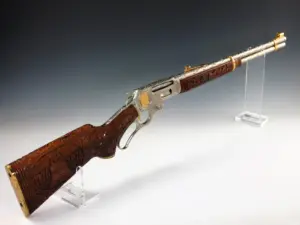
A practical, story-driven guide to reading JM vs REP barrel marks, understanding pre-safety 336s, Micro-Groove and Ballard-style rifling, and the smart checks to make before you buy.