
Remington Model 8 and 81: Browning’s Long Recoil Sporting Rifles
A practical, collector-minded look at Remington’s Model 8 and 81. Calibers, long recoil explained, police conversions, and what to check before you buy.

Call us any time at: (833) 486-6659
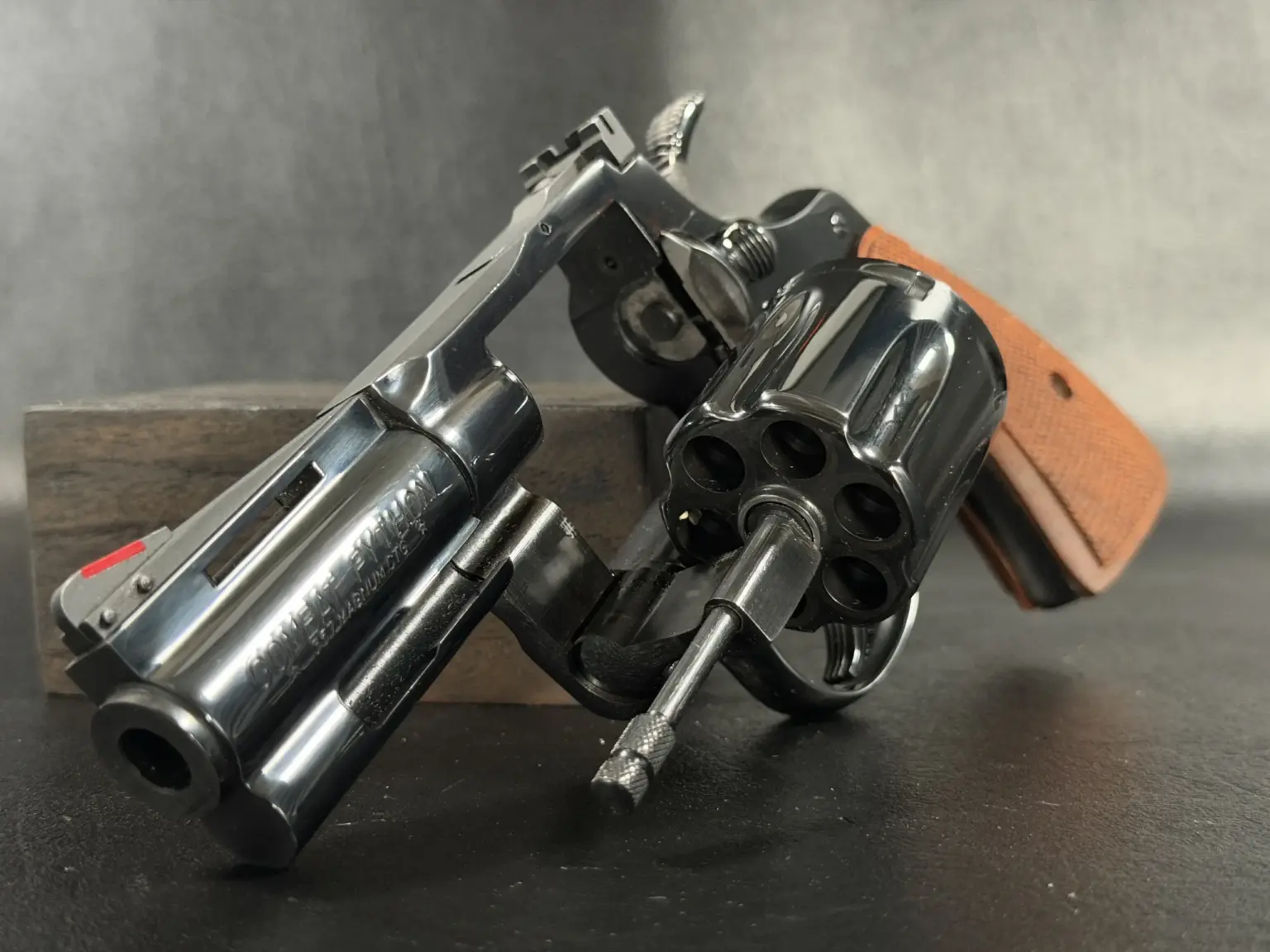
The first time I held a true Royal Blue Python under shop lights, I understood why the nickname stuck. The polish looked deep enough to lose a fingertip in, and the action had that silk-over-glass feel that made folks talk about Pythons like they were part revolver and part myth. Decades later, snake guns are back in the spotlight, both in the case and on the firing line. New models keep rolling out, old ones keep climbing in desirability, and the hunt has only gotten more interesting.
If you are sorting out Pythons, Cobras, Diamondbacks, and Anacondas for the first time, or you have been eyeing a tempting online listing, this guide will help you place a gun in its era, understand the finishes and barrel lengths you will actually see, make sense of rollmarks and proof marks, and avoid the usual traps that snare buyers and new collectors.
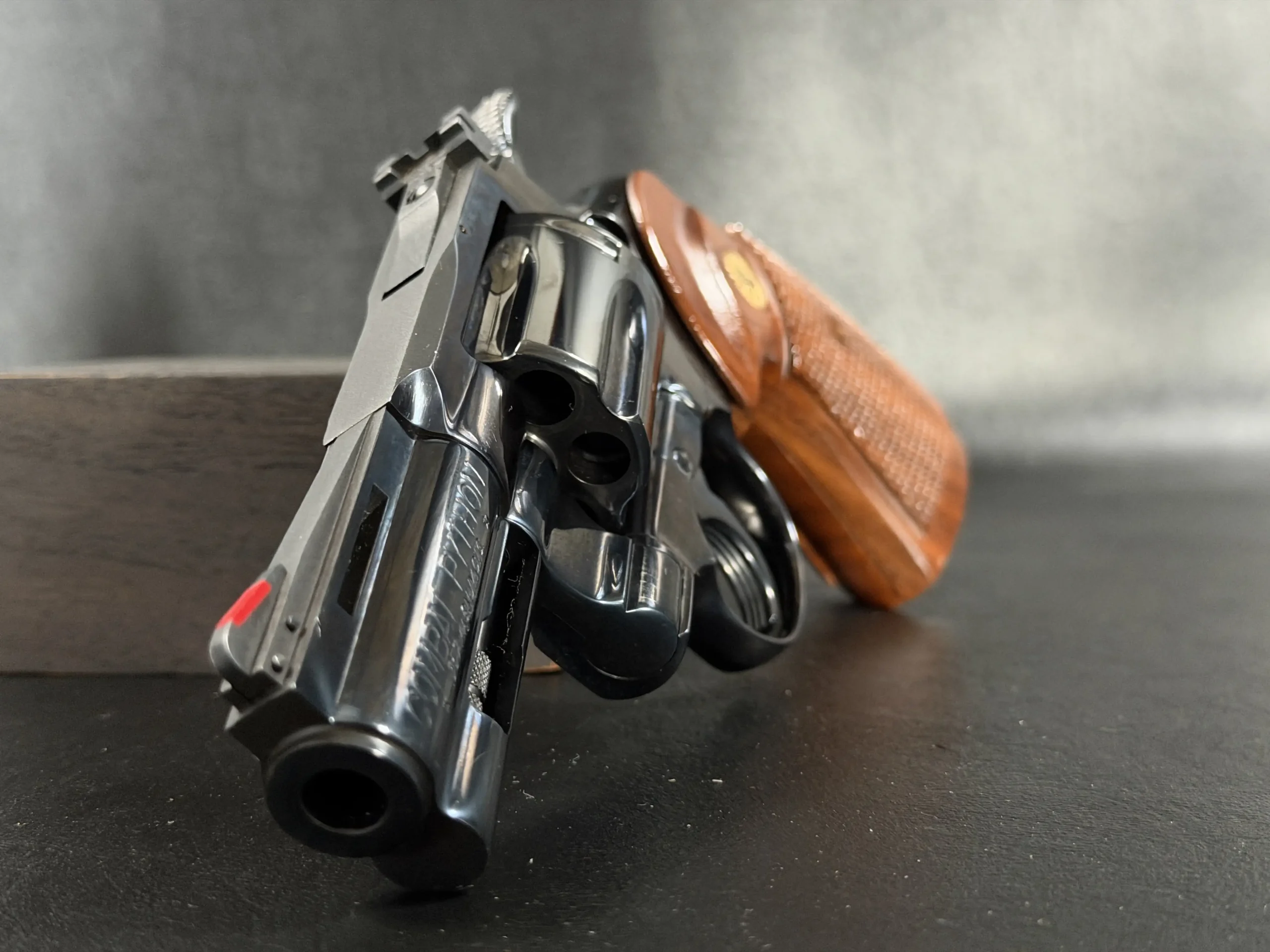
When folks say snake gun, they are talking about Colt’s postwar double-action family that wore serpent names. The core four for most buyers are the Cobra, Python, Diamondback, and Anaconda. There are others in the extended family, including the King Cobra, Boa, Viper, and more specialized offshoots, but this article focuses on the big four, with a few side notes to help make sense of the market.
Timeline-wise, the Cobra kicked things off in 1950, then came the Python in 1955. The Diamondback arrived in 1966. The big-bore Anaconda showed up much later. For modern buyers, a major turn came when Colt began reintroducing snake guns in the late 2010s. As Guns & Ammo summed up, the second wave started with the Cobra in 2017, followed by new-production Pythons in 2020, the Anaconda in 2021, and further additions like the King Cobra Target .22, reported in 2023. For 2024, they noted more barrel lengths, new blued models, and a few special variants. That second wave matters because it gives buyers a current-production option and shapes how people compare old and new.
Collectors commonly split snake guns into two broad eras.
The vintage era covers the period when the original models were first cataloged. Think first-generation Cobras, Pythons, and Diamondbacks. These guns built the legend. American Rifleman has pointed out that true rarity is not the norm for these models in standard configurations. They noted that more than 100,000 Pythons were manufactured between 1955 and 1969, with many in 4- and 6-inch Royal Blue, and nickel added as a finish option in 1962. In 1960 alone, Python production topped 16,000 units. That context helps you understand why conditions, unique features, and short configurations matter so much in value discussions.
The modern era covers Colt’s reintroductions starting in 2017 and running forward. The company brought back core snakes, added stainless steel heavy hitters, and, in 2024, brought back blued offerings that nod to the old-school shine collectors love. Guns & Ammo listed Python barrel-length options in the current lineup, which now include 2.5, 3, 4.25, 5, 6, and 8 inches. That is good news for buyers who like to match length to use or simply fill an old gap without chasing vintage pricing.
Finishes are one of the fastest tells for era and correctness.
Royal Blue is the finish that made the Python a poster child for polish. Deep, glossy, and warm in tone, Royal Blue is part of why many collectors still put the classic Python at the top of the snake pit. Per American Rifleman, nickel was added as a factory option in 1962, and those bright nickel guns are another crowd favorite. Both finishes are often faked through refinishing, which we will cover later.
Stainless steel became the dominant material and look for much of the modern run. If you have worked with a new Anaconda or Python, you know the satin-stainless vibe. Colt has continued to build out that stainless catalog with different barrel lengths and trimmed variants.
In 2024, Colt made many collectors smile by bringing back blued models in the new generation. Guns & Ammo highlighted the return of blued Pythons and other variants for that model year. For buyers who want a deep blue look with current production reliability and availability, that is a strong combination. If you are specifically after a modern Anaconda, Colt’s own catalog shows 4.25-, 6-, and 8-inch Anacondas available in stainless steel, with blued versions as well, and certain models chambered in 45 Colt alongside 44 Magnum. You can see the current mix on Colt’s official Anaconda page for a snapshot of what is shipping now.
Check the current Anaconda lineup and finishes on Colt’s site.
Barrel length is another quick filter. It can be a hint about correctness, it changes the feel in the range, and it swings perceived desirability for many buyers.
Python lengths have always been a conversation starter. In the classic era, 4 and 6-inch guns were common and practical. The shorter 2.5 and 3-inch guns make people look twice, and the 8-inch silhouette is unmistakable. In the modern run, Guns & Ammo reported a wide range of Python lengths for 2024, including 2.5-, 3-, 4.25-, 5-, 6-, and 8-inch barrels. That 5-inch length, especially, scratches a classic aesthetic itch while being a sweet spot for balance.
Cobra lengths historically tilted toward carry, with shorter tubes. Diamondbacks in 38 Special and 22 LR came with several length choices, with short barrels often drawing more attention among collectors. The Anaconda, a big-frame .44 Magnum classic and now a revived model, tends to appear in 6- and 8-inch configurations for hunting and silhouette vibes, though 4.25-inch models have a loyal following for packable power. Colt’s current catalog shows 4.25, 6, and 8-inch options for the Anaconda family, including Target variants.
If you are asking yourself, ” Can I hang a role on each length, the short answer is yes. The 2.5- to 4.25-inch guns are fast-handling and easier to carry. Five and six-inch guns hit the sweet spot for sight radius and general shooting. Eight-inch guns are built for steadiness and velocity.
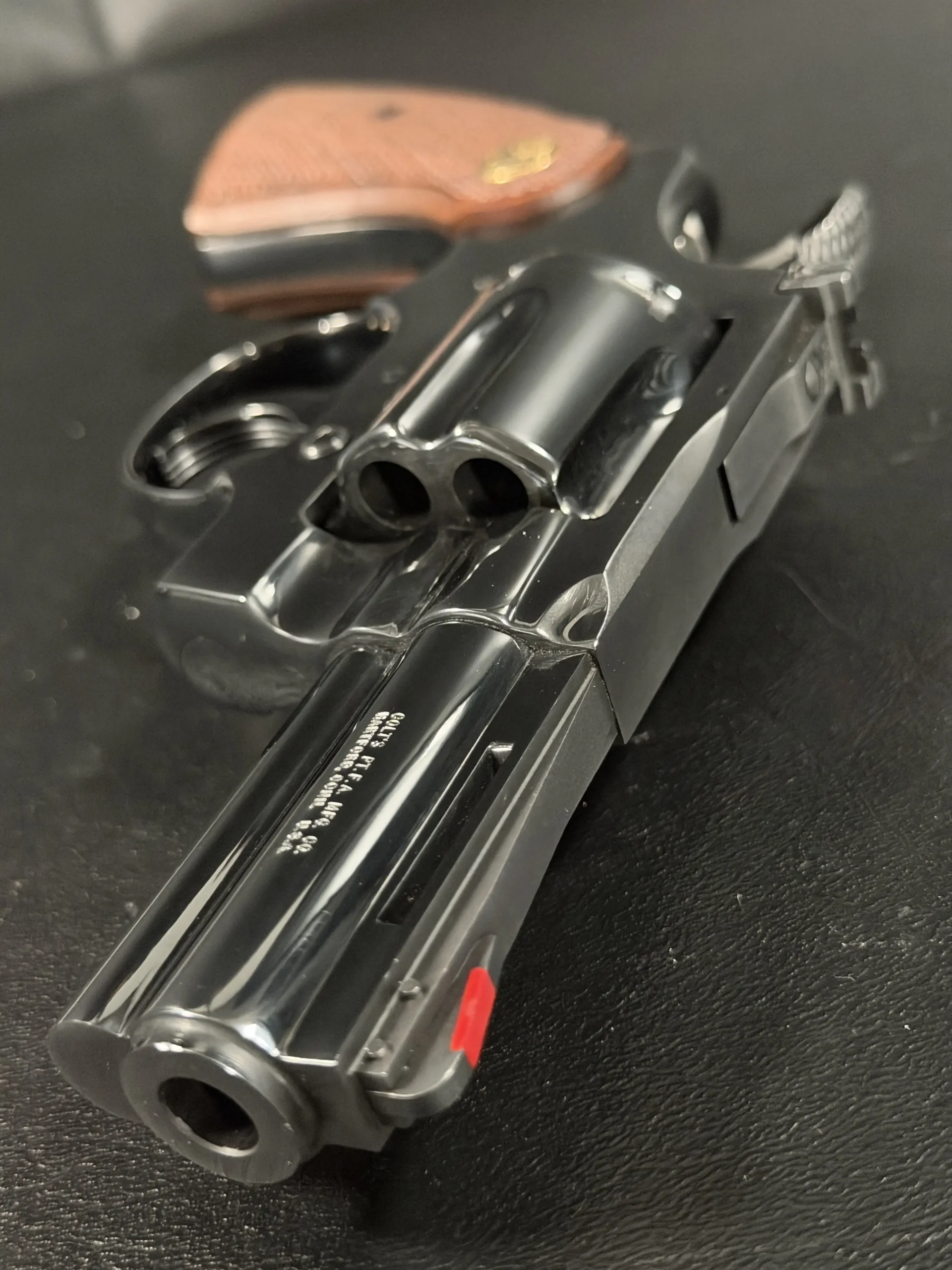
Rollmarks are the printed story on the metal. They tell you model names, sometimes caliber, and usually carry the brand identity that changes slightly across decades. Proof marks, import marks, and inspection stamps are the quieter footnotes.
Here is how to use them wisely.
Era and font style. On vintage snakes, the style of the Colt name, the model script, and any address lines tend to match their time and batch. If a rollmark looks soft, smeared, or oddly modern on a gun that is supposed to be early, that is a red flag. Overpolishing before a refinish is a common reason for mushy marks.
Export and proof marks. Some vintage Pythons left the country. The Guns & Ammo author mentioned a 1969 Python that was shipped to West Germany and bore German proofhouse and inspection marks on the barrel and frame. Those sorts of stamps are not a flaw. They are part of the gun’s story. If you find a claimed export gun with no foreign proofs or marks that look laser-fresh, slow down and verify.
Matching details. Caliber rollmarks should make sense with the frame. So should any special model names. If you see a hodgepodge, consider the risk that parts were swapped or that a barrel was replaced at some point in its life.
Serial confirmation. Colt offers a serial number lookup, and many collectors rely on a Colt Archive Letter to lock down factory details. The letter can confirm the ship date, original finish, barrel length, and destination. It costs money and takes time, but it is the cleanest way to answer those nervous questions about correctness that creep in after midnight.
Original packaging is a multiplier in the world of snakes. It does not make a worn gun mint, but it rounds out a clean example and removes a layer of guesswork.
What to watch:
If the seller emphasizes the box and paperwork while showing only a few clear photos of the metal, ask for clearer images. You are buying a revolver first, packaging second.
Put a vintage Royal Blue Python next to a new blued Python, and the differences are obvious to a practiced eye, but you can simplify this into a few fast observations.
Above all, behavior matters. A seller who welcomes close inspection and serial confirmation is easier to trust than one who waves you off questions about finish or barrel swaps.
I have lost count of the would-be Pythons that turned out to be shiny refinish jobs and the clean Cobras wearing reproduction grips with new medallions. Here are the traps that come up again and again.
This is the single most common mistake I see. A refinish can hide light pitting, buff out honest wear, and make a gun pop in photos, but it also softens corners and washes out rollmarks. Check screw heads for rounded slots from disassembly. Look for edges that should be crisp but appear melting. On nickel guns, watch for flaking in protected areas and haze that does not match the even sheen of a factory job.
Barrel length drives desirability. That means some guns had barrels swapped long after they left Hartford. If the front sight style, crown, or roll marks look off for the frame’s era, consider a factory letter to be sure. Parts mixing can also show up as modern grips on an old frame, or the reverse.
It is rare, but I have seen suspect marks. They often look too sharp and too shallow at the same time, as if a printer had passed over the surface. Compare to known-good examples, and trust your gut when something feels laser-etched rather than rolled. Authentic rolled marks have depth and a slight character from the die’s pressure.
A box from the right decade but the wrong gun is a common pairing. End labels should tell a consistent story. If the gun is a 6-inch blued revolver and the label calls out a 4-inch nickel, you have a mismatch. Price should reflect that.
Snake guns, especially older examples, deserve a slow double-action check. Feel for clean carry-up and lock-up, both single- and double-action. Check for endshake and cylinder-drag lines that indicate miles on the clock. A tuned action is a joy, but signs of shade tree work inside the sideplate can be expensive to undo.
Online listings love soft light and long distances. Ask for clear, close photos of the muzzle crown, forcing cone, sideplate screws, front strap, and the flats of the frame where polishing marks would show. If you cannot see the details, you cannot fully evaluate the gun.
The icon. Vintage Royal Blue and nickel guns in 4- and 6-inch sizes are the center of gravity. Short barrels command attention, but confirm originality. American Rifleman’s production notes remind us that Pythons are not scarce in standard trim, so condition, correctness, and story are what set one apart from the next. In the modern catalog, Guns & Ammo reported that 2024 brought an expanded set of barrel lengths and new blued options. That gives buyers a choice between vintage charm and modern availability. If you like shooting your guns, it is hard to argue with a current production Python in 4.25, 5, or 6 inches.
The lightweight starter of the family. Early Cobras are classic carry guns with a lot of miles under their belts. Condition runs the spectrum, and a clean example with correct grips is a satisfying find. The modern Cobra reboot marked the start of the second era in 2017. As with other snakes, buyers can go vintage for charm or modern for a straightforward range companion.
One of the most charming compact snakes, offered in 22 LR and 38 Special. Collectors have been paying attention, and American Rifleman noted strong demand for short-barrel lengths and nickel finishes, with Diamondbacks currently among the hottest snakes. Small details and condition drive desirability here. On a 22, an excellent bore and timing matter more than people sometimes expect.
The big .44 Magnum shook hands with modern stainless steel aesthetics early on, and it fits the role well. Colt’s current catalog shows 4.25, 6, and 8-inch models, including Target variants and even 45 Colt chamberings in select SKUs. If you want one today, the good news is you have options right from the factory, and Colt has even introduced blued Anacondas. If you are evaluating a vintage example, check for signs of hard use from heavy loads and look closely at the forcing cone and top strap. On any Anaconda, a smooth double-action pull without stacking is a joy and worth seeking out.
Snake guns have been on a tear. American Rifleman summed up the heat by saying if they get any hotter, they will be on fire, and they pointed to specific models like the Diamondback, Viper, and King Cobra, seeing strong increases. They even pegged a stainless-steel 4-inch King Cobra at approximately $ 2,400 in their snapshot. That said, markets move, regions differ, and auction fever is real. If you are buying, focus on the gun in front of you, not last month’s record.
Here is a practical approach that has saved my friends and me from expensive lessons.
Colt continues to expand the new generation of snakes. Guns & Ammo reported a steady cadence since the 2017 Cobra returned, including the Python in 2020, the Anaconda in 2021, and ongoing additions such as blued and Target models, plus special runs like Kodiak and Grizzly that use ported Python barrels in magnum chamberings for backcountry roles. For those who want a new production revolver with classic lines, this era is a good time to buy.
If you are tracking the big-bore options specifically, Colt’s current Anaconda page gives a clear view of what is shipping now, including 4.25-, 6-, and 8-inch stainless and blued models, as well as select 45 Colt chamberings alongside 44 Magnum. That breadth makes it easier to get the configuration you want without hunting vintage stock.
Guns & Ammo’s overview of the new Python family and modern snake lineup is also useful for understanding how the recent waves compare to earlier guns.
I like well-carried Cobras that still lock up tight, and I like 6-inch Pythons that print a single ragged hole when I do my part. I like Anacondas set up for steady bench work and Diamondbacks that turn range time into grins. The good news is you can find all of that today, vintage or modern. The trick is to be honest about what you want, be patient enough to wait for the right example, and be careful enough to avoid the traps that live where polish meets price.
Colt’s snakes are back in the case, and the old ones are not getting any less interesting. That is a fine place for a buyer to be.
Available
View Item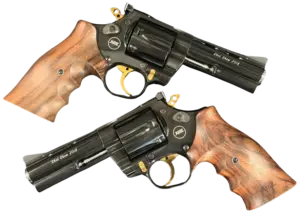
Available
View Item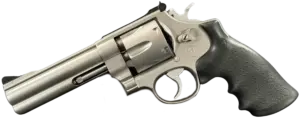
Available
View Item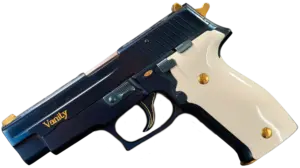
Available
View Item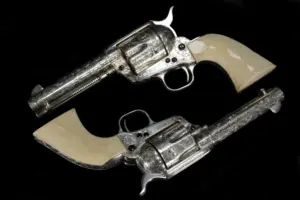
Available
View Item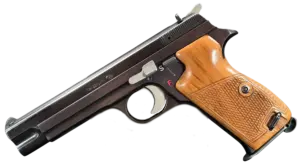
Available
View ItemA practical, collector-minded look at Remington’s Model 8 and 81. Calibers, long recoil explained, police conversions, and what to check before you buy.
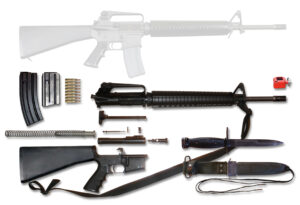
A collector’s look at Colt’s SP1 and early Sporters, from slickside uppers and pencil barrels to the rollmarks and small changes that hinted at the A2 era.
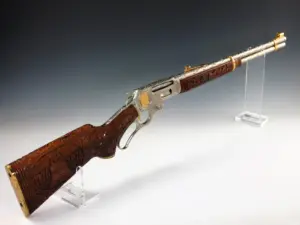
A practical, story-driven guide to reading JM vs REP barrel marks, understanding pre-safety 336s, Micro-Groove and Ballard-style rifling, and the smart checks to make before you buy.