
The first time you pick up a High Standard Model B and spot that small, round button perched on top of the slide, you realize these .22s do things their own way. That little button matters. It is part of the company’s early approach to a takedown system, and it hints at a pistol line shaped by clever engineering, steady target work, and the demands of a very particular cartridge.
If you’re standing at a gun show table trying to separate a B from an HD Military or a Supermatic, you’re in good company. I’ve had more than one Saturday morning where a single High Standard sends me reaching for a loupe, a notepad, and a few memories. The three families share a lot of DNA, and that’s part of the fun. This guide will help you place what you’re looking at, understand the barrel and slide differences that matter, handle takedown without drama, and make a smart call on magazines and condition.
Where these pistols came from, in brief
High Standard’s rimfire story picks up in the early 1930s. In 1932, the company took over the Hartford Arms and Equipment Company and began producing .22 pistols. The early High Standards were close to those Hartford designs. The Model A came first, followed quickly by the Model B, which became the breakout gun. By the start of World War II, the Model B was one of the more popular rimfire handguns in the country and saw service in the war and beyond. If you want a quick historical refresher, the American Rifleman team walks through that rise in their feature on the Model B.
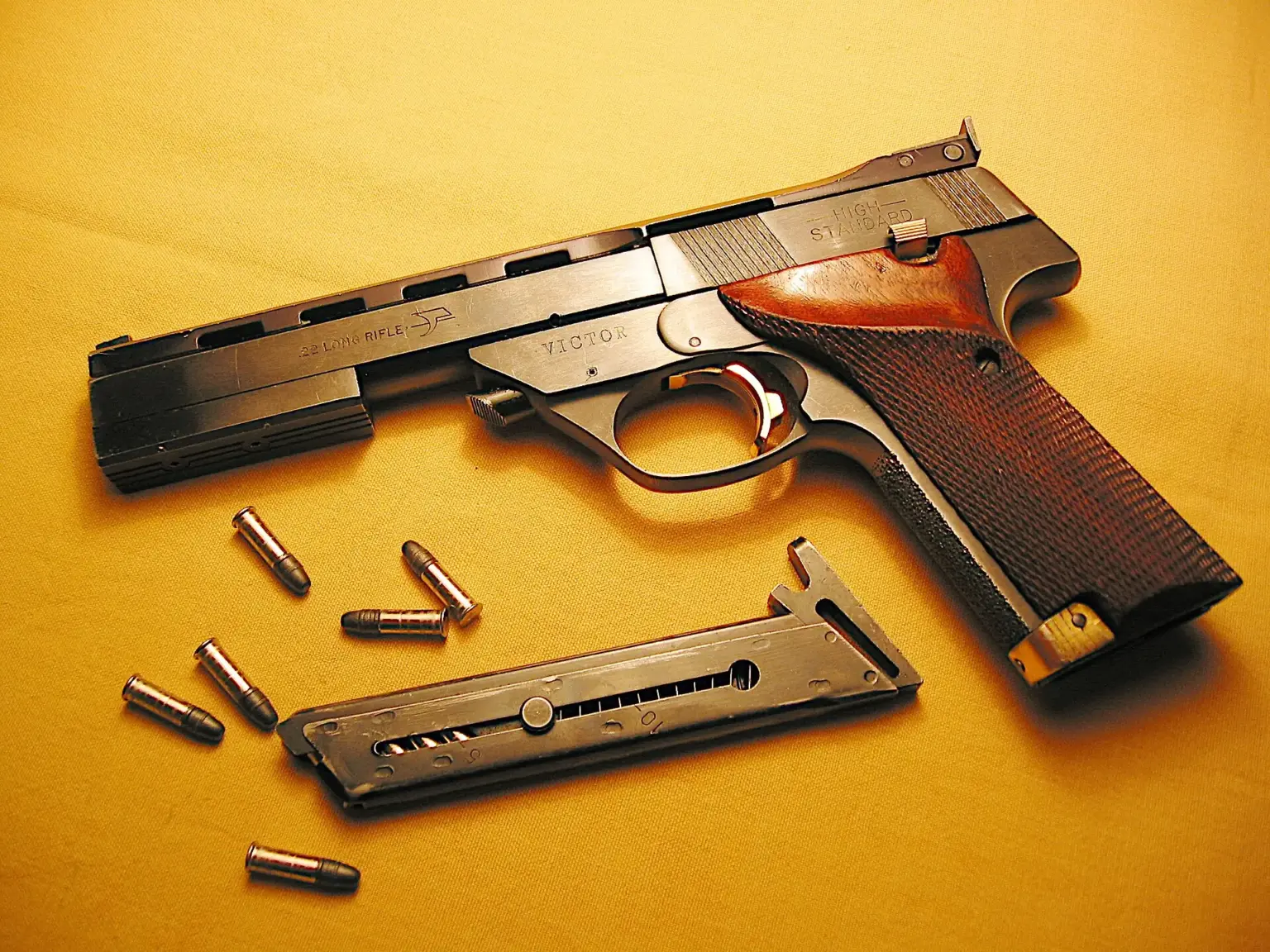
What set them apart was a combination of a fixed barrel for accuracy, a simple blowback action for reliability, and a 10-round magazine retained by a heel latch. The Model B came in two basic barrel lengths from the factory, roughly 4.5 inches and 6.5 inches, and wore a distinctive, somewhat angular grip. That grip wasn’t just for looks. It helps angle rimmed .22 Long Rifle rounds so they ride up toward the chamber reliably, which was a known feeding challenge of the era.
Through the 1940s and into the postwar years, the line expanded. The HD Military arrived with controls many shooters found familiar, and the Supermatic family leaned harder into formal target use. A suppressed offshoot, the HDM, even saw clandestine use. We will keep the focus on buyer-level details you can check with the gun in your hands.
Source note: For a compact history of the Model B’s origins, barrel lengths, and its popularity leading into WWII, see the American Rifleman segment on the High Standard Model B.
Shared DNA: what you feel when you rack one
Across Model B, HD Military, and the Supermatic family, you’ll find a practical core that doesn’t change much:
- Simple straight-blowback action with a reciprocating slide
- Fixed barrel anchored to the frame for consistent accuracy
- 10-round magazine with a heel-style latch at the base of the grip
- Single-action trigger meant for target work
The fixed barrel is more than a design choice. It’s why so many of these still produce tight groups despite their age. With no barrel tilting or moving during cycling, the sights and bore stay in the same relationship shot to shot. That gives the tinkerer in all of us one less variable to chase.
Spotting the variants at a glance
If you only have a few seconds at a counter, these are the cues I look for before I start asking the seller to field-strip anything.
- Model B: Look for the small round button centered on top of the slide and the more angular grip frame. Factory barrels were commonly in the 4.5 and 6.5 inch neighborhood. Controls are simple and compact. The overall feel is light and quick.
- HD Military: These often present with controls and a grip angle that feel close to a service 1911. The manual safety position will seem familiar to anyone who runs a Government Model, which was part of the selling point for competition shooters. Frames feel just a touch fuller in hand compared to most early Bs.
- Supermatic family: Expect a more overt target flavor. Adjustable sights are common in this family and the barrels tend toward heavier profiles. The Supermatic line grew to include dedicated high-end variants such as the Supermatic Trophy.
Those are broad strokes, and High Standards do not fit neatly into three shoeboxes. The families overlap in time and features, and you will occasionally meet a gun that makes you pause and look twice. That’s usually part of the fun, not a sign of a problem.
Barrels and slides: what changed and what stayed the same
Because the barrel is fixed to the frame, it is the most telling piece of the gun once you get past the grip feel. Here is what you can reasonably expect:
- Model B barrels: Offered in short and long versions, commonly around 4.5 and 6.5 inches. The longer B wears nicely as a plinker or small-game trainer. The shorter one balances fast and carries light.
- HD Military and Supermatic barrels: The families expanded into a variety of lengths and target-minded profiles. Adjustable sights become more common as you move deeper into the target roster. Heavier barrels show up with increasing frequency.
- Slides: All reciprocate as part of a straight-blowback system, but the top-side controls and sighting cuts vary. The Model B’s distinctive top button is the standout visual tell. Later families generally refine the sight picture.
When you’re faced with a pistol that has a barrel contour or sight you don’t immediately recognize, don’t panic. The company produced a wide range of competition-focused configurations, including models chambered in .22 Short for very specific match events. Even if you’re looking at a .22 LR gun, the parts vocabulary borrows from that competition toolbox. The key question for a buyer is simpler: does the barrel lock up rock solid to the frame and is the sight picture crisp and correctly regulated for your intended ammo?
Takedown: the Model B’s button and a safe routine
A lot of people come to the Model B with a story about the missing top button, or the one that went airborne across a garage. That button is central to the B’s takedown and worth inspecting closely before you hand over money. If it’s missing, damaged, or stuck, parts can be scarce and gunsmith time adds up.
Here is a sensible, safety-first way to approach disassembly across these pistols, with special attention to the B:
- Verify the pistol is unloaded. Drop the magazine with the heel latch, then lock the slide to the rear and visually and physically check the chamber.
- Control the slide. On the B, the top button is part of how the slide releases for disassembly. Depressing and releasing things under spring tension while the muzzle points safely and your off-hand is controlling the slide keeps surprises to a minimum.
- Follow a step-by-step manual if it’s your first time. The Model B’s takedown is not difficult, but that top button and the spring behind it are small. A factory-style guide keeps you from learning the hard way.
If you prefer having a manual handy, a Model B owner’s manual style document is available that walks through the procedure in detail. A quick review before you start keeps the little parts where they belong.
Magazines: heel latch, 10-rounders, and today’s realities
High Standard’s .22s use a 10-round box magazine that seats with a heel latch. It is simple and rugged, and for many years it was the way rimfire pistols were done. On a used pistol, the magazine is more than an accessory. It’s part of the gun’s tuning.
Original magazines can be hard to source, especially for the early Bs. If the pistol comes with one, look closely at condition and feed lip geometry. A bent lip can turn a sweet old target pistol into a fussy single-shot. Aftermarket magazines exist and can be a fine way to get shooting, but they sometimes need minor tweaking to run perfectly in a specific pistol. That is not unique to High Standard, but it does come up often enough to factor into your offer price if a gun ships with no mags at all.
Two quick checks while you are at the counter:
- Heel latch function: Seat the mag and tug. It should lock with a positive click and release cleanly when you press the heel catch.
- Feed check: With the mag out and empty, gently thumb a dummy round or an inert snap cap up under the lips and watch the angle. One of High Standard’s early design premises was to angle the cartridge path to treat that rim with care. You want a smooth climb toward the chamber, not a nose-dive.
If a seller has a small stash of mags with the pistol, that adds real value. Even if they need mild tuning, you will save yourself time hunting down spares later.
The HD Military: familiar controls and a famous offshoot
One of the selling points of later High Standard target pistols was how the grip angle and manual safety location echoed the 1911A1. The HD Military leans into that feel. If you run service pistols, the way your hand sits and where your thumb finds the safety will seem natural. That was not an accident. It made the transition from service sidearm to rimfire training or bullseye stages easier.
The HD line also produced a historically interesting branch: a suppressed variant known as the HDM. It grew out of the World War II era and later saw use with U.S. agencies. That is museum-tier lore in many collections and a reminder that a good .22 can matter in places most shooters will never see. For a buyer today, the main takeaway is simple. If a gun is presenting as any kind of suppressed or formerly suppressed model, those are subject to specific federal and state laws. Paperwork should be in perfect order before you even think about a test fire.
For a personal take on living with an HD Military as a practical plinker, the Lucky Gunner Lounge has written about cherishing one as an heirloom and keeping it running. It is a nice look at how these pistols age in the real world.
Supermatic family: target focus and buyer notes
The Supermatic lineup became High Standard’s mainline competition series. Sights are frequently adjustable, and the barrels often show the beefier profiles that bullseye shooters favor. If your goal is paper punching, this family is usually where you find the most out-of-the-box target features.
As a buyer, prioritize function over chasing every variant nameplate. With any Supermatic in hand:
- Dry check the trigger carefully. You are likely dealing with a light, crisp pull. It should be consistent and predictable.
- Confirm the sights adjust positively, without slop. Even if you never move them after zeroing, clean clicks build confidence.
- Inspect the barrel crown. Many of these guns saw steady use on the line. A dinged crown wipes away accuracy faster than almost any other cosmetic flaw.
What to look for when buying: a practical checklist
Here is a quick bench routine I run through on any of these High Standards. It fits in five minutes and keeps you from missing the small stuff.
- Serial and markings: Note the model marking and any special rollmarks. Photograph them if you are comparing later.
- Top button present on a Model B: Verify the button is there, moves as it should, and is not peened over or jammed. Look for tool marks that suggest frustrated disassembly.
- Slide and barrel relationship: The barrel must be absolutely solid to the frame. The slide should run smooth, with no gritty hang-ups.
- Extractor and ejector condition: Look for clean edges and spring tension. Soft extraction is the first symptom you will feel with dry springs.
- Magazine lockup: The heel latch should hold firmly. Watch for wobble at the base where the latch meets the magazine body.
- Trigger check: With the pistol cleared, cock and dry fire while pointed safely. You want a crisp break without a hitch. Reset should be positive.
- Bore and crown: Shine a light. A bright bore with sharp rifling and a clean crown is a simple predictor of how a pistol will shoot.
- Sight picture: Make sure the sights are regulated, not bottomed out or topped out just to hit paper at 15 yards. If you can, bring a small screwdriver and ask permission to feel the clicks.
- General hardware: Screws should be snug and unbuggered. Loose grip screws or marred slots can indicate hurried owner maintenance.
Most of these checks are common sense and apply to any rimfire target pistol. High Standards are steel and well built, but they are old enough now that small parts matter. Missing or broken bits are fixable. They just cost money and time, and that is part of any fair offer.
Shooting today: ammo, feel, and living with an old friend
Part of the appeal with these pistols is how they shoot with plain, standard loads. Many owners prefer standard velocity .22 LR for smooth function and gentle timing in older blowback designs. That is not a hard rule, but it is a smart place to start when you are sorting out a new-to-you High Standard. The current High Standard company even sells standard velocity 40 grain .22 LR, which tells you where their head is on what runs well.
Two range habits make life with any of these easier:
- Keep it wet where it counts. A light film of oil on the slide rails and a touch on the recoil spring guide goes a long way. These are not fussy, but clean steel cycles better.
- Feed a couple of brands. Try two or three standard velocity loads and let the pistol tell you what it likes. Once you find a winner, buy by the case when you can.
As for accuracy, a good B, HD Military, or Supermatic will still make you grin from a rest. They were built for paper more than speed, and even the shorter barrels surprise people who are used to modern polymer service pistols. The fixed barrel and clean triggers do honest work.
A note on controls and the 1911 feel
One of the reasons these pistols held court in bullseye circles was how familiar they felt to service pistol shooters. Later models adopted a grip angle and manual safety location that echoed the M1911A1 pattern. If you are a 1911 person, the transition feels natural. If you are new to that world, a quick read on how small 1911 control differences matter will give context.
Common questions I hear at the table
Is the Model B still a good first target .22? I think so, provided the top button and magazine situation are squared away. They point well and have a friendly learning curve.
Should I wait for an HD Military instead? If you are drawn to familiar controls and a slightly fuller grip, the HD Military will probably fit you better. If your hands like a slimmer frame and you want a simpler control set, the B has a certain charm. Both shoot.
What about a Supermatic? If you want the most target-focused configuration in this trio, the Supermatic family is where you find it. Let condition, sights, and barrel quality steer your choice.
Final thoughts from the bench
High Standard’s target pistols reward the buyer who slows down and looks at details. The Model B’s button tells you how the pistol was built to come apart. The HD Military’s controls tell you who it was built for. The Supermatic family tells you where High Standard wanted to stand on the firing line.
Across all three, the fundamentals are the same: fixed barrels that can still cut tight groups, simple blowback slides that run on modest ammo, and magazines that deserve your attention during a purchase. If you respect those basics and check the parts that age, you will end up with a .22 that still teaches, still trains, and still keeps the groups honest.
External reading worth a bookmark: the American Rifleman overview of the Model B’s early history and features, and a period-correct owner’s manual style guide for Model B takedown steps. If your interest in control layout carries you toward the 1911 family comparisons, a deep look at U.S. service M1911 and M1911A1 pistols will give you a useful baseline for how a grip and safety location shape the shooting experience.
Links mentioned:
- History and features: American Rifleman on the Hi-Standard Model B
- Takedown reference: Model B owner’s manual-style instructions
- 1911 context: M1911 and M1911A1 collector guide