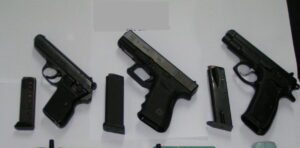

Line up a dozen used Glocks and they blur into the same dark silhouette. Pick them up one by one, though, and the differences jump out. Texture shifts. Rails appear. Slide controls change. Barrel crowns look deeper. Mag baseplates grow a small lip, and one slide quietly says Gen 5 right next to the model. Those cues are not trivia. They are practical tells for buyers and collectors.
This is a hands-on tour of Glock generations focused on what you can see, what you can feel, and what it means for parts, shooting, and buying. We will keep it tight and useful: frames and rails, barrels and marks, extractors and ejectors, slides and sights, magazines, proof and date clues, and a smart inspection routine that respects your time.
What Glock means by a generation
Glock builds a broad family of pistols across sizes and calibers. Generations bundle rolling improvements into recognizable eras. The company refines continuously, but each gen has anchor features you can spot.
In August 2017 Glock announced the fifth generation. Changes centered on ergonomics and reliability, with many parts unique to Gen5. Most Glock pistols use a short recoil, locked-breech system; a few models such as the G25, G28, and G44 use straight blowback. For current models and sizes, see the official Glock pistols page.
Quick visual tells by generation
If you are trying to place an unknown Glock by eye, these cues get you close fast. For model availability and Gen5 variants, scan the official listings.
- Gen1: Original smooth, pebbled texture; no accessory rail.
- Gen2: Checkering on the front and backstrap; still no accessory rail.
- Gen3: Accessory rail on full and compact frames; finger grooves and slight thumb rests on the sides; a third frame pin (locking block pin). Many subcompacts of this era remained rail-less.
- Gen4: Modular backstrap system; more aggressive texture; reversible magazine release; many slides marked Gen 4.
- Gen5: No finger grooves; ambidextrous slide stop levers; flared magazine well; optional front slide serrations (FS); deeper recessed barrel crown; Gen 5 rollmark; half-moon cutout at the front of the grip on many models; omission of the Gen3-era locking block pin.
There are special runs and market-specific variations, but these signposts solve most counter questions in seconds.
Frames and rails that actually changed
Rails: No rail on Gen1 and Gen2 frames. The accessory rail arrives broadly in Gen3 on duty-size guns and continues forward. Do not assume every Gen3 has a rail; early subcompacts like G26/G27 examples often do not.
Grooves and texturing: Gen3 brings finger grooves and mild thumb rests. Gen5 deletes the grooves entirely. Texture evolves from the early pebble to later, more pronounced patterns.
Backstraps and controls: Gen4 adds interchangeable backstraps and a reversible magazine release. Gen5 keeps the grip simple and adds ambidextrous slide stop levers.
Pins: The locking block pin appears in Gen3. Gen5 simplifies the pin count while revising internal geometry.
Barrels, crowns, and meaningful marks
Glock barrels are known for polygonal-style rifling. Gen5 introduces the Glock Marksman Barrel with a revised rifling style and a deeper recessed crown. That crown is an easy muzzle-end tell. Gen5 also applies a durable DLC-type finish to the slide and barrel for consistent wear resistance.
On marks, confirm the obvious first: caliber and model markings, and serial number agreement across slide, barrel, and frame when present. Gen5 slides are rollmarked Gen 5 next to the model number. If a mark’s meaning could change your offer or trade, take clear photos and verify with trusted sources instead of guessing at a stamp.
Extractors, ejectors, and interchangeability
Extractor: Later extractors on many models provide a subtle visual and tactile cue when a round is chambered. Verify the feature on the gun in hand.
Ejector: Glock has revised ejector geometry over time, especially in 9 mm. Function matters most: on the range, healthy pistols throw brass consistently. Treat ejection pattern as your truth test.
Gen5 parts: Many Gen5 parts do not interchange with earlier generations. If you keep spares or mix parts between guns, confirm compatibility by generation and model before you buy.
Slides, serrations, finish, and sights
Slide cues help pin down a generation quickly. Gen5 pistols often list front serrations as FS; not every Gen5 has them, but you will see it in catalogs and on tags. The Gen 5 rollmark beside the model number is the easiest tell of all.
Finish matters. Gen5’s DLC surface treatment delivers a uniform, dark tone that holds up well to carry and high round counts. Earlier frames and special runs have seen color variety, but the theme is simple: later generations bring more refined factory finish options.
Factory sights vary by configuration, and many owners change them immediately. If a specific sight picture matters to you, check the actual gun rather than assuming a package default.
Magazines across generations
Gen4 introduces a reversible magazine release, and magazines evolved to latch from either side via added notches. Gen5 magazines add two easy identifiers: an orange follower for quick visual confirmation and a baseplate with a small forward lip to aid manual extraction.
As always, confirm mag fit and function with the frame in hand. The mag release side dictates which notches you need.
Proofs and date clues that help buyers
Glock pistols can show origin and import clues that vary by production location and destination market. At the counter, stick to reliable checks: confirm serial agreement where present, note a Gen 5 rollmark if applicable, and look for origin on the slide such as Austria or USA. Import marks, when present, are typically discreet. If a specific proof or date code affects value, document it with photos and verify with the manufacturer or a trusted specialist before you buy.
Smart inspection: a 10-minute walkaround
1) Confirm generation and core features
Rail presence, finger grooves, and backstrap system narrow it fast. Gen5 adds ambidextrous slide stop levers and a Gen 5 rollmark.
2) Barrel and crown
Lock the slide back and inspect the bore and chamber. On Gen5, look for the deeper recessed crown. Clean rifling and an undamaged crown are good signs.
3) Rails and frame condition
With the slide off, check frame rails for peening or deformation. A little finish wear is normal; mushrooming is not. Verify the expected pin layout for the generation.
4) Extractor and ejector behavior
If the extractor doubles as a loaded chamber indicator, confirm it with a dummy round. On the range, consistent ejection to roughly 3 to 4 o’clock is healthy.
5) Slide finish and serrations
Look for even wear and clean serrations. If a tag claims FS but you do not see front serrations, confirm the exact model variant. Gen5’s finish typically presents as a smooth, dark coat.
6) Controls and dry function
Cycle the slide. Check trigger press and reset. Gen5’s ambidextrous slide stop should be positive from either side. If a Gen4 or Gen5 was set up with the mag release reversed, confirm your magazines will latch.
7) Magazines
Sort by cues. Orange follower and a forward lip on the baseplate point to Gen5. Test insertion and drop-free with each mag.
8) Markings worth noting
Record serials and any origin or import marks that matter to your purchase. Photos beat memory when you verify later.
Which generation fits which buyer
- Gen3: Widely available. Rail on duty-size guns, finger grooves on the grip, and the added locking block pin. If the grooves fit you, a clean Gen3 is a reliable workhorse.
- Gen4: Modular backstraps and a reversible mag release make it flexible for different hands and shared use.
- Gen5: Ambidextrous slide stop levers, flared magwell, revised barrel and crown, and a durable finish. Remember that many parts do not interchange backward.
Collectors often chase clean early examples or uncommon variants. For them, condition, matching parts, and clear markings carry more weight than any single feature.
Final thoughts
Glock’s generations tell a steady story of practical refinement. Some changes are under your fingertips, others hide in plain sight. Learn the fast tells, check the functional basics, and let the pistol in your hand make its case. If you want a clean view of the current lineup after you place a gun’s era, the official site keeps that simple.