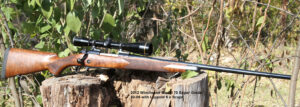

I knew this one was different the second the bolt closed. No rasp. No hitch. Just that quiet, confident shut that feels like a bank vault easing closed. If you have handled a few custom actions, you know the feeling. Getting there is not magic. It is material choice, geometry, and a stack of small process calls that add up where it counts.
This walkthrough covers how modern custom bolt actions are actually made and why specific decisions matter: the steels chosen, how lugs are cut, why EDM sometimes beats broaching, what timing means, and how tolerances translate to smooth cycling and steadier groups. If you are comparing spec sheets, this is the context that makes the numbers useful.
Why custom actions feel different
It starts with repeatability. Custom actions target tiny, honest clearances so the bolt tracks straight, cycles without drag, and locks the same way every time. Some makers quote clearances at roughly 0.0001 inch and use wire EDM for raceways to keep surfaces even along their length, which prevents binding and protects headspace control. These actions are built to keep parts aligned under pressures that can exceed 60,000 psi, and the result shows up both in the hand and on paper.
That smooth feel is not an accident. It is parts that actually match the print.
Materials: what gets used, and why
Action makers select steels for stability, wear resistance, and clean machinability. Barrel work often leans on stainless grades known for predictable cutting and heat treatment. One pistol-barrel maker, for example, publicly specifies 416 stainless, vacuum heat treating to a consistent hardness, and even EDM-rifled bores with very fine claimed tolerances. Small action parts like extractors are commonly cut from tool steels such as A2, then hardened into the high 50s on the Rockwell C scale to resist peening and wear.
The theme is consistent: choose alloys that take a precise cut and stay that way under stress. When you compare spec sheets, look past simple stainless versus carbon labels. Ask how the part is machined, heat treated, and verified.
Lug geometry 101: two, three, and the angles between
Lugs are the handshake between bolt and receiver or barrel extension. They set bolt lift, cocking effort, and lockup feel. Traditional two-lug designs usually lift 90 degrees. Many modern actions tweak that formula. Three-lug designs commonly use a 60 degree lift that clears big turrets and can feel quicker. Some two-lug actions split the difference with a 75 degree lift, aiming to blend leverage with speed. None is categorically better; what matters is how consistently the lugs bear on their seats and how that consistency stabilizes headspace from shot to shot.
EDM vs broaching: cutting the lockup
Broaching is fast and proven. A stacked-tooth tool cuts the feature in one controlled push or pull. The tradeoff is that broaches struggle with perfectly sharp inside corners and can show more variability on small, critical shapes.
Electrical discharge machining takes a different path. EDM erodes metal with controlled sparks between an electrode and the workpiece. It is slower and costs more, but it shines where geometry and repeatability matter most. In barrel extensions, EDM-cut lug seats typically hold tighter tolerances, about 0.0002 to 0.0005 inch, while broaching more often runs around 0.001 to 0.002 inch. EDM can also deliver sharp, repeatable corners and complex profiles that improve lug engagement and reduce play in the lockup.
EDM shows up in other spots, too. Wire EDM raceways help ensure even surfaces and consistent guidance. Some shops even claim EDM-rifled bores with very fine tolerances, though broad forensic overviews note that EDM is more commonly used to make tooling than to rifle barrels in mainstream production. In other words, EDM-rifled barrels exist, but the dominant rifling methods remain cut, button, and cold hammer forge.
Raceways: keeping the bolt on rails
A smooth action depends on straight, consistent guidance. Wire EDM is often used to cut bolt raceways with very uniform geometry along their length. Combine that with tight bolt-to-raceway clearance targets, and you minimize the chance of binding or drag that can show up as speed changes in the firing cycle and small vertical dispersion on target.
Timing and true pre-fit barrels
Timing is the choreography between cam angles, lug pickup, thread start, and sear release. Some modern actions control receiver headspace and time the threads so precisely that properly made pre-fit barrels can be installed by the customer without a lathe. You will see this called out explicitly by manufacturers, and it is a practical advantage for competitors or hunters who want quick, reliable barrel swaps at the bench.
Bolt lift angles play into this, too. There are respected two-lug actions at 75 degrees that aim to keep the leverage benefits of a two-lug while picking up some of the speed feel associated with 60 degree three-lug designs. The goal is the same: make the action run cleanly under a shooter’s hand.
Threads, torque, and headspace
Barrel-to-action fit is where a lot of accuracy is won or lost.
- Extended thread engagement increases thread contact area. That helps with structural integrity, torque retention, and alignment. It is most useful on higher pressure cartridges and high round count guns.
- Controlled torque improves consistency. Automated or hydraulic torquing systems index and torque barrel extensions or barrels to precise values so headspace and concentricity are not left to feel.
- 100 percent headspace checks at the barrel stage catch problems early. Gauging every chambered barrel with go and no-go tools before bolt pairing is slower, but it prevents out-of-spec builds and protects both safety and accuracy.
How tight is tight: tolerances that matter
Tolerances are not frosting. They are the cake. Holding critical clearances near a tenth of a thousandth in custom actions is a real step beyond typical mass production. EDM-cut lugs that repeat within a few ten-thousandths and wire EDM raceways that stay even front to back help the action lock and cycle the same way every time.
For the shooter, that consistency reduces unexplained vertical in groups by stabilizing the pressure curve and muzzle velocity. It also supports reliable feeding and smoother bolt operation, which keeps you on target during fast strings. In some modern systems, uniform tolerances across bolts and chambers even enable safe pre-fit parts without recutting headspace, which is part of why the pre-fit ecosystem has grown.
What top competitors are running
Look to the firing line for a reality check. Surveys of top-ranked long-range competitors show a healthy mix of two- and three-lug actions. You will see flagship three-lug models with 60 degree throws, as well as refined two-lug designs at 75 degrees. Several of the most popular actions call out receiver headspace control and timed threads that allow customer-installed pre-fit barrels. You will also see manufacturers modernize machining on key parts, reducing steps without giving up precision. The takeaway is simple: the features outlined above are not just brochure talk. They are working choices on winning rifles.
Buyer questions that cut through marketing
- How are the lug seats and raceways made, and what tolerances are quoted for each?
- Where does the maker use EDM, and why there instead of traditional cutting?
- Are threads timed and receiver headspace controlled to support true pre-fit barrels?
- What is the stated bolt-to-raceway clearance target, and how is it verified?
- How are barrels or extensions torqued and indexed, and to what value?
- Is every chambered barrel headspaced with go and no-go gauges before bolt pairing?
- What is the action footprint? Remington 700 compatibility expands stock and rail options dramatically.
- Are small wear parts like extractors cut from tool steel and properly heat treated?
Where this shows up on target
Better lug geometry and tighter tolerances mean the bolt face and chamber meet the same way, every time. That sameness steadies velocity and trims odd vertical at distance. A smooth, well-timed lift and close lets you run the bolt without bouncing the rifle. Proper thread engagement and controlled torque keep the bore and sight line stable through heat and travel. Tie those fundamentals to a well-supported footprint, and you get reliability, accuracy, and easier upgrades throughout the rifle’s life.
Further reading:
- Match-Grade Barrel Manufacturing – EDM lugs, torque control, QC
- What the pros use for actions in long-range competition
- Custom actions, footprints, and tolerance targets
- Rifling methods overview, including EDM’s typical role
Modern custom actions are the product of careful materials, clean geometry, and a refusal to accept slop. Get those right, and the rest gets easier.