
I still remember the first time a range buddy handed me a well-worn CZ 75 and said, “Just run a few magazines.” Two mags later I was looking down at a ragged hole that kept growing at the center of the target and thinking, this grip was drawn on tracing paper around a human hand. The trigger settled in, the slide rode low, the recoil felt like it was being pulled into the frame instead of snapping up. If you know, you know. If you don’t, this guide will help you learn why the 75 keeps making believers of buyers and collectors nearly 50 years on.
A DA/SA grip that keeps winning hands
The CZ 75 sits in that classic category of double-action/single-action pistols, often called DA/SA. First shot from hammer down gives you a longer, heavier pull. Subsequent shots ride in single action, with a shorter, lighter break. CZ built theirs with a low bore axis, an all-steel frame, and a double-stack magazine. On paper that sounds ordinary, but in the hand it’s a different story. The contouring fills the palm and draws the sights flat through recoil. A hammer-forged barrel and full-length slide rails help the platform punch above its weight for accuracy, and that’s been true since the earliest examples.
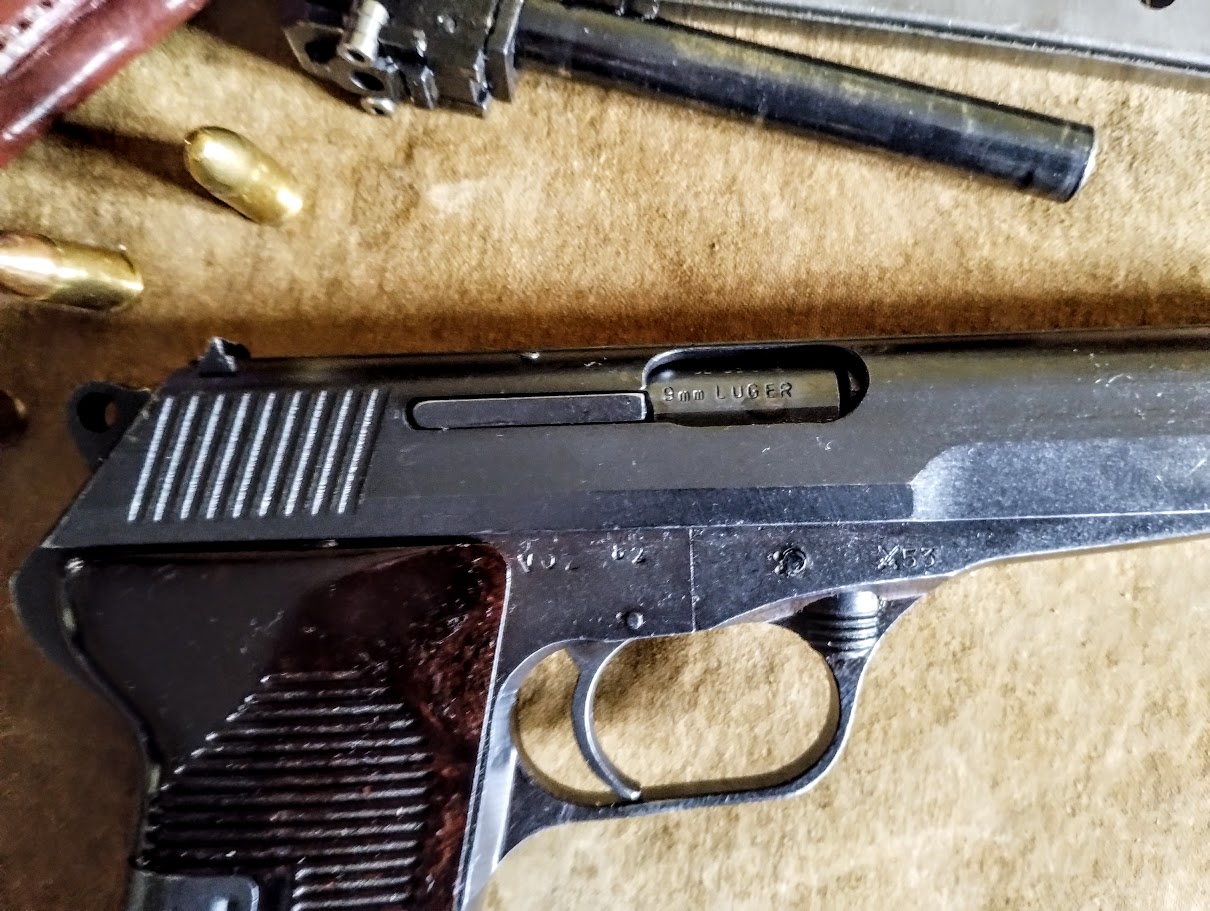
It was one of the early “wonder nines,” and it’s still the most common handgun in the Czech Republic. The family has sprawled into duty guns, compact carry variants, and pure competition machines. The skeleton underneath can feel the same across them all: that grip, those rails, and a system that rewards time behind the trigger.
What makes a CZ 75 a CZ 75
Across four decades, you can still spot 75 DNA quickly:
- All-steel full-size models with slide-in-frame rails
- DA/SA operation with manual safety or decocker variants
- Staggered-column 9 mm magazines
- Hammer-forged barrels
Everything else is lineage and flavor. Understanding where your particular 75 falls in that lineage will help you buy with confidence and know what parts, magazines, and grips are likely to fit without fuss.
From first-model short rail to Pre-B
Collectors often split the early years into two main chapters. The earliest pistols, typically called the first model or short rail, ran from 1975 to about 1980 with distinct shorter slide rails and forged frames. They did not include a half-cock hammer position. Reported production is relatively limited compared to later guns, which keeps interest high among collectors.
The next wave, commonly referred to as Pre-B, arrived around 1980 and carried through roughly 1993. These guns introduced longer slide rails, a cast frame, and a half-cock position on the hammer. If you prefer the classic look and old-world feel, Pre-Bs have a devoted following. They’re also where buyer practicality starts to matter. When you handle a Pre-B, look for the usual mechanical health markers of any used steel pistol, but also keep in mind that compatibility with later grips, sights, and small parts can vary. More on that shortly.
The jump to the CZ 75B
In the mid-1990s, the line stepped into the B era. The headline change was the addition of a firing pin block safety. As Wikipedia notes, the CZ 75 was updated to the B model in that period, and most 75 variants afterward have used the firing pin block, with some competition models excepted. If you browse case labels and model tags today, you’ll see 75B used as the baseline full-size steel gun in the lineup. For buyers who plan to shoot hard, chase parts, and swap sights or grips, the B-pattern ecosystem is the most forgiving place to live.
If you’re comparing a Pre-B to a B-model on the shelf, the decision comes down to feel, the features you want, and how much you value drop safety in a hammer-fired pistol. I find the B guns usually have the edge in parts availability and are easier to standardize with magazines across the rest of the modern family. The Pre-B charm is real though, and a straight, clean example will always get a second look from me.
Omega models in the family
In recent years CZ has offered variants of the 75 series with what they call the Omega system. This is a different internal fire control arrangement compared to the classic 75 lockwork. If you’re cross-shopping, the only honest recommendation is to handle both. The way the trigger stacks and resets is the real test, not an exploded diagram. Some buyers prefer the traditional feel, others like the simplified modern setup. If you are looking at an Omega-equipped model, take a moment to confirm with the shop which small parts and springs match your specific variant before you assume classic 75 parts will drop in.
For an overview of current CZ 75 offerings and where Omega-equipped models sit in the range, it’s worth a quick look at CZ’s site under their 75 family pages, which highlight the model lines and current features across the catalog. You can start with the main portal and branch into the 75 listings from there.
CZ’s official site has current model pages for the 75 family.
SP-01 and the Shadow lines
The SP-01 took the 75 foundation and aimed it at duty and competition roles with a rail-dustcover frame and full-size capacity. Many shooters call it a soft, easy gun to run fast, and it became a natural starting point for the Shadow line.
CZ’s Shadow variants are competition-centric evolutions of the SP-01 and 75 pattern. The Shadow 2, released in 2016 with input from elite IPSC shooters on the CZ team, brought measurable changes for faster shooting and improved control. Among the upgrades were a longer barrel, a reshaped lighter slide with more aggressive serrations, tweaked grip ergonomics with sharper checkering, and a smaller fiber optic up front for a crisper sight picture. Those details come straight from published descriptions and match what you feel when you move from a duty 75 to a Shadow 2 on the bench.
Even the earlier SP-01 Shadow trims often come with fiber optic front sights and slicked-up triggers that favor match work. If you plan to compete, it’s usually simpler to buy the configuration you want up front rather than chase it purely with aftermarket parts.
Compact offshoots: P-01 and PCR
The compact branch of the 75 tree is where carry guns live. The P-01 comes in as an alloy-frame, decocker-equipped compact with a rail. The specs are compact-friendly while keeping the same operating system and control style familiar to any 75 shooter. It is authority-friendly too, with adoption by Czech police units according to public sources.
Alongside it sits the PCR, another alloy-frame compact that trades the accessory rail for a smoother dustcover. Shooter feedback on both is remarkably consistent: the short slide cycles flat, the grips still seat the gun well in hand, and the decocker controls feel at home for anyone who prefers DA first shots.
If a full-size steel 75 is your range workhorse, a P-01 or PCR makes a fine understudy for carry that won’t force you to relearn the manual of arms.
Clones and pattern guns
It’s hard to talk about the 75 without mentioning the wider family of 75-pattern pistols built by other manufacturers. One of the better known is the IWI Jericho 941, commonly grouped with CZ 75 pattern handguns. Reviewers often call the Jericho an easy, soft shooter at an approachable price point, which lines up with the broad appeal that made the 75 design so influential in the first place.
Here’s the buyer takeaway: pattern does not always mean parts compatibility. Clone magazines and small parts may or may not run in a true CZ, and vice versa. If you want the 75 experience with the confidence of factory support behind it, stay in the CZ ecosystem. If you are curious about pattern pistols like the Jericho 941, handle them side by side and let your hands decide, but assume nothing about interchangeability until you’ve confirmed it with the maker.
Parts and magazine compatibility
Compatibility inside the 75 family is generally friendly, but it pays to slow down and verify. Here’s how I frame it when buyers ask.
- Full-size 75 series magazines typically cross between the classic 75B, SP-01, and many Shadow variants. Be mindful that competition models can ship with tuned mag bodies and base pads for specific divisions.
- Compact models like the P-01 and PCR use shorter magazines. Some shooters run full-size magazines in compacts as range spares, understanding they will extend below the grip frame.
- Pre-B and early short-rail pistols can be the outliers. Before you stock up on mags or grips for an older gun, confirm that the parts you’re ordering are listed to fit your serial range.
A practical way to double-check what fits what is to use a compatibility chart organized by model and capacity. One I’ve found helpful is this simple reference that lays out which magazines cross between the common CZ categories.
This CZ magazine compatibility guide offers a clear cross-fit overview.
Beyond magazines, small parts and springs are where Omega versus classic lockwork starts to matter. If you run a B-model with classic internals, most mainstream springs, pins, and controls will be easy to source. If you have an Omega or an older Pre-B, bring your exact model name when you order and ask the seller to confirm part numbers by model. It saves headaches and shipping costs later.
Tuning and aftermarket notes
There are two broad paths people take with 75s: shoot them as-is or smooth them up a bit. The factory triggers on many 75s wear in nicely with use. If you want to accelerate that process, there are well-known aftermarket kits and smiths who focus on the platform. Cajun Gun Works is a popular name among owners for springs and action parts, and CZ’s own channels have offered tuned models and components in various trims. Shooter feedback is consistent: a light spring tweak and a clean break turn a good trigger into a great one, especially on SP-01 and compact decocker models.
My caution here is the same as always. Work you do to a carry gun should favor reliability over feel. If you’re changing mainsprings or sear geometry, function test with the ammunition you actually use and let someone else run the gun to make sure the changes translate for more than just your hands. On older Pre-Bs, keep the original parts labeled and bagged. Collectors appreciate reversible changes, and you might too after the honeymoon period passes.
Buying used: what I check first
A used 75 can be a terrific score. Here’s my quick checklist on the counter.
- Slide-to-frame fit with the hammer down and the safety off. You want smooth travel on the full-length rails without gritty spots.
- Barrel lockup at the hood and muzzle. Minimal play is the goal. Expect a little polish on bearing surfaces; avoid sharp peening or burrs that suggest battering.
- Trigger return. Dry fire in DA and SA and watch the reset. A lazy or gritty reset can be a spring or debris, but it can also hint at an improvised polishing job. Trust your gut.
- Extractor tension and claw condition. Visually confirm the hook is clean and sharp. Weak ejection on the range will tell you more.
- Magazine function. Seat mags with the slide open and closed. The 75 family is forgiving, but a bent feed lip or tired spring can make even a great pistol feel fussy.
- Sight cuts and grip panels. Pre-Bs can have unique cuts and screw patterns compared to later 75B models. If you plan to change them, verify availability before you buy.
Cosmetics matter to collectors, but with shooters I’m more concerned about honest wear versus abuse. CZ’s parkerized and polycoat-type finishes take scuffs differently over the decades. Look past the finish to the fit.
Which CZ 75 fits which role
Buyers usually come to the 75 with a job in mind. The good news is there’s a configuration that probably lines up.
- Range and home duty: The 75B or SP-01. All-steel weight, long sight radius, simple to live with. Many shooters report the SP-01 in particular as a soft-shooting, confidence-building platform for high round counts.
- Competition: SP-01 Shadow or Shadow 2. The factory sights, trigger tuning, and slide geometry changes are there so you don’t have to build them yourself. According to published specs, Shadow 2 brings a longer barrel and a reshaped, lighter slide with more aggressive serrations and sharper checkering, all aimed at speed and control.
- Carry: P-01 or PCR. Alloy frames, decockers, and the same manual of arms as the full-size guns. They shoot flatter than most compacts in their weight class and keep that 75 grip that just plain works.
- Collecting and range nostalgia: Pre-B and first-model short rails. Expect to hunt a bit for the right example and be patient about accessories. The appeal is the feel and the history rather than universal compatibility with modern parts.
If you want to see how CZ frames these families today, their official pages group the 75 series and let you skim what’s current and what’s special edition. You can start at the 75 landing and browse from there.
Browse CZ’s 75-series overview at the manufacturer.
A few parting thoughts from the bench
There are a lot of hammer-fired pistols worth owning. The reason the CZ 75 keeps showing up in my range bag is simpler than mystique. It’s a design that rewards time. The DA pull teaches you to press. The SA rewards you when you do. The slide’s low ride in the frame helps it track, and the grip locks your hand in a way that makes recoil management feel honest rather than athletic.
If you’re a buyer, start with the job and find the 75 that fits it. If you’re a collector, let your hands guide you and be honest about what you’ll actually shoot. Either way, the family gives you a lot of room to grow without swapping operating systems or retraining muscle memory. That’s a big part of why the 75 legend endures, and why you still see them stacked in the racks on match morning and tucked in the holsters of people who don’t care about trends as much as they care about results.