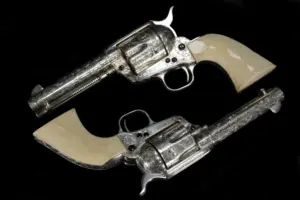

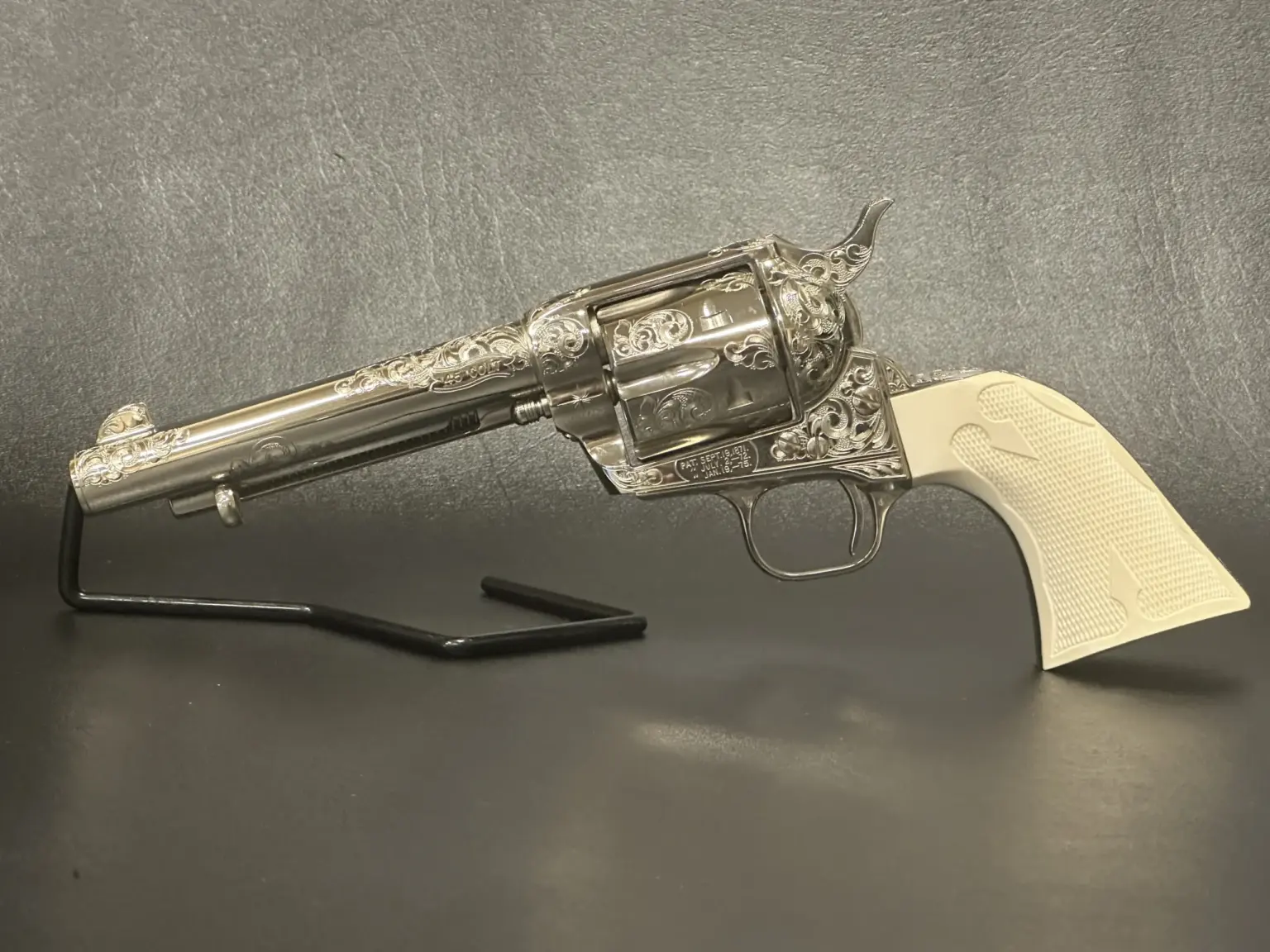
Ask a dozen collectors what hooked them on the Colt Single Action Army and you’ll get a dozen different stories. Mine started with a scuffed old 5.5-inch .45 that had seen honest belt-holster miles. The finish was thin in all the right places, the timing still true, and there on the left barrel flat were the words Frontier Six-Shooter. It wasn’t the shine that got me. It was the feeling that, with the SAA, little details tell the real story.
If you’re eyeing an SAA and want to separate first-generation romance from later reproductions and reworks, those little details matter. Frames change. Ejectors come and go. Caliber rollmarks move. Inspector initials can add a chapter of U.S. Army history, and the wrong ones in the wrong places can be a red flag. Let’s walk through the Colt SAA through its generations and focus on what buyers and collectors actually need to look for.
Three generations in plain English
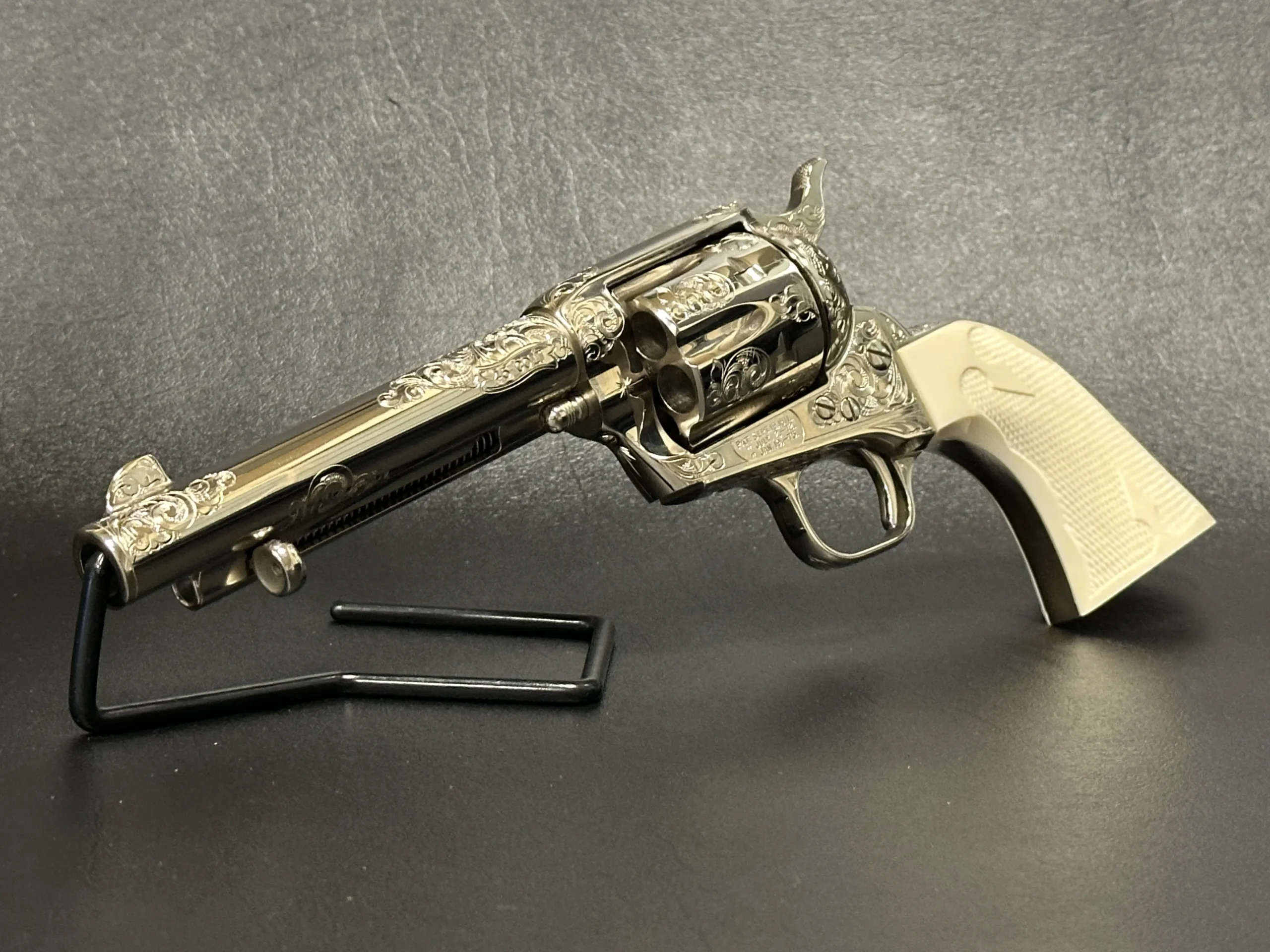
Colt’s Single Action Army first hit as the U.S. Army’s new service revolver in 1873 and served in that role until 1892. That first run of production, often called First Generation, continued through 1941.
A few quick anchors help you orient an SAA in time:
First Generation (1873–1941): Serial numbers ran in a straight sequence up to 357859, with no letters in the serials. That clean, all-numeric serial on the frame, trigger guard, and backstrap is often your first sign you’re holding an early gun. This is also the era where you’ll encounter the two frame latch types people still argue about. We’ll cover those in the next section.
Second Generation: Postwar production resumed years after World War II. These are the guns that brought the SAA back to the catalog and back to holsters and display cases. You’ll see lettered serial formats in this era and modern steel. They still have the four-click, traditional lockwork.
Third Generation and the 1990s return: A later production wave brought the SAA into modern hands again. A noteworthy point comes in 1994, when Colt resumed production amid the Cowboy Action crowd and reintroduced the original style removable cylinder bushing. This late third generation (sometimes called fourth) uses serial numbers with an S prefix and an A suffix, starting at S02001A and continuing in that format. Colt’s current catalog shows the SAA available in the classic three barrel lengths with either blue plus color case-hardened frame or full nickel, and chambered in several traditional calibers. You can get a sense of the modern lineup at Colt’s product page for the model.
Colt’s Single Action Army page outlines the present finishes, barrel lengths, and chamberings.
Black-powder vs smokeless frames: the real story
Every new SAA buyer hears the two phrases “black-powder frame” and “smokeless frame.” It’s handy shorthand, but it’s also not what it sounds like.
Collectors use those terms to track the base pin latch on the frame:
- “Black-powder frame” means the cylinder base pin is retained by a screw that angles in from the front of the frame.
- “Smokeless frame” means the pin is held by a spring-loaded transverse latch that pushes left to right.
The American Handgunner primer puts it bluntly: those names don’t actually indicate what powder a gun was made to handle. Colt began phasing out the angled screw in early 1892, and the transverse latch became standard by 1896. But Colt did not warranty SAAs for smokeless loads until serial number 192000 in 1900. That serial marker is a practical line in the sand for buyers who plan to shoot an original SAA. The latch style is about a retention design change, not factory blessing for smokeless.
Why this matters to you: an 1894 gun can have the transverse latch and still predate Colt’s own smokeless warranty policy. If you’re evaluating a first-generation revolver for range use, keep loads period-appropriate and talk with a qualified gunsmith who knows old Colts. For collecting, latch type is a fast visual cue to the era of the frame, which helps you judge if the other details on the gun make sense for that time.
Barrels and ejectors: what lengths and layouts tell you
Colt standardized three barrel lengths that still define the SAA in the public imagination:
- 7.5 inches, the original Cavalry length
- 5.5 inches, often associated with Artillery conversions and later orders
- 4.75 inches, commonly favored for belt carry
All three are still the traditional options from the factory. Each length uses a matching ejector-rod housing fixed to the right side of the barrel. The shorter the barrel, the shorter the housing. It sounds basic, but on a well-used or put-together revolver, an ejector housing that doesn’t match the barrel length is a red flag.
There’s also a charming outlier that shows up in both the historical record and modern catalogs: sub-4-inch barrels without ejectors. You’ll hear these called Sheriff’s, Storekeeper’s, or Banker’s models. The key detail is the absence of an ejector assembly on the right side. A true no-ejector variant will have the boss at the front of the frame but no housing or rod. It is worth paying close attention to the muzzle crown and front-sight base when you find one of these. Shortened barrels can masquerade as factory shorts to the untrained eye. Factory-style address markings and correct front sight height for the short barrel are two of the tells you want to evaluate closely.
Calibers and rollmarks: Frontier Six-Shooter and friends
The SAA was born around the .45 Colt and wore it well, but Colt was quick to feed the gun with other cartridges. By 1878, the SAA was cataloged in .44-40 Winchester (.44 WCF) to pair with the Winchester 1873 rifle, and Colts so chambered were marked on the barrel as Colt Frontier Six-Shooter. Early barrels were acid-etched; later ones were roll-stamped with the same phrase along the left side. It’s one of the most recognized Colt legends, and it should match a .44-40 cylinder and chamber mouths.
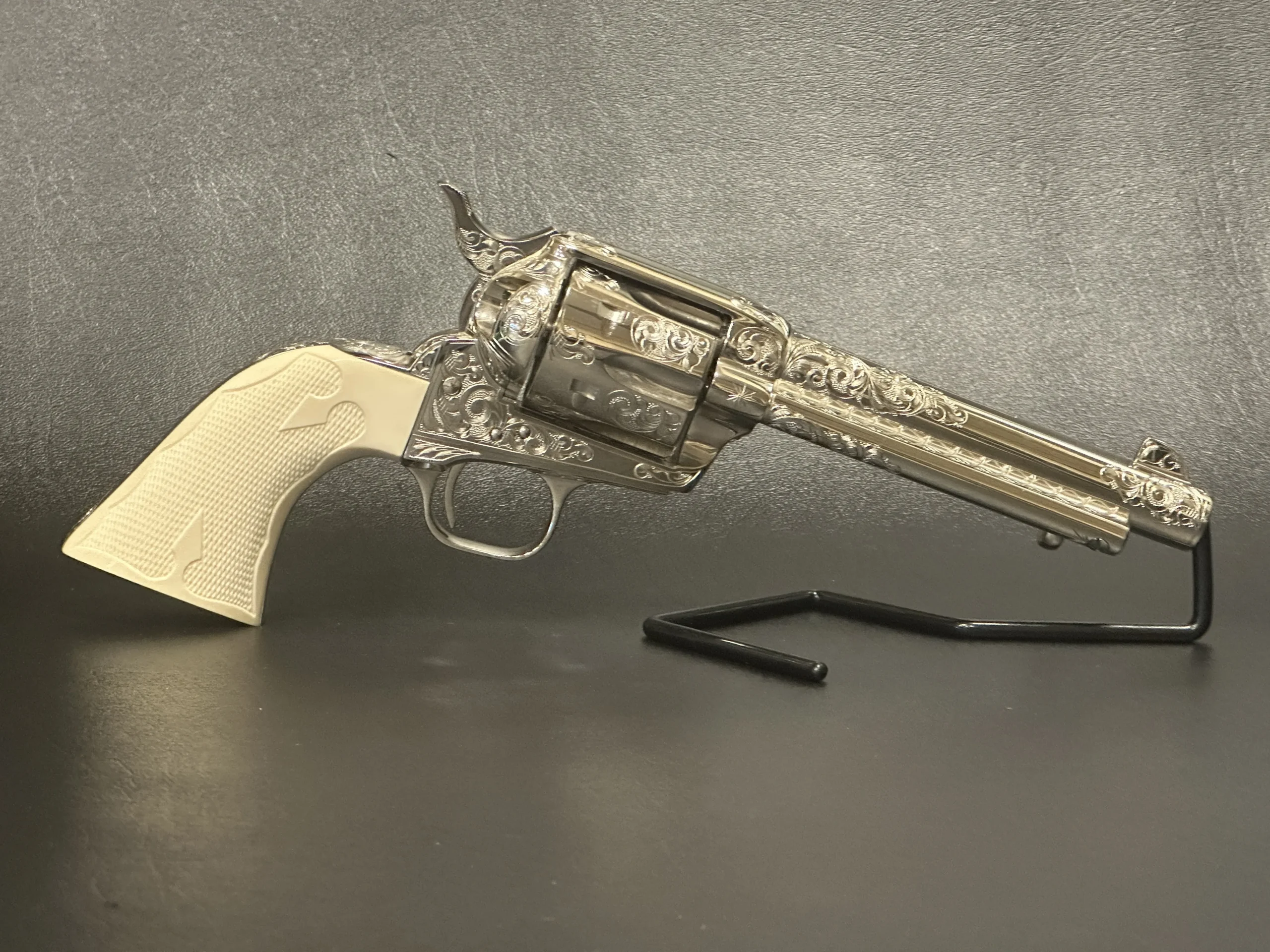
Colt added more WCF cousins in the 1880s, including .38-40 and .32-20 in 1884. You’ll also encounter .41 Long Colt by 1885 and .38 Long Colt by 1887. In the 20th century, the SAA picked up .38 Special and .357 Magnum in meaningful numbers.
In practical terms for buyers, the eight chamberings you will see in significant numbers across generations are:
- .45 Colt
- .44-40 (.44 WCF)
- .38-40 (.38 WCF)
- .32-20 (.32 WCF)
- .41 Colt
- .38 Special
- .44 Special
- .357 Magnum
When you check an SAA marked for .44-40, look at the cylinder’s chamber mouths. They should be appropriate for a .44-40, not .45 Colt dimensions. Mismatched parts happen in 140-plus years of life, and caliber misfit is one of the easiest ways to get burned. Likewise, a Frontier Six-Shooter legend belongs on a .44 WCF barrel, not a .45.
If you enjoy the broader story of Colt moving from percussion to cartridge, you may like our overview of cap-and-ball classics in Percussion Icons: Collecting the Colt 1849, 1851, 1860 and Remington New Model Army. It puts the SAA’s arrival in context.
Serials and inspector stamps: reading the small stuff
Serial numbers are the backbone of SAA identification. First-generation guns run to 357859 without letters. Numbers should appear, and match, on the frame, trigger guard, and backstrap. Cylinders and barrels are more likely to be swapped, but matching assembly numbers and period-correct markings help.
There’s a special chapter for U.S. martial SAAs. From 1873 to 1891, the U.S. Army contracted for Single Action Armies. Those frames were casehardened and marked U.S., and sub-inspectors stamped their initials on key parts. These tiny letters can be found on barrels, cylinders, grips, and frames. Names that come up often include Orville Wood Ainsworth, John T. Cleveland, Henry Nettleton, and Rinaldo A. Carr. There are others, and a few brief periods where only a single initial shows up, like an unidentified “J” between Ainsworth and Samuel B. Lewis. A.P. Casey’s “C” is common on 1875-made guns. These marks both certify Army acceptance and weave the gun into Army service life on the plains and in later campaigns.
Why this matters for a buyer: U.S. marks and inspector stamps can multiply the desirability of an SAA, so they are also widely faked. Letters should be crisp, of the correct size and font for the inspector and year, and in the right places. The finish around them should make sense for the gun’s overall age. A gun with buffed flats and strong inspection letters is suspect. If you’re uncertain, study verified examples and compare. The walkthrough on inspecting the Colt Single Action Army from Rock Island Auction is a helpful primer on where to look and what originality looks like.
One more serial note for modern production: late third-generation SAAs, the 1994-and-later run that brought back the replaceable cylinder bushing, carry the S prefix and A suffix in their serial numbers. That format cleanly separates them from earlier guns and is handy when you’re scanning a grip frame at a show.
Finishes: blue and case, or bright nickel
The classic SAA look is a color case-hardened frame and hammer paired with blued barrel, cylinder, and small parts. That’s how the Army received its revolvers in the 1870s. Soon after, Colt added a full nickel option that was a hit in the black-powder era because it shrugged off rust better and wiped clean when black powder fouling settled in. You’ll find plenty of old-timers with nickel remaining strong where a blued gun would have gone gray.
Today, Colt lists only those two finishes for new SAAs, keeping things traditional. When you’re inspecting a vintage example, look at the style of case colors and their interaction with wear. Strong rainbow hues on a 140-year-old frame can be a red flag unless there’s clear evidence the gun was stored untouched. Nickel should show honest edge wear and flaking consistent with age; heavy uniform pitting under mirror-bright nickel is a tell that the gun was prepped hard before a later refinish.
What to inspect before you buy
Here’s a buyer’s checklist I keep in my pocket notebook. You won’t always get perfect answers, but this framework helps you decide when to dig deeper or walk.
- Serials and assembly numbers: Do the frame, trigger guard, and backstrap numbers match? Do the assembly numbers on cylinder and barrel make sense for the period? First-gen guns should be all-numeric; late modern guns will carry S prefix and A suffix.
- Frame latch type vs era: Screw-retained base pin puts you in the earlier frame pattern; the transverse latch becomes standard by 1896. Latch style should match other period details.
- U.S. and inspector stamps: If present, are they correctly placed and of the right style for the claimed year? Is the frame marked U.S. on a martial gun? Be skeptical of fresh-looking letters on an otherwise worn piece.
- Barrel length and ejector: Measure from the cylinder face to the muzzle. Does the ejector housing length match the barrel length? No-ejector models should present with a clean right-side barrel and correct short front sight. Watch for shortened barrels passing as factory short.
- Caliber rollmarks and chamber mouths: A Frontier Six-Shooter legend belongs on a .44-40. Check that the chambers suit the caliber on the barrel. Caliber remarking happens; look for uneven depths or disruptions in original address marks.
- Timing and lockup: Cock the hammer slowly and watch the bolt drop into the cylinder notch. Each chamber should lock firmly with minimal rotational play at full cock. Excessive carry-up or overtravel suggests internal wear.
- Endshake and barrel-cylinder gap: Gently push the cylinder fore and aft. Endshake should be minimal. The gap should be even around the cylinder; a wide gap hurts performance and can hint at hard use.
- Bore and forcing cone: Pitting tells you a story. Black powder guns can lead hard and pit if neglected. A sharp, clean forcing cone and decent rifling are good signs if you intend to shoot at all.
- Base pin fit: The cylinder base pin should seat fully and the latch should engage positively. Sloppy fit can be a simple parts issue or a sign of frame wear.
- Grips and grip fit: One-piece wood on early martial guns should show proper aged fit and inspector cartouches where applicable. Later two-piece stocks, hard rubber or wood, should sit tight with correct medallions for the era.
- Finish honesty: Do the case colors and blue or nickel match the age and handling the rest of the gun shows? Polished edges and washed-out address lines point to refinish work.
- Modern-production cues: On late third-generation guns, verify the S prefix/A suffix serial and look for the removable cylinder bushing if disassembly is allowed. These are normal on the 1994-and-later wave.
If you can, handle several verified examples at a show alongside the one you’re considering. Side-by-side comparison sharpens your eye faster than any guide can. And remember that Colt maintains a Serial Number Lookup tool on its site that can help you confirm basic data for modern production guns.
Notes on shootability and safety today
Plenty of SAA owners enjoy firing their revolvers, from light cowboy loads to black powder. The key is matching ammunition to the era and condition of your gun. Colt did not warranty SAAs for smokeless powder until serial number 192000 in 1900. That’s not an ironclad test for what your specific revolver can handle, but it is a practical marker for caution. On anything pre-1900, keep it gentle and talk with a gunsmith who knows first-generation Colts before you attempt smoky or smokeless sessions.
For new-production SAAs, follow Colt’s current manual and ammunition guidance. The lockwork is still the traditional four-click system. Treat it with respect, load five with the hammer down on an empty chamber unless you have clear documentation and training on any modern enhancements. The SAA is a slice of 19th-century engineering still made for the 21st, and that charm is part of why we love it.
Final thoughts for buyers and collectors
The Colt Single Action Army’s appeal isn’t a mystery. It is part history book, part machine, and part folk art. What separates a good purchase from a regret is usually found in the details. Learn the frame latch story, measure barrels, read the rollmarks, and don’t ignore the tiny inspector letters. First-generation serials without letters up to 357859, U.S. stamps where they belong, and the Frontier Six-Shooter legend on a true .44 WCF barrel are the kinds of signals that stack in your favor.
Modern SAAs carry the flame with traditional finishes, classic barrel lengths, and a return to the removable cylinder bushing in the 1994 wave. If that’s your lane, Colt’s current product page lays out what’s offered, and late third-generation serials make them easy to recognize at a glance.
Above all, handle as many as you can. Talk to people who’ve owned a few. Compare what you see to period-correct examples. And when you finally find the one that speaks to you, you’ll have the knowledge to read its story with confidence rather than guesswork.