
I still remember the first time I rolled a Karabiner 98k into the light at a show and saw a tidy little pair of markings on the receiver. A two-letter code over a date. The bolt handle was turned down and tucked into a neat scallop in the stock. The butt showed the remains of inspection stamps half lost to history. That rifle had a lot to say if you knew how to read it. The Mauser 98 story is like that. It starts long and lanky as the Gewehr 98, slims and shortens into the K98k, then spreads across the post-war world as actions for target rifles, hunting rifles, and custom builds. Along the way, there are the details buyers and collectors care about most: large ring versus small ring, the telltale safeties and extractors, the stocks and their cartouches, and the codes that unlock the where and when.
From Gew. 98 to K98k: What changed and why it matters
The Gewehr 98 arrived at the turn of the 20th century and became Germany’s long service rifle. It wore a 740 mm barrel and a straight bolt handle you could spot across a room. The rear sight was a Lange ramp, a tall and complicated ladder that looks more at home on a piece of machinery than a service rifle. It worked, but times and tactics were changing.
By mid-1935, Germany adopted the Karabiner 98 kurz as standard. Shorter overall, handier, and built around the same 98 action, the K98k moved to a tangent rear sight and a turned-down bolt handle that nested in a relief cut in the stock. The front end carried an L-shaped stacking rod near the muzzle. These are easy visual tells when you are scanning a rack: straight bolt and Lange ramp for the long Gewehr 98, turned bolt and tangent sight for the K98k.
Wartime production refined and simplified things as it went. Early rifles show careful machining and walnut stocks. As resources thinned, especially late in the war, beech stocks appear. They are heavier and generally less durable than walnut, and that shift alone can help you place a rifle in time when you pick it up. Not every part tracks cleanly across every maker and year, but these broad signposts put you in the right neighborhood.
Inside the Mauser 98 action: why it earned its reputation
The heart of the story is the 98 action. It cocks on opening, locks with two massive lugs up front, and carries a rear safety lug as a backup. The bolt shroud has a flanged collar that acts as a shield. These choices were not decorative. They speak to a design that was simple in concept, tough in practice, and forgiving when things went wrong. Even a cutaway drawing of a sporting 98 hints at that simplicity, and the safety elements are all exactly where you would hope they would be.
A lot of the mystique around 98s comes down to steel and dimensions. The large ring 98 action has a receiver ring about 1.41 inches across and an internal collar for the barrel to abut. That combination means thicker walls around the locking recesses and shank. As American Rifleman has written, those features make the large-ring actions stouter than their small-ring cousins, and failures under harsh conditions were uncommon. The cost of that strength is weight. A bare 98 action without stock, sights, or barrel is still roughly a 3-pound hunk of steel. But buyers do not usually complain when that weight is anchored in the right places.
The influence of the 98 did not end with German service rifles. If you have ever admired the feel of a pre-64 Winchester Model 70 or a Ruger M77, you are feeling echoes of Oberndorf. Many post-war American bolt actions took design cues from the 98’s layout and feeding system, and bespoke makers on both sides of the Atlantic have kept the pattern alive. It is no accident that newly built, true 98-pattern actions appear in small runs and can command serious money. The blueprint is that sound. For a deeper look at the action’s enduring footprint and dimensions, American Rifleman’s overview is worth a read.
The Mauser Model 98: Truly Great
Small ring vs. large ring: what to measure and why collectors care
When folks talk rings on a Mauser, they mean the diameter of the front receiver ring where the barrel screws in. It is the first fork in the identification road for a buyer.
Large-ring 98s are the most familiar. Count on about 1.410 inches across the receiver ring and a slight visual swell at the front. Small-ring actions keep a more even outside profile from front to rear and measure about 1.300 inches at that front ring. Those numbers are not abstract details. They are the fast way to understand what parts fit and what pressures a receiver was intended to handle.
Among Mauser actions, there are also different lengths and regional variations that muddy the water in a good way. Before World War II, Mauser made short or Kurz commercial actions that are true 98-patterns but compact. They are around 8.125 inches long and cock on opening, with their own unique bolt, extractor, firing pin, and bottom metal that do not interchange with other Mausers. These short actions are rare and very desirable to collectors.
Between the true short and true long are intermediate actions, such as the 1910 and 1936 Mexican and the 1924 Yugoslavian types. They tend to be about 8.5 inches long, keep the hallmark 98 features like cock-on-opening, the rear safety lug, and the flanged bolt shroud, and share a decent amount of parts interchangeability. Some are small ring, some are large ring. It pays to measure and not assume.
If you are sorting an action on a bench with a set of calipers, Brownells’ classic guide on Mauser action sizes is still one of the simplest tool-free primers around. It walks you through the ring diameters and action lengths that matter most for identification and parts fitment.
The Long and Short of Mauser Actions
Safeties and extractors: the Mauser 98’s calling cards
Two things tell you you are working with a 98-pattern bolt before you even see the receiver ring: the wing safety on the bolt shroud and the external extractor riding the side of the bolt. The safety is that broad flag on the rear of the bolt that can be worked with the shooting hand. The bolt shroud itself is flanged, a built-in shield to direct gas away from the shooter if a case lets go. Pair that with the rear safety lug and you have a design that is thinking about worst cases even as it goes about the routine job of chambering and firing.
The extractor is the other signature. A long, springy claw along the bolt body, it grabs a case as the round rises from the magazine and carries it forward into the chamber. An awful lot has been written about why this style of feed became the gold standard for controlled, reliable cycling. For the buyer evaluating an old service rifle or a sporter built on one, the practical step is simple. Check that the extractor is straight, that its tension feels even across the stroke, and that it is not chipped at the claw. The part is sturdy, but these rifles have lived lifetimes. Respect that and inspect it closely.
Stocks and cartouches: wood, sights, and what the furniture tells you
German service stocks carry their own timeline. Early on, walnut was the standard and those stocks tend to be lighter and tougher in daily handling. As the war deepened and material shortages bit, beech shows up in larger numbers. Late-war beech stocks are heavier and more prone to wear, a clue your hands can feel before your eyes settle on the grain. That change does not make one better than the other for collecting, but it should influence how you judge condition and price.
Look at the stock hardware and sighting gear, too. A Gewehr 98’s long handguard and Lange Visier rear sight mark it clearly as an earlier pattern. A K98k stock will have an inletted recess for its turned-down bolt handle and a simpler, rugged tangent sight. Many K98k rifles wear a small, L-shaped stacking rod near the muzzle. Those features, taken together, help weed out the rebarreled long rifles and the short rifles that have had their parts shuffled.
Cartouches and proof marks on stocks are a world of their own. On German rifles they can indicate inspection and acceptance, and on post-war rebuilds they can tell you a continent’s worth of travel. These are delicate, literal stamps of history. Crispness counts. Oil, sandpaper, and time erase them. When you find honest, legible marks, treat that wood like the primary source it is. When they are absent, that does not mean a rifle is unworthy, but it should temper claims and asking prices.
Receiver codes and dates: a quick decoding guide
One of the handiest tells on a K98k is the code on the receiver. Germany marked receiver rings with factory codes that also include the when and the where. In 1934 and 1935 the scheme used an S/ prefix followed by a number, capped with a K for 1934 or a G for 1935. After that transition, the year itself appears on the receiver ring as two or four digits, and beginning in 1937 letter codes replaced the numeric factory codes on many rifles. Some makers held on to the numeric codes for a while, so do not be surprised by a little overlap. You will occasionally see rifles that show two codes separated by a slash when production was shared.
For the buyer, this kind of quick decoding is less about collecting trivia and more about catching red flags. Does the letter code match the year on the ring for that maker’s known timeline. Is the stock style appropriate for that date. Do the sight parts and bolt handle configuration line up with what that plant was building at that time. A little consistency check goes a long way, and it separates rifles with clean, believable stories from those that just look the part.
After the war: target rifles, sporters, and high art
When the shooting stopped, the 98 action kept working. All across Europe, K98k rifles were pressed into service by countries that had them on hand at the end of the war. Denmark’s Schultz & Larsen turned surplus K98k actions into refined target rifles. German marks were scrubbed, the metal was finished in gray phosphate, and the rifles were set up with heavy barrels and target stocks. Offerings appeared in 6.5×55, 7.62 NATO, and .30-06, and some of those guns still show up on firing lines today with fresh tubes and long, happy lives.
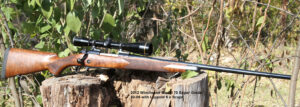
Elsewhere, makers like FN, Zastava, and Santa Barbara built sporters on 98-pattern actions in a wide spread of chamberings. It was a simple equation. The actions were proven, the materials were good, and the tooling for 98-pattern parts was widespread. In the custom world, names like Griffin & Howe and Rigby continued to chamber 98 actions for hunting rifles, sometimes in cartridges much larger and stouter than anything the original military rifles were intended to fire. Even now, demand for true 98 actions remains steady enough that limited runs appear on the market, and they have no trouble finding buyers.
Real-world legacy: the American connection and what buyers value
The 98 action casts a long shadow over post-war American bolt guns. The pre-64 Winchester Model 70 and the Ruger M77 are two of the clearest examples of that influence. If you enjoy their feel and feeding, you are appreciating design choices born in the 1890s. That is the quiet power of the Mauser blueprint. It shaped the way bolt guns handle, cycle, and protect the shooter.
Today, with the long wave of sporterized surplus mostly behind us, many owners would rather preserve original 98s than convert them. That shift is good for collectors and good for history. It does not mean custom work on surplus actions has stopped. Far from it. Talented makers are still building elegant sporting rifles on 98s, and newly manufactured, high-grade 98 actions exist at the top end for those projects. Prices there can reach into the five figures for the action alone, a sign that the market values both the pattern and the craft.
If your interests run broader than rifles, the Mauser name also ties into one of the most interesting early semiautos. For markings, stocks, and inspection tips applied to a very different Mauser, see our collector-minded look at the broomhandle pistol.
Mauser C96 for Collectors: stocks, markings, and smart inspection
Quick buyer checklist: fast IDs and sanity checks
If you are standing at a table or bench with a Mauser 98, these fast checks help frame what you are holding and what to ask next:
- Action type and ring size: Measure the receiver ring. About 1.410 inches suggests a large ring. Around 1.300 inches suggests a small ring. Note any visual swell at the front of the receiver.
- Length category: Short commercial Kurz actions are roughly 8.125 inches long and have unique parts. Intermediate Mexican and Yugoslav actions are about 8.5 inches and carry true 98 features.
- Bolt identity: Straight handle with a tall ramp sight points to a Gewehr 98. Turned-down bolt with a stock recess and tangent sight points to a K98k.
- Stock wood and era: Walnut usually signals earlier production. Beech shows up more often in late-war builds and is heavier in the hands.
- Receiver codes and year: Early K98k rifles may carry S/ numeric codes with K or G suffixes for 1934 and 1935. After that, look for a two- or four-digit year, and by 1937 many makers had switched to letter codes. Confirm that code-year pairing makes sense.
- Safety and shroud: Verify the wing safety operates smoothly and that the bolt shroud’s flange is intact and properly fitted.
- Extractor health: Inspect the external extractor for straightness, proper tension, and an unchipped claw.
- Cartouches and condition: Look for crisp, honest stock stamps and avoid stocks that have been heavily sanded or aggressively refinished.
A few closing thoughts from the bench
The Mauser 98 is one of those designs that makes you feel like the engineers had your back. The way the bolt lifts and the lugs seat. The thick ring up front that hides more steel than you expect. The quiet security of a rear safety lug waiting its turn. You can hold a Gewehr 98, shoulder a K98k, or run the bolt on a post-war sporting rifle and the language is the same.
That is the real legacy. A design that worked across trenches and forests, across match lines and hunting camps, across continents and decades. For buyers and collectors, the reward is that you can learn to read them. Rings and codes, stocks and sights, safeties and extractors. Every mark tells you where it came from and where it has been. When a rifle shows you that story clearly, it is hard not to bring it home.