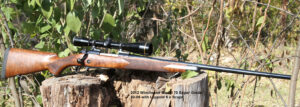

The first time I pulled a well-sorted Anschutz match rifle from a rack, the bolt ran on oiled glass and the trigger let go with a click you feel more than hear. The seller grinned. That is a 54. For collectors and buyers, that moment usually leads to the same fork in the road: Match 54 or Match 64.
If you are weighing a purchase, this guide makes the split tangible. We will cover what separates the 54 and 64 actions, how the 5018 and 5065 triggers fit in, what the barrel and stock interfaces tell you, what sights to expect, where to find import marks, and how to inspect a used rifle with confidence.
Where the 54 and 64 fit in the Anschutz family
Anschutz built two major rimfire action families you will see again and again in the market:
- Match 54 series: the higher-spec match action most associated with top-tier target rifles. These pair with Anschutz’s premium two-stage triggers and a wide range of adjustable target stocks.
- Match 64 series: a lighter, more affordable action used in training rifles and sporter-target hybrids. Good shooters, but simpler in build and trigger architecture.
For current factory guidance on action families, stock and trigger compatibility, and barrel attachment, Anschutz North America’s Technical Questions page is the best single reference. See: Anschutz North America Technical Questions.
What separates Match 54 from Match 64
The short version: the 54 sits higher on the ladder. It is heavier in the receiver, mates to more adjustable triggers, and typically wears stocks and barrels aimed squarely at match use. Community experience mirrors this. Longtime small-bore shooters on TargetTalk describe the 54 as having a better trigger, faster lock time, a more solid action, and carrying more weight, while 64s tend to be lighter and simpler. Typical weights often cited are roughly 11 to 15 pounds for a 54 match rifle and 9 to 10 pounds for a 64-based gun, depending on configuration. Source: TargetTalk: Anschutz 54 vs 64 Action.
The 64 family is not a slouch. It is commonly found in lighter training and crossover roles and can be a very sensible buy. But if you want the classic small-bore target feel and the broadest tuning range, the 54 family is the archetype.
Triggers: 5018 and 5065, plus 64-family units
Two model numbers matter most in the 54 world: 5018 and 5065. Both are two-stage match triggers with broad adjustment windows for first stage, break weight, over-travel, and shoe position. The 5018 was the long-running standard on many classic Match 54s; the 5065 is the later evolution used on newer match rifles.
Compatibility highlights, per Anschutz North America:
- 5018 and related 54-match triggers fit the 54.30, 1913, and 1907 families. The 2013 and 2007 actions are their own receivers but use the same trigger family as the 54.30, 1913, and 1907.
- 64-based actions use their own trigger designs. They are not interchangeable with 54-match triggers and have narrower adjustment ranges.
Practical buying tip: if the listing says 5018 or 5065, ask for a clear photo of the trigger housing label and the adjustment screws. On inspection, verify a distinct two-stage feel, clean safety function, and undamaged screw heads.
Barrels and how they attach: quick IDs for buyers
How the barrel meets the receiver tells you a lot and can help you verify what you are looking at. Factory attachment methods, per Anschutz North America:
- 54.30: threaded receiver.
- 2013 and 2017: clamp fit with three screws on the side of the receiver.
- 1913, 1907, all 1700 series, 1827, 1927: press fit with two vertical locking pins.
- 64 series: press fit with one horizontal locking pin.
Fast field ID:
- One horizontal cross pin at the receiver face usually signals a 64-series barrel fit.
- Two vertical pins ahead of the receiver ring are typical on 1913 and 1907-era match rifles.
- A 54.30 will not show barrel pins because it is threaded, and it is only offered as a single-shot match action.
Inspection notes: check crowns closely, look for pin disturbance or misalignment at the barrel shoulder, and confirm that any sight bases or muzzle devices are seated square.
Stocks and compatibility: what swaps and what does not
Collectors see a lot of parts-swapped rifles. Knowing what should fit helps you spot the good ones fast:
- 54.30, 1913, and 1907 share stock and trigger compatibility. You can generally swap among them when inletting and screw locations match.
- 2013 and 2007 are their own receivers. They use the same 54-match trigger family but have distinct stock and action screw patterns.
- 64-based actions are unique. Their stocks do not interchange with 54-match actions.
- 1727 and 1827 straight-pulls have their own stock and action screw layouts. Triggers interchange within their family, but stocks do not cross over to 54 or 64 actions.
- Left-hand variants exist for some models, but not all. Confirm orientation in the listing title and photos.
Helpful factory reference showing trigger group location, recoil lug, and action screws by action family: Anschutz North America Technical Questions.
Sights you will see on period rifles
Many classic match rifles ship or shipped with micrometer rear sights on a receiver rail and front tunnels with interchangeable elements. Period materials reference rear units such as the Micro sight No. 6700 and the 6702 Micra. If sights are included, verify model, knob function, and clamping security on the rail. Ask for close photos of scales and any chipped edges on front sight bases.
Marks and import stamps
Model designations, serials, and proof marks can be on the barrel flats, receiver sides, or underside. Import marks on U.S. rifles vary by importer and era and may be on the barrel or receiver. Ask sellers for clear photos of both sides of the receiver, barrel markings, and the underside if accessible. Clean, legible import marks and complete factory sights add context and value on the collector side.
Hands-on inspection checklist
- Action and bolt
- Cycle slowly, then briskly. Feel for smooth travel and confident cocking.
- Check extractor edges for chips and firing pin tip for peening.
- With the bolt out, inspect raceways for galling rather than normal rub lines.
- Trigger
- Identify the unit. Expect a two-stage feel on 5018 or 5065. Verify safety function.
- Look for unmolested adjustment screws and consistent two-stage transition.
- On light settings, a careful bump test on a padded surface should not jar it off.
- Barrel and attachment
- Inspect the crown under magnification for nicks or rolled edges.
- Note pin style and placement to confirm action family: one horizontal pin (64), two vertical pins (1913/1907), no pins on 54.30.
- Check that front sight bases and muzzle accessories are square and tight.
- Sights and rails
- Confirm rear sight model where present. Knobs should track crisply and return.
- Inspect receiver dovetails or rails for extra holes or chewed edges from bad mounts.
- Stock and bedding
- Look for cracks around action screw holes and signs of over-torque.
- Check inletting for oil soak or compression at recoil bearing surfaces.
- Test all adjustable hardware for full travel and solid lockup. Verify intended barrel clearance.
- Marks and numbers
- Photograph serials, model stamps, and import marks. Make sure they match the listing.
- Function
- Dry fire with a snap cap if possible. Listen for a clean, repeatable release and consistent reset.
Which action fits your use
If you want the classic Anschutz match experience for prone or three-position work, a Match 54-based rifle is the safe bet. The trigger system, weight, and stock options are the point.
If you want something lighter for field carry or a budget-friendly way into the Anschutz feel, a 64-based rifle can be an excellent choice, especially for juniors or as a crossover trainer.
For collectors, condition and completeness usually beat tiny generational changes. A clean 64 with original sights and stock is worth a second look. A well-cared-for 54 with its match trigger set to factory baselines will remind you why these rifles built their name.
Closing thoughts
The magic in a classic Anschutz is how the action, trigger, stock, and sights work together. The 54 family sits higher in the hierarchy, and the 64 keeps much of the feel in a simpler package. Shop with your hands and eyes. Confirm the action family, identify the trigger, and read the barrel and stock interfaces. The right rifle will make itself obvious the first time you close the bolt.
Factory reference: Anschutz North America Technical Questions. Community context: TargetTalk 54 vs 64.