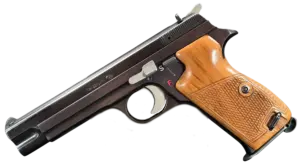
You can tell a lot about a shooter by the gun that never leaves their range bag. For a surprising number of serious folks, it is not a compensated wonder blaster or an heirloom compact. It is a rimfire pistol with a slightly worn finish, a scuffed front sight, and magazines that rattle around a bit. When the timer beeps or a new shooter steps up, that little .22 keeps earning its spot.
The quiet teacher: Fundamentals without the flinch
Rimfire pistols have been teaching people to shoot for generations. That is not nostalgia talking. It is a practical reality. With a gentle recoil and a modest muzzle report, .22 LR pistols let new shooters focus on safe handling, sight alignment, and a clean press rather than fighting blast and anticipation. NRA Family has pointed out that rimfires are a natural on-ramp because their mild manners help students grasp the basics without getting spooked by power they are not ready for.
That head start does not just benefit beginners. Even experienced shooters discover things when the noise and push drop out of the equation. If your sights leap or you milk the grip, the .22 calls it out because there is no recoil to blame. You see the error, correct it, and repeat. There is a reason many of us still keep more rimfires than anything else. They are fun, yes, but they are also honest instructors who never raise their voice.
Reps that actually transfer
Training time is precious. Dollars are too. Inside Safariland made a point that sticks: rimfire lets you stack far more repetitions for the same money, and those reps matter when the rimfire closely mirrors your primary pistol. Same holster, similar trigger, matching controls. If your rimfire shares a platform with your centerfire, you can build legitimate reps in draw stroke, indexing the sights, manipulating a retention holster, running a weapon light, and working reloads. The ammo leaving the barrel may be different, but the motions are the same.
The catch is obvious and fair. A .22 does not kick like a duty pistol. That means you cannot hide behind soft-shooting ammunition to avoid poor recoil management. The Safariland piece calls this out plainly. A rimfire helps cement many fundamentals, but recoil control is something you need to validate with your centerfire. Rimfire training is smart, but it does not replace strong work with the gun you actually carry. Balance is the key.
What rimfire pistols really do well
Strip away the arguments, and you are left with what .22 handguns truly excel at:
- Low-cost practice that sharpens mechanics and confidence
- On-ramp training for new shooters who need a friendly first step
- Competition and structured skill-building events
- Pest and small game tasks around a farm or campsite where lawful
American Handgunner put it plainly: rimfire pistols and revolvers are among the most useful tools a handgunner can own. They are ideal for bringing new people into the fold, keeping skills sharp, knocking around a property for legitimate chores, and just enjoying an afternoon of steel and paper without beating up your hands or your wallet.
The competition pipeline
Spend any time at a weekly bullseye league, a club steel match, or the rimfire bays and you will notice something. The grins look the same whether you are sixteen or sixty. Primary Arms highlighted how much pure enjoyment shooters get from rimfire pistols, but there is more under the surface. Manufacturers keep producing dialed-in competition models because people take these games seriously. Ruger’s Mark series and Smith & Wesson’s SW22 Victory line show up with target barrels, crisp triggers, and grips meant for one-handed precision, and they do it right from the factory. You can walk into a match with a bone-stock gun and focus on your hold and cadence instead of your gunsmith.
The caliber itself has a deep match resume, too. As Mossy Oak noted, the little .22 shows up from club nights to the Olympic stage. That pipeline is not a novelty act. It is a training ground that teaches sight discipline, trigger control, follow-through, and throttle management. If you want to see people who can run a pistol like a metronome, watch a good rimfire bullseye line.
The money math without the guilt
Walk through any recent ammo receipt, and the picture forms. Inside Safariland, it was illustrated with a simple range-bag snapshot. One shooter brought a .45 ACP 1911 and a rimfire 1911 look-alike to the range. The cost of a box of .45 ammunition contrasted sharply with that of a similar round count of .22 LR. Even if the raw figures shift with the market, the ratio tells the story. With rimfire, your dollar stretches. That is not an argument to abandon your centerfire. It is a reminder that affordable ammo buys you more time with your sights aligned and your finger moving straight to the rear.
And the affordability doubles as a teaching tool. New shooters relax when they know they can send a lot of rounds downrange without feeling spendy regret. Experienced shooters can set up longer strings, work more stages, or run the same drill until it is boring, and then keep going. Repetition is how skills stick.
The defense question, answered like adults
Ask ten shooters about a .22 for defense, and you will hear a full spectrum. Some say it is viable, others urge you to steer clear. The grown-up answer is the one you see across responsible sources.
Guns and Ammo framed it precisely: using rimfire for personal defense is less than ideal and generally not recommended. Centerfire options have a stronger track record. Still, there are shooters who cannot comfortably manage a centerfire handgun. Recoil sensitivity is real, so are hand strength limitations or medical conditions. For that group, rimfire can be a step up from being unarmed. The lack of recoil can make accurate hits come more easily and faster, and, as that article observed, a string of well-placed shots matters more than the number stamped on a case head.
American Handgunner voiced the other half with equal clarity. Power matters, and rimfire ignition is statistically less reliable than centerfire, which means misfires do happen. Some semiauto .22s run flawlessly, and rimfire revolvers sidestep some feeding issues by design, but you cannot wish away the lower energy of the cartridge. Hitting tiny, critical targets on a moving threat under stress is not the place to handicap yourself. If you have a better option, carry it. If you do not, choose a proven rimfire platform, test your ammo thoroughly, and understand the limitations.
Bottom line for serious shooters: use rimfire to build transferable skills. Carry and train with a centerfire where you can. If you or a loved one must rely on a rimfire, be careful, be realistic, and be disciplined about practice.
Buyer notes: Picking a rimfire pistol that fits your needs
Rimfire pistols come in two main flavors, and each has strengths worth considering.
Semiautos built for accuracy and reps
These are the classic slab-sided target pistols and modern polymer companions that feed from magazines. Think of the long-running designs that populate bullseye lines and club matches. As Primary Arms pointed out, factory competition trims exist with heavy barrels, tuned triggers, and grips that favor one-handed precision. Many contemporary models also accept optics plates or rail accessories, which makes them handy training surrogates for your carry pistol if you run a dot or a light.
What to look for:
- Ergonomics that match your primary pistol if cross-training is the goal
- Track record of running a broad selection of .22 LR loads
- Good sights, or easy optics mounting if that is your preference
- Spare magazines that are easy to find and affordable
Rimfire revolvers for simple, reliable practice
Rimfire revolvers trim away some complexities. There is no slide to cycle and no magazine to load, which helps new shooters concentrate on the trigger and sights. American Handgunner noted that rimfire revolvers are typically reliable. They bring a useful trait to the table, too. If a round fails to fire, a second trigger press rotates to a fresh chamber. That is a simple, confidence-building experience for beginners, and a solid way for experienced shooters to work double-action skills.
Across both types, pick a gun that suits the role you need. Chase pure accuracy for matches, shared ergonomics for training, or simplicity for teaching. If you are curious about the staying power of classic rimfire designs, our look at why the Browning Buck Mark still has its fans offers a focused snapshot of one enduring path here.
Keeping a rimfire running
The same qualities that make rimfires fun also explain some of their quirks. Primary Arms joked about the reputation. Rimfire is not famous for being spotless. .22 LR tends to run dirty compared to centerfire, and tolerance for different ammunition can vary from gun to gun. None of this is cause for drama. It just means rimfires like a bit of attention.
Helpful habits:
- Clean more often than you might with a duty-caliber pistol, paying special attention to chambers and feed ramps
- Test a few brands and bullet shapes to see what your pistol prefers
- Track malfunctions honestly and note which magazines or loads are involved
American Handgunner also flagged the broader rimfire reality. Rimfire ignition is statistically less consistent than centerfire. Many misfires will light off on a second strike, especially if the rim is hit in a fresh spot, but countable misfires are still a thing. That is a maintenance and ammunition-selection reminder, not a reason to abandon the platform.
Building a smart training plan
This is where rimfire pistols shine for serious shooters. Inside Safariland’s take was pragmatic. Rimfire training stretches your budget, makes room for new shooters, and lets you add reps that translate to your carry gun, especially when the rimfire fits your holster and gear. The tradeoff is time. Every hour with a .22 is an hour not spent with your centerfire. The fix is not complicated. Be deliberate. Use rimfire for high-volume repetitions that ingrain mechanics, then validate recoil management and defensive skills with your centerfire at regular intervals.
A simple session could look like this:
- Warm up with a rimfire pistol, working presentations from the holster, sight pictures at different distances, and trigger control on low-problem targets
- Run accuracy standards with the .22 to sharpen focus on sights and cadence
- Transition to your centerfire for fewer, more consequential strings that test grip, recoil control, and reloads under pressure
Rimfire will make you better if you are honest about what it can and cannot teach. Keep that clarity, and you will get the best of both worlds.
Why collectors keep circling back
Rimfire is not just for range rats and the newly initiated. Collectors know the throughline here, too. Mossy Oak’s look back reminds us that the .22’s roots run deep. The .22 Short dates to 1857 and was created for compact pocket guns. From there, rimfires grew into the cartridge that countless Americans used to learn marksmanship and safe handling. That early experience matters. Mossy Oak shared a point you hear often from manufacturers, too. The first rimfire someone shoots tends to set a tone for brand loyalty later on, which helps explain why gunmakers keep investing in the category.
The scale is not trivial either. Mossberg’s Linda Powell noted that rimfires play a significant role, with distributors moving over $100 million in rimfires in just the first ten months of 2023. That reflects rifles and pistols together, but the lesson holds for our lane here. Rimfire pistols remain a healthy part of the market because people keep buying and shooting them. A collector can build an entire storyline from rimfire handguns alone, from early steel target pistols to modern polymer trainers, with each model showing how tastes and training needs have changed over time.
Two classic paths for would-be owners
If you are shopping, think about the job you want the pistol to do, then pick a proven path.
The bullseye and steel track
Grab a purpose-built target model. Primary Arms pointed to long-standing options like Ruger’s Mark series and Smith & Wesson’s SW22 Victory line. These are pistols that cut straight to the point. Heavy barrels for steadiness, sighting systems you can trust, and triggers that reward clean presses. They are just as happy on a bench as they are ringing racks at a club match. Models from the last few decades still hold their own next to fresh releases, which is great news for a buyer who appreciates value and a collector who enjoys the arc of small design changes.
The training companion track
Go with a rimfire that mimics your centerfire. Inside Safariland’s example with two 1911s sharing the same holster and manual of arms nails this. If your rimfire will live at the range as a stand-in for what you carry, make the transition seamless. The closer it feels to your main pistol, the less your brain has to translate under stress. If you are a wheelgun devotee, a rimfire double-action revolver pays dividends in smooth trigger work that shows up later when you re-holster your centerfire. For an expanded take on why so many shooters still enjoy the simplicity and control of wheelguns, you might enjoy our piece on their appeal here.
A last word from the .22 on the bench
It is easy to shrug off rimfire pistols when social media celebrates muzzle-brake shockwaves and muzzle-energy charts. But spend a weekend watching new shooters smile, seasoned hands clean up a sloppy press, and a row of steel plates go quiet in half a magazine. The case for rimfire writes itself.
Guns and Ammo says it best in spirit. There are no magic bullets and no absolutes. Rimfire pistols are not perfect. They are not the answer to every question. They are, however, some of the most useful handguns you can own. They build skill. They bring new shooters in. They keep costs manageable so you can focus on doing the work. They even find a narrow, careful role in defense for those who cannot manage anything else, while the rest of us borrow their lessons and go back to our centerfires.
Serious shooters keep rimfire pistols close for simple reasons. The guns are honest teachers. The ammo makes practice possible. The platforms keep improving. And the shooting, even after all these years, is still flat-out fun.