
Remington Model 8 and 81: Browning’s Long Recoil Sporting Rifles
A practical, collector-minded look at Remington’s Model 8 and 81. Calibers, long recoil explained, police conversions, and what to check before you buy.

Call us any time at: (833) 486-6659
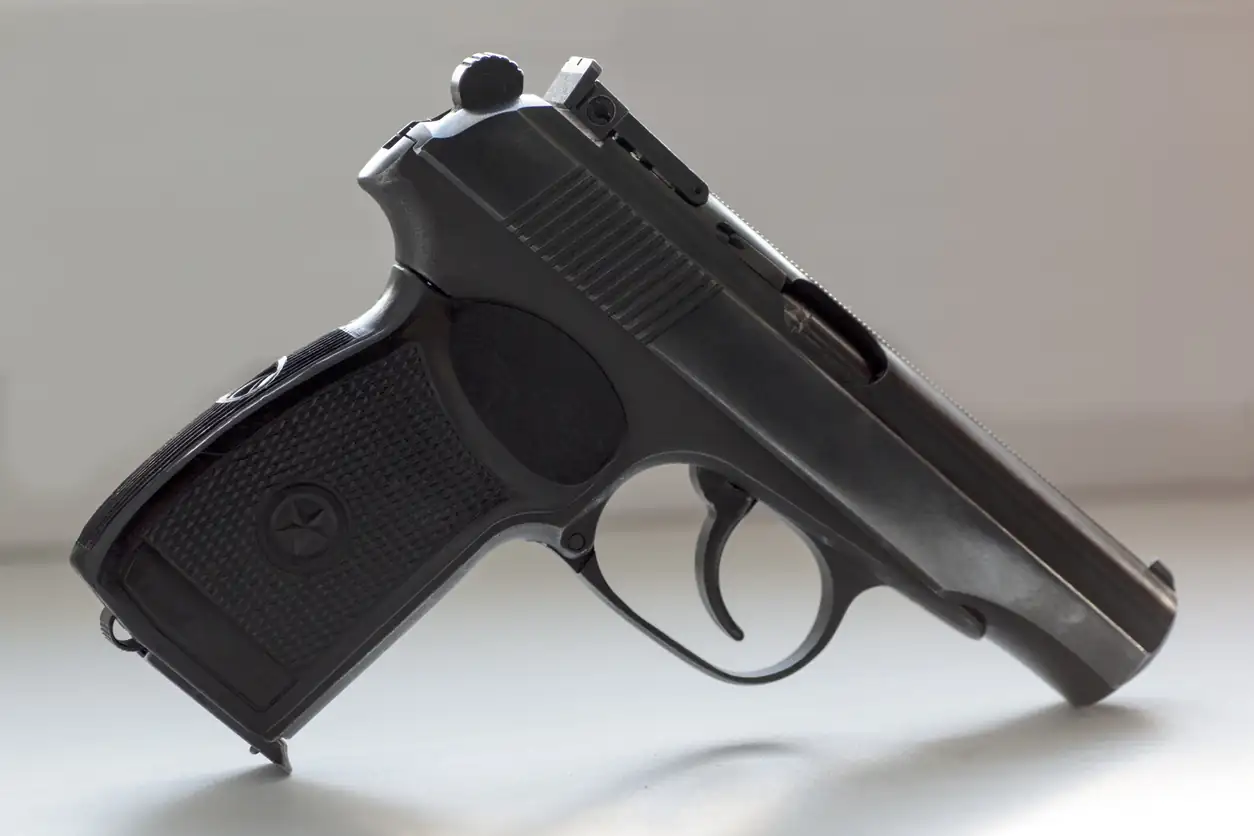
I remember the first time I watched a buyer freeze halfway down a surplus aisle because two Makarovs sat side by side and looked almost identical. He picked one up, then the other, and asked the question I hear all the time: which one is which? I handed him a loupe and said, start by counting slide serrations, then read the little codes. The Makarov PM is simple by design, but it rewards anyone who slows down long enough to read it.
The Makarov PM is a compact, all-steel, double-action, blowback pistol chambered in 9×18 mm Makarov. The Soviets adopted it in 1951 to replace the TT-33, selecting Nikolay Makarov’s design for its reliability and stripped-down parts count. The platform is famously straightforward to build and service, with roughly 27 major parts, not including the magazine. For a quick background on its adoption and design lineage, see the Makarov pistol overview.
The true PM lineage is narrower than the surplus bins suggest. Production came from:
Plenty of other 9×18 pistols get mistaken for PMs, but a true PM traces to that list.
The PM’s 9×18 mm cartridge uses a slightly larger bullet than the 9×19 or .380 ACP, about 0.363 inch versus 0.355/0.356 inch. The case body is essentially straight, which is well-suited to a blowback operation. East German service ammo was typically steel-cased and came in 16-round boxes. These details come straight from American Rifleman.
Military PMs were built at Izhevsk for the Soviet armed forces and police after adoption in 1951. They are usually fixed-sight guns with Cyrillic markings and familiar factory proofs. Later, Russia exported commercial models bearing Izhmech or Baikal branding and English legends such as “Made in Russia by IMEZ”. These IJ-70-series pistols often had adjustable rear sights; some were available in .380 ACP, and a subset used double-stack magazines.
Counter tip: fixed rear sight usually signals military surplus, while adjustable rear sight and English-language legends point to a commercial export. Model marks like IJ-70-18A indicate 9×18, and IJ-70-17-series indicate .380 ACP.
East German production began in the late 1950s and ended in 1965, a brief run that left an outsized mark. Early 1958 to 1959 pistols can be the toughest dates to find. The Suhl guns are known for deep, even bluing, one-piece black plastic grips, and chrome-lined barrels with four-groove, right-hand rifling. Many collectors regard them as some of the best-finished PMs of the era, and large numbers were imported into the United States after 1990. For a compact factory and import history, see American Rifleman.
Practical tells: count the grasping serrations. East German slides typically have 10 on the left and 17 on the right, a layout shared by the Chinese Type 59. Russian and Bulgarian PMs usually show 13 serrations per side. This quick check comes up again and again in collector guides, including The Armory Life.
Markings tell the story. Early East German PMs did not carry a model name or country stamp. Instead, the left side of the slide and frame shows a two-letter code and a four-digit serial number. Several small parts, including the hammer on some pistols, may have the last two serial digits electropenciled. The serial itself often appears lightly etched because many were applied with an electropencil or dotting tool rather than a deep stamp. Magazines often bear electropenciled numbers that rarely match the pistol. A number under the stock is a part number, not a hidden serial number. These conventions are documented in American Rifleman.
Bulgarian production from Arsenal tends to present as workmanlike and reliable. The quick visual tell is symmetry: 13 serrations on the left and 13 on the right, with fixed sights and standard PM dimensions. If you want the PM experience without fuss, these deliver it consistently.
The Type 59 follows the PM pattern closely. The easiest quick ID is again the slide: 10 serrations on the left, 17 on the right, like East German guns. Finish quality varies by batch, but many examples compare favorably to other Warsaw Pact production. China also exported PM-type pistols in both 9×18 and .380 ACP.
Surplus imports sometimes wear one-piece thumb-rest grips to help meet U.S. sporting purposes requirements. Russian exporters also offered new commercial PMs with adjustable rear sights, and some higher-capacity versions appeared alongside standard eight-round models in both 9×18 and .380 ACP. These patterns are summarized in The Armory Life.
Once you are past the serrations and overall finish, let the markings do the heavy lifting.
Collectors also report a small y inside a ring of dots on some pistols. One interpretation links it to training use, but that reading is not confirmed. Treat it as a curiosity, not a definitive mark.
Letter codes help bracket East German production years. The full map is not complete, but examples documented by collectors include:
Do not panic if your letter block falls outside a short list. The sequence appears orderly, but surviving documentation is partial.
East German bluing is often richly even. Honest holster wear at the muzzle and front strap is normal. Look for sanding traces or color shifts that suggest refinish work. On Russian and Bulgarian guns, expect a durable service-grade finish, and judge it the same way: crisp markings and a consistent tone earn points.
For East German pistols, confirm the two-letter code and four-digit serial numbers on both the frame and slide, then look for the last two digits electropenciled on small parts. Light, dotted serials can be correct. Mismatched magazine numbers are common and not a red flag by themselves.
On Russian pistols, separate fixed-sight military guns from adjustable-sight commercial exports. English-language legends and IJ-70 model marks mean commercial.
Inspect from chamber to muzzle. East German barrels are chrome-lined with four grooves and a right-hand twist. A bright bore with sharp lands is ideal, but a clean, slightly dull bore can still shoot very well.
Verify that the safety engages positively and decocks correctly. Confirm the slide lock on an empty magazine and a positive magazine catch. Dry fire to feel the double-action pull and reset. The PM’s trigger will not feel target-grade, but it should be predictable.
Expect importer marks in English on the frame, slide, or front strap. Some East German imports include added engravings referencing Ernst Thälmann. These are importer additions and do not prove or disprove the pistol’s originality.
Learn the quick tells, verify the markings that matter, and grade with your eyes and hands rather than the story on the tag. The PM’s clarity is why it endures, on the range and in the collector’s case.
Available
View Item
Available
View Item
Available
View Item
Available
View Item
Available
View Item
Available
View ItemA practical, collector-minded look at Remington’s Model 8 and 81. Calibers, long recoil explained, police conversions, and what to check before you buy.
A collector’s look at Colt’s SP1 and early Sporters, from slickside uppers and pencil barrels to the rollmarks and small changes that hinted at the A2 era.
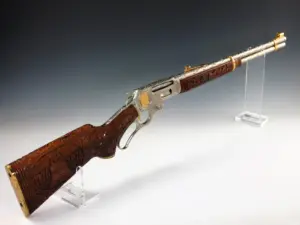
A practical, story-driven guide to reading JM vs REP barrel marks, understanding pre-safety 336s, Micro-Groove and Ballard-style rifling, and the smart checks to make before you buy.