
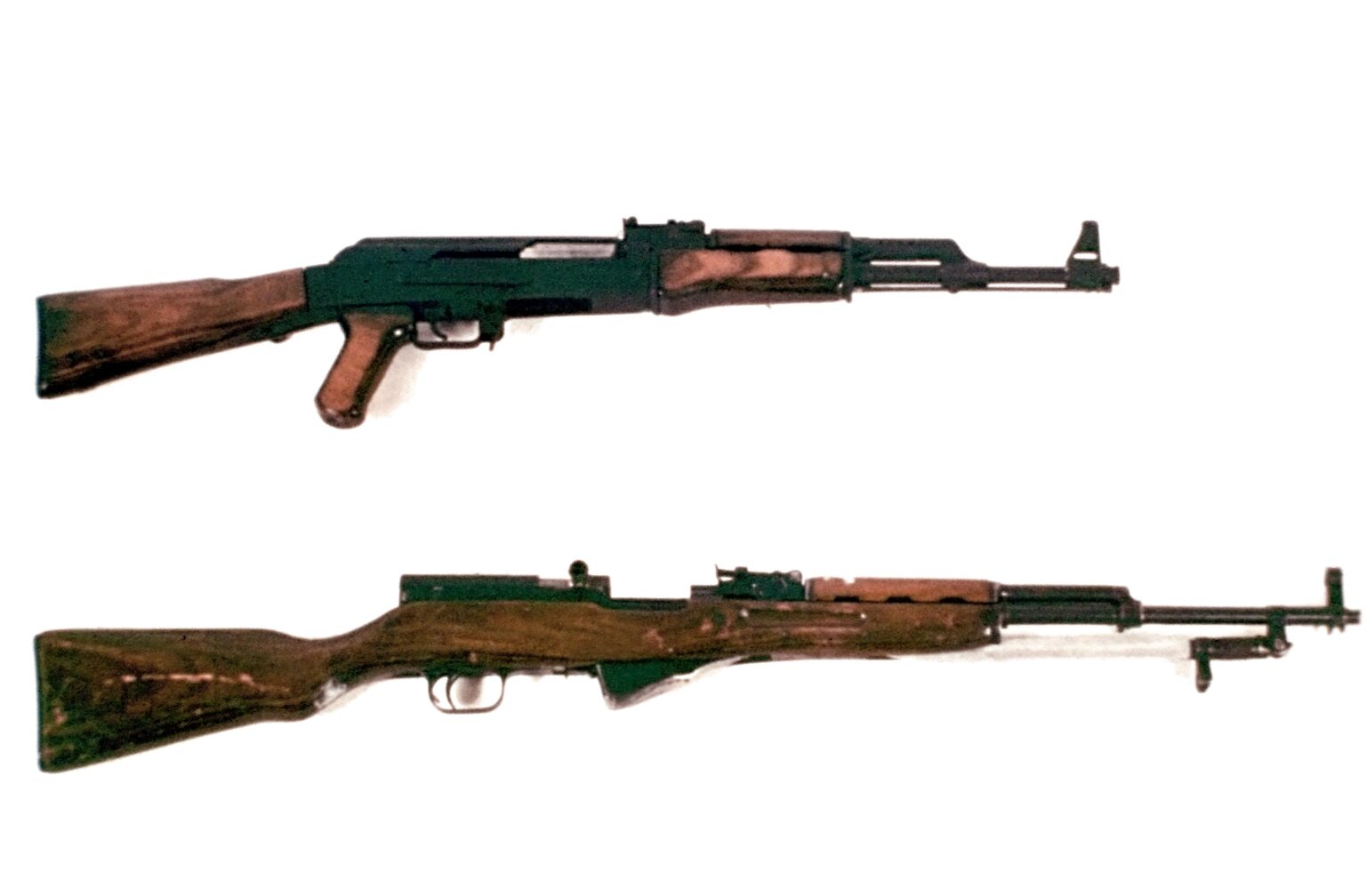
The SKS has a way of sneaking into your life. Maybe it was a cracked-laminate beater you shot at a buddy’s farm, or that tidy carbine on a gun show table with a bayonet gleaming just enough to make you pause. You pick one up, then another. Before you know it, you’re comparing spike bayonets to blades and squinting at tiny arsenal marks inside diamonds and triangles.
This guide is written for the collector and buyer who wants more than just “it’s an SKS.” We’ll walk through the major variants you actually find on the American market, what their typical features look like, where matching numbers matter, how to spot bayonets and grenade sights at a glance, what those AK-mag models really are, and how import marks and exporter tweaks change both character and value.
Start with what most SKS carbines share
Under the national quirks and importer oddities, a lot of SKS rifles are very similar where it counts. Designed by Sergei Simonov and formally adopted by the Soviets in 1949, the SKS is a semi-automatic carbine chambered in 7.62×39 with a 10-round fixed magazine and a tilting-bolt action. It runs a short-stroke gas system and usually carries a folding bayonet under the barrel.
The typical barrel length is about 20.5 inches, and the platform’s reputation for being stout comes from its milled receiver and honest chunk of wood for a stock. If you like numbers, common specs include around 40 inches overall length, about 8.5 pounds unloaded, and muzzle velocity near 2,400 fps with standard ball ammunition. These aren’t target rifles by design, but they’re robust and usually reliable, which is why they became the world travelers they are today.
Most national variants stayed pretty faithful to that template. The fun begins in the details.
Why availability shifted: a quick import history
For American buyers, the SKS story is also a tale of import waves. Chinese Type 56 rifles arrived by the millions between the mid-1980s and 1994, which is why Chinese examples are still the most common in U.S. hands. After the 1994 cutoff for new Norinco imports, Russian SKS carbines filled the shelves for a few years until 1998. When that door closed, Yugoslav, Romanian, Albanian and a trickle of others took their turn. As these pipelines slowed or ended, prices climbed and the old “cheap SKS” image faded fast.
Some national patterns are now just plain scarce stateside. East German and Polish carbines, for example, are extremely rare here and command serious collector attention. North Korean and Vietnamese examples that made it home as bringbacks sit in an entirely different category of desirability. Albanian rifles show up and are collectible in their own right, though not typically because they’re unusually refined. Rarity isn’t everything, but it explains a lot about the current market and why certain roll marks make collectors stop mid-aisle.
Soviet SKS: the starting point
Russian-made SKS rifles are the baseline that many collectors measure against. Most use a blade-style bayonet and carry the clean, early pattern look that people associate with the type. Stateside, the prime years for Russian imports largely ran from the mid-1990s until 1998. That relatively short window means Russian carbines are less common here than Chinese rifles but not unobtainable.
If you’re shopping one, you’ll encounter conversations about which factory built it and how the finish compares to later copies. You’ll also hear buyers talk about finding examples that haven’t been overly messed with since military service. The overall condition, presence of the correct bayonet, and how the serial numbers present will do the heavy lifting in value here.
China’s Type 56: spikes, stamps, and a thousand small variations
China produced the SKS as the Type 56, and they made a lot of them in a lot of flavors. This is the variant you’re most likely to see in the U.S., and that abundance comes with huge variety. Many rifles are nearly identical to Russian patterns, but Chinese guns branch out in practical and commercial directions that make collecting both fun and a little complicated.
On a typical military-pattern Type 56, expect one of two bayonets from the factory: a blade or a tri-lobed spike. Both are commonly left in the white rather than blued. Stocks can be hardwood or laminate, and sling swivels may be on the side or the bottom. Serial numbers can be short or quite long, sometimes with letter prefixes. You’ll often see arsenal symbols on the receiver near the serial, set inside geometric shapes like triangles, diamonds, ovals, or rectangles. It’s also not unusual to encounter a rifle with just a serial and an import stamp but no obvious arsenal mark at all.
China also produced some notable detours. The SKS M and SKS D models are Type 56 variants built to accept standard AK magazines. That change required specific receiver and stock work, and they’re among the most sought-after Chinese commercial patterns on the U.S. market. There’s also a sheetmetal-receiver Type 56 variant that stands apart from the usual milled-receiver construction and tends to get pulled out as its own talking point when collectors compare notes.
Exporters and importers added their own twists during the 1980s and early 1990s. Barrels that began life around 20.5 inches sometimes left for the U.S. trimmed to about 18.5 inches or even 16.5 inches. Some Chinese rifles arrived with receiver-mounted optics rails, and you’ll see others that were brought in without bayonets at all to meet the shifting rules of the day. If you spot an SKS that takes AK mags, wears a short 16.5-inch barrel, or has a factory-like scope rail fixed to the receiver, odds are good you’re looking at a Chinese gun with a commercial slant.
If you want a friendly, photo-heavy overview of Chinese and Yugoslav examples from a shooter’s perspective, the piece at Pew Pew Tactical on Norinco and Yugo SKS variants is worth a look.
Yugoslav M59 and M59/66: grenade sights and gas cutoffs
Yugoslav SKS rifles sit in their own lane. There are two main types you’ll encounter: the M59 and the M59/66. The M59 reads like a fairly standard SKS. The M59/66, however, wears its national flavor up front, literally. In original configuration, it will have a permanently attached grenade launcher at the muzzle, a tall flip-up grenade sight, and a gas cutoff selector. Those features make M59/66 rifles some of the easiest SKS variants to identify from across the room.
Yugoslav serial numbers typically appear as a single letter followed by five or six digits. On the rear sight ladder, Yugo rifles use a plain, sans serif “1” for the battle setting, a small tell you can confirm in a single glance. Another detail collectors talk about is finish: while many SKS stocks arrive with a glossy shellacked look, Yugoslav rifles are commonly seen with oil-finished stocks instead. Sling swivels on Yugos are usually of the bottom-mounted style, which also lines up with the national pattern.
When inspecting an M59/66, look closely at the grenade launcher and sight hardware for wear and corrosion, and confirm the gas shutoff operates. Some rifles on the U.S. market were modified to meet state requirements by removing or altering the muzzle device, so make sure the configuration matches your expectations if originality is your goal.
Romania, Albania, and the rarities
Romanian and Albanian SKS carbines round out the group that most American buyers will actually see for sale. Albanians are certainly collectible, even if they aren’t held up as finer-built than others. East German and Polish examples, on the other hand, are extremely rare here and bring premium attention. Then there are North Korean and Vietnamese rifles that came home as bringbacks; those sit in a special category because of their scarcity and history.
None of this means a Romanian or Albanian rifle can’t be the right choice. It just means identification matters, because value rides on the details in a way that surprises newcomers who only remember the days when any SKS was a cheap trunk gun.
Matching numbers: what it means and how to check
“Matching numbers” matters because it suggests the carbine sits closer to how it left service rather than being rebuilt from a parts bin. The catch is that practices varied by country and by era. Chinese serial formats run the gamut from short digit strings to long number blocks, sometimes with letter prefixes. Yugoslav rifles may or may not carry serials on parts beyond the receiver and stock. And some rifles from different countries show only a serial and an import stamp, with no arsenal symbol at all.
As a working approach:
- Start with the receiver serial. Then check the major serialized components that are present on your specific rifle. On many SKS carbines, those will include the stock and additional key parts. On others, the receiver and stock may be all you get.
- Expect Chinese patterns to show more variation in numbering style, including letter prefixes and those geometric arsenal stamps near the serial.
- On all-original Chinese guns, bayonets are typically either blade or tri-lobe spike and left in the white, which can help you spot a bayonet that doesn’t fit the pattern.
- For Yugoslav M59/66 rifles, confirm the serial pattern (single letter plus five or six digits) and inspect the grenade hardware at the same time.
If you want a compact identification reference that hits these points with visuals, the community-made Quick SKS ID Guide is a handy companion on the bench or at a show.
Bayonets and stocks: small choices, big tells
Bayonets do more than look cool under the muzzle. They anchor identification. Russian and Yugoslav rifles generally wear a blade bayonet. Chinese Type 56 rifles frequently use a spike bayonet, though blades show up too. Factory bayonets are commonly left in the white, so a deep-blue bayonet on an otherwise correct rifle is cause to ask a few questions.
Stocks carry clues as well. Chinese SKS rifles may be hardwood or laminate, with side or bottom sling swivels depending on the production batch. Yugoslav stocks typically present an oil finish rather than the glossy look you see on many others. None of these details make or break function at the range, but they help you sort a rifle that’s been altered from one that still reflects its national pattern.
AK-mag SKS models and other commercial twists
Let’s talk about the AK-magazine SKS rifles, because those always stop traffic on a rack. The Chinese SKS M and SKS D models are Type 56 carbines reworked to feed from standard AK magazines. That isn’t a simple magazine swap; these variants use modified receivers and stocks built around the detachable mag concept. They handle a bit differently and tend to be harder to find at sane prices because demand outstrips the number floating around.
Beyond the M and D, commercial features pop up on Chinese imports from the 1980s and early 1990s. Barrel lengths were sometimes cut down for the U.S. market to around 18.5 inches or even 16.5 inches. Some rifles arrived with receiver-mounted optics rails. Others were brought in without bayonets to fit shifting regulatory interpretations at the time. None of this is a problem if you want a shooter with a bit of flair. If you’re chasing a military-pattern look, though, keep these alterations in mind.
Import marks and exporter modifications: reading the fine print
Every imported SKS tells part of its story in small text. Some rifles wear clear arsenal marks inside triangles, ovals, rectangles, or diamonds near the serial. Others show nothing more than a serial number and the import stamp. Styles of import markings vary, and size and placement can influence collector appeal. You may also see changes that clearly happened for export: shortened barrels, receiver rails for optics, and rifles shipped without bayonets are all known features on Chinese guns sold into the U.S. commercial market during the 1980s through the mid-1990s.
The takeaway is simple: confirm what you’re looking at. If a carbine accepts AK magazines and wears a short barrel or an optics rail, it’s very likely a Chinese commercial variant. If a Yugoslav M59/66 lacks its grenade hardware, you’re probably seeing a modification done stateside. None of that ruins a rifle if you want it for range use, but originality and configuration accuracy are central to collectible value.
Buyer checklist: how to evaluate an SKS in five minutes
Here’s a quick mental routine I use when a new SKS shows up on a table or in a safe.
- Confirm the country pattern fast. Blade or spike bayonet? Grenade launcher and flip-up sight present? That gets you to Soviet/Chinese vs. Yugoslav in seconds.
- Scan for the telltales. On a Yugo M59/66, find the gas shutoff and check the rear sight’s battle setting mark. On a Chinese Type 56, look for spike vs. blade, stock swivel location, and any arsenal stamp near the serial.
- Check matching numbers within reason. Receiver serial first, then other serialized components on that specific national pattern. On Yugos, don’t panic if not every part is numbered.
- Look for exporter fingerprints. Shortened barrel, receiver rail, no bayonet, or AK-mag compatibility usually means Chinese commercial flavor.
- Inspect the muzzle hardware. On Yugos, make sure the grenade hardware is present and functional and look for corrosion. On others, confirm the bayonet type makes sense for the rifle.
- Note the import stamp and how it’s executed. It won’t change how the rifle shoots, but it can change how you feel about the carbine ten years from now.
If you prefer a longer-form walkaround that pairs well with this checklist, you might appreciate our broader look at military surplus inspection habits in the K98k Mauser Collector’s Guide. Different rifle, same collector’s eye for marks, stocks, and honest condition.
A few variant-by-variant snapshots
To help you apply all of this at the gun counter, here are quick profiles distilled from what we’ve covered.
Soviet
- Usually blade bayonet.
- Imported in meaningful numbers during the mid-1990s until about 1998 in the U.S.
- Collectibility rides on condition, originality, and overall presentation.
Chinese Type 56
- Blade or tri-lobe spike bayonet in the white; hardwood or laminate stocks.
- Arsenal stamps commonly inside triangles, diamonds, ovals, or rectangles near the serial; some rifles lack arsenal marks entirely.
- Commercial twists include 18.5-inch and 16.5-inch barrels, receiver scope rails, and bayonet deletions.
- M and D variants accept standard AK magazines via modified receiver and stock.
- By far the most abundant in the U.S., imported in the millions through 1994.
Yugoslav M59 and M59/66
- M59: conventional SKS pattern; M59/66: permanently attached grenade launcher, flip-up grenade sight, gas cutoff.
- Serial pattern often a single letter followed by five or six digits.
- Rear sight battle setting uses a plain “1.”
- Stocks typically oil-finished; bottom sling swivels.
- Inspect grenade hardware for function and corrosion; some U.S. examples were modified without the muzzle device.
Romanian, Albanian, and others
- Common enough to collect in the U.S., with quirks of their own.
- East German and Polish SKS carbines are extremely rare here.
- North Korean and Vietnamese rifles appear primarily as bringbacks.
How it all feels on the range
Collectors buy with their eyes and hands first, but none of this matters much if the rifle won’t run. The good news is that most SKS carbines, across countries and decades, were built to be durable. Chinese, Russian, and Yugoslav examples all have reputations for solid performance when they’re in good mechanical shape. If you’re comparing them purely as shooters, the national differences fade. If you’re comparing them as artifacts, the differences are everything, and that’s where this guide earns its keep.
Final thoughts from the rack
The SKS market changed, and so did the rifles that caught our eye. A plain Chinese Type 56 with honest wear is still a fine carbine. A tidy Soviet example that hasn’t been overly fussed with will always feel right in the hands. A Yugoslav M59/66 with all the grenade furniture intact is an unmistakable piece of Cold War hardware. And if you find a Chinese M or D that feeds AK mags and hasn’t been abused, you just might understand why collectors who thought they were done keep making room for one more.
If you’re new to the SKS rabbit hole, start simple: learn what blade vs spike looks like, memorize the Yugo grenade kit, and train your eye to spot import stamps and arsenal symbols. After that, it’s just time spent with the rifles, and that’s the best part of collecting anyway.