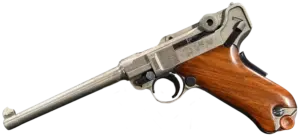

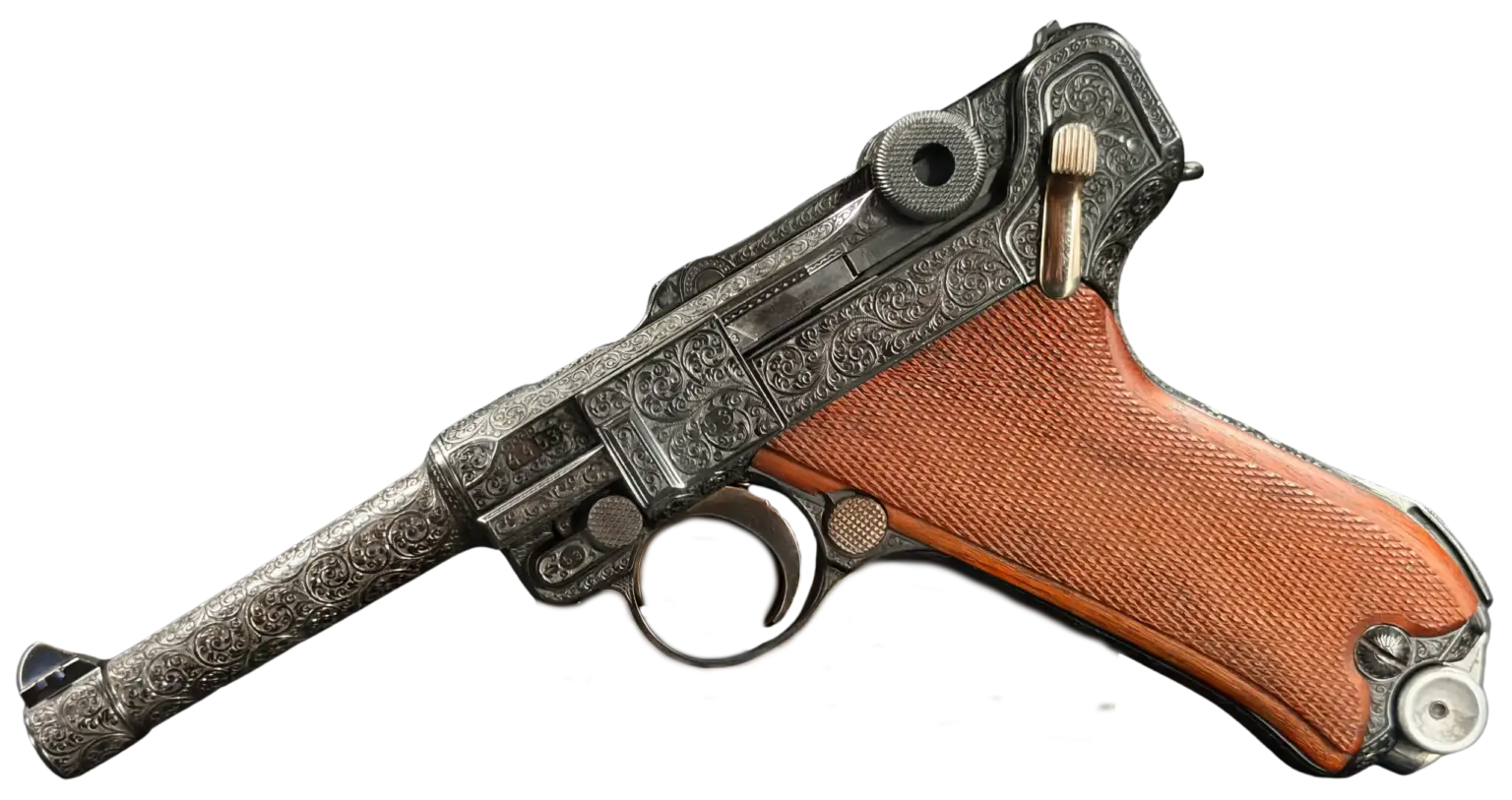
Crack the toggle on a Luger and you feel a century of engineering snap into motion. That jointed arc is more than a party trick. On a P08, it is a calling card. The style of finish, the tiny proofs, the way the safety reads, even the shape of the toggle ears can tell you who built it, when it left the factory, and sometimes who carried it. If you are hunting a solid example for your collection or you are trying to make sense of one you already own, the Luger rewards a careful eye.
A toggle that tells a story
The Luger stands out among early semi-automatics because it looks and runs like nothing else. Georg Luger refined the earlier Borchardt system into a compact toggle-locked pistol that recoils, breaks at the knee, then springs forward to feed the next round. The German Army accepted this design in 1908 as the Pistole 08, chambered in 9 mm with a short service barrel and a stock lug at the heel. It wore off much of the earlier fuss, including the grip safety seen on the pre-1908 models, and set the pattern that most of us picture when we hear the word Luger.
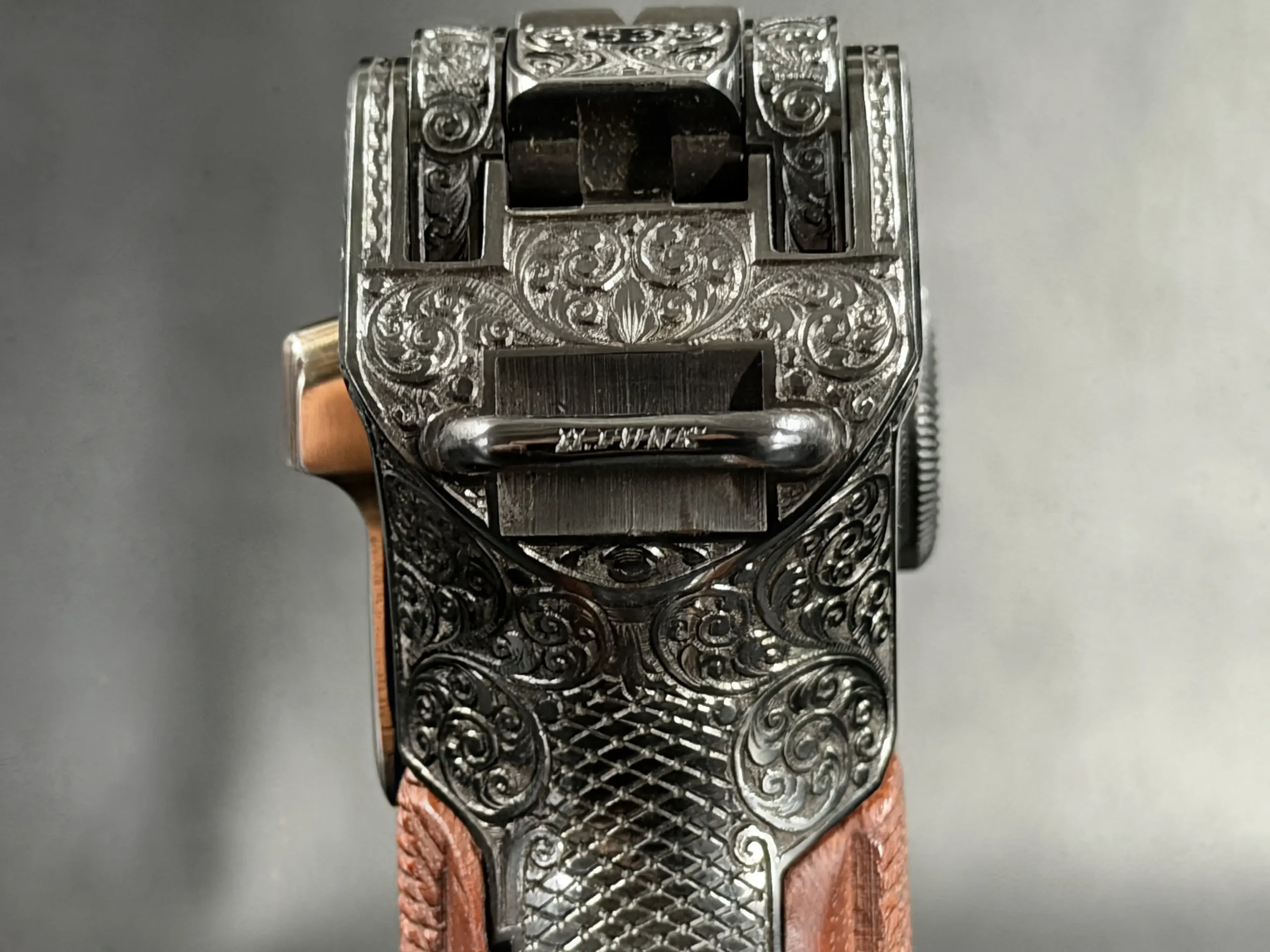
For a crisp overview of how the P08 became standard issue and the spin-off long-barrel variants, the NRA Museum overview of the P08 and its variants is a handy primer.
Where the P08 fits: DWM, Erfurt, and adoption
Production began at Deutsche Waffen und Munitionsfabriken, the successor to Ludwig Loewe, then expanded to the Prussian arsenal at Erfurt during the First World War. DWM and Erfurt cranked out standard short-barrel pistols for the Army, with the Navy taking a longer-barreled model earlier and, in 1917, the Army fielding the even longer Lange Pistole 08 that we simply call the Artillery Luger. The Artillery’s rear sight was graduated to 800 meters and, in some cases, carbines were kitted with shoulder stocks and 32-round drum magazines. The configuration spectrum gets wide fast, which is why a little framework helps before you buy.
From DWM to Mauser: what actually changed
After the First World War, Luger production did not simply stop and start again on the eve of the next war. Pistols filtered through police channels, commercial sales, and reworks in the Weimar years. In 1930, Mauser took over P08 manufacture from DWM. Simson and Krieghoff also produced P08s in smaller numbers, but the bulk of later military Lugers you encounter will be Mauser built.
From a buyer’s perspective, Mauser-era finish details are a strong tell. According to period data, Mauser phased out the traditional rust blue with straw-colored small parts late in 1937, switching to a single salt blue on all parts at once. Around 1941, some pistols left the factory with black Bakelite grip panels to speed production. The catchy “Black Widow” nickname often attached to these is a postwar marketing label, not a factory designation. When you hear it, treat it as a description of appearance rather than a special series.
Toggle talk: what you’re looking at and how to read it
The toggle on the P08 is more than the action’s knee joint. It is also a branding billboard. On DWM pistols, the front toggle link carries the DWM monogram. On Erfurt pistols, you will often see the crowned Erfurt mark on the toggle. Mauser-era pistols are commonly marked with a numerical or letter code on the toggle, with the chamber area stamped with the two- or four-digit year of manufacture on many examples. A commonly seen combination is a 1939 chamber date with a “42” code on the toggle. Details vary by contract and year, so compare the toggle and chamber markings rather than reading one in isolation.
Mechanically, the toggle linkage evolved as well. Earlier models used a leaf mainspring. Later Lugers employed a coiled mainspring, a round-topped bolt, and a change in the toggle design that encouraged lifting the toggle to retract rather than pulling straight back. When you handle a Luger, ease the toggle open and closed. Feel for a smooth cycle, look at the bearing surfaces for galling, and check for peening on the locking shoulders. These are expensive parts to make right if they are wrong.
Safety systems and what they tell you
If you only remember one safety note, make it this: the standard P08 dispensed with the grip safety. If you see a grip safety, you are likely looking at an earlier pattern. The safety lever itself also changed across variants. The commercial Model 1906 included a rearward-operating safety lever and a hold-open that locked the action after the last round. Early Navy Lugers can be found without a hold-open and without a stock lug, a detail collectors enjoy spotting because it pins down a very specific slice of production. When you inspect any Luger, test the safety deliberately and watch how the markings align when it is engaged. Do not force anything if it feels gritty or bound up.
Barrels and sights: Army, Navy, and the long Artillery model
The standard Army P08 wears a short service barrel in 9 mm, which is what most buyers have in mind. Naval pistols carried a longer barrel and a distinctive two-position rear sight. The Artillery model stretched things out farther still, adding a fully adjustable rear sight graduated to 800 meters. Many Artillery pistols were paired with wood shoulder stocks. Some were issued with 32-round drum magazines, a combination aimed at noncommissioned officers and assault units where extra firepower was desirable.
If you enjoy the concept of stocked semi-autos of this era, you might appreciate our Mauser C96 Broomhandle guide as a companion read. The two pistols share the same historical stage, but their engineering paths could not be more different.
Magazines: wood bottoms, drums, and the reality of mismatches
Most Lugers you encounter will come with an 8-round, single-stack magazine. On many First World War examples, those magazines wore wood bases. You will also see the long drum magazines that were mated with some Artillery configurations, usually riding in their own pouches.
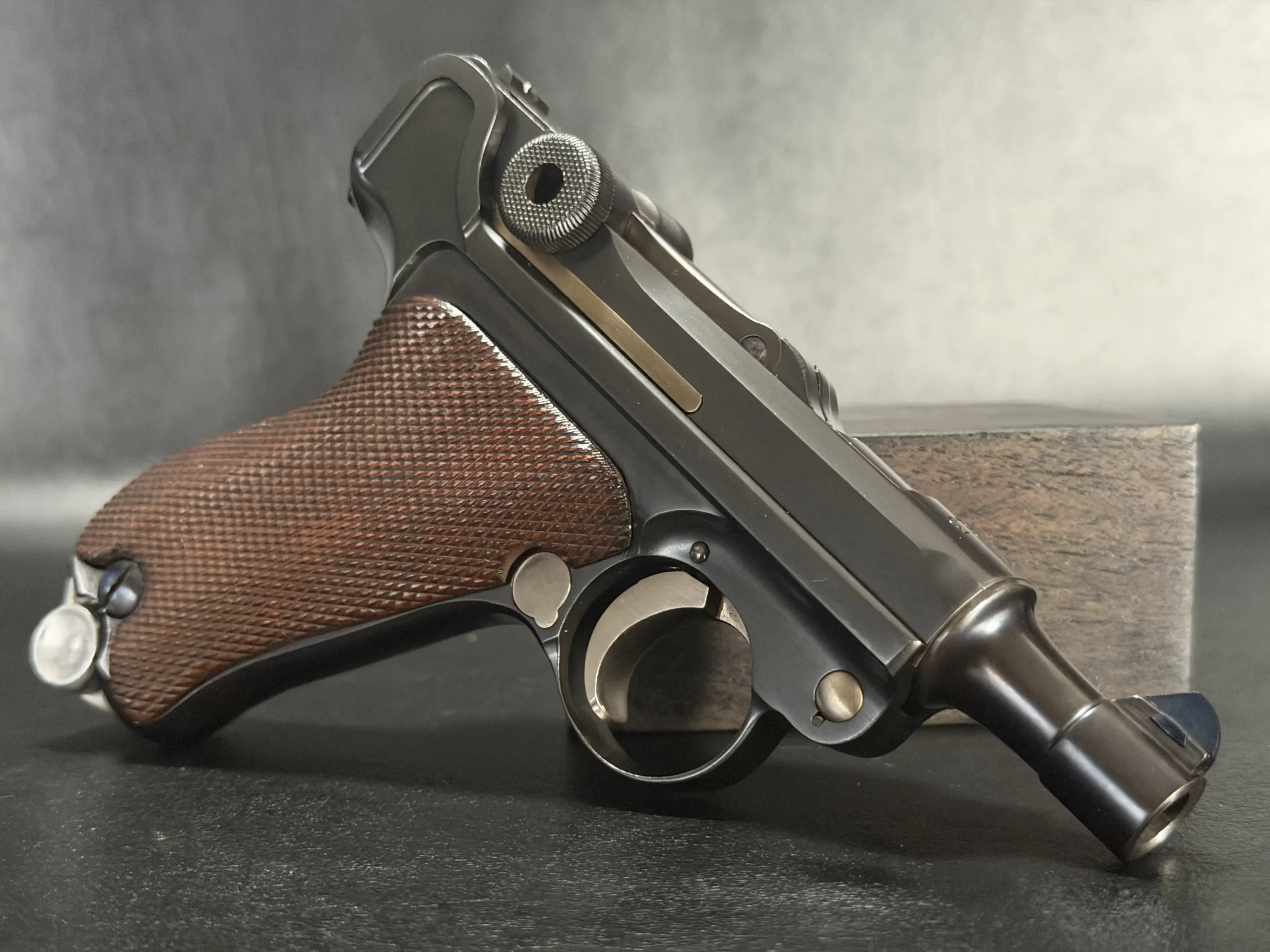
Collectors talk a lot about matching magazines. Many magazines were numbered to the pistol, and they tend to wander over a century of service and bring-backs. A non-matching magazine is extremely common on military Lugers, so do not let that alone spoil an otherwise correct package. What matters in the hand is function and condition. Inspect the follower for smooth travel, look closely at wood bases for cracks or chips, and make sure the magazine engages the catch positively. If the pistol has a hold-open, the follower should raise it after the last round.
Proofs, police and unit marks, and those double dates
Proofs and acceptance marks on a Luger can feel like hieroglyphs at first. Start broad, then zoom in. On DWM and Erfurt pistols from the First World War era, Imperial crowns and acceptance stamps appear on the right side of the receiver, with Erfurt examples also showing the crowned arsenal name on the toggle. Some Army pistols were unit marked on the backstrap or grip strap. One 1918 Erfurt example I handled bore “11K ER 122” inside the grip strap, a style seen on period-marked guns and usually interpreted as a company or motorized unit notation. Read such marks with caution because formats vary and later police property marks can look similar at a glance.
Weimar-era reworks are commonly encountered, sometimes with a bold “1920” property stamp applied above or alongside the original chamber date. Double-date pistols show up as 1920 over an earlier 191x date, and you will also bump into police pistols with unit markings on the backstrap. These can be historically fascinating guns that served through multiple chapters, which is part of their charm.
Mauser’s late 1930s output typically wears the year over the chamber and a manufacturer code on the toggle. A 1939 example with a “42” toggle code and eagle acceptance stamps is a pattern many collectors recognize. Again, codings and inspectors changed across the years, so take a holistic view of the markings rather than fixating on a single stamp.
Matching numbers: how to verify and what matters
Luger serial numbering can be a pleasure or a headache. The short version is that the full serial sits on the frame front and barrel base, then the last two digits repeat on many small parts. You will also encounter numbers penciled or stamped on the inside of grip panels. Many original pistols were delivered with numbered magazines, though surviving guns often wear replacements today.
When you are checking a candidate, consistency is king. Fonts should look right for the maker and period. The depth and placement of the stamps should feel natural, not hammered in yesterday. Two digits that look fresher than the rest or that sit at an odd angle are not proof of trouble by themselves, but they should make you look harder at the surrounding story. A pistol with a professional refinish can blur this trail. Set your expectations accordingly and judge the whole ensemble.
Hands-on inspection pointers
Here is a practical checklist I use at shows and in the shop. It keeps me from getting lost in the romance of a tidy toggle and missing the obvious.
- Numbers and marks. Frame, barrel, toggle, sideplate, and small parts should tell a consistent tale. Look for matching grips on earlier pistols, but do not force them off if they are stubborn.
- Finish type. Pre-late-1937 Mauser pistols commonly show rust blue with strawed small parts. Late 1937 onward, expect uniform salt blue. Black plastic grips start showing up around 1941.
- Bore and crown. A bright bore and an honest crown are nice to see, especially on short-barrel Army pistols that saw daily carry.
- Toggle feel. Cycle slowly. The action should run smoothly, lock up firmly, and show no strange peening on the locking lugs or shoulders.
- Safety and hold-open. Engage the safety and check that it positively blocks the sear. With an empty magazine inserted, draw the action back and see if the hold-open functions on pistols so equipped.
- Magazine fit. Insert and lock the magazine, then tug gently. It should seat solidly and release without drama.
- Grips. Wood grips should fit tight to the frame without gaps. Black plastic grips on Mauser-era guns should not look freshly cast or out of place for the pistol’s date.
- Accessories. Artillery rear sights should be complete and move through their range without slop. Stocks should fit properly to the lug and not wobble.
Weimar police and reworks: what turns up in the market
The Weimar period created a rich landscape of police Lugers. Many were assembled or overhauled from military parts, carried by various police formations, and then updated again in the 1930s. This is where you will see a lot of unit marks on the backstrap, double dates on the chamber, and sometimes small features that do not square neatly with a textbook Army configuration. None of that is a deal-breaker. In fact, these pistols can be a sweet spot for buyers who want the Luger experience with a deeper paper trail and without chasing battlefield originality.
Common pitfalls: restamps, force-matching, and swapped parts
It is perfectly normal to see a Luger with a magazine that does not match. It is also common to see holsters and stocks that were married to guns long after they were made. Where you need to slow down is when freshly struck numbers appear on high-traffic parts, or where the overall finish looks warmer and glossier than the condition of the edges and screws would suggest.
A classic example is a salt-blued Mauser pistol with small parts that show bright yellowed straw color. That does not line up with the finish practices Mauser adopted late in 1937. Another yellow flag is a 1930s Mauser with late-war style grips on a chamber date that predates their common use, or a Navy-marked long barrel with a hold-open on an early pattern that should not have one. All of these details are solvable. The trick is to collect a handful of period-correct signals that support each other.
Care and shooting thoughts for owners
The Luger is a precision pistol. If you plan to shoot yours, treat it kindly. Use appropriate 9 mm ammunition and be mindful of how the toggle lock and springs behave. The hold-open should work correctly, and the magazine should feed without hiccups. If something feels off, stop and diagnose. Replacement parts are out there, but an incorrect extractor or a mismatched firing pin in a matching-numbered pistol is a sunk cost many owners regret later.
Parting thoughts for buyers and collectors
Part of the Luger’s draw is how quickly a small detail cracks open a larger story. DWM monogram or Erfurt crown on the toggle. A 1939 chamber date paired with a “42” code. Strawed small parts or a uniform blue that places a pistol just past 1937. Wooden magazine base on a First World War example that long ago lost its original numbered mate. A heavy double-date stamp from the Weimar years. The moment you tune in to those notes, the P08 stops being a silhouette and starts being a specific pistol built and carried by specific people.
If you are just getting started, build your eye using straightforward examples. A DWM First World War Army pistol with clearly struck Imperial proofs and a tidy bore. A Mauser 1938 or 1939 pistol with the right code and the right blue. A police-marked Weimar rework with a calm, consistent set of unit marks. When something feels too busy or too perfect, thank the seller for their time and go handle the next one. There is always another Luger on the next table. The right one will speak up when you read the toggle and listen to what the marks say.