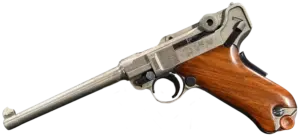

The first time you pick up a Mauser C96, the grip tells your hand exactly why it earned the Broomhandle nickname. It is more wand than pistol, a long slab of milled steel with a round wooden handle and a magazine in front of the trigger. The profile is so distinctive that even non-collectors recognize it. If you are shopping for one, or trying to decode a rack of lookalikes, this guide breaks down the variants that matter to buyers, the stock-holster rigs, the common calibers, and the checks that separate a great example from an expensive headache.
A quick origin story and where it served
Mauser began testing its new self-loading pistol in 1895 at Oberndorf, Germany, and the model we know as the C96 went into production soon after. The factory marketed it as the Mauser Military Pistol, but no major power officially adopted it as a standard sidearm. Instead, the gun found a strong commercial audience and was purchased in notable quantities by various governments and units. According to a widely cited overview from Rock Island Auction, limited military buys came from places like Italy, Turkey, and Persia, while the broader market was civilian and paramilitary.
Even without a single flagship military adoption, the C96 still saw a great deal of service. It was carried in Europe before and during the First World War, it traveled to far corners of Asia, and it remained available and influential well into the interwar period. The gun’s reputation as both a status piece and a hard-hitting sidearm kept it in the public eye for decades.
If you want a high-level refresher with period photos and variant snapshots, Rock Island’s overview of the Mauser C96 is a good companion read.
How the C96 works in plain terms
The standard C96 is a short-recoil, locked-breech pistol with an internal box magazine permanently fixed in front of the trigger guard. Most examples hold 10 rounds and are loaded from the top with stripper clips. The long barrel and high sight line gave it reach and a certain elegance, and the detachable wooden shoulder stock could turn it into a stocked pistol for more stable shooting at distance. The safety evolved over time, and collectors often distinguish early and late patterns by the type of safety present.
While most C96s have a 10-shot fixed magazine, you will encounter less common 6-shot and 20-shot fixed-magazine variants noted in the literature. One major outlier is the later M712 Schnellfeuer, which accepts detachable magazines and can fire in semi or full auto. We will get to that one shortly.
Pre‑war commercial variants buyers actually encounter
Ask three C96 collectors to define pre‑war commercial and you will get four answers. The umbrella covers a range of sub-variants from the late 1890s through the early 1910s, and the nicknames can sound like secret handshakes. Here are the broad strokes that matter to most buyers.
Early commercial pistols are often tagged by hammer and frame traits: terms like cone hammer, large ring hammer, small ring hammer, and flat side refer to visible changes in the hammer profile and the shape of the frame sides. These are not cosmetic quirks. They cue you to approximate production windows and parts compatibility. If you are browsing a show table and see an early high-polish pistol with a cone hammer and a deep milled panel on the frame, you are likely looking at an early commercial build from the first years of production.
By the 1912 to 1914 period, Mauser introduced an updated safety that collectors frequently call the New Safety. Many buyers prefer it if they intend to shoot sparingly, because it is considered more practical than the early type. You will also see the term Bolo used for short-barreled, small-grip C96s that became common in the 1920s. The nickname nods to the pistol’s appearance and its association with Russian and Eastern European use. For buyers, the Bolo’s handier size is a plus, though originality and condition still rule the price tag.
What to check on pre‑war commercial C96s:
- Numbers: Mauser numbered parts widely. Matching numbers on the frame, bolt, lock frame, hammer, and other small parts lift confidence and value.
- Markings: Commercial proofs and Oberndorf legends are normal for this period. Look for crisp, honest stamps without heavy buffing.
- Finish: Older commercial guns often show a higher polish blue. Watch for aggressive refinishing that rounds edges and washes out letters.
- Stock: If a stock-holster accompanies the pistol, make sure the numbers and fit tell a consistent story. More on stocks below.
The WWI Red 9 contract and how to vet one
During the First World War, Germany’s need for sidearms exceeded P.08 Luger production, and Mauser supplied C96 pistols chambered for 9×19 mm Parabellum. To make sure troops did not feed these guns the more common 7.63 Mauser cartridges, the grips were marked with a large, filled-in numeral 9, usually in red. The nickname Red 9 stuck.
Genuine Red 9s are among the most recognized military C96 variants. They are also commonly faked or assembled from parts because demand is strong. If you are looking at a Red 9, slow down and audit the details.
- Grips: Original Red 9 grips show an inlaid or burned-in numeral that looks right for age and wear. Freshly cut numbers or paint over modern sanding should set off alarms.
- Chambering: 9 mm Red 9s will not have the typical 7.63 mm chambering. If you cannot gauge the chamber safely, ask for a known-inert cartridge fit check.
- Numbers and marks: Matching serials across the main parts are important. Military acceptance or contract marks can appear, but do not buy a story without the metal to back it up.
- Stock: A Red 9 with a matching stock-holster and period leather is a premium combination. Repro wood is abundant, and mismatched numbers are common.
If you are cross-shopping German WWI handguns more broadly, our guide to P.08 Luger pistols, dates, and smart buying helps frame what military sidearm originality looks like across makers.
The M712 Schnellfeuer: detachable mags and the selector
In 1932, Mauser introduced the M1932 Schnellfeuer machine pistol, commonly called the M712. This was the C96 concept evolved for detachable box magazines and selective fire. On the left side of the frame sits a spring-loaded selector with positions marked N for semi-automatic and R for full automatic, a detail noted in Rock Island Auction’s coverage.
The Schnellfeuer found markets in the 1930s that valued compact automatic firepower. Period use appears in China, in Spain’s conflict, and in the hands of various German users as a secondary arm. For buyers today, the M712 carries its own set of cautions.
- Magazines: Original 10 and 20-round detachable mags are a world apart from modern repros. Fit and finish on the originals are usually cleaner, and markings help.
- Selector and internals: The selective fire parts should show consistent finish and wear with the rest of the pistol. Overly fresh parts in a worn gun deserve scrutiny.
- Stocks: Some Schnellfeuer stocks differ from earlier C96 patterns. As with all C96 stocks, number matching and fit matter to value.
- Legal status: Select-fire arms and stocked pistols are tightly regulated in many jurisdictions. Get clear, written guidance for your location before you buy or attach any stock.
Stock‑holsters: how to spot original, matching rigs
The C96’s wood stock-holster is a big part of its personality. Slot the tang on the pistol’s grip into the iron on the stock, lock it down, and you have a stocked pistol. Detach and it becomes a wooden holster case. For collecting, the stock can be the difference between a nice example and a truly compelling rig.
What raises confidence:
- Matching numbers: Many stocks were numbered to the pistols. Matching serial numbers are a strong sign, though always consider the whole picture.
- Fit and wear: A stock that fits the pistol cleanly, with wear patterns that echo each other, is more persuasive than a pristine stock on a well-worn gun.
- Hardware: Inspect the iron carefully. Original inletting, screws, and hinge work look a certain way. Modern replacements often stand out on close inspection.
- Wood: Period wood shows age, small checks, and finish that sits down in the grain. Recent sanding or glossy re-varnish flattens that character.
Buyer’s note on law: Attaching a shoulder stock to a handgun can be regulated. Some historic combinations are treated differently than modern pairings in certain countries. Do not assume. Check current rules where you live before you attach a stock to a pistol, even if the wood looks original.
Calibers: 7.63 Mauser, 9 mm, and a few rarities
The C96’s native chambering is 7.63×25 mm Mauser, also called .30 Mauser. It is a spicy little bottleneck cartridge that made the C96 famous for reach and penetration. Most commercial guns you will find are in this caliber. During WWI, the Red 9 contracts brought 9×19 mm Parabellum to the C96 family to align with German service ammo. There are also rare 9 mm Mauser Export chamberings noted in the historical record.
For the modern shooter, the main caution is ammunition confusion. Some later pistols and copies in Asia were associated with 7.62×25 Tokarev, which is not the same as 7.63×25 Mauser in pressure terms. Even if dimensions are similar, many consider Tokarev loads too hot for early C96 pistols. If you plan to fire an original C96, have a qualified gunsmith check the pistol, choose conservative loads intended for the platform, and proceed carefully.
What to look for: mechanical checks, finish, and numbers
Collecting a C96 is part history lesson, part mechanical inspection. You do not need a machinist’s gauge set to spot the big things, but a method helps. Here is a practical checklist you can work through at the counter.
- Bore and crown: Many C96 bores are worn. Strong rifling and a clean crown improve both shootability and value.
- Bolt stop: The C96’s bolt stop absorbs a lot of stress. Cracks here are common and serious. Inspect it in good light.
- Lockup and movement: With the pistol empty, cycle it and feel for smooth motion. Excessive slop or grinding can signal wear you will pay to correct.
- Safety: Confirm which safety type you have and that it functions as intended. Early safeties can be idiosyncratic.
- Numbers: Mauser stamped serials widely. Matching numbers across major and minor parts raise confidence that the pistol has not been pieced together.
- Extractor and firing pin: Look for chips and peening. Small parts are replaceable, but original, healthy parts are always better.
- Sight: The tangent rear sight is easy to knock off straight over a hundred years. Make sure it moves as designed and sits square.
Finish and stocks deserve their own quick pass:
- Finish honesty: Expect edge wear and thinning where a hand would naturally polish the metal. Blued-over pits, washed-out edges, or soft lettering hint at a refinish.
- Grips: Original wood grips age with the pistol. Sharp checkering on a gun that is otherwise well worn can mean a replacement. That may be fine, just price it accordingly.
- Stock-holster: Read the stock guidance above closely if a rig is included. The stock and leather can account for a large portion of the value.
Common pitfalls: copies, conversions, fakes, and ammo mixups
The C96’s fame attracted foreign makers, and some of those guns were licensed or respectful homages while others were crude copies. Spanish-made pistols inspired by the C96 were widespread in the early 20th century. They have their own following today, but their value, quality, and parts interchange vary. If a price seems too friendly for a “Mauser,” slow down and check the markings closely. The correct Oberndorf legends and Mauser markings should be present and crisp on a true Mauser-made C96.
Faked Red 9s are an evergreen trap. Freshly cut numerals, mismatched parts, and 7.63 barrels reworked to resemble 9 mm are all out there. On the M712 side, frankenguns assembled from mixed parts are also common. Patience and comparison with known-good examples will save you money and heartache.
On ammunition, it is worth repeating: do not assume 7.62×25 Tokarev ammo is safe in a 7.63×25 Mauser pistol. When in doubt, stop. Bring in a competent gunsmith and buy or load ammo that is appropriate for an antique C96.
Shooting and living with a C96 today
Part of the C96’s charm is that it still runs like a machine that mattered. The sights are optimistic, the grip is unique, and the balance with a stock attached is surprisingly civilized. If you want to shoot one occasionally, a few habits help keep the experience clean and safe.
- Have it checked: Before you put any live rounds through an antique pistol, have a professional examine it, especially the bolt stop and locking surfaces.
- Choose gentle ammo: Use loads intended for C96 pressures. Many owners handload for control, but factory options for 7.63 exist from time to time.
- Protect the stock: If you are lucky enough to own a matching stock-holster, consider using a reproduction for range trips. Original wood is valuable and fragile.
- Mind the stripper clips: Quality clips make loading easy. Bad clips cause more frustration than most other factors on a day at the range.
Parting thoughts: collecting with a plan
The C96 Broomhandle rewards curiosity. You can aim your search at early high-polish commercial pistols with the distinctive early hammers. You can focus on wartime Red 9s and the tangled web of stocks and leather. Or you can go after the technical oddball, the M712 Schnellfeuer, with its detachable magazines and N and R selector. Across all of it, the themes are the same: originality, matching parts, clean wood and iron, and mechanical integrity.
When you compare notes across German handguns of the era, the C96 sits comfortably alongside the Luger and later service pistols like the P.38. It is a piece of Oberndorf history you can hold, a slice of engineering ambition, and a sidearm that travelled the globe without a formal flagship contract. If your goal is to add one great Broomhandle to your safe, take your time. Handle as many as you can. Learn what honest wear looks like. Do not let a red 9 on fresh beech grips talk you into skipping the rest of the exam. The right one always makes itself obvious when you are ready for it.