
I still remember the thunk of a Dan Wesson Pistol Pack case landing on a glass counter. Flip the latches, and there it was: a tidy row of barrels shining like organ pipes, a wrench tucked into its cutout, and a revolver frame waiting to wear whatever length your day called for. If you’ve ever wanted a sixgun that could be short and handy in the morning, long and steady in the afternoon, and something in between on a whim, Dan Wesson built that idea into steel.
This is a nuts-and-bolts, buyer-friendly walk through Dan Wesson’s interchangeable-barrel revolvers, with the Model 15 and today’s stainless 715 front and center. We’ll look at how the barrel/shroud system works, what comes in a Pistol Pack, what to know about frames, finishes, and grips, how the modern 715 ties back to older guns, and the watch-points I use when I’m deciding whether to bring one home.
A case full of barrels: why Dan Wesson still turns heads
Plenty of revolvers are accurate. Plenty are durable. Very few let you change their personality at the bench in a matter of minutes. That’s the Dan Wesson trick. The switch-barrel idea isn’t just a neat party trick; it lets the owner tune cylinder gap, pick a barrel length for the job, and enjoy the same trigger and sights across several configurations. For shooters who travel light and think in practical terms, that was liberating. For collectors, the Pistol Pack became both a symbol and a rabbit hole. The factory case with matching barrels and shrouds doesn’t just look cool; it captures the brand’s core promise in one tidy kit.
What makes the Dan Wesson system different
Dan Wesson’s revolvers thread the barrel tube directly into the frame. Over that barrel goes a separate shroud, and then a front nut tensions everything together. If you’re used to a traditional one-piece barrel, this approach looks unusual. In practice it’s straightforward and, once you’ve done it a time or two, a five-minute job at the bench.
Here’s the rhythm, paraphrasing the process outlined in Handguns’ 715 overview:
- Screw the new barrel tube into the frame.
- Set the cylinder gap using the included feeler gauge.
- Slide the matching shroud over the barrel; a small guide pin on the frame aligns it.
- Thread on and tighten the barrel nut at the muzzle.
That last step puts the barrel under tension. Shooters have long credited that tensioned setup, combined with consistent cylinder gap and good lockup, for the strong accuracy many Dan Wesson revolvers deliver. The system also makes maintenance of the forcing cone and muzzle crown more owner-friendly than most fixed-barrel designs. If you’re buying, the takeaway is simple: the tool kit matters, and condition of the barrel nut flats, muzzle crown, and barrel threads tells you a lot about how carefully the gun was handled.
From early oddballs to the Model 15
Dan Wesson’s first production switch-barrel revolvers arrived in 1970: the W8, W9, W11, and W12. They used Karl R. Lewis’s switch-barrel concept with a screw-in barrel tube, removable shroud, and a feeler gauge for setting gap. Those early guns had an exposed muzzle nut that gave them a quirky, almost experimental look. The next year brought what most collectors think of as the classic Dan Wesson silhouette. In 1971, the fixed-sight Model 14 and adjustable-sight Model 15 appeared with a recessed barrel nut and a more contemporary profile. The Model 15, in particular, became the quintessential Dan Wesson switch-barrel revolver, and it’s the model many of us picture when we think of those foam-lined Pistol Pack cases.
If you’re new to the family, the Model 15 is the blued, adjustable-sight, .357 Magnum that defined the line for decades. It made the brand’s reputation for accuracy and shootability, and it paved the way for the stainless gun that carries the torch today.
The stainless 715 returns
In 2014, CZ-USA announced that regular production of the stainless Model 715 would resume. The “new” 715 arrived in .357 Magnum with an interchangeable six-inch barrel and a heavy vent shroud profile designed to manage recoil. According to Shooting Times’ first look at the 715, the gun made its fall debut that year, and it remained true to the Dan Wesson spirit while adding a modernized shroud design.
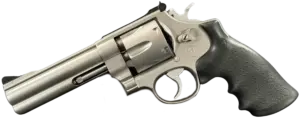
That modern heavy-vent, full-underlug shroud you’ll see on new 715s is often referred to as the HV6 profile. It gives the gun a planted, beefy look, and the extra forward weight helps keep the sights steady through Magnum recoil. Importantly for owners and tinkerers, the 715 was announced as compatible with barrels and grips from 15-2 models and newer revolvers. If you have a stash of older tubes and shrouds, that compatibility opens some welcome options.
Frames, finishes, sights, and feel
On materials and finish, the current-production 715 stays honest. The frame is cast stainless steel with a brushed stainless finish, and the overall look leans functional rather than flashy. You’ll notice the ventilated rib and the full underlug on the shroud, and you’ll likely find a set of hand-filling black rubber grips on the gun as it ships. The sight setup will feel familiar to most double-action revolver shooters: a pinned ramp front sight and an adjustable rear. Those are real advantages for a gun that expects to serve across .38 Special target work and .357 Magnum field tasks.
For buyers who like hard numbers, Handguns reported a single-action pull around 4.4 pounds and a double-action pull around 10.6 pounds on their sample, along with a Pistol Pack weight ranging from roughly 40 ounces to just over 50 ounces depending on which barrel assembly was installed. It’s a stout, steel revolver with a smooth DA stroke and a clean SA break, and that’s before you add the tuning potential the design was meant to deliver.
Pistol Packs: what you actually get
Say the words “Pistol Pack” around a Dan Wesson crowd and you’ll see eyes light up. The idea is simple: one frame, multiple barrels and shrouds, and the tools to swap them. The modern 715 Pistol Pack, as described by Handguns, is a stainless .357 Magnum set with 4, 6, and 8 inch barrels and matching shrouds, packed with a wrench and feeler gauge in a fitted case. It’s a faithful nod to the classic kits that first made Dan Wesson a household name among accuracy-minded revolver shooters.
Factory cases patterned after the original concept are laid out with compartments for three additional barrel assemblies and the supplied barrel-wrench kit, so everything has a place. That orderliness isn’t just for show; if you’re buying, it makes quick work of inventorying a used set. You should see three barrel tubes, three shrouds, a frame, a wrench, and a feeler gauge, each where it ought to be.
Barrels and shrouds: profiles, lengths, and setup tips
The heart of the Dan Wesson trick is the barrel assembly. The tube does the actual shooting; the shroud defines the gun’s look, weight forward of the frame, and how it balances in your hand. A few practical notes help when you’re evaluating parts or changing them yourself:
- Length and profile go together. A six-inch tube must wear a six-inch shroud, and mixing lengths won’t work. On current guns, the heavy-vent shroud is the signature profile.
- Inspect the barrel nut flats. Scuffed or rounded flats tell you someone used the wrong tool or too much force. The nut should snug down securely without drama.
- Mind the cylinder gap. The feeler gauge is there for a reason. A gap set too tight will bind as fouling builds, and too loose wastes velocity and can spit. Proper gap is part of the system’s accuracy recipe.
- Check the crown and forcing cone. Because owners can remove barrels, you’ll see everything from factory-fresh crowns to home-polished cones. Clean, even work is good; chatter marks and dings are not.
- Look for the guide pin. The shroud indexes on a small pin at the lower front of the frame. If the shroud doesn’t seat cleanly or appears canted, stop and investigate before turning a wrench.
The upshot is that these revolvers reward careful hands. Set up properly, they shoot well and stay tight for a very long time. Set up carelessly, they can be frustrating until you undo the prior owner’s sins and start fresh with the gauge and the correct tool.
Grips and reach: getting the trigger to you
Dan Wesson treated grips as part of the user-fit equation. On the 715, both grips and barrel/shroud assemblies are designed to be swapped, which lets you match the revolver to your hand and your task. As Shooting Times noted, owners can change out the grips just as they change barrels, and the 715 was rolled out with compatibility for grips from 15-2 models and newer. That means if you find a grip shape you love for slow-fire work, and another you prefer for speed and control in double-action, you can keep both on hand and switch as needed.
As a buyer, pay attention to how the grip fills your palm and where it puts your finger on the trigger in double-action. One virtue of the Dan Wesson system is that you don’t have to force a compromise. Try several styles. The factory rubber grips do an honest job of taming recoil and keeping the gun put in your hand. Wood can feel wonderful, but choose a shape that doesn’t make you overreach in DA.
Monson, Palmer, Norwich: what collectors mean
Spend more than ten minutes around Dan Wesson fans and you’ll hear three place names used as shorthand for different stretches of the company’s production. Collectors often group guns by these eras, and sellers will commonly note the location marked on a frame when describing a revolver. These labels are part of the hobby’s vocabulary and tend to drive a lot of conversations about desirability and fit-and-finish expectations among enthusiasts.
If you care about era when you’re buying, ask the seller for clear photos of the frame markings and the barrel/shroud stamps, and be sure those details match how the gun is being represented. You don’t need a degree in factory history to make a smart choice; you just need to confirm what’s actually in front of you and decide how much weight to give that era label for your purposes. It’s also worth noting that CZ-USA brought regular production of the 715 back in 2014, and those current guns have their own following separate from older frames.
Buyer and collector watch-points
Switch-barrel Dan Wessons aren’t fragile, but they are a little different. Here are the checks I make before I say yes to one, with notes specific to the Model 15 and stainless 715:
- Completeness of a Pistol Pack. For a modern 715 set, expect three barrel/shroud assemblies in 4, 6, and 8 inches, plus the revolver, barrel wrench, and feeler gauge in a fitted case. Make sure each shroud matches a tube and that the case cutouts make sense for what’s included.
- Barrel nut condition. The nut should show crisp flats and no vice marks. A chewed nut is a bargaining chip at best, a red flag at worst.
- Cylinder gap and endshake. With a feeler gauge in hand, verify that the gap isn’t paper-thin or yawning. Check endshake and sideplay the same as you would on any double-action revolver.
- Timing and lockup. Slow-roll the cylinder and test carry-up on each chamber. The 715’s lockwork is stout; it should feel consistent and honest.
- Sights and screws. The 715 uses a pinned ramp front and an adjustable rear. Make sure the front pin hasn’t been battered and the rear sight isn’t wallowed out or leaning. Check the shroud screw hole for cracks or marring around the pin area.
- Finish honesty. On the stainless 715, look for even brushing and crisp edges on the shroud and frame. Overbuffing rounds corners and can hide prior scratches. On older guns, don’t confuse honest holster wear with stainless scuffing.
- Shroud alignment. With the shroud installed, the rib and underlug should line up perfectly with the frame. Any cant suggests the alignment pin isn’t seated or the shroud has been stressed.
- Compatibility expectations. If you’re buying a 715 to share barrels or grips with a 15-2, confirm that assumption. Shooting Times reported compatibility for barrels and grips from 15-2 models and newer, which is great news, but always verify fit with your specific parts.
- Tool kit reality. A Dan Wesson without its wrench and gauge will still shoot, but you’ll want those items. Factor the cost of replacements into your offer if they’re missing.
One last note for the meticulous: because the Dan Wesson system encourages owner involvement, you’ll encounter guns that have been carefully maintained and tuned, and others that have been tinkered with a bit too enthusiastically. Let the condition of the small things guide you. A cleanly cut crown, a square-faced nut, and a shroud that seats flush usually signal careful habits across the board.
Living with a Dan Wesson: why these guns stick around
It’s easy to talk mechanics and forget the simple reason these revolvers keep people smiling: they’re a joy to set up and shoot. You don’t feel locked into one choice the day you buy. If your weekend range session starts with mild .38 Special loads on a four-inch barrel and ends with .357 Magnum across an eight-inch tube, it’s the same sight picture, the same frame in your hand, and the same trigger you’ve already learned. That continuity, paired with real accuracy and the satisfaction of doing the setup yourself, makes a Dan Wesson a hard gun to let go of once it’s settled into your safe.
The 715 carries that spirit forward with stainless steel, a heavy-vent profile that soaks up recoil, and factory support in the present tense. It’s a practical shooter’s revolver that happens to make collectors happy, too. If you find a clean Model 15 or a well-kept 715 Pistol Pack with its pieces still nestled where they belong, you’ll understand why so many of us still grin when that foam-lined lid swings open.
If you want to see the current stainless gun and how the factory presents it, Handguns offers a clear walk-through of the modern kit and its setup. And for background on the 2014 return, Shooting Times’ first look captures the reintroduction and notes on compatibility that matter when you’re hunting parts or planning a pack.