
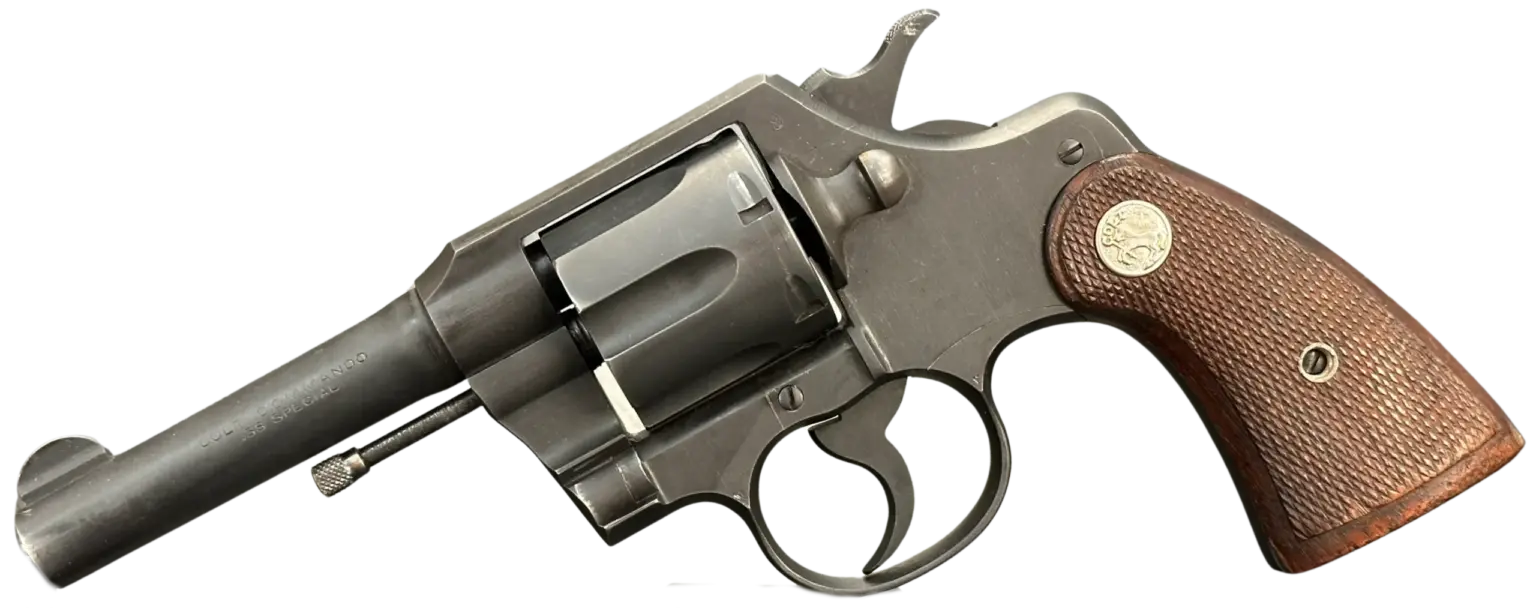
I still remember the first time a Colt Detective Special locked into my hand the way a good pocketknife snaps shut. Short barrel, six chambers, and that graceful little profile. It was a pawn counter find wearing tired blue and a rubber boot grip. Nothing flashy. But the moment the cylinder clicked home and the trigger stacked cleanly through a dry fire, I understood why these small Colts get under your skin.
If you are hunting for one now, the questions start piling up. Which generation am I looking at, and about what years was it made? Is the ejector rod shrouded or not, and when did that change happen? Is the frame steel or alloy? Where do I find the serial and what does it tell me? And how on earth do I inspect lockup and timing without a bench full of tools?
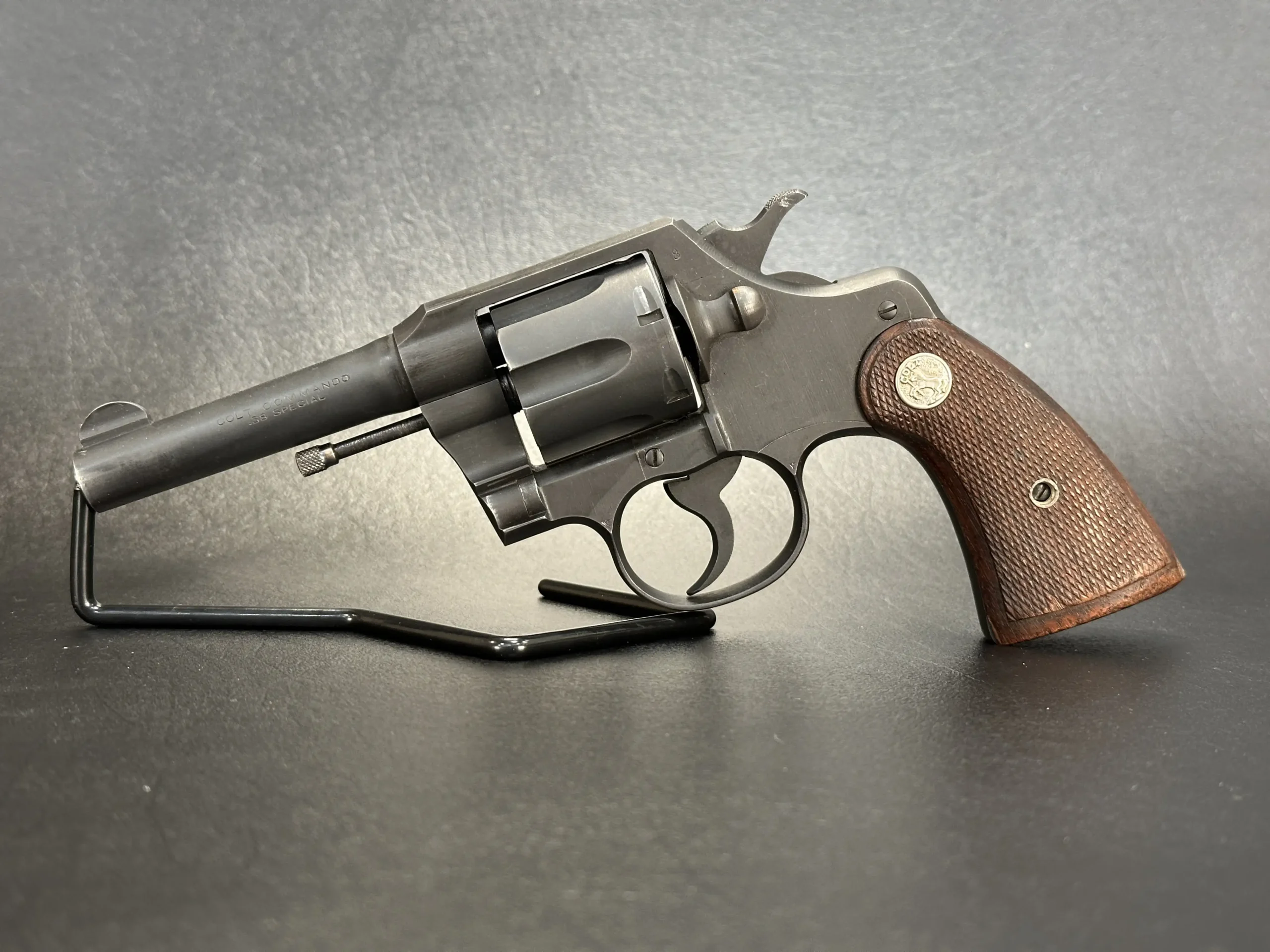
Let’s walk through it. This guide sticks to the core D-Frame family that shows up most often in the wild: the Detective Special, Police Positive, Cobra, and Agent. We will hit the generation cues and date windows, how to spot the alloy variants, how to read what the serial can tell you, and what to check before you shake hands on the deal.
What Colt means by D-Frame
Colt used letter codes for frame sizes. D-Frame was the small six-shot frame that carried most of Colt’s .38 Special snubnose revolvers for decades. When you hear D-Frame, think compact grip frame, medium-small cylinder, and barrels typically in the 2 to 4 inch range. The family includes the Detective Special, the Police Positive line, the lightweight Cobra and Agent, and a few upscale neighbors like the Diamondback with target sights built on the same footprint.
Colt’s own literature groups these models together in one manual, which is a handy clue that the basic layout and controls share a lot of DNA. If you want an official reference for operating and safety basics across these guns, the factory’s combined booklet is worth bookmarking. Colt’s revolver manual covering the Detective Special, Police Positive, Agent, and Cobra is a straightforward starting point for parts names, disassembly limits, and safe handling.
Meet the family you will actually find
Here is how the quartet most buyers care about generally shakes out. I am keeping it practical, because you are likely to meet these in gun shop cases and estate lots rather than on a museum rack.
Detective Special The classic two-inch, steel-frame snubnose with six shots. The DS is the face of the D-Frame line and the one with the most visible feature changes across its run. You will see early guns with slender barrels and later examples with heavier profiles. Some wear a protective shroud around the ejector rod, some do not. Grips run from small wood panels to fuller stocks, depending on era and owner taste.
Police Positive Think of this as the service or belt-holster side of the family. Typically steel framed, longer barrels are common, and the topstrap and sights are simple and clean. The name references Colt’s “Positive” internal safety system that keeps the hammer from striking the firing pin unless the trigger is deliberately pulled. The Police Positive shows up a lot in 4 inch trim and has the same core D-Frame layout and feel.
Cobra This is the lightweight carry variant made with an alloy frame. It keeps the six-shot cylinder and the D-Frame profile but trims weight in a way you can feel the instant you handle one. Most have short barrels and compact grips. Finish on the alloy frame will look different from the polished steel barrel and cylinder, which is a helpful tell.
Agent Another lightweight, the Agent emphasizes concealment. Expect an alloy frame and a trimmer grip profile. If you pick one up and it feels even smaller in hand than a typical Cobra, you probably found an Agent. It is a favorite among folks who want maximum pocket friendliness with the Colt trigger character still intact.
Neighbor note for context, not to shift focus. The Diamondback rides the same footprint with a vent rib, adjustable sights, and upscale trim. It is often cross-shopped with D-Frames, but the identification and inspection basics below apply just the same.
Police Positive vs Police Positive Special
Buyers often lump these together, but the chamberings differ. The Police Positive commonly appears in .32 Colt New Police and .38 Colt New Police, which correspond to .32 S&W Long and .38 S&W, not .38 Special. The Police Positive Special has a longer cylinder and is the D-Frame service gun chambered for .38 Special and certain other longer cartridges of its era. Do not assume every Police Positive is a .38 Special D-Frame. Check the barrel rollmark carefully, and match ammunition to the exact chambering. As Colt’s safety guidance reminds us, use only commercially manufactured ammunition that meets SAAMI specifications, and never fire ammunition not specified for your revolver.
Generations and date ranges at a glance
Colt’s catalogs did not always use “generations,” but collectors do. The ranges below are widely used as practical dating windows, with transitional overlap possible. Always confirm with serial data if exact dating matters to you.
- Detective Special
- First Issue approximately late 1920s to mid 1940s: unshrouded ejector rod, slim “pencil” barrel, early examples with square-butt stocks becoming round-butt as the line matured.
- Second Issue approximately late 1940s to early 1970s: still unshrouded, barrel profiles trend heavier over time, front sights often ramped on later production. Most DS you see from this era will look like the classic 2 inch snub with exposed rod.
- Third Issue approximately early 1970s to mid 1980s: shrouded ejector rod becomes standard, heavy barrel profile common, updated sights and stocks. If you see a DS with a clean, integrated shroud under the barrel, you are likely in this era.
- Cobra
- Early production approximately 1950 to early 1970s: alloy frame, unshrouded ejector rod, light carry weight, short barrels most common.
- Later production approximately early 1970s to early 1980s: shrouded ejector rod mirrors the DS update, stocks and sights modernize. Still alloy framed.
- Agent
- Early production approximately mid 1950s to early 1970s: alloy frame, unshrouded ejector rod, very compact stocks.
- Later production approximately early 1970s into the 1980s: shrouded ejector rod adopted, continued emphasis on a short grip profile. Expect the lightest feel of the bunch.
- Police Positive and Police Positive Special
- Prewar through postwar production: largely unshrouded ejector rods throughout their classic service life. The Police Positive Special tracks the DS changes most closely, with later examples showing heavier barrels and updated sights.
Quick sort at the counter. If you are holding a shrouded D-Frame, think early 1970s and later. If the rod is exposed and the barrel is pencil-slim with small stocks, think earlier. Square-butt DS stocks point you toward the earliest end of the run.
Shrouds, barrels, and other visual tells
The ejector shroud is the big visual fork in the road. Here is how to see it clearly, and when it tends to show up. Look under the barrel, all the way to the muzzle. If the ejector rod runs in the open and ends at a small knob, that is the unshrouded style common on earlier production through the 1960s. If the rod disappears into a shaped housing that seems to be part of the barrel, that is the shrouded style that becomes common across DS, Cobra, and Agent lines in the early 1970s. The shrouded look has a smoother, more continuous line under the barrel and helps protect the rod from bumps.
Barrel diameter tells you about the period and the intended feel. A skinny barrel makes a two inch snub feel livelier at the muzzle and a bit snappier under recoil. A heavier barrel damps some of that and puts a little more weight forward. Hold the revolver at eye level and compare the barrel to the frame window. If the barrel looks stout all the way to the frame, you are in the heavier camp that shows up later in the run.
When you are evaluating a piece that might be a mix of parts, scan for mismatches. A shrouded barrel paired with an early style front sight base, or vice versa, can indicate a rebarrel at some point. Rebarreling is not a crime against good sense, but it matters to originality and price. If the finish tone and polish level on the barrel do not quite match the frame, make a note and ask questions.
Steel versus alloy: what your hands and eyes can tell
The Detective Special and Police Positive are steel frame guns. The Cobra and Agent use an aluminum alloy frame with a steel barrel and cylinder. If you pick up a Cobra or Agent after handling a steel D-Frame, the weight difference is obvious.
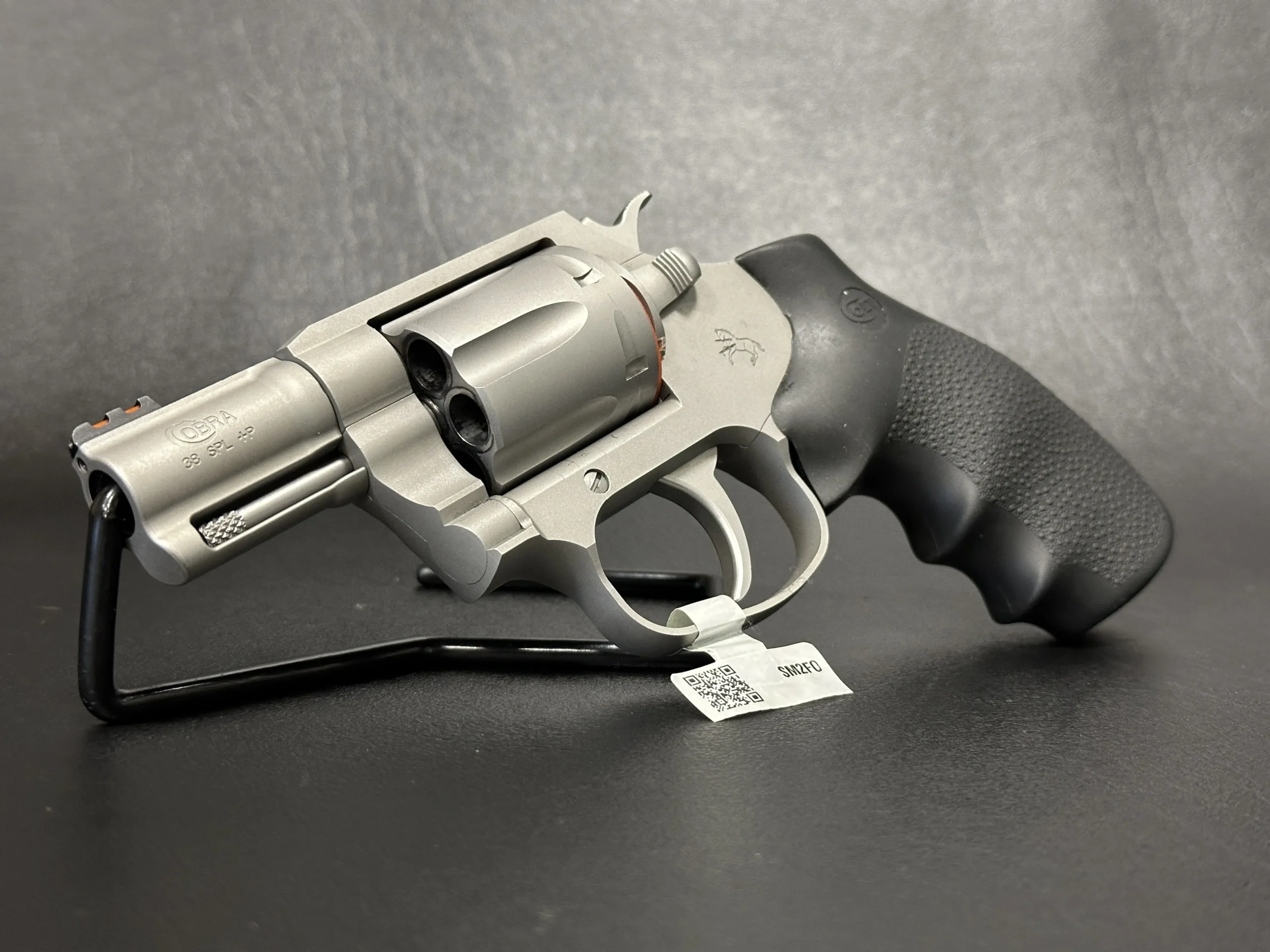
Finish clues help too. Many alloy frames show a slightly different sheen or color compared with the steel barrel and cylinder. That contrast can grow with age and handling. Examine the junction at the barrel shank where it threads into the frame. On a well used alloy frame, you can sometimes spot subtle finish wear or tiny halos there that you tend not to see on a steel frame with the same mileage.
Look for model rollmarks as the most reliable shortcut. A sideplate or barrel that says Cobra or Agent tells you the intent from the factory. Just remember that barrels can be swapped. If a revolver says Cobra on the barrel but the frame looks steel in color, pause and investigate. Colt has seen many decades and many hands. Parts travel. If originality is critical, consider requesting a factory letter or support from Colt so you know how your example shipped.
Because alloy frames are lighter, they can show different wear patterns. Pay careful attention to the crane and frame fit on lightweight models. A forced open cylinder, or a cylinder repeatedly snapped shut with a flick, can affect alignment over time. An alloy frame can reflect that abuse sooner than steel.
Serial numbers and dating: where to look and what codes mean
Start by locating the serial number and writing it down carefully, including any letters. Colt serials may include prefixes or suffixes, and those characters matter. On D-Frames, expect to find the serial on the frame in the crane cut, visible when you swing out the cylinder. Many also have it on the butt. If you do not see it on the butt, look again in the crane cut and under the grips. Always verify that the number you see is the true serial and not an assembly number on a sideplate or crane.
For date guidance, use two tracks. First, match the gun’s visible features to the generation list above to get a workable window. Second, use a serial reference to narrow it further. Colt has supported owners with documentation and service for decades, and a factory confirmation is the cleanest way to pin down a shipping year. If you prefer to do homework yourself first, start with a trusted serial resource and then verify. We maintain a practical overview of Colt serial numbers and date ranges to help you organize your notes before you contact Colt.
Two quick cautions. Parts swapping is common across long-lived revolvers. Barrels, stocks, and small parts move around. Also, letter codes in a serial can indicate a sub-variant or production run, so record the entire string exactly as stamped. If a sale hinges on a claim like first year of a pattern, get it in writing from a reliable source.
How to inspect a D-Frame before you buy
Inspection is where you protect your wallet and your peace of mind. You do not need to take the sideplate off to make a sound judgment. Stay within what the factory manual allows and lean on simple checks that reveal how the revolver was treated. Colt’s own guidance emphasizes safety and leaving deeper work to a qualified smith. Their manual also reminds you to stick with commercially made ammunition that meets SAAMI specifications and to avoid any damaged or questionable cartridges. That is good advice for the inspection table too.
- Always start cold and clear Swing out the cylinder, look and feel every chamber. Keep the muzzle in a safe direction while you work. Colt’s manual repeats these basics for a reason. If you want a deeper walkthrough, see our revolver timing and lockup checklist.
- Timing and carry-up Slowly cock the hammer in double action while watching the cylinder stop and the lead-in notches. You want the cylinder to lock fully before the hammer reaches the fall. Repeat for every chamber. If one chamber arrives late or never quite locks in double action, note it.
- Lockup With the gun at full lock on each chamber, and the hammer held back carefully or the trigger held to the rear on an empty, gently try to move the cylinder side to side and rotationally. A hint of rotational play is normal. Excess slop or inconsistency from chamber to chamber is a red flag.
- Endshake and barrel gap Push and pull the cylinder fore and aft at full lock. If it clacks around, you have endshake to address. Shine a light and eyeball the barrel cylinder gap. You are not measuring to a thousandth at the counter, but you do want to avoid visibly huge gaps or a rotor that seems to kiss the forcing cone.
- Forcing cone and bore Tip the muzzle to the light. Look for sharp chips at the edge of the cone and roughness in the bore. A leaded or dirty bore can hide sins. If a seller is comfortable with a quick patch, it is worth it.
- Ejector rod and star Spin the cylinder slowly while watching the ejector rod for wobble. A bent rod can bind under use. Push the rod and inspect the star and its face. Crud under the star can feel like timing trouble, so make sure your judgment is not based on grit.
- Crane fit With the cylinder open, rest the gun on its side and look at how the crane meets the frame. The fit should be even, without daylight or odd gaps. Check that the cylinder swings smoothly and closes without needing a nudge to line up. Any hint the assembly has been pried or slammed around is worth a pause.
- Sideplate screws and pins Mangled screws tell a story. If the sideplate has been pried or battered, you may be inheriting someone’s experiment. That does not mean a gun is bad, but it means proceed with care and possibly budget for a gunsmith’s attention.
- Finish and refinish Colt polishing and blue work has a certain look. Edges should be crisp. If rollmarks look washed or the edges of the frame look melted, refinishing is likely. A refinish can be honest, but value rides along with originality.
- Stocks and sights Factory stocks and sights matter to collectors. Make sure any aftermarket grips come with the sale if the original panels are no longer on the gun. A short round-butt stock on a long square-butt frame can throw you off when judging concealability and feel.
Run those checks on every D-Frame you handle, steel or alloy. If something feels off on one chamber but not the others, that is a clue. Pattern problems can be corrected by a competent gunsmith, but the time and parts will affect what you should pay today.
Shooting manners and what buyers notice on the range
One reason D-Frames keep finding homes is how they behave when you press them into ordinary work. The double action pull has a distinct stacking character that many shooters like because it telegraphs the moment before ignition. On a good example, the pull stacks, settles, and breaks without grit. That pull helps a short-barreled six-shooter punch above its size in practical accuracy once you learn it.
Heavier barrels settle the front sight faster between shots. Alloy frames carry beautifully, but you will feel more of the cartridge in your palm. If you plan to shoot mostly standard pressure .38 Special, any sound D-Frame will treat you well. Before considering hotter loads or +P, especially in older or alloy-framed guns, verify suitability with Colt or a knowledgeable gunsmith. As Colt’s safety material reminds us, stick to commercially manufactured ammunition that follows SAAMI specifications, and always inspect ammunition before use. For current-production options that are rated for +P, see Colt’s Cobra series lineup.
Parts, service, and ammo notes
Colt’s safety guidance around revolver service is simple and wise. Do not go past basic owner maintenance without the right training and tools. The interplay between the hand, ratchet, cylinder stop, and rebound parts is not guess-and-check territory. If you think a D-Frame needs more than cleaning and lubrication, budget for a professional and have the gun assessed.
If you are new to revolvers, one habit will save you grief. Protect the ejector rod and the crane. Open the cylinder gently, press the latch, and swing it out straight. Do not flick it shut. That movie flourish is a fine way to stress parts on any swing-out cylinder revolver, and a lithe Colt D-Frame is no exception.
On ammunition, Colt’s printed guidance emphasizes inspecting cartridges, avoiding anything damaged or corroded, and using factory ammo built to SAAMI specs. That covers both safety and longevity for older revolvers. The temptation to run exotic reloads is real. For a classic Colt you want to enjoy long term, it is a temptation worth resisting.
A quick word on the modern Colt Cobra and the 1990s DS-II era
Colt brought the Cobra name back in current production, and it sits in the same size class buyers think of when they say D-Frame. The new guns are not built exactly like the classics. The current Cobra line uses a stainless steel frame, a six shot cylinder in .38 Special, and modern internal safeties that include a transfer bar and a rebounding hammer system. Colt also lists certain models as suitable for .38 Special +P. You can see current catalog configurations and features on Colt’s site, for example the standard Cobra in .38 Special +P.
Also worth noting for clarity. The short-lived 1990s compact Colts such as the SF-VI and DS-II are not classic D-Frame lockwork. They occupy the same size niche, but their internal designs differ. If you are collecting traditional D-Frames, keep that boundary in mind when you evaluate a listing.
Final thoughts for buyers and collectors
Buying a Colt D-Frame is part careful identification and part listening to your hands. Sort the basics first. Steel or alloy. Shrouded or not. Slender or heavy barrel. Detective Special, Police Positive, Cobra, or Agent rollmark. Then let the mechanics talk. Does the cylinder carry up cleanly on every chamber? Is the lockup consistent? Do the sights and stocks belong? Does the finish tell a straight story?
Once you have a candidate that passes those tests, grab the serial, record any letters with care, and file that with a few clear photos of the gun’s features and marks. If production dating matters to you, a factory confirmation makes a tidy capstone. For operating details, safety reminders, and a parts diagram that applies across this family, Colt’s combined manual for these revolvers is the official word and a handy thing to keep around. Use it, lean on a competent gunsmith when needed, and keep these small Colts in the kind of shape that made you want one in the first place.
If you are comparing close cousins, we also have a quick primer on the Colt Diamondback’s place in the D-Frame family so you can price features confidently without mixing up models.