
Remington Model 8 and 81: Browning’s Long Recoil Sporting Rifles
A practical, collector-minded look at Remington’s Model 8 and 81. Calibers, long recoil explained, police conversions, and what to check before you buy.

Call us any time at: (833) 486-6659

The first time I shoved a borescope down a well-loved hunting rifle, I expected to see a shiny steel tunnel. Instead, I found a tiny highway of lands and grooves, copper streaks clinging to every ridge, and tool marks that looked like fingerprints from the person who cut that barrel a generation ago. In that moment, rifling went from a diagram in a manual to the real heart of the rifle.
If you care about how a rifle shoots, you should care about how its rifling was made. Not because one method is magic, but because each leaves a different signature in the steel. That signature shows up in how a barrel breaks in, how it holds accuracy when hot, how long it lasts, and sometimes even how it feels to clean.
Rifling refers to the helical grooves inside the bore that spin the bullet, giving it gyroscopic stability so it tracks point-forward through the air. That spin keeps the projectile from tumbling and tightens groups downrange. The grooves are the recessed spirals you can see, and the lands are the little raised ridges between them. Land diameter is measured across the tops of those ridges. Groove diameter is measured across the bottoms of the grooves. Getting those diameters consistent along the full length of a barrel is a big part of what makes a rifle shoot predictably.
Twist rate is tied to this. It is the distance the rifling takes to make one full turn. A 1-in-8 twist means one turn in 8 inches. Choose a twist that matches your bullet length and weight to stabilize your load’s spin rate. Too slow and long bullets may yaw. Too fast and you can overstress thin-jacketed projectiles. For a friendly refresher, see Savage’s plain-English walk-through on how rifling works and why twist rates matter, and our twist-rate guide.
Barrel making is part craft and part controlled process. Steel is stubborn. Push it cold, and it moves in ways that are hard to predict unless you have done it a thousand times. Cut it, and you leave tool marks. Forge it, and you push stress into and through the metal. That is why barrel makers care about the exact way those spirals are formed. The different methods can leave slightly different surface finishes, internal stresses, and tendencies when a barrel heats up or wears down.
Three methods dominate modern rifles:
Cut rifling is the old-world method done with a small cutter that removes a whisper of steel per pass. A hook-shaped cutter is pulled through the bore to cut a single groove, then indexed, and the process is repeated for each groove. It usually takes multiple passes to reach the final depth. That is why cut-rifled barrels take time to make.
The upside is control. Because the cutter advances so gradually, the maker can tweak the groove profile and twist details with fine resolution. As Gun University’s rifling 101 explains, the method is slow but allows adjustability when making changes to twist.
The tradeoff is throughput and scrap risk. Many tiny passes mean production is slower, and a mistake deep into the process can scrap a blank. That helps explain why cut-rifled barrels are often pricier and made in smaller batches.
On durability, comparisons vary by use case. The approved comparison at 80-lower.com argues that cut rifling can wear out more quickly than buttoned or cold-hammer-forged bores under heat and rapid fire. Others will tell you results depend more on steel, chambering, and how you shoot than on the method alone. Either way, you are balancing the maker’s skill, the material, and your cadence.
Button rifling starts with a barrel blank that has already been drilled and reamed. A super-hard tungsten carbide button with a reverse image of the lands and grooves is forced through that bore in a single pass. The button may be pulled or pushed, and it is usually allowed to rotate freely so the angled pattern on its surface self-guides to the desired twist. Instead of cutting away metal, the button displaces it.
This cold-forming process does more than shape the rifling. Savage explains that it work-hardens and smooths the steel at a microscopic level, which can reduce fouling, minimize bullet deformation, and promote consistent velocities. It is also fast and scalable, which helps deliver accuracy at a sensible cost when the process is dialed in.
A detail buyers often overlook is stress relief. Moving steel cold can trap stress in the blank, so many makers stress-relieve their button-rifled barrels after rifling to help them stay straight as they heat. Savage calls out this post-rifling step as part of keeping things true.
Cold hammer forging is a modern, high-throughput method that combines barrel shaping and rifling in a single step. Start with a short, fat blank that is already drilled and honed. Insert a hardened mandrel that carries the negative of the final rifling. Then the forging machine hammers the blank from multiple sides. As the hammers compress the steel inward against the mandrel, the blank lengthens, the outside diameter shrinks, and the rifling profile gets ironed into the bore.
American Rifleman’s overview of popular rifling types explains why this method suits large manufacturers with the machinery to do it well. In practice, very close tolerances can be held, and the process delivers a nearly finished barrel right off the machine.
CHF barrels are often praised for their durability in heat and heavy use. The comparison at 80-lower.com positions CHF as the best choice if you want the most reliable and longest-lasting barrel. If a CHF barrel feels heavier, that is typically due to the chosen exterior contour, not the rifling method itself.
All three methods aim at the same geometry. Lands are the raised portions that bite the bullet’s jacket. Grooves are the channels between. Profiles vary. Some prefer a taller land, some a more sloped transition. You may also run across named land-and-groove patterns like 5R, which alters land geometry and count to reduce jacket deformation and make cleaning a bit easier. The goal with any pattern is consistent engagement with the bullet so it takes the spin cleanly.
Twist rate needs to match your bullet. The heavier and longer the bullet, the faster the twist you usually need to keep it stable. Cut, button, and forged methods can all produce a wide range of twists. Cut rifling historically gave makers freedom to dial oddball twists for specialty loads. Buttoned and forged barrels often follow common twists for popular cartridges. For a deeper primer, see Gun University’s barrel rifling 101: types, twist rates, and more, and American Rifleman’s popular rifling types: advantages and disadvantages.
Most shooters want three simple things from a barrel: tight groups, predictable behavior when hot, and serviceable life. Here is how the methods tend to stack up, with the reminder that quality of execution is the real boss.
Button rifling has a strong track record for accuracy-per-dollar because it leaves a smooth bore with uniform dimensions and it is repeatable. Savage highlights that work hardening and the finish from buttoning help minimize bullet deformation and fouling, both of which are friendly to small groups. Many factory rifles wearing button-rifled barrels shoot better than their price tags suggest.
Cut rifling has long been associated with makers who chase peak precision. The slow, incremental cutting lends itself to fine control over twist and profile. That does not mean cut rifling is always better. It means the method often attracts the kind of shops that sweat details, and buyers select those barrels for precision-focused builds.
Hammer-forged barrels can be very accurate too, particularly for practical accuracy in carbines and hunting rifles. The bigger draw is how they keep performing under pressure.
Cold hammer forging has a reputation for taking abuse. The 80-lower comparison positions CHF as the go-to if you prioritize reliability and barrel life. That lines up with what shooters see in carbines and service rifles that see strings of hot rounds. The forging compacts steel around the mandrel’s shape, and many believe that structure helps the bore hold its dimensions longer under temperature swings.
Button-rifled barrels do well here, too, especially in sport and hunting settings where you are not trying to set a personal record on how fast you can heat a tube. The work-hardened bore surface and smooth finish are friendly to cleaning and to repeatable velocities.
Cut-rifled barrels excel at slow-fire precision and are perfectly fine for normal use. If your plan is to blast through magazines, the case for CHF gets stronger.
All barrels are wear items. Throat erosion from powder burn and heat is the sneaky enemy that takes accuracy before the rest of the bore looks tired. CHF barrels are frequently chosen when round counts and heat will be high. 80-lower.com states plainly that CHF offers the longest-lasting option. Buttoned barrels also enjoy long lives when treated kindly, and many shooters will never notice the difference in typical use. On cut barrels, opinions vary, which tells you the method is often less decisive than steel quality, chambering, and how you run the gun.
The rifling method is one variable among many, but it is a useful filter when you are staring at a spec sheet and wondering what it means for you. A few practical cues:
These cues are not absolutes. They are starting points to ask better questions about the specific barrel in front of you. Who made it, how do they treat and stress-relieve the steel, and how do their barrels shoot with the ammunition you plan to use?
Button rifling tends to leave a very smooth finish right off the tool, which can mean a shorter break-in and less fouling. Savage calls out that microscopic smoothing is part of the process. Cut-rifled bores can be very smooth as well, and many makers hand-lap or polish them after rifling to even out micro-tool marks. Hammer-forged bores often emerge with a consistent surface that cleans predictably and withstands hard use.
Cut rifling traditionally made oddball twists and custom groove profiles easier to produce. That is less decisive now, given how refined modern buttoning and forging setups have become. If you need a very specific twist or groove geometry for a boutique load, it is still worth asking a maker which method they use and how flexible they are.
Any time you move steel around, stress follows. Many makers stress-relieve after buttoning. Some stress relief after cutting. Hammer-forged barrels come off the machine with their own stress profile and then receive whatever heat treat and checks the maker uses. The point for buyers is not to become a metallurgist. It is important to know that reputable barrel makers build stress relief and inspections into their process so the bore stays where it belongs when you heat it up.
Whatever you buy, treat it well. A few simple habits make more difference than the rifling method in how long and how well a barrel shoots:
A button-rifled sporter that shoots small clusters with your favorite deer load might outshoot you for decades. A CHF carbine barrel that lives on steel in high summer may lose a little edge sooner at the throat, but keep running long after you stop counting rounds. A cut-rifled heavy barrel can be a joy when the wind is twitchy, and you are stretching things out. None of those scenarios live or die on method alone. They live or die on the sum of steel, maker, ammo, and the person behind the trigger.
If you remember nothing else, remember this: the method is the canvas. The maker paints the picture. A great shop using any of these methods will beat a careless shop every time.
Start with your honest use case. Are you building a lightweight hunter that will see a handful of careful shots each season? A button-rifled barrel from a reputable maker is very hard to beat. Are you putting together a training carbine that will live a rough life, eat bulk ammo, and run hot? Cold hammer forging is designed for that. Are you building a rifle that will live at the range on bags, where you handload and chase tiny numbers on paper? A cut-rifled, heavy-contour barrel from a trusted shop is worth the wait.
Then find out how the maker handles the details. Ask about stress relief, twist, groove profile, and how their barrels tend to shoot with the loads you care about. Read real targets, not just spec sheets. And if a shop is open about their process, that is usually a good sign. You do not need to become a machinist, but a little curiosity goes a long way.
Rifling is where the steel meets the bullet. How those spirals get there shapes what you feel at the trigger. Now that you know how cut, button, and hammer-forged barrels are made, you can match the method to your mission, ask smarter questions, and spend your money on the qualities that actually matter for the way you shoot.
Available
View Item
Available
View Item
Available
View Item
Available
View Item
Available
View Item
Available
View ItemA practical, collector-minded look at Remington’s Model 8 and 81. Calibers, long recoil explained, police conversions, and what to check before you buy.
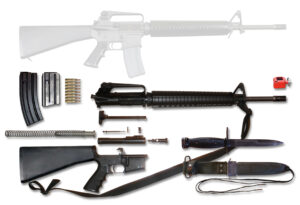
A collector’s look at Colt’s SP1 and early Sporters, from slickside uppers and pencil barrels to the rollmarks and small changes that hinted at the A2 era.
A practical, story-driven guide to reading JM vs REP barrel marks, understanding pre-safety 336s, Micro-Groove and Ballard-style rifling, and the smart checks to make before you buy.