
Remington Model 8 and 81: Browning’s Long Recoil Sporting Rifles
A practical, collector-minded look at Remington’s Model 8 and 81. Calibers, long recoil explained, police conversions, and what to check before you buy.

Call us any time at: (833) 486-6659
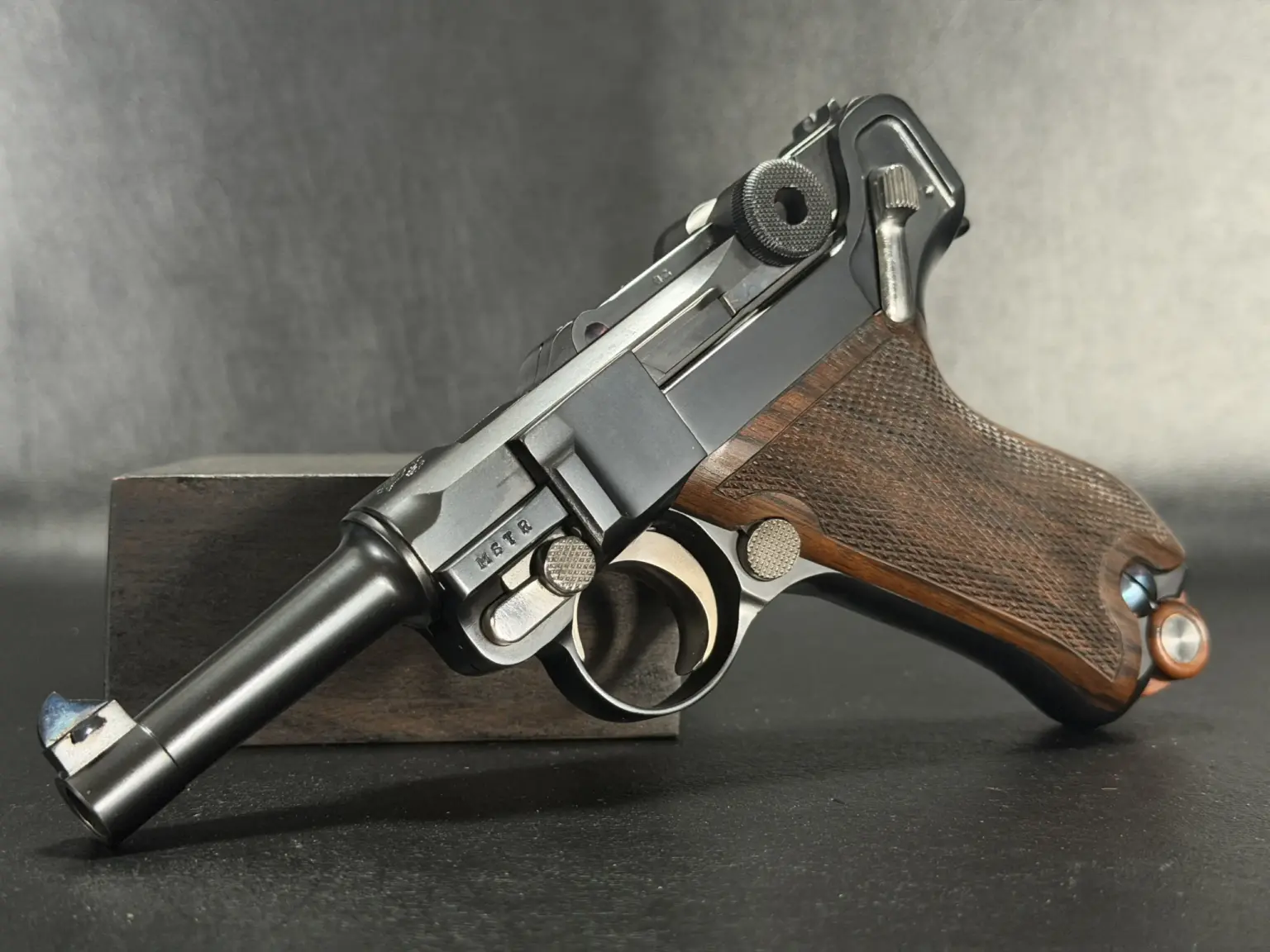
The first time I watched a Luger P.08 come out of a worn leather case, the chatter around us softened. It was not the rarest pistol on the table, nor the most expensive. But that silhouette still made people lean in. The P.08 does that a century on, and there are concrete reasons collectors keep circling back.
The form is unmistakable. Lean, purposeful, and oddly elegant even under harsh lights. Pick one up, and the balance feels like a deliberate handshake. That small pause you take before you run the action is the moment many buyers remember later. It is a pistol that invites you to look closely.
Collectors love mechanisms that show their work. The P.08’s short recoil, toggle-lock system does exactly that. Under recoil, the barrel and upper assembly move back together a short distance, a link cam the “knee” of the toggle up, the joint breaks, and the action unlocks to extract and feed. It is a visible rhythm you can watch in slow motion. Practical or not is a separate debate. What matters to collectors is that the motion has character and precision you can feel.
Georg Luger refined the Borchardt concept into a cleaner, more compact pistol that the German Army adopted in 1908. The P.08 became a service icon and a commercial success. That mix of serious duty history and intricate engineering is the core of its appeal.
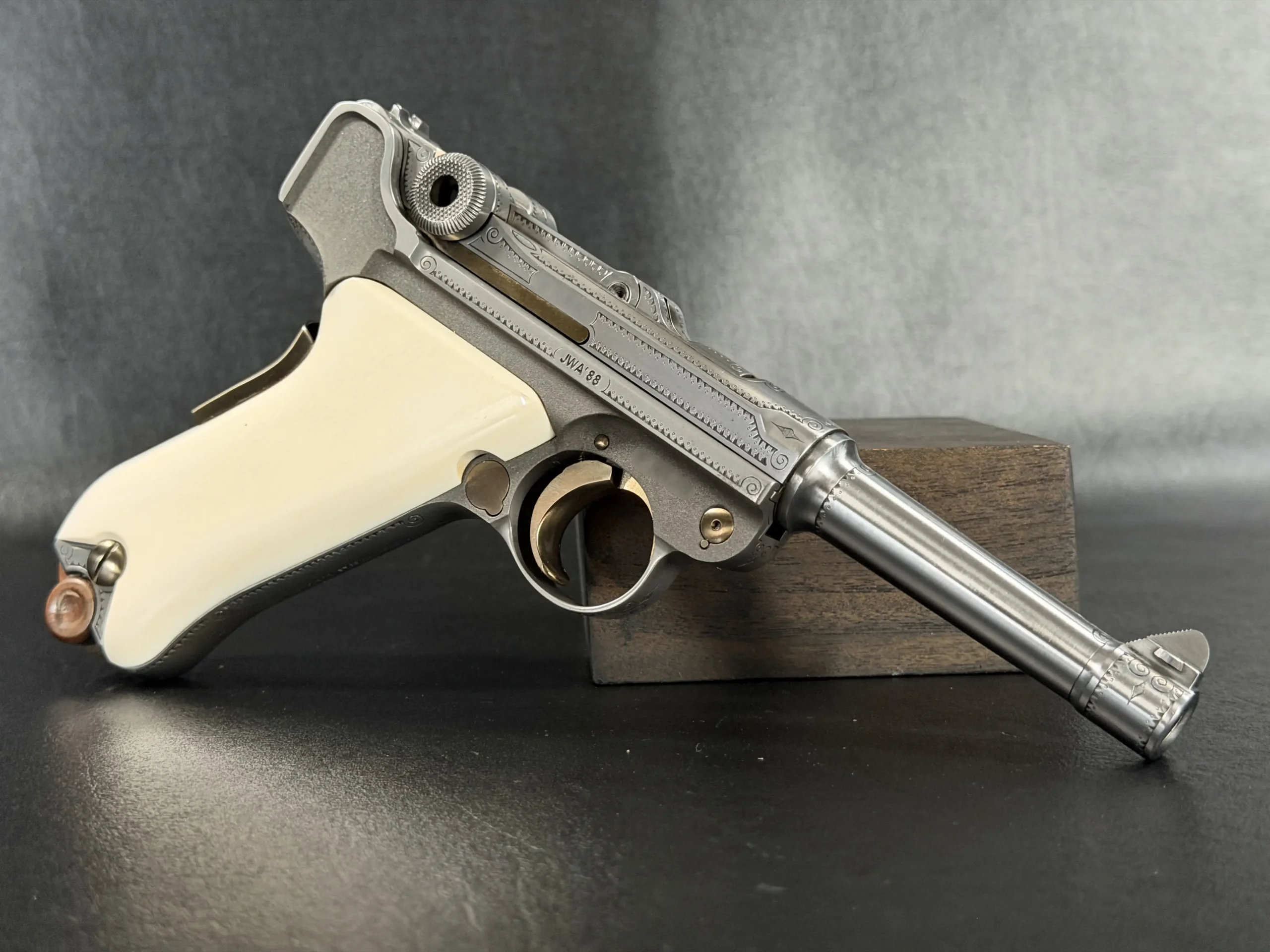
If you collect by maker or era, this quick map helps frame value and expectations before you ever look at a price tag.
Markings are the P.08’s paper trail, stamped in steel. A few checks most buyers make:
For deeper dives on marks and examples, see our Luger P.08 markings guide and the proof marks explainer.
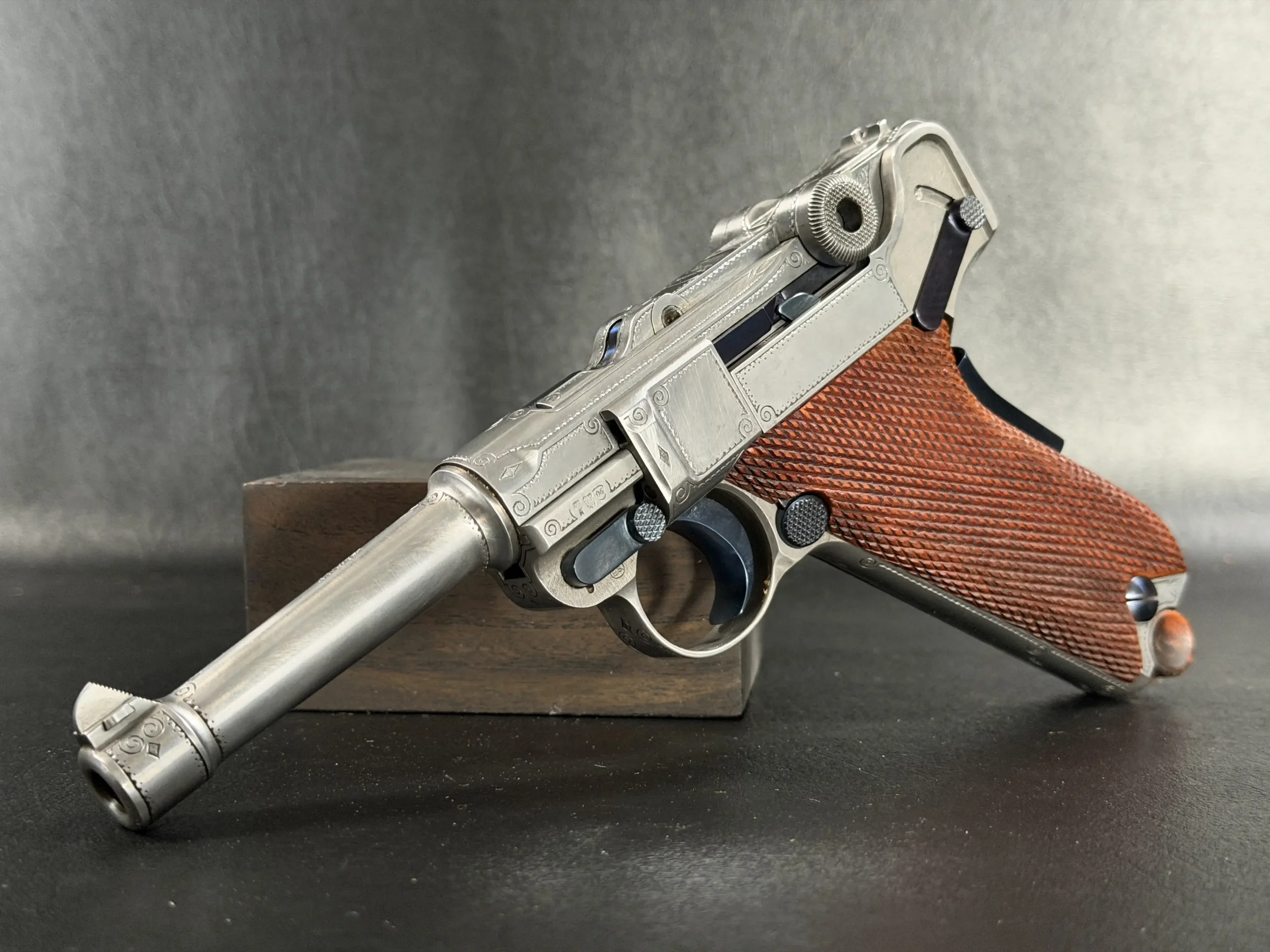
Shooting note: Have a competent gunsmith inspect any vintage P.08 before use. Stick to standard-pressure loads. Avoid +P or hot handloads. Many pistols are happiest with quality 115 or 124-grain FMJ in 9 mm and with correct factory loads in 7.65. Old springs and tight tolerances reward a considerate pace.
These three still drive value. Condition is not just shine. Honest holster wear on high points reads differently than heavy corrosion or buffed-over edges. Originality shows up in matching small parts, correct finishes, and markings that sit crisp and square. Honesty is the seller and the story. A clear explanation of flaws beats a flawless tale that leaves you with questions.
Holsters, loading tools, and unit-marked pouches give a pistol context. They are fun to chase and can complete a display, but they should not distract from choosing the right pistol first. Correct leather is easier to find than the exact Luger you really want.
Some P.08s live in the safe. Some get a slow day at the range now and then. Either path is fine if it is thoughtful. If you shoot yours, keep it lubricated, use standard-pressure ammo, and let the mechanism do its dance rather than running it like a modern duty gun. Many owners find a P.08 is a special-occasion pistol that rewards patience.
Price temptation is real. Patience pays. Good examples keep appearing, and the one that fits your criteria will feel better every time you open the safe.
The Luger P.08 feels like a complete idea, executed with care and animated by a mechanism you can watch. Add a maker map you can learn, markings that tell a story, and an unmistakable silhouette, and you have a pistol that keeps drawing people in for one more look. That is enough to keep collectors chasing, and enough to make a quiet smile appear when the case finally closes around the right one.
Related reading: caring for vintage pistols and our P.08 markings guide to decode proofs, dates, and inspector stamps.
Available
View Item
Available
View Item
Available
View Item
Available
View Item
Available
View Item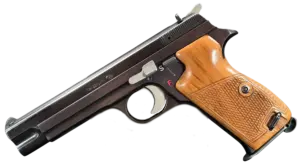
Available
View ItemA practical, collector-minded look at Remington’s Model 8 and 81. Calibers, long recoil explained, police conversions, and what to check before you buy.
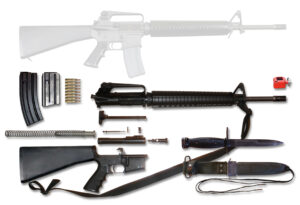
A collector’s look at Colt’s SP1 and early Sporters, from slickside uppers and pencil barrels to the rollmarks and small changes that hinted at the A2 era.
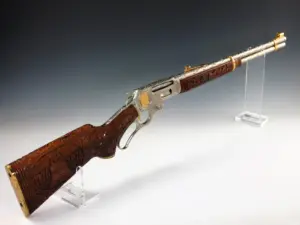
A practical, story-driven guide to reading JM vs REP barrel marks, understanding pre-safety 336s, Micro-Groove and Ballard-style rifling, and the smart checks to make before you buy.