
Remington Model 8 and 81: Browning’s Long Recoil Sporting Rifles
A practical, collector-minded look at Remington’s Model 8 and 81. Calibers, long recoil explained, police conversions, and what to check before you buy.

Call us any time at: (833) 486-6659
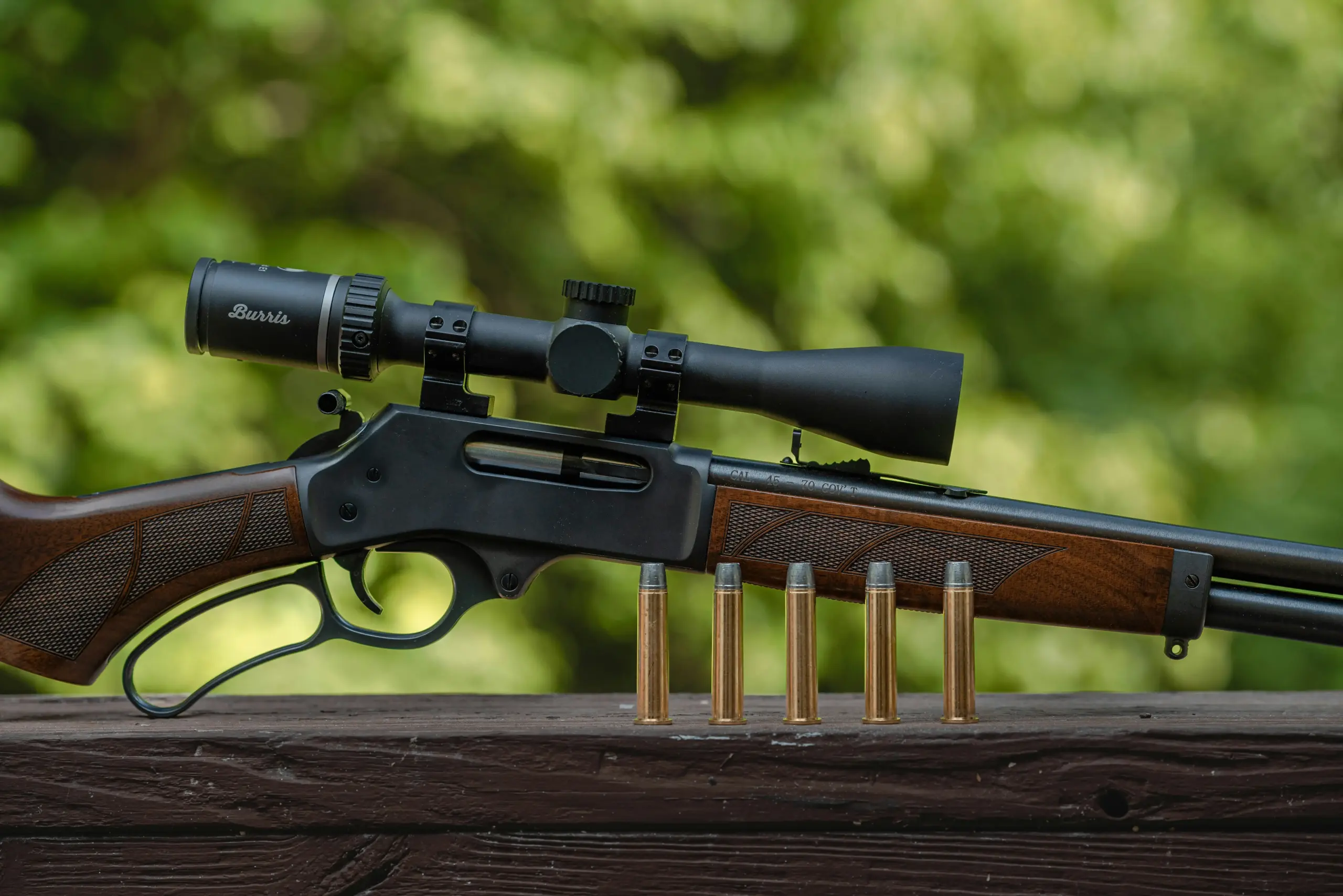
Every range day has at least one. Someone brings a lever gun out of a scabbard or case, and the whole firing line lifts their eyes. It is not because it is the newest thing. It is because the cycle of that lever and the way the rifle floats to the shoulder look right. You can almost hear brush parting and a saddle creaking. Then you watch the group on steel, the rhythm of shot, lever, shot, and it clicks. These rifles never went away. They simply refuse to be made obsolete by a calendar.
A good lever rifle lives in that sweet spot between speed and control. You keep your cheek on the stock, your sight picture stays mostly undisturbed, and your support hand never leaves the forend. Cycle the lever and you are ready for the next shot. That is not nostalgia speaking. It is a real handling advantage that kept cowhands and guides hooked long after other designs took the spotlight.
There are practical reasons, too. Lever guns tend to be short and lively, easy to thread through timber or across a pickup cab. They shoulder fast. They do not care if you are left or right handed, because the lever is simply there for either hand to run. As one old hand put it to me years ago, they point like a finger. Sources that have looked across eras point out these same strengths: faster follow-up shots than a bolt, compact length, and easy manipulation from horseback or on foot in close cover. Those characteristics kept them popular in the brush when other actions grew long and heavy.
Of course, nothing is magic. Lever rifles with tubular magazines shift balance as rounds burn down the tube. They can be harder to run while flat on the ground. Detachable box magazines are not part of the classic pattern. And the big one that still matters today is ammunition shape. Pointed bullets nose-to-primer in a tube can spell trouble. That is why so many classic chamberings use flat or round nose bullets. These tradeoffs, noted by practical writers over the years, did not kill the lever gun. They simply kept it honest about its niche.
It is easy to think Winchester sprang fully formed with the lever action. The line is longer and more interesting. In 1848, the Volition Repeating Rifle earned the first patent for a lever-operated repeater, though it was complex and never entered real production. Robbins and Lawrence tried to make a go of it and folded by 1852. From there the thread runs to Horace Smith and Daniel Wesson, who, with other investors, formed the Volcanic Repeating Arms Company in 1855. One of those investors was Oliver Winchester. That is the root network that fed the American lever-action tree, even if the famous leaves came later.
Once lever guns hit their stride, they splintered into different ideas. Not all followed the Winchester and Marlin path. The Savage Model 1899, for example, was a different animal. It had a streamlined, hammerless action and a rotary magazine. That rotary spool allowed the safe use of pointed bullets, and the faster lock time from the hammerless design helped with accuracy. It looked like the future in 1899 because in many ways it was.
The fact that these rifles never really left the market is just as important. Even now, the old familiars keep showing up with new chapters. Public sources have noted for years that Marlin never left the stage. The Model 94 returned to production. Mossberg’s 464, introduced in 2008, found an audience. Browning’s lever rifle has been around for more than four decades. Several makers import Winchester-pattern replicas for folks who want the old look with new steel. And the Henry name returned in 1997, putting rimfires and centerfires together in American workshops in Brooklyn and New Jersey.
If you are a buyer, that continuity should tell you something. This is not a fad that spikes and disappears. It is a steady flame that throws different light as needs change.
People sometimes ask why lever guns faded from uniforms if they are so useful. There were clear reasons. Armies aimed for rugged tolerance of mud and dust, and levers are less forgiving in truly grimy, wet conditions than simple turnbolts. Cost matters when you are purchasing on a national scale. Bolt guns were cheaper and easier to mass produce at the turn of the 20th century, which pushed militaries worldwide toward them. Practical drawbacks for field doctrine also bit hard. Running a lever while prone is not as natural as flicking a bolt handle. Tubular magazines do not play happily with pointed spitzer bullets in most cases. You also cannot slap in a preloaded detachable mag and go back to work.
Even shotguns tell a parallel story. The earliest widely adopted repeating shotgun was the Winchester Model 1887, a lever gun designed by John Browning at Winchester’s request. Browning himself is on record as preferring a slide action for a shotgun’s job, yet the lever format was chosen for brand familiarity. Once pumps and semis proved themselves, lever shotguns stepped off the main stage. None of this made the lever rifle less useful for hunters, ranch hands, or anyone who wanted a fast, compact carbine. It just meant the big orders went another direction.
Fast forward to now and lever guns are back in plenty of headlines. If you look closely, you will see they were never gone. But there are fresh tailwinds.
One reason is regulation around deer seasons in certain states. Some places ask for straight-wall cartridges for big game. Lever rifles have always done well with straight-walled rounds like .357 Magnum, .44 Magnum, .44-40, .38-40, .38-55, .444 Marlin, and .45-70 Government. Even rimfire .22 Long Rifle remains a lever classic for small game and plinking. Newer straight-wall offerings have also come along, including .360 Buckhammer for lever platforms. That kind of rulemaking turned a lot of eyes back toward carbines that already fit the bill.
Another nudge is practical home and ranch defense. Not everyone wants a semi-auto rifle or a 12 gauge. A carbine in a pistol chambering like .357 or .44 gives you manageable recoil and meaningful energy, especially with loads designed for carbine barrels. Modern makers acknowledge this use by adding threaded muzzles, light mounts, and rail sections for optics. Some current rifles mix classic loading with a side gate plus a removable magazine tube assembly, so you can top off from the side and safely unload from the front without running every round through the action. Peep sights and receiver rails show up from the factory now because many buyers want either a small scope or a reflex sight for fast work.
There is also a simple truth about taste. People like objects that tie generations together. Lever guns hit that nerve without feeling fussy. Contemporary models use stainless barrels, synthetic or hardwood stocks, weather coatings, and smart machining, but they still shoulder like the rifles you grew up seeing above the door. As one industry piece put it, they bridge tradition and modern needs in a way that still makes sense at the range and in the field.
Buyers have more good choices than they did a few decades ago. Think first about what you want the rifle to do. That trims the list quickly.
It is hard to argue with the classic 30-30 in a handy carbine if your shots are inside a couple hundred yards. That cartridge built its reputation in timber, and plenty of folks still carry a slick 94-style or 336-style rifle every fall for exactly that job. If you hunt heavier cover and like big, slow bullets, traditional thumpers like .45-70 Government and .444 Marlin keep finding homes. Recoil is real, but so is the authority at brush distances.
A lever in .357 Magnum or .44 Magnum might be the most fun-per-dollar in the category. With .38 Special or .44 Special loads they are as easygoing as a .22 on the range. Step up to magnums and you have a solid 50-to-100 yard deer rifle or a tidy ranch gun. These are also strong picks for home users who want a shoulder-fired tool without the blast of a 5.56. Look for models drilled and tapped for a rail, with a decent set of aperture sights from the factory if you are staying with irons.
.22 lever rifles are pure therapy and perfectly capable in the squirrel woods. If you want a little more zip for varmints, .22 WMR and even .17 HMR show up in current catalogs. A light, smooth rimfire lever also makes an excellent trainer for new shooters thanks to the manual rhythm and clear feedback of the action.
Lever shotguns are a niche, but not extinct. The modern .410 examples get good marks for build quality, and while many keep to 2.5 inch chambers, they are well executed for those who like the format. They are not do-everything guns, but they are interesting and useful inside their lane.
Plenty of contemporary lever rifles ship with sling studs, modular forends that accept accessories, and practical touches like recoil pads. Features like these have become common enough that you do not have to special order them anymore.
Lever rifles are simple to love, but they reward a little homework and care.
Tube-fed levers used to require either running cartridges through the action to empty the gun or pulling them out through a loading gate one at a time. Modern designs with both a side gate and a removable magazine tube give you options. You can top off through the gate while keeping the rifle in the shoulder, and you can unload by removing the tube and easing rounds out the front, then running the lever once to clear the chamber. It is straightforward and safe when you follow the manual.
If you run a tubular magazine, stick with flat or round nose bullets in centerfire hunting loads unless the maker specifically rates the ammo for tubes. Some cartridges and rifles avoid this issue with rotary or box magazines, which allow pointed bullets. That design difference is part of why certain historic lever models earned a reputation for better long-range performance. For most brush-country hunting, the traditional bullet shapes still perform well and feed smoothly.
Open actions and lots of linkages dislike grime. A lever rifle will run in snow and rain, but it appreciates being kept reasonably clean and oiled. That was true a century ago and it is true now. If you are coming from a sealed-up modern bolt gun, just remember to keep dust and heavy grit out of the action and check your screws for tightness after hard use.
Cycle it with purpose. A halfhearted stroke is how you get a short feed. Practice shouldering from low ready, snapping a sight picture, and working the lever without breaking your cheek weld. It feels natural quickly, and the rhythm is part of the appeal. From field positions, you will find sitting and kneeling easiest, with prone being the least friendly due to the need to move your firing hand more under the rifle.
Collectors sometimes get wrapped around serial ranges and special editions. There is nothing wrong with that. But the liveliest corner of lever collecting is often about mechanical differences and eras of manufacture you can feel.
The Savage 1899 remains a prime example of a lever that did things its own way, and it attracts buyers who like unusual engineering that also shoots well. Browning’s long-running lever rifle demonstrates how the format kept evolving across decades. Mossberg’s entry in 2008 is a neat marker of a modern maker planting a flag in a classic space. The return of the Model 94 and the steady hum of Marlin production kept the river flowing even as it changed banks. Imported replicas of 19th-century patterns give you the look and manual of arms you want without the stress of running a fragile antique.
It is also worth noting the Henry story in modern times. The company name came back in 1997 and has been attached to a wide range of rimfire and centerfire levers made in American facilities. For folks who want a new rifle with an old name and domestic manufacture, that matters.
Prices and regional demand shift, and I would hesitate to treat any firearm as a financial instrument. Buy the rifle that makes you grin when you work the lever. That feeling is what ties an 1890s deer camp to a 2020s truck gun. It is also the feeling that keeps resale interest healthy, even if that is not why you bought it.
When I stack up notes from the range, old catalogs on the shelf, and the way folks actually use these rifles, a clear picture forms. Lever guns endured because they keep doing practical work while scratching an itch that newer technology does not. They are easy to carry. They keep both hands where they should be. They shoot fast enough to matter without spraying brass. They chamber useful cartridges for small game to elk-sized work, and they fold into straight-wall seasons neatly in the states that call for it.
The market agrees. Writers pointing out that lever guns are hot again are not wrong. But the reasons are the same reasons that put them on horseback a century and a half ago. Makers have just updated the details. A set of peeps instead of buckhorns. A rail for glass. A threaded muzzle. A side gate and a tube you can unload without cycling twelve live rounds through the action. Stainless here, synthetic there, with the same style of receiver looking back at you.
If you like to think about why certain designs hang on, you might also enjoy how other manual actions have stayed current. We covered that with pump shotguns in another piece, and even with double-action revolvers that never stopped making sense for a lot of hands. The stories rhyme for a reason.
So when someone at your range brings out a lever gun and everyone turns their head, remember it is not just the silhouette doing the work. It is the whole package. History that still carries, mechanics that still make sense, and a way of shooting that still puts a smile on your face. That is why lever guns never really went away. They never had any reason to.
If you are on the fence, shoulder one. Run the lever with intent. Find the bead in the notch or put a small piece of glass on the rail. Feed it the right ammo for the job. Then ask yourself if you have room in the safe for a rifle that connects you to both the past and your next weekend in the woods. Most people who try it already know the answer.
Related reading from our archives, if you like action types that stand the test of time:
Available
View Item
Available
View Item
Available
View Item
Available
View Item
Available
View Item
Available
View ItemA practical, collector-minded look at Remington’s Model 8 and 81. Calibers, long recoil explained, police conversions, and what to check before you buy.
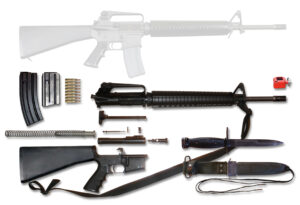
A collector’s look at Colt’s SP1 and early Sporters, from slickside uppers and pencil barrels to the rollmarks and small changes that hinted at the A2 era.
A practical, story-driven guide to reading JM vs REP barrel marks, understanding pre-safety 336s, Micro-Groove and Ballard-style rifling, and the smart checks to make before you buy.